
Stages of Event Management: Thirteen Steps From the Purpose to the Closing Report
The stages of event management are the same whether the event is a conference, a product launch, a festival, a staff day or a company taking part in an exhibition. The content changes and the order does not: a purpose, a brief, a date, a design, a budget, approvals, contracts, production, a plan for the day, a build, the day itself, a clean exit and a report. This guide walks through all thirteen in order, for a student, a junior coordinator or a manager who has just been handed a first event in Saudi Arabia.
Two words keep one meaning throughout. The owner is the person inside the company who asked for the event and answers for its result. The organiser is whoever runs it, an in-house team or an agency. Each stage is described with the same five points: what is decided, who decides it, the document the stage produces, the failure that repeats most, and a test that tells you the stage is done. A stage that leaves no document behind has usually not happened.
The stages of event management at a glance
Read this table first. It lists every stage with the paper it leaves and the person whose signature closes it. If you cannot name the signature for a row, that row is where the event will slip.
| Stage | Output document | Who signs it |
|---|---|---|
| Purpose and measure of success | A one sentence objective with the number to be measured | The owner |
| The brief | The written brief, dated, with a version name | The owner, or the decision maker the owner names |
| Feasibility and the date | The date decision, with the venue hold confirmed in writing | The owner, and the venue for the hold |
| Concept and design | The concept, the visitor journey, the plan and the 3D views | The decision maker named in the brief |
| Budget and the itemised quote | The approved budget, with the quote line by line | The budget owner and the supplier |
| Permits and approvals | The approvals file | The venue, the landlord or the authority, each for its own part |
| Suppliers and contracts | The contracts and a list of who owns each line | The owner and each supplier |
| Production | Signed proofs and the test assembly record | The owner for proofs, the producer for the assembly |
| Run of show and staffing | The run of show, the roster and the briefing note | The organiser, with the owner approving |
| Site build and handover | The snag list and the handover form | The organiser and the owner, after the safety walk |
| The live event | The log of issues and decisions | The event manager on the organiser side |
| Dismantle and return of the site | The site return form and the storage list | The venue |
| Closing | The closing report | Written by the organiser, accepted by the owner |
Stages one to three: decisions that come before any design
The first three stages of event management cost almost nothing and settle most of what follows. They are also where a first time organiser loses the most time, because they feel like talking and not like work.
Stage one: the purpose and the measure of success
An event with no written purpose is judged afterwards by whoever speaks loudest. So the first paper is the shortest one: a single sentence that says what the event is for, who it is for, and which number will be read at the end. It is written before any creative idea, because an idea chosen first will bend the purpose to fit itself.
- What is decided: the objective in one sentence, the audience, and the measure: registrations, qualified leads, attendance from a named guest list, sales on the day, or staff who complete a session.
- Who decides: the owner. An agency can help with the wording, but it cannot choose the purpose.
- Document: the objective sheet, short enough to be read aloud at the start of every later meeting.
- Common failure: several objectives at once, or a measure that nobody has a way to count on the day.
- Done when: someone who was not in the room reads the sentence and can say how the event will be judged.
How to pick a measure and count it properly is covered, for exhibitions, in our guide on how to measure exhibition success, and the same logic holds for any event.
Stage two: the brief
The brief turns the purpose into limits that a designer and a supplier can work inside. A good one is short and complete. A weak one is long and silent on the two points that matter most: money, and who says yes.
- What is decided: the date window, the city and the kind of venue, the audience and its expected size, the budget envelope as a range, the decision maker, and the constraints: brand rules, protocol, what must appear and what must not.
- Who decides: the owner writes it or approves it. The budget range is the client’s to set, never the supplier’s to guess.
- Document: the brief in writing, dated, with a version name.
- Common failure: dictating it by phone, or leaving out the budget range, which brings back proposals too far apart to compare.
- Done when: every supplier invited to respond has received the same brief and none of them needs a call to understand it.
Stage three: feasibility and the date
Before design, one question is tested: can this event happen on this date in this place? In Saudi Arabia the calendar decides more than a first time organiser expects.
- What is decided: the date and the venue, with a second choice for each.
- Who decides: the owner, on facts the organiser collects.
- Document: a date and venue note, with the hold confirmed in writing by the venue and the day on which the hold lapses.
- Common failure: announcing a date before the venue has confirmed, or asking about the event day alone and forgetting the days needed to build and to clear.
- Done when: the venue hold covers the build, the event and the dismantle days, and the calendar check below is written down.
The calendar check has five lines. Ramadan: working hours shorten and audiences move to the evening after iftar, so a daytime programme rarely works. Hajj: hotels, flights and roads in the west of the Kingdom are under pressure, and many suppliers are already committed. School holidays: families travel, which helps a public festival and hurts a business audience. Summer: heat rules out most outdoor daytime formats and changes what materials and people can stand. Other events in the same city: a large exhibition or a city season fills halls, hotels and crews, and prices follow.
Ramadan and Hajj follow the Hijri calendar, so they fall earlier in each Gregorian year, and a check done for last year does not carry over. The weekend is Friday and Saturday, which decides whether a business audience is free to come. Dates of the trade shows that fill the main halls are in our Saudi exhibitions calendar.
Stages four to seven: from the idea to signed paper
In these four stages decisions turn into drawings, figures and signatures. Whatever is agreed here by voice alone comes back later as a dispute.
Stage four: concept and design
Only now does the creative work start, and it answers the brief, not the other way round.
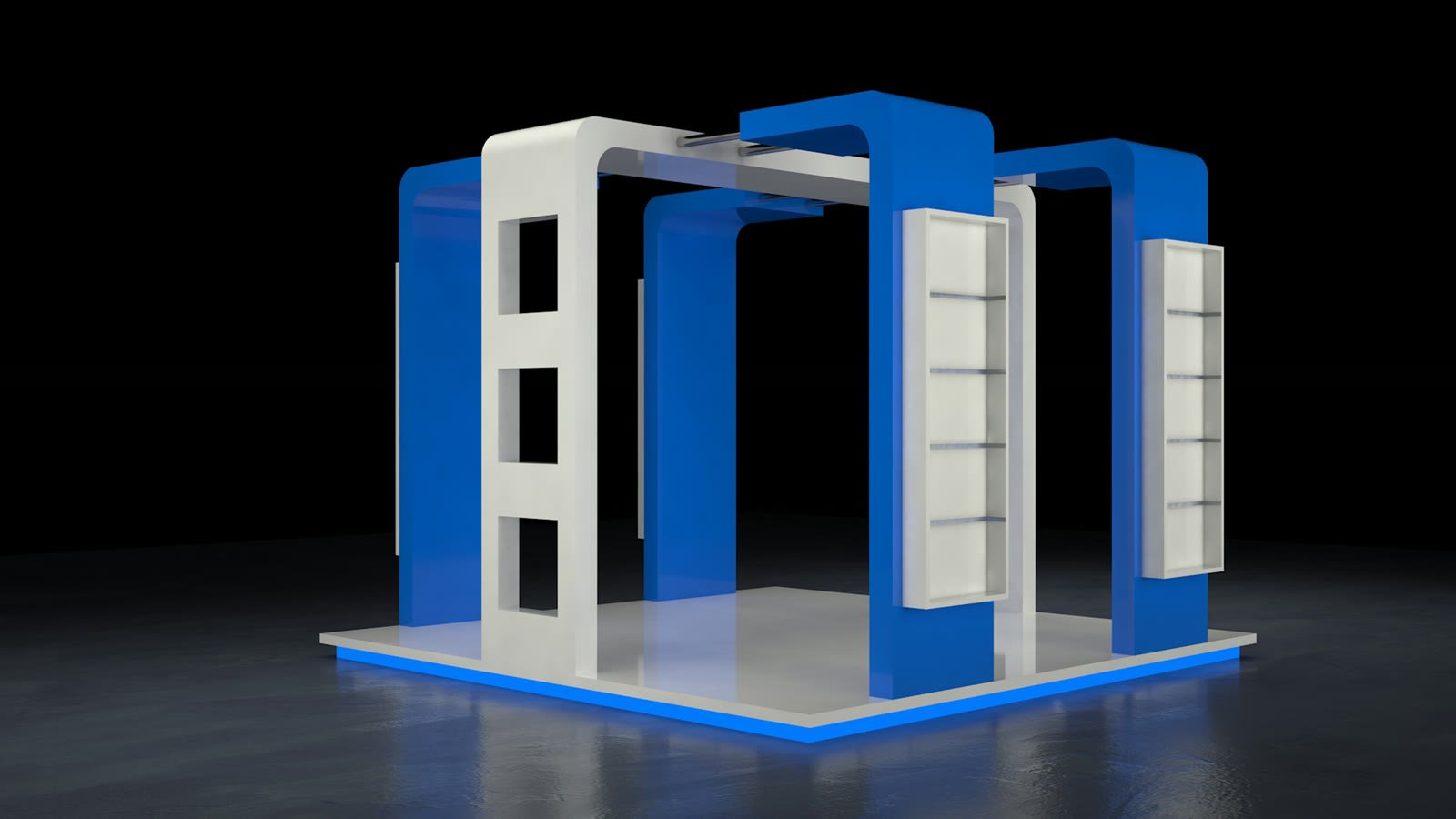
- What is decided: the idea in a sentence, the visitor journey from arrival to exit, the layout plan, and how the space looks in 3D views.
- Who decides: the decision maker named in the brief, alone. Comments from anyone else pass through that person.
- Document: the concept, the journey, a plan drawn to scale and the 3D views, approved in writing by version name.
- Common failure: approving pictures without a plan. A view shows how it looks. A plan shows whether people, power and exits fit.
- Done when: anyone can trace a guest’s path on the plan from the door to the last point without asking a question, and the approval names the version.
Stage five: budget and the itemised quote
The budget envelope came from the client in the brief. This stage fills it with lines.
- What is decided: what each line costs, which lines are fixed (hall hire, built items, print) and which move with numbers or hours (catering, staffing, transport, overtime), and what is held back as contingency.
- Who decides: the budget owner on the client side, a single named person.
- Document: the itemised quote and the approved budget, with every later change approved in writing before it is spent.
- Common failure: a single total with no lines, or changes agreed by voice that surface on the final invoice.
- Done when: every line has an owner, the variable lines state what they vary with, and the contingency is a named line that only one person can release.
Contingency is a principle, not a percentage to copy from another event. It is a reserve the owner keeps for what cannot be known yet, released only in writing, and reported at the end as spent or returned.
Stage six: permits and approvals
In no other stage does the organiser decide less. The organiser prepares and submits, and others approve.
- What is decided: which approvals this event needs, and who files each one.
- Who decides: the venue on its own rules, the landlord or the mall management on its property, the municipality on public space and temporary structures, and the authority that licenses that type of event. Safety requirements run through all of them.
- Document: the approvals file: the drawings as approved, material certificates, insurance, and each approval with its date and its conditions.
- Common failure: starting late because the design was not final, or changing the design after approval without submitting it again.
- Done when: every approval on the list is in the file in writing, and its conditions have reached the people who build.
Requirements differ by event type and by city. A stand inside a licensed exhibition, an event in a mall and a public event in an open square do not pass through the same doors. The route in the two largest cities is set out in our guide to the event permit in Jeddah and Riyadh. The safe rule is to write the list of approvals in stage three, when the venue is chosen, and to start filing as soon as stage four produces drawings.
Stage seven: suppliers and contracts
The question here is not who is cheapest. It is who answers when something falls between two lines.
- What is decided: a single lead contractor who carries the whole event or several suppliers coordinated by the organiser, who owns each line of the budget, and the deadlines that bind each side, starting with content and artwork.
- Who decides: the owner chooses the model and the organiser manages it.
- Document: the contracts, and one page that names the owner of every line with a phone number.
- Common failure: gaps between suppliers. The screen arrives, and nobody was asked for the cable, the power or the person to run it.
- Done when: every line of the quote has exactly one owner, and the client has signed its own deadlines for content, logos and guest lists.
A single lead contractor costs a management margin and buys one answer when something goes wrong. Several direct suppliers can cost less on paper, and they move the coordination work, and the risk in the gaps, to the client’s team. Neither route is wrong. What fails is choosing the second while staffed for the first.
Stages eight to ten: making it and getting it on site
Everything so far was paper. From here the event becomes things that are made, people who move and a place that is handed over.
Stage eight: production
Production turns approved files into objects, and only what is caught before shipping can be corrected without a price.
- What is decided: the final materials, the final artwork, and the order in which things are built and printed.
- Who decides: the producer proposes and the owner approves the print proofs.
- Document: a signed proof for every printed piece, and a test assembly record for everything that is built.
- Common failure: late content. Production time is the one thing that cannot be bought back, and artwork that arrives late is printed without a proof.
- Done when: every built item has been assembled once before it travels, every print has a signed proof, and the packing list matches the plan.
A test assembly finds what drawings hide: a panel that meets a column, a screen bracket with no fixing behind it, a colour that reads differently under the event lighting. Found in production, it is a small correction. Found on the build day, it can cost the opening.
Stage nine: the run of show and staffing
The run of show is the event written as a timetable of cues. Each line gives the time, what happens, where, who is responsible, and what sound, light and screen do at that moment.
- What is decided: the sequence minute by minute, the roles, who briefs whom, and when the rehearsal takes place.
- Who decides: the event manager on the organiser side writes it, and the owner approves the content and the protocol.
- Document: the run of show (also called a cue sheet), the roster with roles and contact numbers, and a briefing note for hosts and promoters.
- Common failure: several versions in circulation at once, or a rehearsal cancelled because the build ran late.
- Done when: a rehearsal has been run from the final version, with the real microphones, files and people, and every role knows who it reports to.
Staffing follows the visitor journey drawn in stage four: registration, guiding, hosting, stage hands, technicians and a supervisor. Front of house staff are briefed on the purpose from stage one, not only where to stand. That is why teams of promoters and hosts work under a supervisor.
Stage ten: site build and handover
Build days are shorter than they look in the schedule, because their hours are not the organiser’s to set.
- What is decided: access times, the order in which crews enter, and the moment the site passes from the build crew to the event team.
- Who decides: the venue sets the access times, the organiser sequences the work, and the owner accepts the result.
- Document: the build schedule, the snag list and a signed handover form.
- Common failure: a build plan that ends at the minute the doors open, leaving no time to fix, clean or rehearse.
- Done when: the safety walk is complete, every snag is closed or accepted by a named person, and the owner has signed the handover.
The snag list is a walk with a pen: every scratch, loose cable, missing label and dead lamp is written down with the name of the person who will fix it. The safety walk is a separate thing and comes first: exits clear, cables covered, structures fixed, extinguishers where the venue requires them. For an exhibitor, the same stage day by day is in the exhibitor checklist for the thirty days before the show.
Stages eleven to thirteen: the day, the exit and the report
The event day is the shortest stage and the most visible. The two after it are the least visible and leave the longest trace.
Stage eleven: the live event
A good day is a dull one for the person running it: everything was decided earlier, and what remains is following it through.
- What is decided: nothing new, if the earlier stages were done. Decisions on the day are only about departures from the plan.
- Who decides: one decision maker, named in advance and reachable at the control point. Not a committee, and not whoever happens to be nearest.
- Document: the log of issues: the time, what happened, who decided, and what was done.
- Common failure: the owner giving instructions straight to technicians and staff, so that two versions of the plan run at once.
- Done when: the last guest has left, the log is closed, and the figures for the measure chosen in stage one have been counted, not estimated.
The control point is a fixed place, a desk or a room, that holds the event manager, the run of show and the team’s phone list. Everyone knows that a problem goes there and an answer comes from there. On the day the log looks like bureaucracy. Afterwards it is the most useful page of the closing report.
Stage twelve: dismantle and return of the site
The exit is part of the event, not an appendix to it, and its hour has been in the booking since stage three.
- What is decided: what is removed and in what order, what is kept, what is recycled or discarded, and the hour by which the venue expects its space back.
- Who decides: the venue sets the deadline and the organiser runs the exit.
- Document: the site return form signed by the venue, and a list of what went into storage.
- Common failure: no plan for the exit, a tired crew, and damage to the building or to pieces that were meant to be used again.
- Done when: the venue has signed that the space came back clean and undamaged, hired items have been returned, and stored items are listed with where each one is.
Stage thirteen: closing
Closing takes you back to the sentence written in stage one and asks whether it came true.
- What is decided: whether the event did what it was held for, and what changes next time.
- Who decides: the owner judges, on a report the organiser writes.
- Document: the closing report: the result against the measure, the budget against actual spend with the contingency accounted for, the log of issues, photographs, notes on each supplier, the lessons, and the storage list.
- Common failure: no report at all, or an album of photographs with no number in it.
- Done when: the report is delivered while the event is still fresh in memory, the final invoices match the approved changes, and the lessons are saved where the next organiser will find them.
How long each stage takes
The stages of event management do not share one timetable. A staff day in a hotel and a public festival share their stages, not their durations. What can be said is which stages compress and which do not.
Stages that compress with effort: the purpose, the brief, the concept and the budget. All of them are decisions, and a client who decides quickly closes all four quickly. The run of show and the staffing compress as well, and the price is the quality of the rehearsal.
Stages that do not compress: approvals and production. An approval takes as long as the venue or the authority takes, and it starts only when the drawings are complete. Production has a physical floor: materials are ordered, pieces are built, paint dries, print is proofed. Exhibition work gives a known reference: a custom stand takes 6 to 8 weeks from brief to opening, and graphics are printed in 1 to 5 working days once the artwork is approved. For anything else the duration depends on its size, its materials and the approvals it needs, and the quote should state the date.
Access times are fixed as well. The build cannot start before the venue opens the space, and the dismantle cannot run past the hour it wants the space back. So plan backwards: from the event date to the handover, from the handover to the build, from the build to production, from production to design approval, and from there to the day the brief has to be signed. If that day is already behind you, change the scope or the date, not the test assembly and not the rehearsal.
The three stages people skip
Under pressure the same three stages are dropped every time, and each of them is cheap.
The measure. Stage one is skipped because everyone believes they agree. They find out they did not when the event ends, and one person counts attendance, another counts leads and a third counts posts. Write the number first.
The rehearsal. It is the first thing cut when the build runs late, and it is the only moment when the run of show meets the real room. A walk through of the opening sequence with the real files and microphones is worth more than a full rehearsal that was planned and then cancelled.
The report. Once the space is returned, the team moves on to the next job. Without a closing report the next event starts from memory, the budget lessons are lost and the stored pieces are forgotten. Put its delivery date in the contract, back in stage seven.
The stages of event management on one page: a checklist
Print this list and tick it in order. Each line is the done-when test of one stage.
- The objective is one sentence, with the audience and the number to be measured.
- The brief is written, with a date window, a city, a budget range and a named decision maker.
- The date has passed the calendar check, and the venue hold is confirmed in writing for the build, event and dismantle days.
- The concept, the visitor journey, the plan and the 3D views are approved by version name.
- The quote is itemised, fixed and variable lines are marked, and the contingency has an owner.
- Every approval the event needs is in the file, with its conditions.
- Every line has one owner and every contract has its dates, the client’s content deadlines included.
- Print proofs are signed, and built pieces have been assembled once before they travel.
- The run of show is final, the team is briefed and the rehearsal has been run.
- The safety walk is done, the snags are closed and the handover is signed.
- The control point is staffed, one person decides and the log is being kept.
- The venue has signed the return of the space, and stored pieces are on a list.
- The closing report compares the result with the measure and keeps the lessons.
Where a contractor fits, and where The Touch fits
Most first time organisers do not run every stage alone. The owner keeps the first, the second and the last, because the purpose, the brief and the judgement of the result cannot be delegated. A contractor usually carries the stages from design to dismantle.
That is the part The Touch works in. We answer a brief with an itemised quote within 24 hours, where transport, if it applies, is a named line, and the design is presented as 3D views. We prepare the drawings and paperwork that the venue, the mall or the authority asks for, and the approval is theirs, not ours. The work is built in our own factory, with joinery, paint, acrylic and large format print under one roof, and it is fully test assembled before it ships. Our own team installs it, stays for the opening and dismantles it, and a client’s kit can be kept in our storage until it is needed again. We have more than one location in the Kingdom, so the method is the same wherever the event is held.
The services behind those stages are experiences and events, exhibition and conference setup and printing and promotional production. How we work between cities is on the event management company in Saudi Arabia page, with local notes on the pages for event management in Riyadh and event management in Jeddah.
The stages of event management themselves are not ours. They are common practice across the industry, and for a view of professional standards worldwide the general reference is the Events Industry Council. Where a general rule and a written requirement from the venue or the authority disagree, the written requirement decides.
Frequently asked questions
How many stages of event management are there?
Thirteen in this guide, from the purpose to the closing report. Other sources group them into fewer and broader phases, such as planning, design, delivery and review, and the content is the same. What matters is not the count but that each stage ends with a document and a signature.
Which stage takes longest?
Usually production or approvals, and neither can be hurried by working harder. Production has physical limits, and an approval moves at the pace of whoever grants it. Both start only when the design is complete, which is why a late design approval is the most expensive delay in the whole chain.
When should permits start?
Write the list when the venue is chosen, and start filing as soon as approved drawings exist. Who approves depends on the event type, the venue and the city, so the list is written for each event and never copied from the last one. A design that changes after approval goes back for approval.
Who should own the budget?
One named person on the client side, not the agency and not a committee. That person sets the range in the brief, approves the itemised quote, signs every change before it is spent, and is the only one who can release the contingency.
What is a run of show?
It is the event written as a timed list of cues: what happens, when, where, who is responsible, and what sound, light and screens do. Professionals also call it a cue sheet. It has one final version, and the rehearsal is run from that version.
What goes in the closing report?
The result against the measure chosen in stage one, the budget against actual spend, the log of issues, photographs, notes on each supplier, lessons for next time, and a list of what was stored and where. A report without the first item is a photo album.
Can stages overlap?
Yes, and on a short schedule they have to. Permits run alongside the budget and the contracts once drawings exist, and the run of show is written during production. What does not move is the order of approvals: no production before design approval, no build before the permits, and no opening before the handover.
Events We Delivered
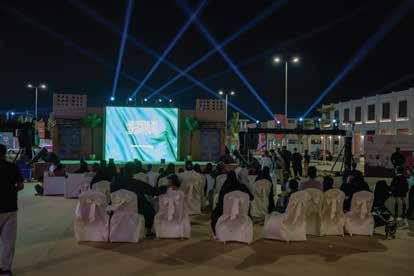
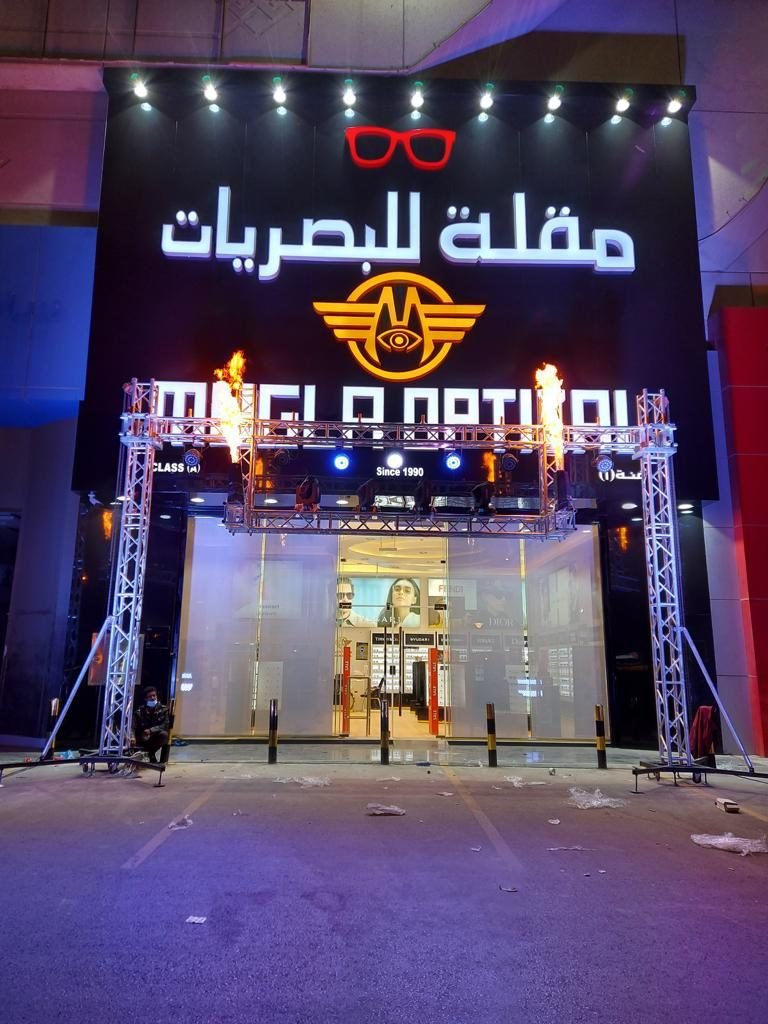
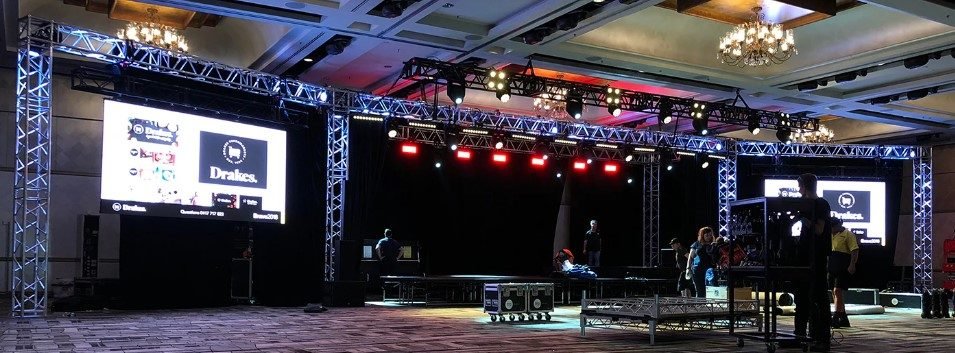
Photographed on site after handover, no renders.

Have a project and want a real number?
Send the area, the date and the city, and we come back with an itemised quote within 24 hours. No commitment, and no vague all-in price.

