
How to Get an Event Permit in Jeddah and Riyadh: Authorities and Lead Times

The question that arrives before any design is “do we need a permit for this, and from whom?”. The answer is usually yes, and usually from more than one place. A mall event passes through the mall’s management and Civil Defense, a trade show through the Saudi Conventions and Exhibitions General Authority and the organiser, and a public show in an open square through the General Entertainment Authority, the municipality and traffic police. Anyone who treats an event permit in Saudi Arabia as one piece of paper discovers in the last week that the one piece of paper needs four approvals before it.
This guide lays out the route to an event permit in Saudi Arabia the way we walk it for clients in Jeddah and Riyadh: which authority approves what, the documents each asks for, the lead times we actually plan with rather than the ones printed in manuals, who files, and why applications are refused. It is written for the person delivering the event, so that on the first call you already know how many weeks you need before the date.
The short answer: who approves what
This is the table we open in the first meeting about any event permit in Saudi Arabia. The lead times are what we build into the schedule from experience, not statutory periods: every platform shows its own current processing time when you file, and it moves with the season, the city and how complete the file is.
| Authority | What it covers | Lead time we plan with | Who applies |
|---|---|---|---|
| Saudi Conventions and Exhibitions General Authority | Licensing of exhibitions, conferences and trade forums | Three to six weeks | The organiser |
| General Entertainment Authority | Entertainment events, live shows, public concerts and fun zones | Three to five weeks | The organiser, or the agency with a mandate |
| The Amanah through the Balady platform | Temporary structures in public space, signage, occupying part of a road | Two to four weeks | The event owner or the agency |
| Civil Defense | Safety requirements, fire-rated materials, emergency exits | One to three weeks once the drawings are complete | The contractor or the agency |
| The mall, exhibition centre or hotel | Design and drawing approval, the build window, the insurance certificate | One to two weeks | The agency on the exhibitor’s behalf |
| Traffic police and security | Road closures, traffic management, the crowd security plan | Three to four weeks | The organiser |
The six do not all meet at every event. A stand inside a licensed exhibition needs only the organiser’s and the venue’s approval plus a Civil Defense check on materials, while a product launch in a public square can gather four of them at once. So the first job is to find which rows apply to you, and then the countdown starts.
The Saudi Conventions and Exhibitions General Authority: exhibitions and conferences
Every trade exhibition, conference or forum in the Kingdom needs a licence from the Saudi Conventions and Exhibitions General Authority, issued in the organiser’s name, not the exhibitor’s. An exhibitor who books space at a licensed show works under the organiser’s licence and files nothing of their own, but is bound by the exhibitor manual: height limits, materials, build and dismantle windows, and the insurance certificate.
A company running its own show, say a single-brand exhibition for its customers in a hotel, needs the same licence, which is an event permit in Saudi Arabia in the company’s own name. The file includes the commercial registration, the programme, the site plan, the venue contract and the list of participating parties. We plan three to six weeks for this route, because any gap in the file sends it back to the start.
The General Entertainment Authority: entertainment and public events
Live shows, concerts, fun zones and events open to the public, ticketed or free, need an event permit in Saudi Arabia from the General Entertainment Authority. The dividing line we ask about first: is there entertainment content aimed at the general public? A stage act, a games area or a light show in an open square means yes. A closed staff celebration inside a hotel is usually covered by the venue’s own approval, and even so we check every time, because audience size and content change the answer.
The file is larger here: a detailed programme, a site plan showing the stage, entrances and exits, a security and medical plan, performer contracts and insurance. Because the authority may ask for other bodies’ approvals inside the same application, we start this route three to five weeks before the date, and earlier in the seasons.
The Amanah and the Balady platform: temporary structures and public space
Anything erected in public space, on a facade or on a pavement goes through the city’s Amanah on the Balady platform: tents and temporary stages, kiosks in squares, temporary signage, and the occupation of part of a road or a car park. The Amanah does not look at the content of the event; it looks at the structure and the location. Is the structure safe, is the site permitted, and is the sign within the municipal rules on size, content and duration.
The event owner or whoever they authorise files it, with the commercial registration, a site plan with coordinates, drawings of the structure with its materials, the duration of occupation and sometimes the property owner’s consent. We run this in parallel with the design, because an objection to a height or a location changes the whole design, and a design changed after fabrication is paid for twice.
Civil Defense: safety before anything else
Civil Defense does not issue the event permit in Saudi Arabia itself, but no event opens without its consent. Its requirements appear in every route above: fire-rated materials with certificates, emergency exits of the required number and width, extinguishers and signage, clear aisles, and at large events a safety crew on site. At exhibitions the organiser coordinates and each stand still proves its materials comply; at standalone events the file sits with the contractor. We plan one to three weeks here after the drawings are complete, because the inspection may be on site before opening. The lesson we learned early: material selection starts from the fire certificate, not from the colour.
The venue itself: the mall, the exhibition centre, the hotel
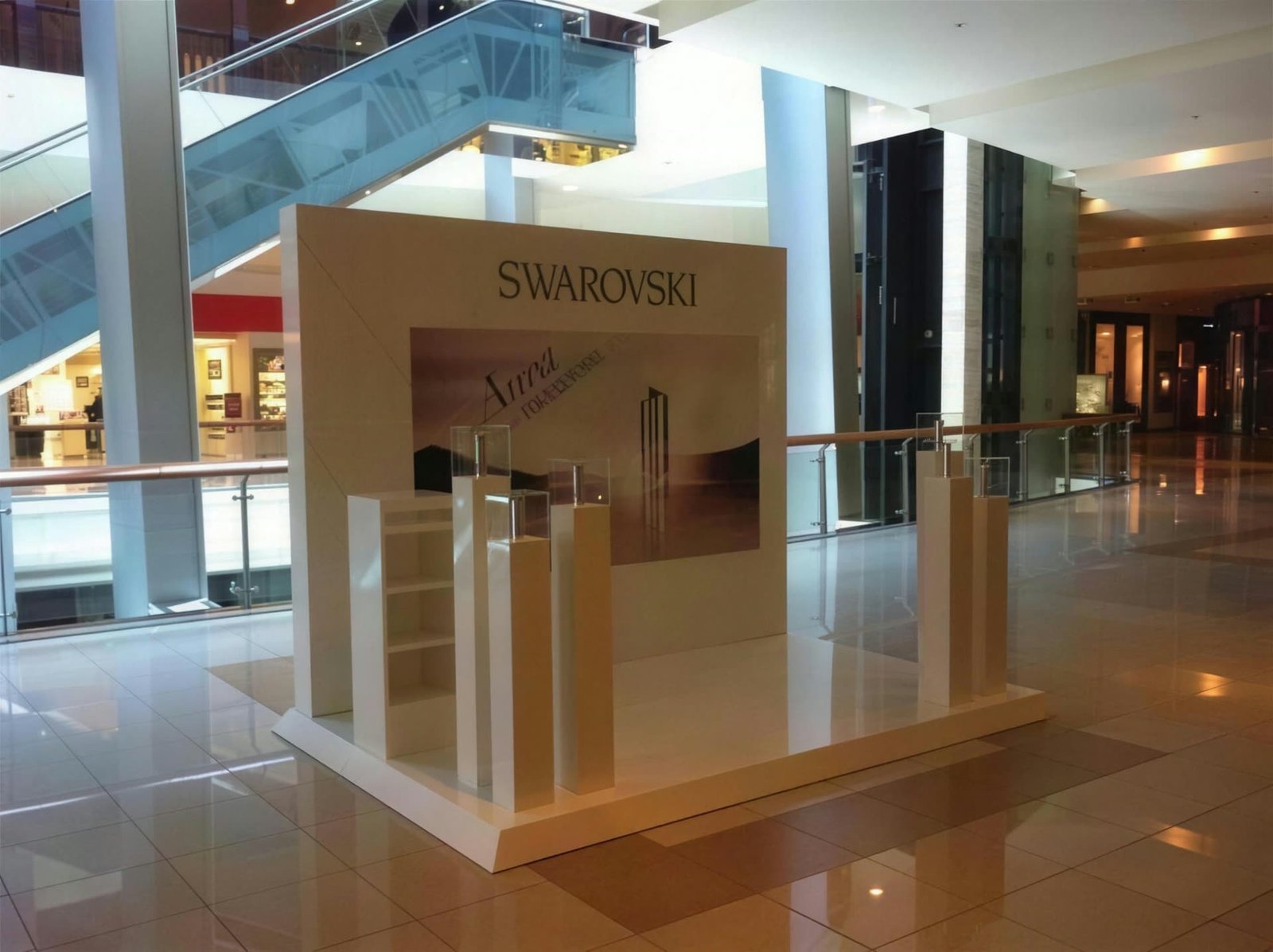
The authority many people ignore, because it is not a government body, is the venue. A mall’s management approves the design, dimensions, materials and the overnight build window, asks for third-party liability insurance, and decides what sound and sampling are allowed. An exhibition centre asks for stand drawings above the standard height and books loading windows. A hotel approves what is hung, what is stuck to surfaces and what power is drawn. These approvals take one to two weeks, and they cannot be skipped even when you hold a permit from every government body on the list.
In malls the file is long, and we gathered it in what a mall requires before any display; mall activations in Saudi Arabia gives the wider picture of what works there and what does not.
Jeddah and Riyadh: where the route differs in practice
The regulations are the same in both cities; the difference is in application, season and venues. In Riyadh the large shows sit in centres with strict exhibitor manuals and short build windows, and applications crowd together during Riyadh Season and before the international exhibitions, so we start at least a week earlier. In Jeddah the consumer events, malls and the waterfront set the tone, and Jeddah’s Amanah has its own rules for open sites and the corniche, so the route to an event permit in Saudi Arabia there often starts with the Amanah or the mall before any other body, with the pressure rising during Jeddah Season and the summer.
That is why our pages on an event management company in Jeddah and on events in Riyadh differ in schedule and cost rather than in service. For anyone delivering in more than one city in the same year, our page on an event management company in Saudi Arabia explains how the file is run from one place.
The schedule backwards: from the date to the day you start
We read the schedule from the event date backwards, because the date does not move and an event permit in Saudi Arabia cannot be rushed. Eight weeks before, we pick the route from the table and collect the fixed documents: the commercial registration, the venue contract and the mandate if we are filing for you. Six weeks before, the design is approved and the site plan is ready, so the applications to the relevant authority and to the Amanah go in the same week, because they run in parallel. Four weeks before, we answer the authorities’ comments and fix the materials with their certificates for the Civil Defense file. Two weeks before, the approvals are in hand and we confirm the build window with the venue; what remains is delivery.
The show dates themselves, for every exhibition in Riyadh, Jeddah and Dammam from its official source, are in our Saudi exhibitions calendar for 2026 and 2027, and that is where we count back from on projects that start with choosing the show.
A working rule: no panel is cut and no sign is printed until the design submitted to the authorities is the same design you approved. Any change after submission means a new submission, and a new submission means at least two more weeks.
Who applies: the organiser, the exhibitor or the agency
The simple rule: the event permit in Saudi Arabia is in the name of whoever owns the event, and the technical approvals are in the name of whoever delivers it. The organiser holds the exhibition licence or the show permit, the exhibitor works under the manual, and the delivering agency handles the venue, materials, drawings and insurance files, applying to the Amanah and Civil Defense under a mandate where needed. When we take an event on in full, from experiences and events to exhibition stands, we handle all of the files and ask the client for two things only: the official documents in the correct name, and a formal mandate to file on their behalf. What we will not accept is a client being told “permits are your problem” after signing. Ask any company who files which application, in whose name, and when; a clear answer shows who has walked this route.
The refusals that keep repeating
Most applications are refused not because the event is prohibited but because the file is incomplete or contradicts itself. The applicant’s name differs from the commercial registration. The site plan has no dimensions or coordinates. The materials are listed with no fire certificates. The programme mentions a performance the application does not. The insurance covers the company but not the event or the site. And the most frequent of all: filing before the venue is confirmed, so the authority approves a location that is no longer the location. Each of these is caught in a one-hour review before filing and costs two weeks if caught after it, so we review the file as if we were the authority and match the names, dimensions and materials across every document before it leaves us.
What happens without a permit
The event does not open, or it is closed halfway through. The mall does not allow an overnight build without its signed approval, the organiser does not admit a stand above the height limit without approved drawings, and Civil Defense can stop a public event that fails its safety requirements. On top come fines and removal at the owner’s cost, and the larger damage is to the brand: an audience promised a date that found a closed door. That is why we put permits in the schedule as a line with a date, not a note in the margin, and brief the field team, from the promoters to the supervisors, to carry copies of the approvals on site, because “where is your permit?” usually arrives in the first hour of the build.
Frequently asked questions
Do I need an event permit in Saudi Arabia for a stand inside a licensed exhibition?
Not your own licence, because the exhibition licence is in the organiser’s name. You do need the organiser’s and the venue’s approval of the stand drawings if it exceeds the standard height, fire certificates for your materials, and the insurance certificate the exhibitor manual asks for.
How many weeks do I need before the event to finish the permits?
We plan six to eight weeks for a public event involving more than one authority, three to four for an event inside a mall or a hotel, and two weeks for a stand inside a licensed exhibition. The platforms show their current processing times when you file, and they stretch in the seasons.
Who files the application, me or the agency?
The event licence is in the name of the event’s owner, and the technical approvals for the venue and materials are handled by the contractor. The agency can file with the Amanah and Civil Defense on your behalf under a formal mandate, which is what we do on most projects.
Are permits different in Jeddah and Riyadh?
The authorities are the same; the difference is in the Amanah’s rules for open sites, the venues’ manuals and the pressure of the seasons. In Riyadh we start earlier before the international shows and Riyadh Season, and in Jeddah before Jeddah Season and the summer.
What is the most common reason for refusal?
Contradictions between documents: a name that differs from the registration, a location on the plan that differs from the contract, or materials with no fire certificates. All of them are solved by a one-hour review before filing.
What if the design changes after the approval is issued?
A change in dimensions, structure or location needs a new submission or an update to the application, which is why we freeze the design before filing and accept only graphic changes after it.
Events We Delivered
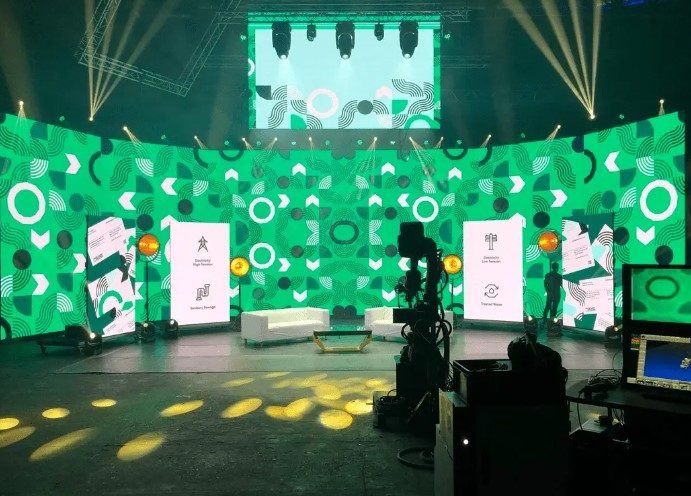
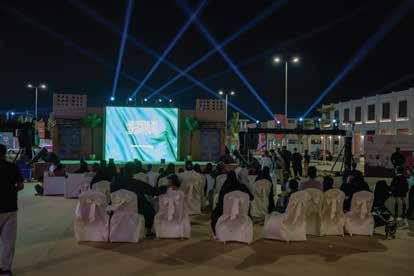
Photographed on site after handover, no renders.
Have a project and want a real number?
Send the area, the date and the city, and we come back with an itemised quote within 24 hours. No commitment, and no vague all-in price.

