
Shop Signage
Shop Signage Drawn for Your Facade
Shop signage is the first thing a passer by reads, often before they notice the window or the door. A sign that works is drawn for the facade it sits on, readable from the street by day and after dark, and approved before it goes up. At The Touch we design the sign from your brand identity, build it in our own factory, install it on the building with our own team, and prepare and follow the licence application with you. This page explains the types, the lighting, the design questions and the licence, so you know exactly what to ask for.
What a Sign on the Facade Has to Do
Shop signage is a working object, not decoration. Before choosing letters or light, it helps to be clear about the four jobs a sign does.
Say what the shop is
A name alone works for a brand people already know. A new café, clinic or salon usually needs the name plus a word or two that explain what happens inside, set smaller so the name still leads. A sign that tries to say everything says nothing from across the road.
Be read from where people actually are
A driver on the main road, someone walking along the pavement and a shopper on a mall concourse read from different distances and angles. Letter size, the space around the letters and their contrast with the facade are chosen for the nearest busy viewpoint, not for the drawing on a screen.
Look at night the way the brand looks by day
Much of a shop's trade in the Kingdom happens after sunset, and then the lit sign is all people see. The colour of the light, which parts glow and which stay dark are decided with the same care as the daytime colours.
Stay up, stay legal, stay clean
An outdoor sign lives with sun, dust, humidity near the coast and wind on tall frontages. It also needs a licence and the landlord's approval. A good sign is fixed to suit its wall, wired safely, lit only once the licence is in place and easy to wipe down.
What Comes With the Sign
Opening or rebranding a shop usually needs more than shop signage alone. These are handled by teams under the same roof.
Printing & Promotional Gifts
Window graphics, a frosted band for privacy, opening hours on the door, menu boards and printed bags for the opening week. Print is ready in 1 to 5 working days once the artwork is approved.
Acrylic & Wood Fabrication
The service behind the sign: acrylic, metal and wood cut on CNC and laser machines, along with menu holders, display stands and counter pieces for inside the shop.
Promoters & Brand Ambassadors
Hosts with a supervisor to welcome visitors, hand out samples and explain the offer during the opening days.
Branding & Creative Studio
Logo files redrawn for fabrication, an Arabic and English lockup that fits the facade, and colour references that the sign maker and the printer both follow.
Digital Solutions
A screen in the window for offers or a menu, and a simple sign up form for people who want to hear about the opening.
Experiences & Events
The opening day itself, with its programme and guests, is a separate job our events team plans, and it has its own page on grand opening events.
Social Media & Content
Photos and short video of the new front lit up at night, ready for the opening announcement.
Custom Exhibition Stands
When the brand also exhibits, the same identity carried onto a stand built in the same factory.
Types of Shop Signage
Most shop fronts carry one main sign and one or two supporting pieces. These are the types worth knowing before you ask for a quote.
Raised letters on a backing panel
Letters cut from acrylic, metal or painted board and fixed onto a panel that covers the whole sign area. The panel hides an uneven wall or the marks of an old sign, gives the letters a clean ground in the brand colour and turns the sign into one unit that is easier to licence, fit and later remove. Light can sit behind the letters, or a slim lamp can wash the panel from above.
Built up lit letters: face lit or halo lit
Each letter is a hollow shape with sides and a face, with LEDs inside. With face lighting the letter shines through its milky acrylic front, so the shape reads strongly from far away. With halo lighting the front is opaque and the letter sits away from the wall on spacers, so the light falls back onto the wall and draws a soft outline. Halo lighting looks calmer and more premium, and needs a light, smooth wall to show.
Lightbox signs
A box with LED lighting inside and a translucent face carrying the design, printed or cut. A lightbox lights its whole face, so it is bright and costs less than individual letters, and the face can be swapped when the brand changes. The price is a glowing rectangle at night, unless the face has a dark background with only the logo letting light through, so after sunset it reads like letters.
Neon flex signs
Neon flex is a flexible silicone strip with LEDs inside that gives the continuous line of old glass neon without glass tubes or high voltage. It suits handwriting, a café slogan or an outline around a window. We make neon flex in our own factory, bent to the drawn line and fixed onto a clear or coloured acrylic back.
Blade signs and window graphics
A projecting or blade sign stands out from the wall at a right angle, so it is read by people walking along the pavement who never see the flat sign face on. Window graphics do the close work: opening hours, services, a frosted band that keeps a clinic or salon private, and a logo on the glass for whoever stands at the door.
Mall unit fascia signs
In a mall the sign sits on the band above the unit front, and the tenant design guide the mall issues sets most of the rules: the zone the letters may occupy, whether light must be internal, whether a lightbox is allowed and how fixings are hidden. Signs in malls are usually installed at night, in the hours the mall sets, and checked by its team before they are switched on.
From Facade Survey to a Lit Sign
Shop signage passes through more hands than most fabrication: the brand, the landlord, the municipality and an electrician. This is the order that keeps it moving.
Survey of the facade
We start on site: measuring the sign area, photographing the facade by day and finding out what is behind the cladding, where the power point is, what overlooks the shop and which way people approach. The survey photograph is what the design is drawn onto.
Design from the brand and the building
The sign is drawn onto the survey photograph so you see it at its true proportion, in a day view and a night view. The logo may be adjusted slightly for fabrication, with thin strokes thickened and tight gaps opened so they survive cutting and lighting.
Drawings and the licence application
Once you approve the design, we prepare the technical drawings and the documents the licence application asks for, and follow the application with you. The landlord or the mall reviews the same drawings, and fabrication is timed around these approvals.
Fabrication in our factory
Letters, backing panel, lightbox or neon flex are cut, built, painted and wired in our own factory, and the sign is assembled and lit there before it leaves, so a dark letter or an uneven glow is found in the factory and not on the facade.
Installation at height
Our own team installs the sign, with access suited to the height of the frontage and fixings chosen for what the survey found behind the cladding. On a busy street the work is planned for quieter hours, and in a mall for the hours the mall sets.
Power, timer and handover
The sign is connected to the supply point the shop's electrician has prepared, with a timer or a light sensor that switches it on at dusk and off when you choose. Before we leave, the sign is lit, the timer is set to your opening hours and you see it glowing for yourself.
What Decides the Installation Date
The licence and the landlord
Approvals usually set the pace more than fabrication does. The quote states a date, counted from the moment the approvals are in.
The type of sign
Built up letters and neon flex take more hand work than a lightbox face or a printed panel, so the type you choose moves the date.
The facade itself
A wall that needs a backing frame, an old sign to remove or cladding to open adds site work before the new sign can go up.
Window graphics and print
Printed in 1 to 5 working days once the artwork is approved, so they are rarely what holds up an opening.
What Shapes the Price of a Shop Sign
We publish no price list for shop signage, because each sign is priced from its survey and its drawing. These are the lines that move a quote, named so offers can be compared on the same basis.
Lit or unlit
Lighting adds LEDs, drivers, wiring and the work of making the glow even. Halo lit and face lit letters cost more than letters washed by an external lamp, and an unlit sign costs least.
Separate letters or a box
Built up letters mean a shape, sides and a face for every character. A lightbox is one box and one face, so it usually costs less for the same width of frontage.
Materials
Acrylic, aluminium, stainless steel in a mirror or brushed finish, painted board: each has its own cost and its own life outdoors. Stainless steel looks the most premium and needs the most hand work in its finishing touches.
Height and access
A ground floor sign reached from a ladder is a different job from one on a tall frontage that needs lifting equipment. Access is quoted as its own line.
Removing the old sign
Taking down an old sign, repairing the wall behind it and disposing of it is real work, and it belongs in the quote, not as a surprise on the day.
Licence paperwork and fees
Preparing the drawings and the application is our work and appears in the quote. Municipality fees are set by the municipality and paid to it, and a mall may have its own requirements for its tenants.
Send photographs of the facade, the shop address and your logo files, and an itemised quote for your shop sign reaches you within 24 hours. Request a quote or message 0567069088 on WhatsApp. If your logo files are not yet ready for fabrication, our branding and creative studio prepares them.
The Licence, the Landlord and the Mall
Shop signage on a facade is not only a design decision. In the Kingdom the municipality issues the licence for a commercial sign, and its rules for commercial signs set what may be shown and how. The owner of the building, or the mall, approves the sign separately, and a mall usually adds its tenant design guide on top. We prepare the drawings, the photographs of the facade with the sign drawn on and the documents the application asks for, and we follow the licence with you until a decision is made. That decision belongs to the municipality and the landlord, not to us, which is why the sign is designed to the rules from the first sketch. The sign itself comes from our acrylic and wood fabrication service. Window graphics, menus and printed bags for the opening are on the printing and promotional production page. If your brand is opening a unit on a mall floor rather than a full shop, see mall kiosks. When the new shop comes with a new product, product launch events covers the launch itself, and a brand that also takes its identity to trade shows will find stands at exhibition booths in Saudi Arabia. Signs inside an office, such as a reception logo or door plates, are a different job with a page of their own on acrylic signage for companies.
Choosing the Right Facade Sign
In shop signage no type is best everywhere, only the one that suits the building, the street and the brand. These questions narrow the choice.
Where do your customers come from?
If most arrive by car along a main road, the main sign needs strong contrast and simple content, often lit letters on a backing panel. If they walk past a row of shops, a blade sign and good window graphics do more than a bigger fascia.
What is the facade like?
A smooth, light wall flatters halo lit letters. A busy facade with cladding joints, windows and air conditioning units needs a backing panel to give the name a calm ground. Glass fronts often suit letters fixed behind the glass or graphics on it.
How premium should it feel?
Premium shop fronts rely on restraint rather than size: fewer words, halo lighting, metal or deep acrylic letters with clean sides, and no fixing in sight. A bright lightbox is practical and economical, but it rarely reads as luxury.
Will the brand change or the shop move?
If a rebrand or a move is likely within a few years, a lightbox with a replaceable face or letters on a removable panel saves money later. Letters fixed straight into the wall are harder to move cleanly.
Is the shop in a mall?
Then start from the tenant design guide, not from a mood board. The guide often settles the lighting method and the zone for the letters, and a design that ignores it comes back for changes.
Shop Signage Mistakes Seen on Real Streets
Each one is cheap to avoid on the drawing and costly once the sign is on the wall.
Hot spots inside lit letters
LEDs set too close to the face show as bright dots instead of an even glow. The cure is in the build: enough depth inside the letter and the right spacing of the modules.
A name nobody can read at night
A logo with thin strokes or script can melt into a single glow after dark. Thicken the strokes for fabrication, or light the panel behind instead of the letters.
A white box after sunset
A lightbox with a white background becomes a glowing rectangle that swallows the logo. A dark background with only the logo letting light through keeps the brand visible.
Fixings in the cladding alone
Fixings in a thin cladding panel loosen with wind and heat. The survey checks what is behind the cladding so the sign is anchored into the structure or onto a frame.
Lighting the sign before the licence
A sign that goes up before its licence is issued risks being asked to come down. Plan the opening date around the approvals, not the other way round.
Water and dust inside the sign
Outdoor signs need drainage and sealed joints in the right places. Without them, water collects inside the letters, dust settles on the LEDs and the glow fades unevenly.
One Factory From Letter to Facade
Design, CNC and laser cutting, joinery, paint, acrylic, neon flex, large format print and installation sit under one roof with us, so the shop signage drawn on your facade photograph is what that is cut, lit and fixed. We have more than one location in the Kingdom, and every sign is built in our own factory and installed by our own team. The brands we have worked for include Kinan, the Heritage Commission, Saudia Holidays, Johnson & Johnson MedTech, Cartoon Network, Ganache, Oceanera, Al Khaleej Al Gharbiya, Saudia, Ascenda, Swarovski and Gucci Flora.
Signs From Our Factory
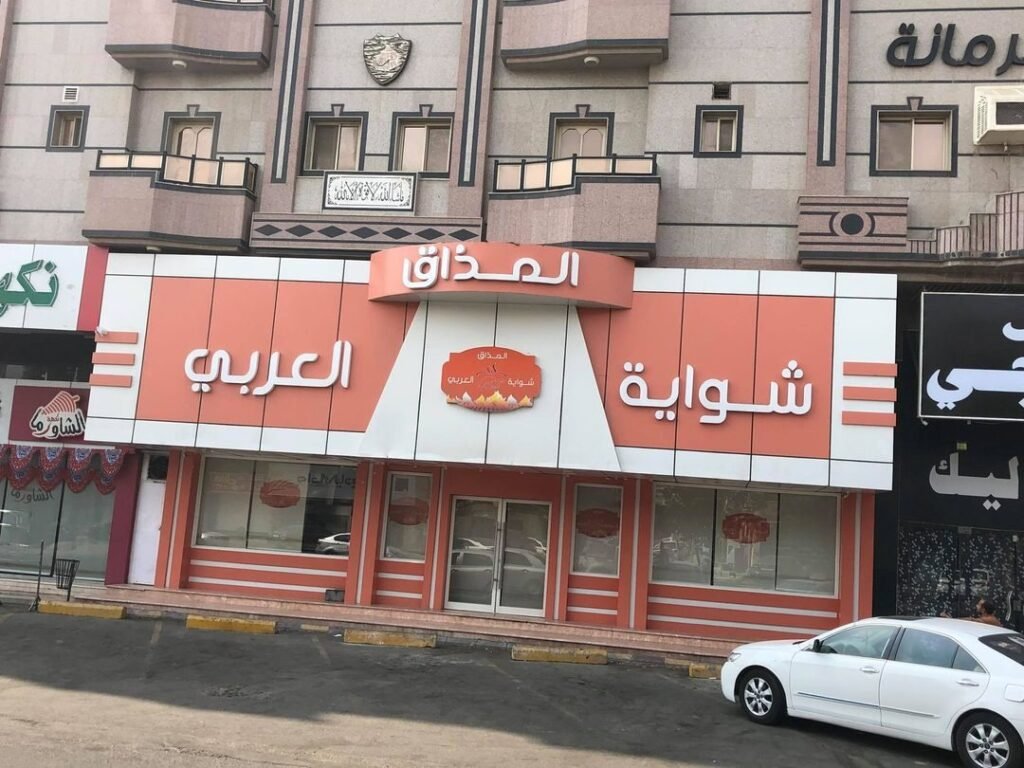
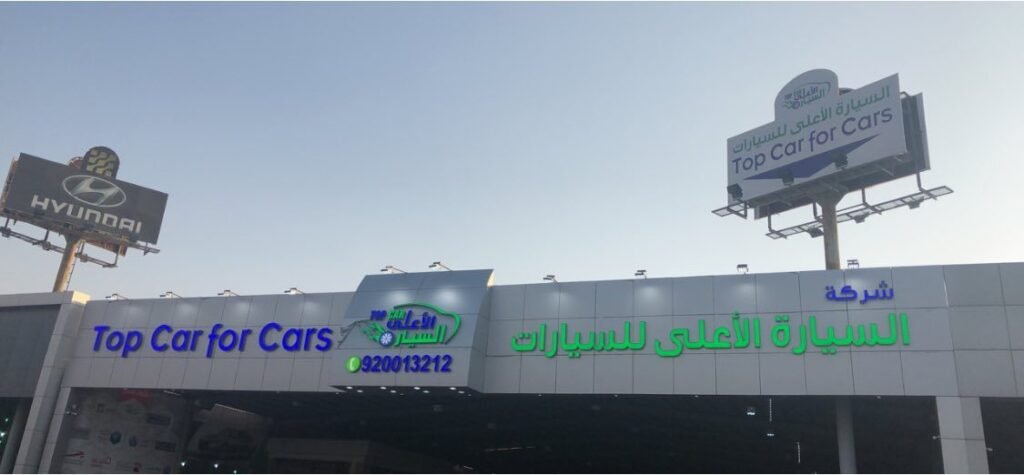
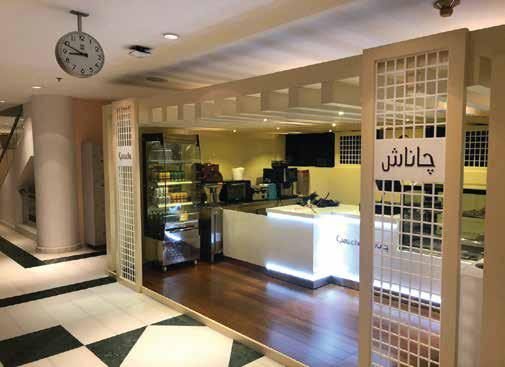
Company and shop signs we made and installed, lit and unlit.


Questions About Shop Signage
What shop owners ask before they order a sign.
Do you install the sign on the building?
Yes. Our own team installs shop signage on the front of the building, at height where the frontage needs it, with fixings chosen after the survey. In a mall the work happens in the hours the mall sets.
Who obtains the licence for a shop sign?
The licence is issued by the municipality, and the landlord or the mall approves the sign as well. We prepare the drawings and the application documents and follow the application with you, while the decision stays with the authority and the landlord.
Can you make the sign before the licence is issued?
Design and drawings come first in any case, because the application needs them. Starting fabrication before approval is your decision, and we advise against fixing or lighting a sign until it is approved.
Which lighting suits a shop sign best?
Face lit letters read from the furthest distance and suit main roads. Halo lighting is calmer and suits premium brands on a smooth wall. A lightbox gives the most light for its cost, and neon flex suits handwriting and cafés. Many fronts combine two of these.
Is neon flex the same as glass neon?
No. Neon flex is a flexible silicone strip lit by LEDs, so it runs at low voltage, has no glass to break and handles heat and transport better. It gives the same continuous line, and we make it in our own factory.
Can the sign carry Arabic and English?
Yes, and most signs in the Kingdom do. The two names are designed as one composition so neither looks added later, and the wording is checked against the municipality's rules for commercial signs before fabrication.
Do you make signs for mall units?
Yes. We work from the mall's tenant design guide, prepare the drawings you submit for the mall's approval, and install in the hours the mall allows.
What maintenance does shop signage need?
Regular cleaning of the face and the letters, a check of the fixings after strong wind and dust storms, and replacing a driver or an LED module if part of the sign dims. Ask for the drawings and a list of the lighting parts at handover, so any repair matches the original.
Can the sign move with us to a new shop?
Often, yes, above all letters on a backing panel or a lightbox, which come off as one unit. We take it down, adapt it to the new facade if needed and install it again. The new address usually needs its own licence, so the application is prepared again.
How do we start, and how soon is the quote?
Send photographs of the facade, the address and your logo files on WhatsApp at 0567069088 or through the quote page. An itemised quote follows within 24 hours, and the survey visit is arranged from there.
A New Front for Your Shop?
Send photographs of the facade and your logo. Within 24 hours you have an itemised quote that names the sign type, the lighting, the installation and the licence work.
More specific pages on this
If your question is narrower than this page, these are written for one question each.

