
Product Launch Events
Product Launch Events Built Around the Reveal
Product launch events have a single job: to put a new product in front of the people who will write about it, sell it or buy it, and to make the moment it appears worth remembering. Whether it is a car, a phone, a perfume, a food line, a medical device, a property project or a new branch, the same questions decide the result: who is in the room, how the reveal works, which venue can carry it and what guests do once the cover is off. This page walks through those decisions, so that your brief is complete before anyone draws a set.
What a Launch Has to Get Right
Decor is the smallest part of it. Product launch events succeed or fail on four things, and each of them is decided on paper long before the venue doors open.
The reveal is the centre of the event
Everything before it builds attention and everything after it uses that attention. So the method is chosen first: a cover pulled away, a screen that opens, a light cue, a curtain drop or a countdown. The seating, the camera positions and the length of the speeches are then set around it, not the other way round.
The product is the hero
It stands on a plinth or a turntable at a height the back row can see, with lighting of its own that does not depend on the house lights of the room. Nothing on the set should be brighter, taller or louder than the product, including the logo wall behind it.
The set carries the brand identity
Colours, materials and typography follow the brand guidelines, so every photograph taken that evening is recognisable without a caption. A set built for the launch also hides what guests should not see: cables, the covered product waiting backstage and the crew.
The guest journey is planned end to end
Invitation, arrival, photo wall, seating, the reveal, hands on time and departure with a gift or a sample. Each stage has a place on the floor plan and a slot in the programme, and a gap at any stage is where guests pick up their phones and drift toward the door.
The Services Behind a Launch
Product launch events draw on several departments of the same company. Each has its own page.
Experiences & Events
The parent service for a product launch: the launch space, the visitor path and a team that runs the site through the day.
Custom Exhibition Stands
For a launch held inside your exhibition booth, where the stand itself is designed around the reveal.
Acrylic & Wood Fabrication
Product plinths, lit logos and display cases cut on our CNC and laser machines for the hero position and the hands on zone.
Printing & Promotional Gifts
Photo wall graphics, printed material and branded gifts for departing guests. Graphics are printed in 1 to 5 working days.
Promoters & Brand Ambassadors
Hosts trained on the new product, working with a supervisor, for the welcome desk and the trial tables.
Branding & Creative Studio
The identity of the launch itself, applied to the set, the screens, the print and the gift.
Social Media & Content
Photography and video coverage, with content published while the event is still running.
Digital Solutions
Guest registration at the door, interactive screens beside the product, and a database you receive afterwards.
Six Kinds of Product Launch Events
The audience decides the format. The same product can be launched several times, to different rooms, and each room wants something different from it.
Press launch
Journalists and content creators come for a story and for pictures. They need a short programme, a clear view of the moment the cover comes off, a press kit with approved images and figures, a quiet place for interviews and time alone with the product before the room fills. Anything they cannot photograph will not be published.
Dealer or trade launch
Distributors, dealers and key accounts want to know how the product sells. After the reveal the event turns into a working session: specifications, pricing and margins, order windows and demonstration units they can handle. Seating in rounds and a longer hands on period suit this room better than a theatre layout.
Customer launch in a mall or public place
The audience did not come for you, so the show has to stop people who are walking past. It repeats through the day instead of happening once, the set is open on several sides, and the mall or site management sets the rules on size, sound and hours.
Internal launch for staff
Sales, service and call centre teams see the product before customers ask them about it. The tone is closer to training: a first look, then product stations where each team learns its own part. It is often held at the company premises, and it deserves the same rehearsal as a public evening.
A launch inside an exhibition booth
The show brings the audience and the booth becomes the stage. The reveal is timed for a busy hour on the opening day, the aisle in front must stay clear under the organiser rules, and a custom stand for it takes 6 to 8 weeks from brief to opening.
Store or branch opening
Here the new product is the place itself. A ribbon or a door takes the role of the cover, guests walk the branch as their hands on time, and the opening has to leave the store ready to trade the same day, with the set coming down without marking the new interior.
Six Stages, From the Brief to the Morning After
Product launch events are built backwards from the minute the product appears. These stages are the order in which the decisions are taken.
The brief: product, audience and result
Tell us what is being launched, who is invited and what you want them to do afterwards: publish, order, book a test drive or simply understand the product. Add the date, the city and any venue you have in mind. An itemised quote follows within 24 hours.
Venue, drawings and approvals
The room is checked against the way you want the product to appear: ceiling height, access for the product, power, how dark the space can go and the hours it allows. We prepare the scaled drawings and paperwork the venue or the relevant authority asks for, and the host or the venue submits them.
Design of the set and the reveal
A 3D design shows the set, the hero position, the photo wall, the seating and the hands on zone on a single floor plan. The reveal method is fixed at this stage, together with its fallback, because the set is drawn around it.
Run of show and media plan
A run of show lists every cue with its time and its owner: music, lights, speaker, cover, screen content. Beside it sits the photo and video plan: which shots are needed, where the cameras stand and who gets interviews. Both are agreed before the day, not on it.
Build, load in and rehearsal
The set is built in our own factory and test assembled before it moves. Our own team installs it in the hours the venue gives, the covered product comes in last, and the full sequence is rehearsed on the finished set with the real product and the real cover.
The day and the morning after
A supervisor from our team stays on site through the event for immediate fixes. After the last guest leaves, the set is dismantled and the room handed back. The morning after belongs to the follow up: content delivered, leads passed to sales and the numbers compared with the targets.
What Decides the Lead Time of a Launch
The first quote
Within 24 hours of a brief that names the product type, the audience, the date and the city.
Graphics and printed pieces
Printed in 1 to 5 working days from approved artwork, so final product names and claims are needed early.
A launch inside a booth
A custom stand takes 6 to 8 weeks from brief to opening, and the show sets the date.
The whole launch
It depends on the set, on the approvals the venue asks for and on how early the product details are final. The plan states the dates.
What Moves the Budget of a Launch
We publish no price for product launch events, because no two share a room, a set and a guest list. These are the factors that move the figure, named so that you can read any quote line by line.
The venue and its hours
Hire is paid to the venue, and its rules shape the rest: a ballroom free only after midnight means a night build and a bigger crew, and a mall may allow work only after closing. Ask which hours are included before comparing places on price.
The set and the reveal mechanism
A printed backdrop with a fabric cover sits at the simple end. A built set with lit walls, a turntable, a sliding screen or a curtain drop adds material, mechanics and rehearsal time, and each moving part needs a tested fallback.
Sound, lighting and screens
The big moment usually needs more than the house system: lighting that can be cued, sound for music and speech, and screens for the film or the countdown. Whether the venue, a technical supplier or your contractor provides them, each should be a named line.
Guest numbers and hosting
Seating, registration, hosts, catering and gifts all scale with the list. An evening for the press and a few key accounts costs less in total and more per head than an open day in a mall.
Content and media
A photographer, a video crew, an edit delivered the same night and a printed or digital press kit are separate items. Decide which images you need before you price the crew, since a single camera cannot cover the product as it appears and the faces of the guests at once.
One evening or several cities
A set built for a single night is the cheapest to make and is waste the next morning. A set designed to travel costs more to build and less each time it stands again. Where transport applies, it is a named line in the quote.
Tell us what you are launching, to whom, when and in which city, with the venue if it is already booked. An itemised quote comes back within 24 hours. Ask for a launch quote or write to us on WhatsApp at 0567069088. If the launch will sit inside an exhibition stand, our guide to exhibition stand cost in Saudi Arabia explains how that part of the budget is built.
Choosing the Venue: What Each Place Asks For
The venue decides how the reveal can work, so choose it with that moment in mind. A hotel ballroom gives a room that can go dark, a stage position and catering, but access is through service doors and lifts, load in is often overnight between functions, and nothing may be fixed to a wall or a ceiling without the hotel agreeing. A showroom or the brand's own premises comes without a hire fee and puts the product at home, though the ceiling is low, daylight weakens a light cue and normal business has to pause. A mall atrium brings footfall, and the mall management sets the footprint, the height, the sound level and the working hours. An outdoor site gives scale and a skyline behind the product, and adds wind, heat, dust and a permit from the authority responsible for the place. In every case the venue and the relevant authority decide what is allowed, the host or the venue submits the request, and we prepare the drawings and paperwork they ask for. Outdoors, plan the reveal for after sunset in the hot months, check the programme against prayer times, weight the cover so that wind cannot lift it early, and keep a shaded or indoor place for the product until its moment. Product launch events are part of our experiences and events service and are delivered through event management across Saudi Arabia, with city pages for Riyadh and Jeddah. Hosts for the door and the trial tables come from our promoters and brand ambassadors team, the photo wall and printed pieces from printing and production, and the look of the evening from the branding and creative studio. For an outdoor site or a branch opening, see also event entrance arches and gates.
Five Tests for Whoever Runs Your Launch
Ask these of any agency or contractor before you sign, including us. The answers show who has run product launch events and who has only decorated a room.
Do they ask about the audience before the decor?
A good first meeting is mostly questions: who is invited, what should they do afterwards and what must be photographed. A proposal that opens with a mood board and has no guest journey has skipped the part that decides the result.
Who owns the run of show?
Ask for the name of the person who calls the cues on the night, and for a sample cue sheet from an earlier event. If sound, lighting, screens and the set come from different suppliers, a single person still has to hold the sequence.
How will the reveal be tested?
The honest answer includes a trial of the mechanism before the day, a rehearsal with the real product on the finished set and a fallback that the audience would not notice. Reassurance alone is not a plan.
Who builds the set, and who deals with the venue?
Find out whether the set is built by the company you are signing with or bought in, and who prepares the drawings that the venue or the authority reviews. Whoever built it should also be the team that installs it and takes it down.
How do they protect the product beforehand?
Look for specifics: a covered delivery, a closed build, a named list of people allowed backstage, a no photos rule for crew and suppliers, and an embargo time printed on the press kit. Vague answers here usually mean a leak has never been considered.
Six Mistakes That Spoil a Launch
None of them is about taste. Each is a decision taken too late, and each can be seen coming on the run of show.
A reveal never tried at full speed
A cover that glides off in the office catches on a mirror, an aerial or a sharp corner in front of the cameras. Fabric is cut to the product, the pull is rehearsed by the people who will do it, and a curtain drop or a sliding screen gets a manual release in case its motor or its trigger fails.
A product the back row cannot see
Guests seated on a flat floor see the shoulders in front of them. Raise the hero position, check the view from the last row and from each camera, and light the product separately, since ballroom and mall lighting is designed for the room and flattens colour and finish.
Speeches that outlast the attention
Each speaker placed before the reveal spends attention that the product needs. Keep the opening short, put the detailed presentation after the cover is off, and write the timings into the programme so that no one improvises a longer one.
No hands on time, or hosts who cannot answer
Guests who may only look leave with a picture and no opinion. Give them a zone where they can open, hold, taste or sit in the product, staffed by hosts briefed on the questions that will be asked, with enough units that nobody queues behind the photographers.
Media left to arrange themselves
Without a plan the photographer is in the wrong place at the reveal, interviews happen beside the loudspeakers and the press kit arrives by email days later. Fix the camera positions, the interview corner and the content for social channels in advance, and hand over the kit at the door.
The product seen before its moment
A delivery through the main lobby, a build with the doors open or a crew photo posted the night before ends the surprise. Bring the product in covered and late, keep the build closed, and tell every supplier in writing that nothing is photographed until the reveal.
The Factory and Team Behind the Set
Our design studio, CNC and laser cutting, joinery, paint, acrylic work and large format print share a single roof, and the crew that installs is our own, so the set, the plinth and the photo wall of a launch come from the same drawing and the same hands. Our stands and displays have stood for Saudia Holidays, Kinan, Cartoon Network, the Heritage Commission and Johnson & Johnson MedTech. We have more than one location in the Kingdom. Your project is built in our own factory and installed by our own team.
Events We Delivered
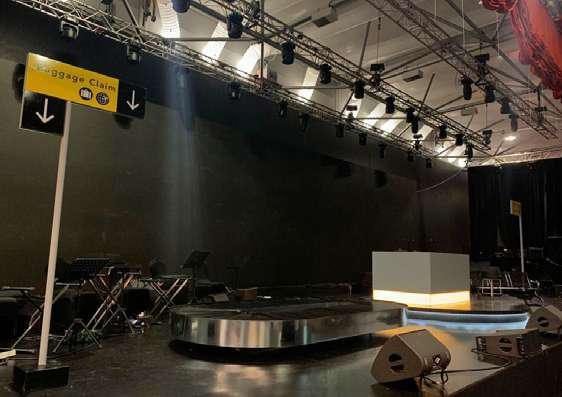
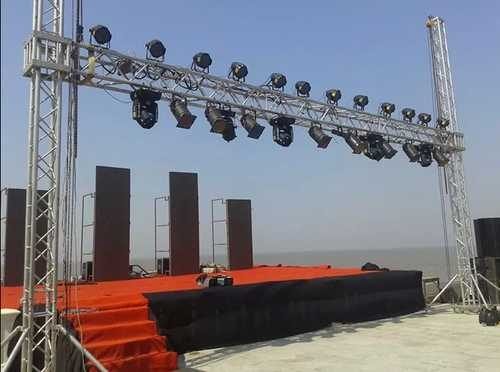
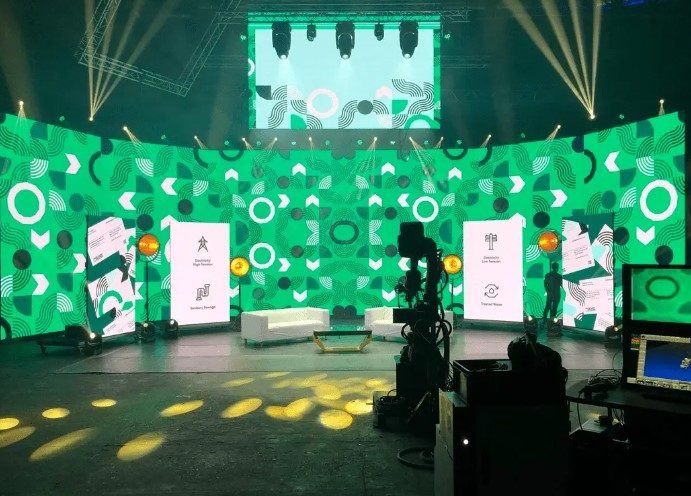
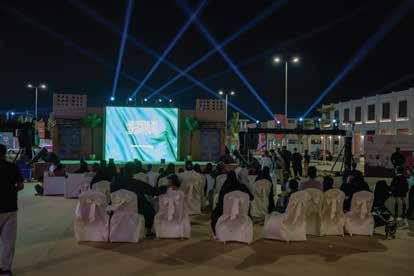
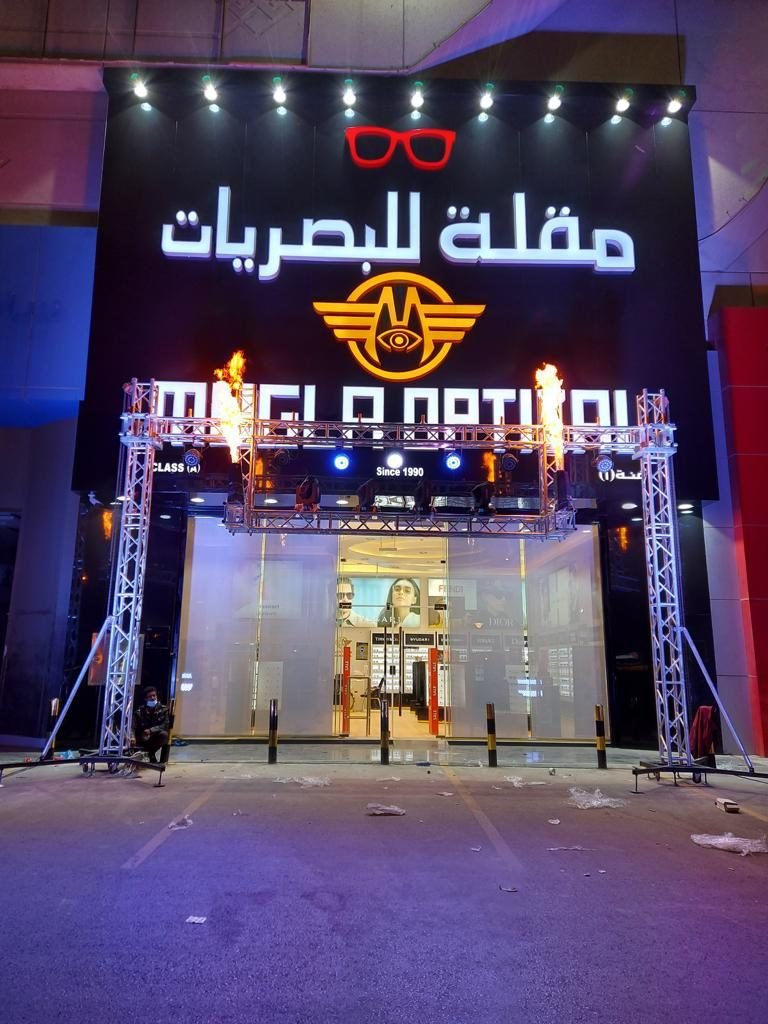
Stages, platforms and event set-ups our team built and ran.
Questions About Product Launch Events
What brand and marketing managers ask before their first launch.
How far ahead should we start planning a launch?
It depends on the set, on the approvals the venue asks for and on how early the product details are final. A printed backdrop in a hotel that needs only a schedule moves quickly, while a built set in a mall or on an outdoor site waits for drawings to be reviewed. Send the brief as soon as the date is known, and the plan you receive states every date.
Which venue suits product launch events best?
Match the place to the audience and to the way the product will appear. A hotel suits press and dealers who need a dark room and seating, a showroom suits a product that should be seen at home, a mall suits a consumer product that needs passers by, and an outdoor site suits something large. Check access for the product itself before anything else.
Who gets the permit for a launch in a mall or a public place?
The mall management, the venue or the relevant authority decides, and the request is submitted by the host or the venue. We prepare the scaled drawings and the paperwork they ask for and revise them after their comments. No contractor can promise an approval on their behalf.
Which reveal is the safest?
A fabric cover pulled by hand has the fewest parts, which is why it remains the most common. A light cue is reliable in a room that can go fully dark and weak in daylight. A curtain drop or a screen that opens gives the biggest moment and needs rigging permission, a trial and a manual backup.
How do we keep the product secret until the reveal?
Treat confidentiality as part of the plan. The product travels covered and enters through the service route, the build is closed to anyone not on the list, crew and suppliers work under a no photos rule, and the press kit carries an embargo time. Phones in the room are the last risk, so the cover stays on until the cue.
Can we launch the product inside our exhibition booth?
Yes, and many brands do, because the show supplies the audience. The stand is designed around the reveal, with a hero position visible from the aisle and room for a crowd that does not block the neighbours. A custom stand takes 6 to 8 weeks from brief to opening, so the decision has to come early.
What do the media need on the day?
A press kit with the release, approved images, specifications and a contact, handed over at the door or sent the moment the cover comes off. They also need a clear line of sight, a quiet place for interviews with a branded backdrop, and a few minutes with the product before other guests surround it.
Who supplies sound, lighting and screens?
It varies from place to place. Many hotels have a house system that covers speech and little more, so an evening with music, cued lighting and video usually brings in a technical supplier. Whoever supplies them, make sure they work from the same run of show as the set crew and attend the rehearsal.
How do we know whether the launch worked?
Decide the measures before the event. Count attendance against the invitation list, the coverage that appears in media and on social channels, the leads or orders captured on the day, and sales in the following weeks against a normal period. A launch with no targets can only be judged by how it felt.
Where is the set built, and how do we start?
We work from more than one location in the Kingdom, the set is built in our own factory and our own team installs it. Send the product type, the audience, the date and the city on WhatsApp at 0567069088 or through the quote page, and an itemised quote follows within 24 hours.
A Launch on Your Calendar?
Send the product, the audience, the date and the city. Within 24 hours you have an itemised quote for the set and everything we build around it.
More specific pages on this
If your question is narrower than this page, these are written for one question each.

