
Signage Company in Saudi Arabia
Signage Company in Saudi Arabia From Survey to Switch On
A signage company in Saudi Arabia should be able to take a sign from the first site photo to the night it is switched on, without handing it between a designer, a fabricator and an installation contractor. At The Touch we design every kind of building and business sign, make it in our own factory and send our own team for the installation, from a shop front on a busy road to door plates on an office floor. This page sets out the families of signs, the materials, how a sign project should run, what the municipality and the landlord decide, and how to compare suppliers before you place an order.
Why One Company for Every Sign
Many businesses buy the facade sign from one supplier, the reception logo from another and the door plates from a third, then spend months trying to make them look related. A single signage company in Saudi Arabia that draws, makes and fits all of them takes that work off your desk.
One set of files, one set of colours
When every sign is drawn from the same brand files, the colour on the facade, on the reception wall and on the directional boards comes from one colour reference and one approved proof. Matching between different suppliers is where most sign families drift apart.
One survey, one schedule
A single survey of the building produces a schedule that lists every sign by location, type, material and lighting. You approve it once, and nothing is ordered twice or forgotten somewhere between the car park and the meeting rooms.
One team on site
Facade work, indoor fixing and the connection to the power point the building's electrician prepares are planned as one installation, so the landlord or the mall management deals with one contractor, one method of work and one set of night hours.
One address for later changes
A new tenant name on the directory boards, a rebrand, a shop that moves or a letter that has dimmed all go back to whoever holds the drawings. When that is the company that made the signs, a replacement matches the original instead of approximating it.
Services That Sit Beside the Signs
Signs rarely arrive alone. These teams work under the same roof as our sign makers.
Printing & Promotional Gifts
Window vinyl, printed wall panels, menu boards and the printed pieces that go with a new sign. Print is ready in 1 to 5 working days once the artwork is approved.
Acrylic & Wood Fabrication
The cutting, routing, engraving and bending behind every sign, along with display units, counters and shelving when the signs are part of a complete retail fit out.
Promoters & Brand Ambassadors
Hosts with a supervisor for the days a new branch or showroom opens its doors behind its new signs.
Branding & Creative Studio
Logo files prepared for fabrication, Arabic and English names set as one composition, and a sign family drawn once so every later sign follows it.
Digital Solutions
Screens for menus, offers or a reception welcome, placed in the sign plan from the start so their power and data are ready.
Experiences & Events
An opening night, a launch or an anniversary planned by our events team, with its temporary signs made in the same factory.
Social Media & Content
Photos and short video of a new facade lit at dusk, ready for the opening announcement.
Custom Exhibition Stands
When the brand exhibits, the materials and lighting of its permanent signs carried onto a stand built and test assembled in our factory before shipping and installation.
The Sign Families a Signage Company in Saudi Arabia Should Cover
Signs fall into families that share materials and methods but answer different questions. Each family has its own page on this site, and here is what belongs to each in short.
Facade and shop front signs
The name on the building or above the mall unit, read by drivers and passers by, usually lit, always licensed, and often needing installation at height. Our shop signage page covers the types, the lighting and the licence in detail.
Office, reception and directional signs
The logo wall behind reception, door and room signs, floor directory boards and the arrows that take a visitor from the lift to the right meeting room. Most are acrylic and are explained on our acrylic signage page.
Illuminated signs and light boxes
Boxes with a printed or cut face lit from inside, slim LED panels, lit menu boards and neon flex, which we make in our own factory. How an even glow is reached across the whole face is on the illuminated signs page.
3D letters and props
Raised letters, a logo built as an object or an oversized product people photograph, for a reception, a mall or an event. The page on 3D letters and props explains how they are built and fixed.
Exhibition and event signs
Stand fascia names, banners and boards hung from the ceiling, lit headers and visitor wayfinding in a hall or a venue, all built to go up fast and come down again. Their printed side is covered on the exhibition stand graphics page.
Temporary campaign signs
Header boards, shelf strips, floor stickers and counter units that stay in stores for the length of a campaign and then come down. The POSM production page covers that programme when it runs across many branches.
How a Sign Project Should Run
Whatever the family, a signage company in Saudi Arabia should take every sign through the same stages. A skipped stage usually shows up later as a sign that does not fit its place, does not match its neighbours or does not get approved.
The brief: photos, measurements, files, rules
A useful brief brings photographs of every wall or facade where a sign will go, rough measurements, the logo as a vector file with the brand colours, and any rules the landlord or the mall has issued for tenants. With those, the first reply is a real proposal and not a list of questions.
A survey on site
Our team measures each location, checks what the wall is made of and what lies behind cladding or gypsum boards, finds the nearest power point and notes how people approach. On a building with several floors the survey also records how installation at height will be reached.
Drawings, a schedule and proofs
Each sign is drawn onto the survey photograph at its true size, with a day view and a night view for lit signs, and listed in the sign schedule. Colours and finishes are agreed from physical sample boards, and the artwork proof you sign is the file the machines follow.
Licence and landlord approval
For a commercial sign on a building we prepare the drawings and documents the municipal licence asks for and follow the application with you, while the landlord or the mall reviews the same set. The decision is theirs, so production and installation are timed around it.
Production in our factory
Letters, trays, light boxes and neon flex are cut, built, painted and wired in our own factory, and every lit sign is assembled and switched on there before it is packed, so an uneven glow is caught before it reaches the wall.
Installation and handover
Our own team carries out the installation, at night when a mall asks for it, connects the sign to the point your electrician has prepared and sets the timer. You receive the final drawings and the list of lighting parts, so any later repair matches the original.
What Sets the Date of a Sign Project
Approvals
The municipal licence and the landlord or mall approval usually set the pace. The quote states an installation date counted from the moment both are in.
The family and the build
Built up lit letters and neon flex need more hand work than printed boards or a light box face, so the mix of families in the order moves the date.
How many locations
A single office floor is one installation. A brand changing its signs across many branches is a rollout, planned site by site with the landlord of each.
Printed parts
Vinyl, window graphics and printed panels are ready in 1 to 5 working days once the artwork is approved.
Materials, and What They Mean for the Quote
We publish no price list, because every sign is priced from its survey and its drawings. The material is one of the biggest decisions in any quote, so here is what each one is good at and what it asks in return.
Acrylic
Clear, coloured, opal or mirrored sheet that is cut, engraved, bent and lit. Opal acrylic spreads light evenly behind a letter face, and clear acrylic printed on its back keeps the print protected behind the sheet. It suits most indoor signs and the faces of outdoor lit letters.
Aluminium composite
Thin aluminium skins bonded either side of a core, known in the trade as ACP and often called cladding panels. It is folded into flat trays that form the backing of a facade sign, routed so lit letters can push through, and it stays flat in the sun where painted boards would bow.
Wood and painted boards
MDF and plywood boards cut on CNC machines give shape, depth and a painted finish to reception walls, indoor letters and props. Wood belongs indoors or under cover. Outside it needs sealing and still ages faster than metal.
Stainless finish
Stainless steel letters and plates in a mirror or brushed finish read as the most premium choice on a facade or a reception wall. Mirror shows every dent and fingerprint, brushed hides them better, and a gold or bronze tone is a coating bonded to the steel rather than paint on top. Indoors, mirrored acrylic gives a similar look for less.
Vinyl
Self adhesive film cut into letters or printed with artwork, for glass, walls, boards and light box faces. Cast vinyl lasts longer outdoors and follows curves, while calendered vinyl suits flat surfaces and shorter campaigns.
Lines beyond the material
Access equipment for installation on a tall frontage, removing an old sign and repairing the wall behind it, night work in a mall and preparing the licence documents are real costs. A fair quote names each of them, and municipal fees are paid to the municipality.
Send photos of each wall or facade, the address and your logo files. An itemised quote for your signs reaches you within 24 hours. Request a quote or message 0567069088 on WhatsApp. When the signs belong to a stand at a show, the whole budget is explained in our guide to exhibition stand cost in Saudi Arabia.
The Licence, the Landlord and a Page for Each Sign
A commercial sign on a building in the Kingdom needs a municipal licence, and the municipality's rules decide what the sign may say and how it may be fixed and lit. The owner of the building approves it separately, and a mall adds its tenant design guide, its installation hours and often a request for a method statement before any night work. We prepare the drawings, the facade photographs with the sign drawn on and the documents the application needs, and we follow the licence with you until a decision is made. That decision is the municipality's and the landlord's, never ours, so the design is drawn to their rules from the first line. This page is about signs on and inside buildings and businesses; large roadside advertising structures are a different trade. Each family has a page of its own. The facade and its licence are on shop signage, signs inside offices, clinics and showrooms on acrylic signage, and lit boxes, panels and neon flex on illuminated signs and light boxes. Raised letters and brand objects are on 3D letters and props, signs that stay in stores for a campaign on POSM production in Saudi Arabia, and the printed surfaces of a stand on exhibition stand graphics.
How to Compare Signage Companies
Signage companies in the Kingdom range from print shops that buy in their letters to sign board manufacturers with their own machines and their own installation crews. These questions show which one you are talking to.
Do they make the signs themselves?
Ask where the letters, trays and light boxes are built. A company that subcontracts fabrication cannot control the glow, the finish or the date, and a fault gets lost between two firms. Sign board manufacturers with a factory of their own can answer technical questions on the first call.
Did they survey before they quoted?
A price given from a logo alone is a guess. A serious quote follows photos and measurements at least, and a survey before production and installation, because what lies behind the wall decides the fixings.
Can they show you a sign at night?
Daytime photos of finished work are easy to find. Ask for night photos of lit signs they installed themselves, where hot spots and uneven faces have nowhere to hide.
Who handles the licence and the landlord?
Ask who prepares the drawings and documents for the municipal licence and for the mall or landlord approval, and who follows them to a decision. A supplier who leaves all of this to you has left out part of the work.
What does the quote leave out?
Compare quotes line by line: access equipment, removal of the old sign, night installation, licence paperwork, the power connection and handover drawings. The cheapest offer is often the one with some of these missing.
Mistakes When Buying Signs for a Business
Each one comes from treating signs as separate purchases rather than one job with one set of drawings, and each is avoided when one signage company in Saudi Arabia holds the whole job.
Ordering before the brand files are ready
A logo sent as a low resolution image is redrawn by every supplier in its own way. Prepare a vector file and colour references first, so every sign starts from the same lines.
Reading the mall's rules after design
A unit front drawn without the tenant design guide often comes back with changes to the lighting method or the zone the letters may occupy. Get the guide before the first sketch.
No power where the sign goes
A lit sign needs a supply point in the right place before installation day, often behind cladding or a ceiling. If the electrician is not told early, the wall is opened twice.
Indoor material used outdoors
Painted boards, calendered vinyl and some acrylic faces fade, warp or crack in the Saudi sun and dust. An outdoor sign needs materials and sealing chosen for the outside from the start.
Arabic added as an afterthought
When the Arabic name is squeezed into space the English left behind, it looks weaker and may not meet the rules for commercial signs. Design both names as one composition from the first sketch.
No record of what was installed
Without drawings, a parts list and colour references, a facility manager cannot replace a single letter so that it matches. Keep a sign register for each building with the location, type, parts and installation date of every sign.
One Factory for Every Kind of Sign
Design, CNC and laser cutting, joinery, paint, acrylic, neon flex, large format print and installation all happen under one roof with us, and there are 10 CNC machines in our factory. We have more than one location in the Kingdom, and every sign is made in our own factory and fitted by our own team. We have worked for Kinan, the Heritage Commission, Saudia Holidays, Johnson & Johnson MedTech, Cartoon Network, Ganache, Oceanera, Al Khaleej Al Gharbiya, Saudia, Ascenda, Swarovski and Gucci Flora.
Signs From Our Factory
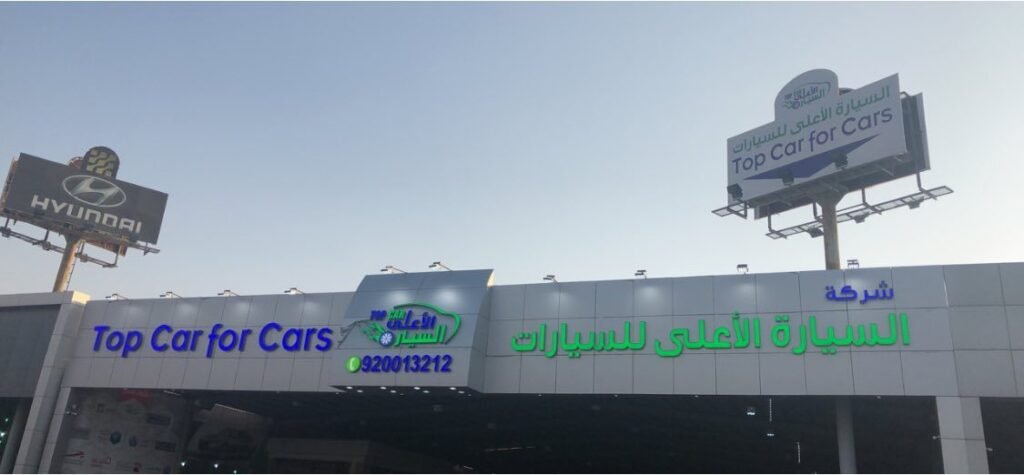
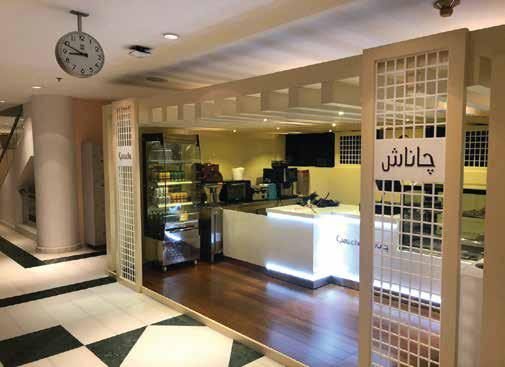
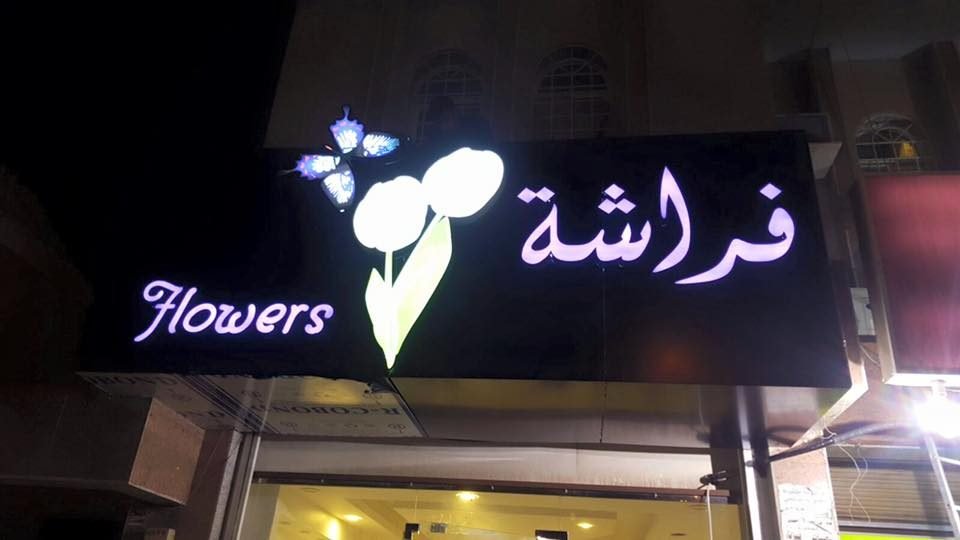
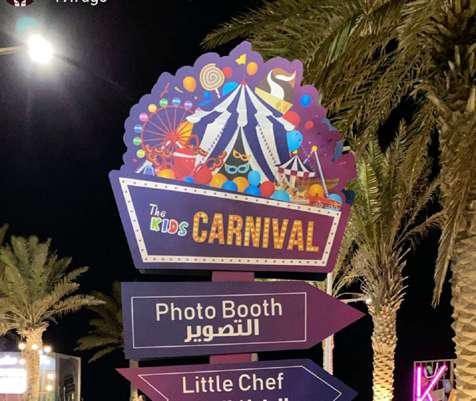
Company and shop signs we made and installed, lit and unlit.

Questions for a Signage Company in Saudi Arabia
What businesses, facility managers and developers ask before they choose who makes their signs.
What does a full service signage company in Saudi Arabia do?
It designs the signs, makes them, carries out the installation and prepares the paperwork the licence needs. Some companies only print or only install. We do all of it, with production in our own factory and installation by our own team.
Can you handle every sign for a new building or head office?
Yes. We survey the building, draw a schedule that lists every sign from the facade to the meeting room doors, then make and install them as one job. Developers often add tenant directory boards and parking direction boards to the same schedule.
Do you do night installation in malls?
Yes, when the mall asks for it, and many malls do for work on unit fronts. Our team works in the hours the mall sets and follows its rules on access, floor protection and the removal of waste.
Who obtains the municipal licence?
The municipality issues it, and the landlord or the mall approves the sign as well. We prepare the drawings and documents and follow the application with you, but the decision is theirs. We advise against lighting any sign before it is approved.
Which materials do you work with?
Acrylic, aluminium, stainless steel in a mirror or brushed finish, wood and painted boards, vinyl, LED lighting and neon flex. The material for each sign is chosen for where it stands, indoors or outdoors, and how long it has to last.
Do you make the signs or buy them in?
We make them. Letters, light boxes, trays and neon flex are cut, built and wired in our own factory and switched on there before they leave, which is how we control the glow, the finish and the date.
Can our signs be maintained or changed later?
Ask for the drawings and the parts list at handover; with them, a dimmed LED module or driver is replaced with a matching part. A light box face can be changed for a rebrand, and when a shop moves we can take down letters mounted on a backing panel, adapt them and install them at the new address, which usually needs a licence of its own.
Do you build large roadside signs?
No. Our work is signs on and inside buildings and businesses, and the signs a brand uses at exhibitions, events and in stores. Large advertising structures beside roads are a separate trade with their own owners and rules.
Can you work from our designer's files?
Yes. We can design the whole sign family from your brand guidelines, or prepare production drawings from files your designer sends. Either way the logo may be adjusted slightly for fabrication, and you approve the proof before anything is cut.
Where are the signs made, and how do we start?
We have more than one location in the Kingdom, and your signs are made in our own factory and installed by our own team. Send photos, measurements and logo files on WhatsApp at 0567069088 or through the quote page, and an itemised quote follows within 24 hours.
Signs for Your Building or Your Next Branch?
Send photos of the walls and facades, rough measurements and your logo. Within 24 hours you receive an itemised quote that names every sign, its material, its lighting, the installation and the licence work.
More specific pages on this
If your question is narrower than this page, these are written for one question each.

