
Shop Front Design
Shop Front Design That Brings People Through the Door
Shop front design is the work of turning a blank or tired frontage into a front that says who you are from across the street and invites people inside. A good shopfront is more than a sign: it is the band above the glass, the name in lit or unlit letters, the window graphics, the entrance and the light that holds them together after sunset. At The Touch our studio designs the whole shopfront from your brand identity and shows you a visual before any work starts, then our factory builds it and our own team installs it, on the street or in a mall. This page explains the parts, the styles, the approvals and the care after installation, so you know exactly what to ask for.
Four Jobs Every Shopfront Does
Shop front design is about more than a name above a door. Before choosing letters, panels or light, it helps to agree on the four jobs every shopfront does for the business behind it.
Be recognised before it is read
People recognise a brand by its colour, its shape and its light long before they can read a single word of it. A good shopfront carries the brand identity across its whole width, so the band, the letters, the glass and the entrance speak one language, and a regular customer finds you from the far end of the street or the other side of the mall concourse.
Invite people through the door
A shopfront can look striking and still keep people outside. The glass should show enough of the interior to tell a passer by what you sell or serve, the entrance should be obvious at first glance, and anything that blocks the view, such as a wall of stickers or a heavy frame, has to earn its place.
Work after sunset
Much of the trade in the Kingdom happens in the evening, when the street is dark and only light tells people which shops are open. Shop front design decides which parts glow, which stay calm and how the interior, seen through the glass, adds to the picture a passer by takes in.
Meet the rules and last
A street shopfront needs a municipal licence for its sign and the agreement of the landlord, and a mall unit follows the design criteria the mall sets for its tenants. Both face sun, dust and daily cleaning. A shopfront designed with all of this in mind from the start goes up once and keeps looking new.
What Comes With the Front
A new or renewed shopfront is usually one part of a wider opening. These are jobs handled by teams under the same roof.
Printing & Promotional Gifts
Window graphics and frosted film, door stickers with opening hours, menus and printed bags for the opening week. Printed items are ready in 1 to 5 working days once the artwork is approved.
Acrylic & Wood Fabrication
The service that builds the shopfront: letters, panels, wooden details and metal trims cut on CNC and laser machines in our factory, together with the display pieces that stand inside the shop.
Promoters & Brand Ambassadors
Hosts with a supervisor who welcome the first visitors, hand out samples and explain the offer during the opening days.
Branding & Creative Studio
The identity the front is built on: a logo redrawn for fabrication, an Arabic and English lockup, colour references and the visual of the front before any work begins.
Digital Solutions
A screen behind the glass for offers or a menu, and a simple form for people who want to hear when the doors open.
Experiences & Events
The opening day itself, with its programme and guests, is planned by our events team as a job separate from the front.
Social Media & Content
Photographs and short video of the new front by day and lit at night, ready for the opening announcement.
Custom Exhibition Stands
When the brand also takes part in exhibitions, the same look moves onto a stand built in the same factory.
What a Shopfront Is Made Of
Shop front design brings together parts that are usually ordered from different people. Seeing them as one shopfront is what makes it look intended rather than assembled. These are the parts we design, build and install.
The band above the glass
The horizontal band over the shop window is where the name usually sits. It is often clad in aluminium composite panels, the material many people search for as cladding, which give a flat, clean surface in almost any colour and hide the wall behind. We make and fit this band as part of the sign and the front, in the brand colour or a neutral tone that lets the letters lead. We also install cladding across the whole shopfront, from the band to the entrance columns and the facade wall, measured on site and in the brand colour.
The name sign and 3D letters
The name is the heart of the shopfront. It can be flat letters on the band, built up 3D letters standing off it, or a sign fixed to the glass or to a frame. Letters can stay unlit and be washed by a lamp, shine through their faces, or be halo lit so the light falls on the wall behind and draws a soft outline. The sign on its own, with all its types, has a page of its own; here it is designed together with everything around it.
Window graphics and frosted film
The glass does the close range work. Its graphics carry the logo at eye level, the opening hours, the services and the contact number, and frosted film gives a clinic, a salon or an office privacy while letting daylight in. A frosted band at eye level also stops people walking into a clear glass door. The skill lies in how much to cover: cover too much and the shop looks closed.
The entrance
The entrance is where a passer by decides to come in or walk on. We design it as part of the front: a frame or portal around the door in panels, wood or metal, the logo on the door glass, light in the soffit above, and a clear line from the pavement or the concourse to the door. The door and the glass themselves belong to the unit; we design around them and dress them with graphics.
Lighting
Light is what the front looks like for half of its working day. It comes from the lit sign, from linear lights hidden in the band, from small downlights over the entrance and from the interior seen through the glass. Good shop front design sets these sources together, so after sunset the front reads as one calm picture and not as a bright sign over a dark window.
Materials and details
Aluminium composite panels for clean flat surfaces, acrylic for letters and lit faces, stainless steel or painted metal for trims and premium letters, and wood for warmth in slats, frames and planters. Each material is chosen for its look, for the sun and dust of the street or the conditioned air of a mall, and for how easily it can be cleaned after installation.
From Survey to a Lit Front
A shopfront involves the brand, the landlord or the mall, the municipality and the shop's own electrician. This is the order that keeps everyone in step.
Brief and survey
We start with your brand and your plans for the shop, then visit the site: measuring the shopfront, photographing it by day, checking what sits behind the existing cladding, where power can reach and which way people approach. In a mall we also ask at this stage for the design criteria the mall sets for its tenants.
Design from your identity
Our studio develops the shop front design from your brand identity and draws it onto the survey photograph, so you see a visual of the shopfront before any work starts, in a day view and a night view. Options for the band, the letters or the entrance are compared side by side on the same picture, so the decision is made on what you will actually see.
Drawings for approval
Once you approve the visual, we prepare the technical drawings. In a mall they go to the mall's team for approval. On a street the shop owner applies for the sign licence through the municipality, and we prepare the drawings and the photograph of the front with the sign drawn on that the application asks for.
Production in our factory
Letters, panels, the band, wooden and metal details and the lit parts are cut, built, painted and wired in our factory. Lit elements are switched on and checked there before they leave, so an uneven glow is corrected in the factory rather than on the street.
Installation by our team
Our own team removes what has to go, fixes the new elements into the structure, applies the window graphics and connects the lighting to the supply point the shop's electrician has prepared. In a mall we work in the hours the mall allows, which usually means at night.
Night check and handover
Before handover we look at the front after sunset, adjust any light that is too bright or too dim, set the timer to your opening hours and walk you through cleaning and care. You receive the drawings and a list of the lighting parts for later reference.
What Decides the Opening Date
Approvals
The mall's approval or the sign licence usually sets the pace more than production does. The quote states a date, counted from the moment the approvals are in.
How many parts the front has
A band with letters is a shorter job than a shopfront with a new entrance portal, wooden details and several lit elements, so the scope you choose moves the date.
The site itself
An old sign to take down, cladding to open or a wall that needs a frame adds site work before the new front can go up.
Window graphics and print
Printed in 1 to 5 working days once the artwork is approved, so they are rarely what holds an opening back.
What Shapes the Price of a Shopfront
We publish no price list for shop front design and installation, because every front is priced from its survey and its drawings. These are the lines that move a quote, named so you can compare offers on the same basis.
The scope of the shopfront
A new name sign on the existing band is one job; a new band with the sign, an entrance frame, window graphics and lighting is another. The quote lists each part separately, so you can see what each one adds.
Lit or unlit
Lighting adds LEDs, drivers, wiring and the work of making the glow even. Halo lit and face lit letters cost more than unlit letters washed by a lamp, and hidden linear light in the band is a line of its own.
Materials
Aluminium composite panels, acrylic, painted metal, stainless steel and wood each have their own cost and their own life outdoors. Stainless steel and solid wood details need the most hand work.
Height and access
A ground floor front reached from a ladder is a different job from a tall frontage that needs lifting equipment. Access is quoted as its own line.
Removing the old shopfront
Taking down an old sign or old panels, repairing the wall behind and disposing of them is real work, and it belongs in the quote rather than appearing on the day.
Design and drawings
The shop front design visual and the drawings for the mall or the municipality are our work and appear in the quote. Municipality fees are set by the municipality and paid by the shop owner, and a mall may have its own requirements for its tenants.
Send photographs of the current front, the address or the name of the mall and your logo files, and an itemised quote for your shopfront reaches you within 24 hours. Request a quote or message 0567069088 on WhatsApp. If your identity is not yet ready for a front, our branding and creative studio prepares it first. Before you apply for the sign on a street front, our article Shop Sign Licence in Saudi Arabia explains what the municipality asks for.
Street Fronts and Mall Units
Shop front design on a street and in a mall share the same craft and differ in who has the final word. On a street the landlord agrees the shopfront and the municipality licenses the sign: the shop owner applies through the municipality, and we prepare the drawings and the photograph of the front with the sign drawn on. A street shopfront also faces strong sun, dust and wind all day, which shapes the materials and the fixings. In a mall the design criteria the mall sets decide most of the rules: where the name may sit on the band, how it is lit, which materials and colours are accepted and how much of the glass may be covered. The mall's team approves the drawings before work and checks the front before it is switched on, and work inside a mall usually happens at night behind a temporary hoarding. In both cases the approval is theirs, not ours, which is why the front is designed to the rules from the first sketch. The name sign on its own, with every type and its licence, is covered under shop signage, and the inside of the store, from shelving to the counter, under retail fit-out. Light boxes and lit panels are on illuminated signs and light boxes, freestanding letters and brand pieces for events and receptions on 3D letters and props, and window film and door stickers come from sticker and label printing.
Choosing a Style for Your Shopfront
There is no single best look in shop front design, only the one that suits the brand, the activity and the street. These are the styles we are asked for most, and what each one needs to work.
Modern and minimal
A flat band in one colour, a single line of letters and plenty of clear glass. It suits showrooms, clinics and premium brands, and it relies on precision: straight joints, hidden fixings and an even light, because there is nothing else to look at.
A 3D lettering shopfront
Deep built up letters, sometimes with a lit logo mark, standing off the band or a feature wall. It reads strongly from a distance and suits restaurants and shops on busy roads, as long as the letters are spaced for the night as well as the day.
A glass shopfront
The shop itself becomes the display, with the name on or behind the glass and the interior lit to be seen from outside. It suits cafés, fashion and showrooms. Here the front depends on the inside, so it is designed together with the interior of the store at the same time.
A heritage shopfront
Patterns and materials drawn from Saudi architecture, such as screens cut in wood or metal, warm earth colours and Arabic calligraphy in the name. It suits coffee, traditional food, perfume and gift shops, and it works best when one strong element carries the heritage and the rest stays simple.
Which one suits your activity?
A pharmacy or a clinic needs clarity and privacy, a restaurant needs appetite and a presence at night, a showroom needs the product in view. Start from what a customer must understand at a glance, then choose the style that says it, and stay within what the mall or the landlord allows.
Shopfront Mistakes That Are Easy to Avoid
Each one costs little to fix on the drawing and a great deal once the shopfront is built.
A front that ignores the building
A band that cuts across a window, letters that crowd a column or a colour that fights the neighbouring fronts. Drawing the design onto the survey photograph shows these problems before anything is made.
Too much on the glass
Covering the windows with offers and photographs hides the shop and makes it look closed. Keep most of the glass clear and let the name, the opening hours and one message do the work.
A bright sign over a dark window
At night a lit sign above an unlit shop looks like a business that has closed. Plan the interior light seen through the glass and a soft light over the entrance together with the sign.
Panels fixed to nothing solid
Aluminium composite panels and letters fixed only into a thin existing skin loosen with wind and heat. The survey checks what lies behind, so every element is anchored into the structure or onto a frame.
Building before approval
A mall that has not approved the drawings can ask for changes, and a sign put up before its licence risks having to come down. Plan the opening around the approvals, not the other way round.
Materials that are hard to clean
Dust settles on every ledge and in every groove. Fronts with deep open textures or light fittings that are hard to reach soon look tired, unless cleaning was considered in the design.
Design and Build Under One Roof
Our studio, CNC and laser cutting, joinery, paint, acrylic, metal letters, neon flex, large format print and installation all sit with us, so the shopfront you approved on the visual is the one that is cut, lit and fixed. We have more than one location in the Kingdom, and every shopfront is built in our own factory and installed by our own team. The brands we have worked for include Kinan, the Heritage Commission, Saudia Holidays, Johnson & Johnson MedTech, Cartoon Network, Ganache, Oceanera, Al Khaleej Al Gharbiya, Saudia, Ascenda, Swarovski and Gucci Flora.
Signs From Our Factory
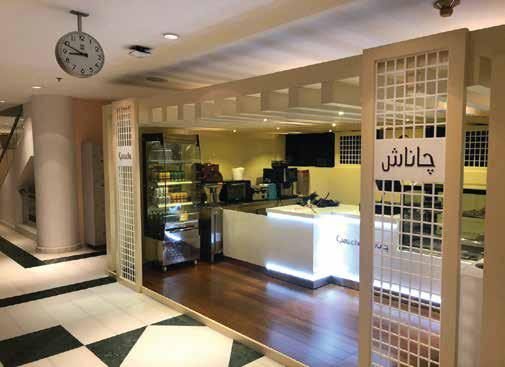
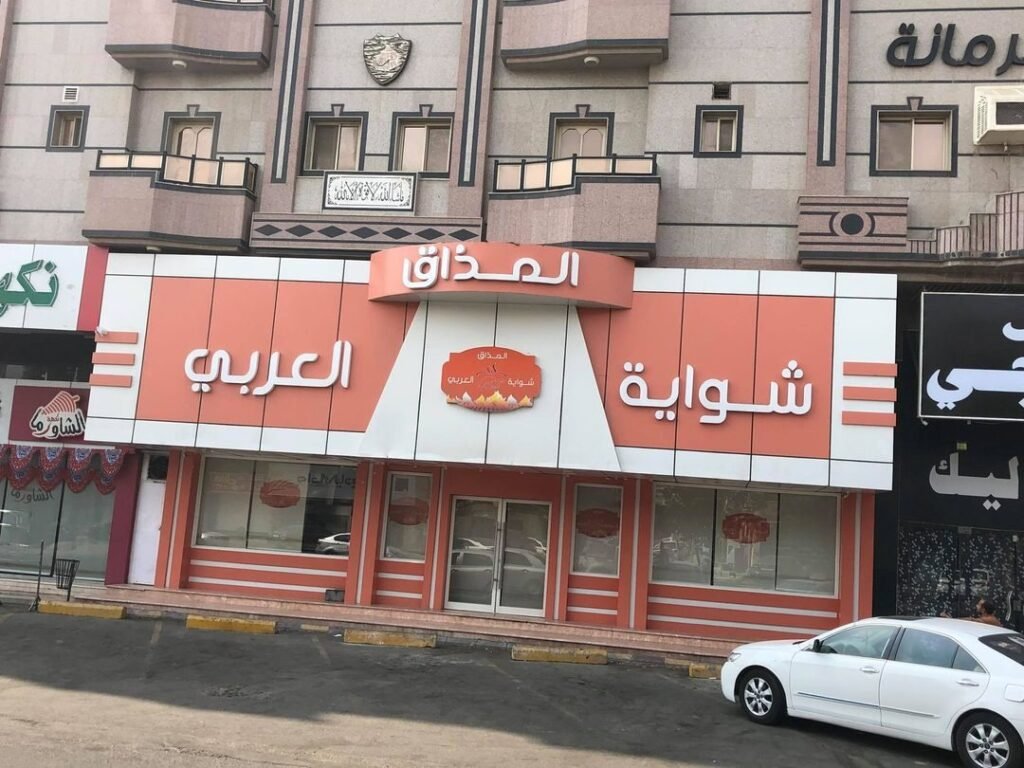
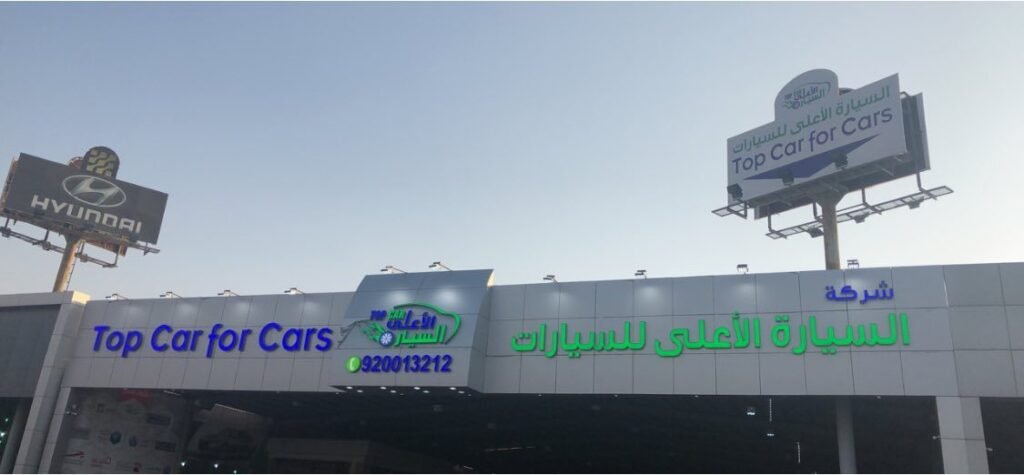
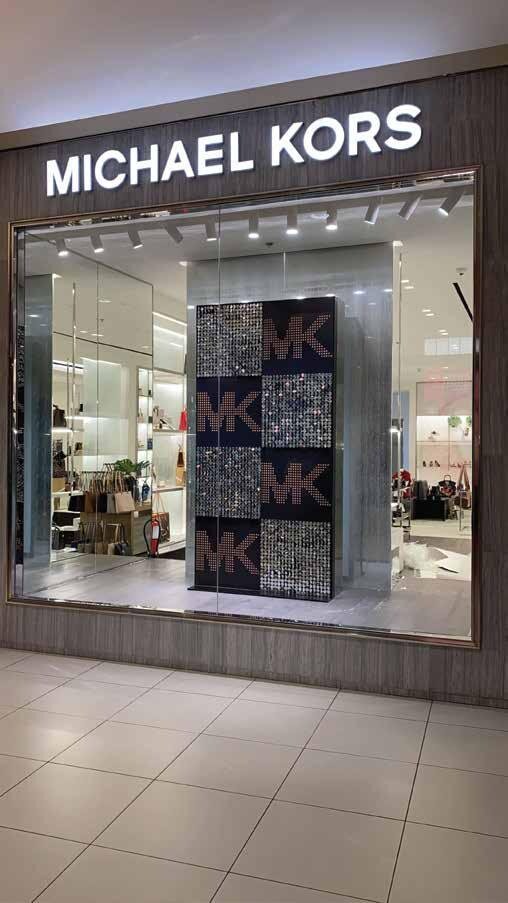
Company and shop signs we made and installed, lit and unlit.

Questions About Shop Front Design
What shop owners ask before they renew their front.
What does your shop front design include?
We design the whole shopfront from your brand identity: the band above the glass, the name sign and 3D letters, the lighting, window graphics and frosted film, and entrance details in panels, wood or metal. We then build it in our factory and our own team installs it.
Do you install shopfront cladding?
Yes. We supply aluminium composite panels, cut them in our factory and install them with our own team, across the whole shopfront or only on the band and entrance elements, in one design with the sign, letters and lighting. If the building needs structural work on the wall itself, the building owner settles it before installation.
Will I see the front before work starts?
Yes. Our studio draws the new shopfront onto a photograph of your current one, in a day view and a night view, so you see the visual and compare options before any production begins.
Who obtains the licence for the sign on the front?
The shop owner applies for the licence through the municipality, and we prepare the drawings and the photograph of the front with the sign drawn on that the application asks for. The decision rests with the municipality alone.
Do you work on shopfronts inside malls?
Yes. We work from the design criteria the mall sets, prepare the drawings you submit for its approval and install in the hours the mall allows, which usually means at night.
Which style suits a restaurant or a café?
A restaurant on a busy road is usually well served by lit 3D letters and glass that shows the dining room. A café often suits a glass front, a heritage touch or handwriting in neon flex. The visual settles the choice on a photograph of your own shop.
How does a shopfront stay visible at night without glare?
By sharing the light between the sign, the band, the entrance and the interior, instead of relying on one bright sign. We set the brightness during the night check before handover, together with a timer that switches the front on and off at your hours.
What are aluminium composite panels?
Panels made of two thin aluminium skins around a core, which give a light, flat surface in many colours and are often called cladding. We use them for the band, entrance frames and the backgrounds behind letters, and they are cut and folded in our factory.
How is a shopfront maintained?
Regular cleaning of the panels, the letters and the glass, a check of the fixings after strong wind and dust storms, replacing a driver or an LED module if part of the front dims, and renewing window graphics when their colour fades. The drawings and the list of lighting parts you receive keep every repair true to the original.
How do we start, and how soon is the quote?
Send photographs of the front, the address and your logo files on WhatsApp at 0567069088 or through the quote page. An itemised quote follows within 24 hours, and the survey visit is arranged from there.
Ready to Renew Your Shopfront?
Send photographs of the front and your logo. Within 24 hours you have an itemised quote that names the parts of the shopfront, the lighting, the installation and the drawings.
More specific pages on this
If your question is narrower than this page, these are written for one question each.

