
3D Letters and Props
3D Letters and Props Made to Be Photographed
A name in raised letters, a logo that glows, a product built many times larger than life, a hashtag visitors stand beside: 3D letters and props are the parts of an event, a booth, a reception or a mall floor that end up in the pictures. This page explains the kinds of piece, what acrylic and painted wood are each good at, how light behaves inside a letter, what the logo file has to be and how a freestanding piece stays safe in a crowd. We cut and build these pieces in our own factory and our own team installs them.
What a Brand Gains From a Third Dimension
A printed wall shows the logo. 3D letters and props give it depth, shadow and a place to stand beside, and that changes how visitors behave around it.
Depth reads from the side
A flat print vanishes when you pass it at an angle. A letter with depth shows its side wall as well as its face, so the name stays legible along the whole length of an aisle or a mall walkway, not only from straight in front.
Light becomes part of the logo
A lit logo does not wait for the hall lighting or for a screen loop to come round. It carries its own light, so it still reads when the room is dimmed for a ceremony, and it is the first thing a phone camera exposes for.
Visitors choose to stand beside it
Nobody poses next to a roll up banner. A giant product, a year in tall numerals or a hashtag at shoulder height is an invitation, and every photograph taken there carries the brand to people who never came.
The piece outlives the event
A stand wall belongs to its stand. A freestanding logo or a set of letters can open a branch this month, stand in a mall the next and settle in the reception after that, provided it was drawn to travel and to be fixed in more than one way.
What Works Around the Piece
The piece is cut and built in the factory. These teams under the same roof add what surrounds it.
Printing & Promotional Gifts
Printed faces for letters and product replicas, vinyl applied over acrylic, and the backdrop behind the photo spot. Graphics are printed in 1 to 5 working days.
Acrylic & Wood Fabrication
The wider service this page belongs to: display cases, plinths, counters and shelving cut on the same CNC and laser machines as the letters.
Promoters & Brand Ambassadors
Hosts with a supervisor who invite visitors to the photo spot and lead them from the picture to the counter.
Branding & Creative Studio
The logo in balanced Arabic and English versions, the colour references and the brand guide the fabrication drawing is taken from.
Digital Solutions
A screen beside the piece, or a tablet at the counter that records visitor details after the photograph.
Experiences & Events
A branch opening, a launch or a mall event planned so that the piece is where the guests gather.
Social Media & Content
Photos and short video of visitors with the piece, prepared for publishing on the day of the event.
Custom Exhibition Stands
Stands where the lit logo and the raised letters are drawn into the walls from the first sketch.
The Families of 3D Letters and Props
Most orders belong to one of these families or mix a few of them. Naming the family early settles the material, the lighting and the way the piece is fixed.
Flat cut letters on a wall
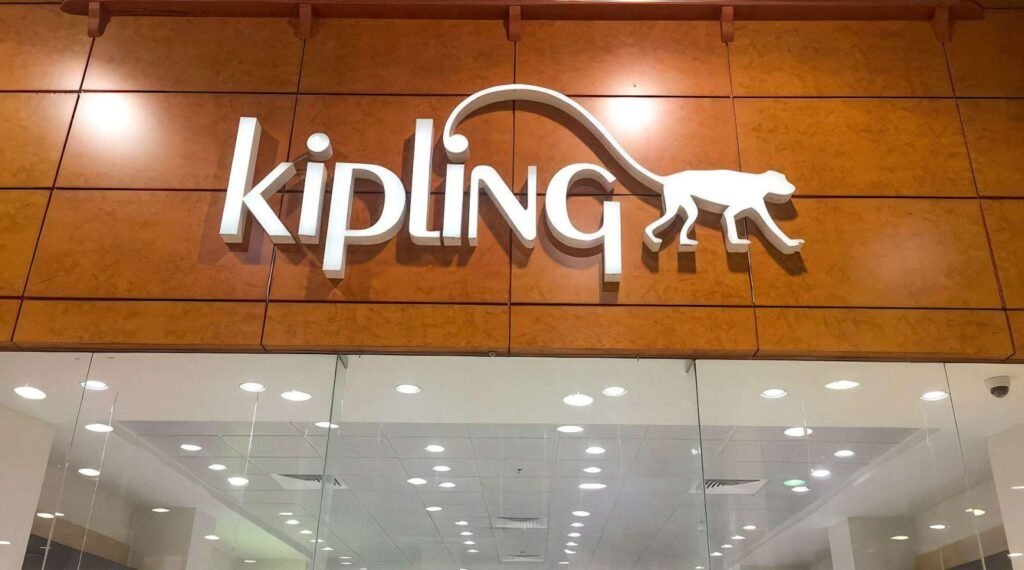
Letters cut from a sheet of acrylic or painted board and fixed to a wall, either flush or held off it on short spacers so that each letter throws a shadow. It is the quickest family to make and the lightest to carry. It suits a logo on a booth wall, in a reception or on a stage backdrop, and it carries no light of its own.
Built up letters with depth
Each letter is a shallow box: a face, a back and a side wall that sign makers call the return. The depth makes the word solid and leaves room for light. For indoor use the body is usually painted MDF or wood, often with an acrylic face, and the return can match the face or contrast with it.
Lit letters and a lit logo
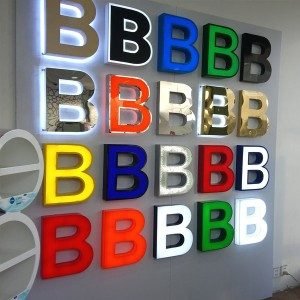
Face lit letters glow through an opal acrylic front. Halo lit letters keep a solid face and throw their light backwards onto the wall, which draws a soft outline around each shape. Edge lit acrylic carries light through a clear sheet, so only the engraved lines and the edges shine. A slogan in handwriting is often made in LED neon flex fixed to a clear acrylic sheet. The same logo can be built in any of these ways, and each suits a different room.
Freestanding letters, numbers and hashtags
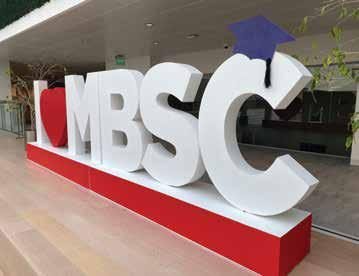
Letters tall enough to stand on the floor with no wall behind them: a brand name, a city name, a year, a hashtag. They are the photo spot of an event, so they are built to be touched. A hidden base joins them, weight inside keeps them down, and the back is finished because people walk around it.
A logo as an object, and a giant product
A symbol can leave the wall and become a solid object on a plinth, seen from every side. A product can be rebuilt far larger than life as a display for a launch or a mall. Boxes, bottles with straight sides and geometric marks are built from boards, acrylic and print. Organic sculpted shapes are a separate craft, covered in the questions below.
Occasion pieces
A year, a slogan, or a shape for National Day, Founding Day, Ramadan or a company anniversary. A national occasion has an official identity with its own usage guide: take the current files from the official source and follow them, and do not redraw or recolour the official mark. Your own logo stays on a separate element beside it.
From the Logo File to the Piece on Site
The order of the work is the same for all 3D letters and props, from a small reception logo to a tall photo spot. What changes is how long each stage takes.
The artwork file
Fabrication starts from a vector file of the logo, not from a picture. The machine follows lines, and a photograph or a screenshot has none. The file needs the typeface converted to outlines, so that it opens the same on every computer, and the exact brand colours as codes from the brand guide. If only an image exists, the mark has to be redrawn first.
Redrawing for fabrication
A logo drawn for a screen is not always buildable. Very thin strokes snap or cannot hold a light, and the small enclosed spaces inside letters, which typographers call counters, close up or fall out when cut. The letter is thickened or opened slightly at the size being made, and the brand owner approves the adjusted drawing before anything is cut.
The technical drawing
We prepare a drawing that fixes the size, the material of each face and side, the type of light, where the piece divides into sections and how it is fixed or how it stands. For a freestanding piece it shows the base and where the weight sits. You approve this drawing, and production starts only after that.
Cutting, building and paint
Acrylic faces and flat letters are cut on our CNC and laser machines from the approved file. Letters with depth are assembled as joinery, then filled, sanded and sprayed in the brand colour. Printed faces come from large format print under the same roof.
Light fitted and tested
The light sources are fixed inside the letters, wired to their power supply and switched on in the factory before delivery. This is when uneven light is found and corrected, while the piece can still be opened on a bench and not on a ladder.
Delivery in sections and assembly on site
A large piece travels in sections sized for the truck, the venue door and the lift. Our own team assembles it on site, levels it, connects the power and checks that every part is secure. On a stand, the logo and the letters go up with the stand itself.
How Long a Piece Takes
The quote
Itemised, and sent within 24 hours of receiving the logo file and the brief.
Printed faces and graphics
Printed in 1 to 5 working days once the artwork is approved.
A cut or built piece
It depends on the size, the finish, whether it is lit and how fast the artwork is approved. The quote states the date.
A piece on a custom stand
It follows the stand: 6 to 8 weeks from brief to opening for a custom build.
What Moves the Cost
There is no price list for 3D letters and props, since each piece is quoted from its own drawing. The factors below are the ones that push a quote up or down, and knowing them lets you read any offer line by line.
Size and depth
Acrylic, board and machine time grow with the height of the letters, and again with their depth. A deep letter is a box to build and paint on every side, where a flat one is a single cut.
Light, and which kind
A piece with no light is the economical end. Face lighting adds light sources, wiring, a power supply and an opal acrylic front. A halo needs a clean back and spacers off the wall. Light that changes colour adds a controller and the time to programme it.
The finish
Matt sprayed paint costs least. High gloss needs longer preparation, because a mirror surface shows every flaw. A metal look, made with metallic paint or a brushed laminate, sits above plain colour, and a printed face adds the print and its mounting on board or acrylic.
The number of separate parts
Every loose letter is its own object to cut, paint, wire and fix. A long name in separate Latin letters is more work than a compact logo of the same width. A joined Arabic word often comes out as a single body, but its dots are small separate parts that each need a fixing.
How it stands
Letters on a booth wall need only fixings and a positioning template. A freestanding piece needs a base, weight inside and a finished back, and a piece that may not touch the venue wall needs a self standing frame behind it. The structure nobody sees can cost as much as the face.
One date or many
A piece for a single evening can be lighter and simpler. One that will travel needs sections that bolt together, protected corners and cases. Where transport applies it is a named line in the quote, and so is any part made by a specialist outside our factory.
Send the logo file, the size you have in mind, where the piece will stand and the date. An itemised quote reaches you within 24 hours. Request a quote or message 0567069088 on WhatsApp. If the piece is part of a stand, our guide to exhibition stand cost in Saudi Arabia shows how the whole budget is built.
Light, Walls and Weather: Where the Piece Will Live
The room decides more than the drawing does. In a bright exhibition hall a face lit logo holds its own against the ceiling lights, while a halo almost disappears, because the glow on the wall is weaker than the light already falling on it. In a dim ballroom, or outdoors at night, the halo is the more elegant choice and a face lit letter can look harsh unless it is dimmed. Edge lit acrylic needs a dark background close behind it to read at all. Walls are the second question. On a stand the letters are fixed to walls that belong to you, and the fixing points are prepared in the wall before it leaves the factory. Most venues and malls do not allow anything to be drilled, glued or hung on their own walls, columns or ceilings, so a piece in a lobby or an atrium stands on its own frame or base, and the venue or the mall management decides what is permitted. Weather is the third. Outdoors, sun fades print and heats dark surfaces, acrylic expands in the heat, and a tall flat face catches wind like a sail, so an outdoor piece needs joints that allow movement, a heavier base and tie down points agreed with the site. For the general service behind this page see acrylic and wood fabrication. Letters that are part of a joinery stand are covered under wooden exhibition booths and custom exhibition stands, and the wider picture is on the exhibition booths in Saudi Arabia hub. A photo spot inside a larger programme belongs with experiences and events, and a name over an entrance with event entrance arches and gates. Printed faces and backdrops come from printing and promotional production, and a logo that still needs drawing starts at the branding and creative studio.
Questions to Settle Before You Order
Any maker of 3D letters and props will ask these on the first call. Having the answers ready shortens the quote and removes most of the later changes.
Where will it stand, and whose rules apply?
A rented stand space, a hotel ballroom, a mall atrium and an office reception each have an owner with rules about fixing, floor loading, power and height. Ask for those rules in writing before the design, because they decide whether the piece hangs, leans or stands by itself. Leave room in front of it too, so that a photographer can step back far enough to fit the whole word in the frame.
In what light will people see it?
Daylight through glass, hall lighting, a dimmed room and the open air at night each favour a different build. If the piece must work both at midday and after dark, say so: a face that keeps a strong colour unlit and still glows evenly when lit is a specific choice of acrylic, not an accident.
Will people touch it, lean on it or sit on it?
If it stands on the floor within reach, assume all of these, and assume children. That means a base wider than the letters suggest, weight low down, rounded edges and corners at child height, no gaps that trap fingers, and a surface that survives shoes and wipes clean.
Is it for a single date or for every year?
A generic piece, such as the brand name or the logo alone, returns for years. A dated piece is used once. A middle way is to build the year or the slogan as a separate part that is replaced while the body and the base are kept. A piece that belongs to your stand kit can stay with the kit in our storage between shows.
Is the artwork ready, and who can approve a change?
Find the vector file and the brand guide before asking for prices. Then name the person who may approve a slight redraw of the logo for fabrication, because in a company with a global brand team that approval can take longer than the build itself.
Mistakes Seen on Opening Day
These are the faults 3D letters and props show on site. All of them are decided on paper, long before the truck is loaded, and all of them show in the first photograph.
Strokes too thin to build
A logo in a light typeface looks refined on a business card and becomes a row of fragile sticks when cut. Thin strokes break in transport and leave no room for light. Either the piece grows, or the typeface gains weight with the approval of the brand owner, or the letters become a flat cut acrylic layer on a solid backing.
Light in patches
When the light sources sit too close to the face, or too far from each other, each shows as a bright spot with a dull zone between. Even light needs enough depth behind the face, an opal acrylic that spreads it, and extra sources in the corners and narrow ends of each letter.
A freestanding piece that rocks
Tall narrow shapes, such as a single upright stroke or a numeral with a small foot, tip when somebody leans on them. The letters share a common base hidden under a plinth or under the flooring, with ballast inside, and nothing relies on tape or on the hope that nobody touches it.
A gloss face under flash
High gloss and mirror surfaces look rich to the eye and photograph as white glare, or as a reflection of the photographer and the hall ceiling. For a piece meant for pictures, a matt or satin face, in paint or in frosted acrylic, is the safe choice. A calm background behind it matters as much: no bright window and no busy wall.
No way in, and a cable in the walkway
A light that fails in the middle of an event cannot be changed if the letter was glued shut. A back or a face that comes off, and a power supply placed in the base and not buried inside the letter, solve it. The power feed is planned as well: where the nearest socket is, and how the cable leaves the base without crossing where people walk.
Too big for the door
A piece built as a single body may not pass the venue door, the service lift or the mall corridor at night. The route from the truck to the spot is measured before the drawing is final, and the piece divides where the joins will not show.
Cut, Painted and Lit Under One Roof
Our factory holds design beside CNC and laser cutting, joinery beside paint, and acrylic beside large format print, and the installation team is our own. That is why the letter on the drawing, the paint on its side and the print on its face come from the same file. Our stands and displays have stood for Saudia Holidays, Kinan, Cartoon Network, the Heritage Commission and Johnson & Johnson MedTech.
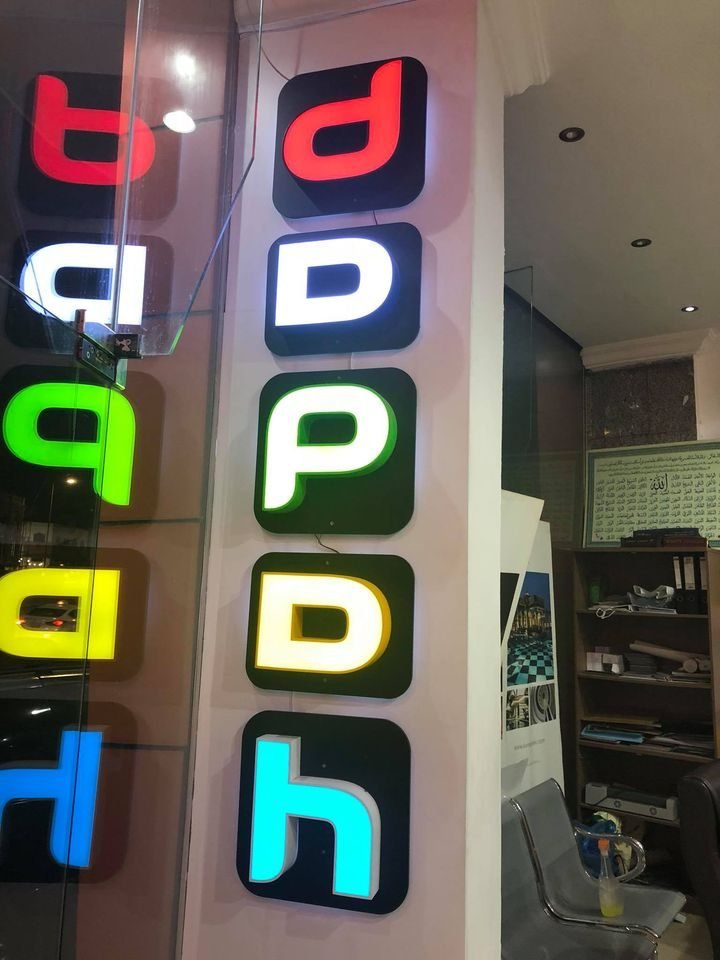
Letters and Props From Our Factory
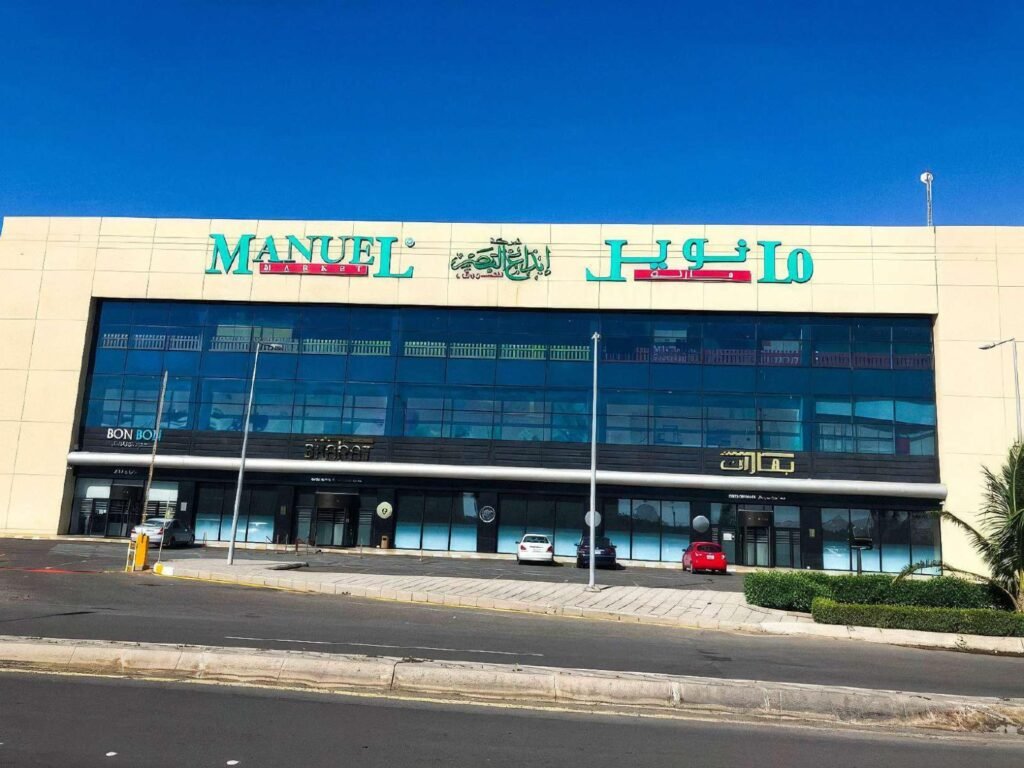
Raised letters and props we cut and installed for our clients.
Questions About 3D Letters and Props
What buyers ask before they order a piece.
What are 3D letters and props made of?
Indoors, mostly acrylic and painted MDF or wood. Acrylic gives clean lit faces and sharp flat letters. Painted board gives depth, an exact brand colour and large built shapes, and a printed face adds photographs or patterns. A metal look is normally paint or laminate over these materials, not solid metal.
What is the difference between face lit and halo lit letters?
Face lit letters shine forward through an acrylic front, so the letter itself is the lamp. Halo lit letters have a solid face and light the wall behind them, which draws a glow around the shape. Face lit suits bright halls and long distances. Halo suits dimmer rooms and a wall close behind the logo.
Which file do you need for our logo?
A vector file, with the typeface converted to outlines and the brand colours given as codes. A picture taken from a website cannot guide a cutting machine. If no vector exists, the logo is redrawn first and you approve the redraw before production.
Can our logo be built exactly as it is drawn?
Usually, at the right size. Very thin strokes, small counters and fine details may need to be thickened or simplified slightly at the size being made, above all if the piece is lit. Every change is shown on the drawing and approved by the brand owner, and nothing is altered silently.
Can letters stand on the floor with no wall behind them?
Yes. Freestanding letters are built with depth, a finished back and a hidden base that ties them together, with weight inside so that they stay down when people lean on them. Tell us whether visitors may sit on the piece, because that changes how the base and the top surfaces are built.
Can the letters be fixed to the wall of the venue or the mall?
That is the decision of the venue or the mall management, and most do not allow drilling or adhesive on their surfaces. The usual answer is a self standing frame or a weighted base that touches only the floor. On your own stand or in your own office the logo and the letters are fixed directly to the wall.
Can the piece be used outdoors?
It can, if it is drawn for that from the start. Sun, heat and wind change the choice of paint, print and acrylic, the joints and the weight of the base, and the site has to agree where the piece is tied down. A piece made for an air conditioned hall should not be moved outside for a whole season.
Do you make sculpted figures, mascots or inflatables?
Our own work is cut and built: acrylic, boards, joinery, paint, print and light. A carved or moulded figure, such as a mascot with organic curves, and an inflatable shape are different crafts. When a project needs one, it is made with a specialist and appears in the quote as its own named line. A licensed character also needs the permission of its rights owner, which stays with you.
Is this the same as a sign on a shop front?
Not quite. A permanent sign on a building is built for weather and fixed at height, and it needs a licence from the municipality and the approval of the landlord or the mall. We make and install shop front signs too, and we prepare and follow the licence application with you. The pieces on this page are the ones made for events, stands, receptions and mall floors.
How long do 3D letters and props take, and how do we start?
The time depends on the size, the finish, whether the piece is lit and how quickly the artwork is approved, and the quote states the date. We have more than one location in the Kingdom, and your piece is built in our own factory and installed by our own team. Send the logo file and the details on WhatsApp at 0567069088 or through the quote page, and an itemised quote follows within 24 hours.
A Piece That Carries Your Name?
Send the logo file, the place where it will stand and the date. Within 24 hours you have an itemised quote that names the material, the light and the way the piece is fixed.
More specific pages on this
If your question is narrower than this page, these are written for one question each.

