
POSM Production in Saudi Arabia
POSM Production in Saudi Arabia From Pilot Store to Every Branch
POSM production in Saudi Arabia is rarely about a single good looking display. A trade marketing or category team needs the same floor stand, counter unit, shelf strip and wobbler to reach a long list of stores, pharmacies and supermarkets, fit the space each retailer gives it, go up the same way in every branch and come back with proof that it did. This page covers point of sale materials as a whole programme: the families of POSM, the retailer's rules, the pilot store, the materials, packing per store, installation and the photo report that closes the campaign.
Why POSM Is a Programme Not a Single Piece
A display that works in the flagship branch and fails in the other stores has not done its job. In POSM production in Saudi Arabia, materials are judged on the whole rollout, so these questions come before anything is cut or printed.
The shopper decides at the shelf
Much of what a shopper buys in a supermarket or pharmacy is chosen in the aisle, moments before the hand reaches the product. POSM is the brand's voice at that point: a header board that names the offer, a shelf strip that marks where the range starts, a wobbler that catches the eye on the way past. If it is missing, damaged or in the wrong place, the campaign is silent exactly where it counts.
Every branch has a different space
The floor of a hypermarket and a neighbourhood pharmacy have little in common. Gondola ends differ in width, counters differ in depth, and some stores have no free floor at all. A sound programme designs a core unit and a small set of variants, so each of the stores receives the version that fits rather than a unit that ends up in the stock room.
The retailer owns the floor
In modern trade the chain decides what goes where. Many chains work to a planogram and to their own display rules: which fixtures a supplier may bring in, how tall a floor unit may stand, whether lit units are allowed, and how long a promotion may stay. POSM that ignores those rules is refused at the door or taken down by the store manager.
A rollout succeeds or fails on logistics
Making the units is half of the work. The other half is getting the right kit to the right stores in the right week, complete, with the instructions inside and someone accountable for putting it up. Brands that leave this until the end lose more display units in transit and in the back rooms of stores than they ever lose to weak design.
Services That Join the POSM Programme
Fabrication and print happen under one roof, and the other services of The Touch plug in where a campaign needs them.
Printing & Promotional Gifts
Posters, stickers, shelf strips, wobblers, danglers, header cards and printed fridge wraps, with graphics printed in 1 to 5 working days once artwork is approved.
Acrylic & Wood Fabrication
Counter units, brochure holders, price holders, product risers and floor stands, cut on CNC and laser machines and assembled in our factory.
Promoters & Brand Ambassadors
Sampling staff with a supervisor, for stores where the campaign includes tasting or a live product demonstration beside the display.
Branding & Creative Studio
The campaign key visual adapted to every format, from a large header board to a small shelf talker, so it reads the same at every size.
Digital Solutions
A small screen or a tablet built into a counter unit or floor stand, wherever the retailer allows powered units.
Experiences & Events
In store launches and mall promotions that carry the same visuals as the branch materials, so the shopper meets one campaign.
Social Media & Content
Photos and short video of the display units in place, ready for the brand's own channels and for internal reporting.
Custom Exhibition Stands
The same factory builds full exhibition stands, so a brand's trade show presence and its branches can share materials and visuals.
The Families of Point of Sale Materials
POSM covers everything a brand places in stores to sell at the point of decision. These are the main families, and most campaigns combine several of them.
Floor standing display units
Free standing units that hold product and carry the brand: shelves under a header, a dump bin, a cardboard cut out figure, a totem. They need the most floor and the most permission. Stability matters more than looks, because a unit that tips when a child pulls a shelf will be removed by the branch at once.
Gondola ends and shelf edge
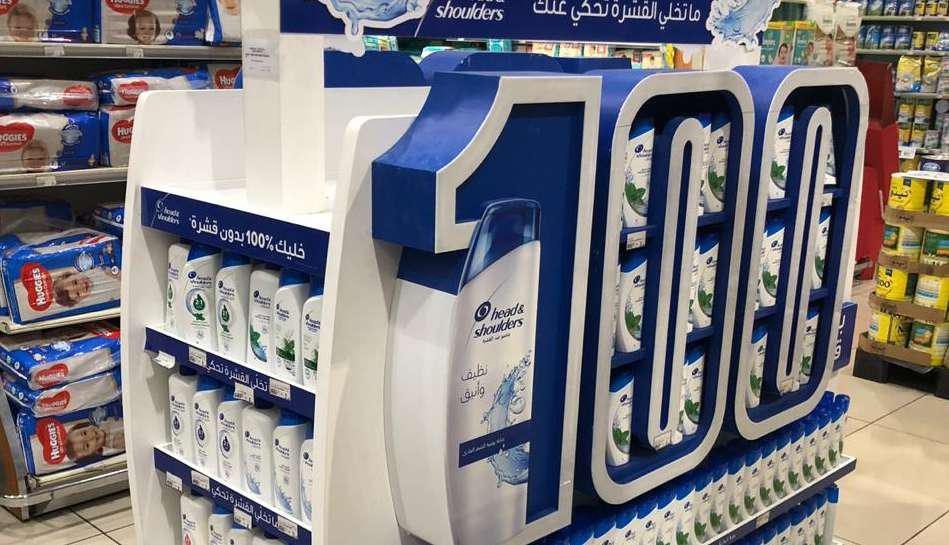
The end of an aisle is the most valuable space in a supermarket, and many chains charge suppliers for it. A gondola end kit dresses the existing shelving with a header board, side panels and shelf strips instead of bringing in a new display fixture. Shelf edge pieces include strips, shelf talkers, dividers and price channels.
Counter units and countertop displays
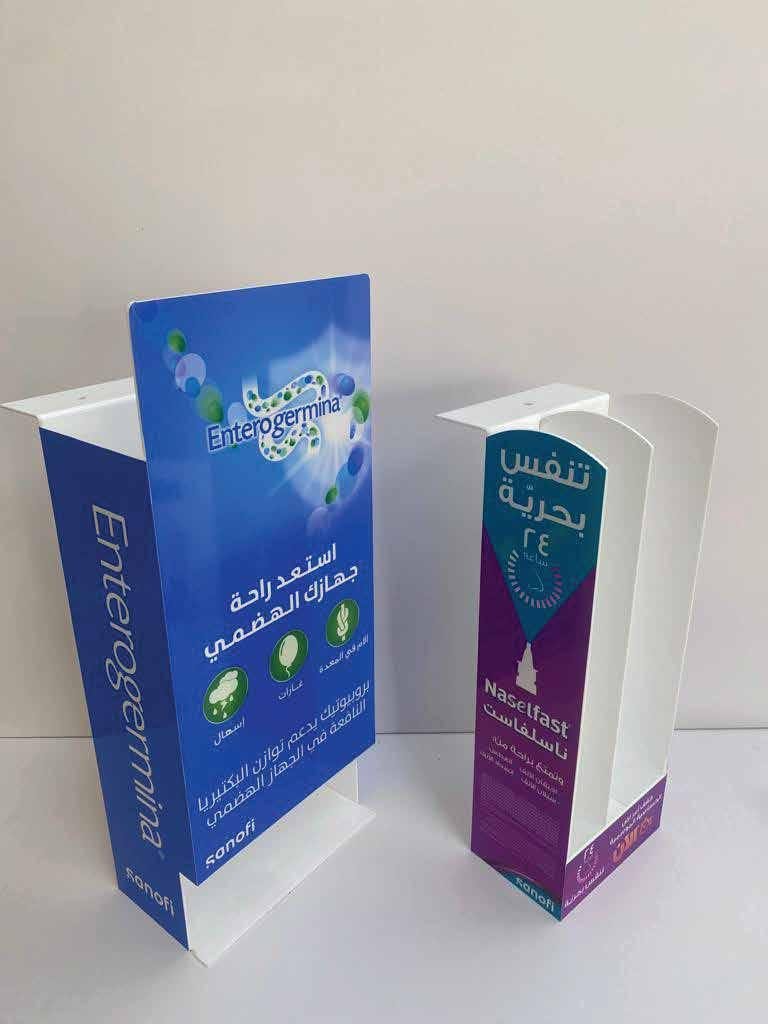
Small units beside the till or on the pharmacy counter: a dispenser, a tester stand, a brochure holder, a branded tray. Counter space is the scarcest space in most stores, so these units are judged on their footprint. Acrylic suits them well, because it shows the product and wipes clean.
Wobblers, danglers and stickers
Light printed display pieces that move or hang to catch the eye: a wobbler on a flexible arm at the shelf, a dangler from the ceiling, floor stickers that lead shoppers to the aisle, window and door stickers at the entrance. They are quick to make and to fit, and they are the first thing to disappear, so they are ordered with spares.
Header boards, posters and lightboxes
Larger display graphics that name the offer from a distance: a framed poster, a header board above a bay, a lightbox with a printed face that changes. A lightbox needs power and the branch's permission, while a poster frame only needs a wall the shop agrees to give.
Sampling counters and printed wraps
A sampling counter where a promoter serves tastings or demonstrations, and printed wraps that brand a fridge, a freezer or a column. A wrap here is printed vinyl applied to the retailer's own equipment, once the owner of that equipment agrees. The counter is designed for daily use and overnight storage inside the branch.
POSM Production in Saudi Arabia Step by Step
A rollout passes through the same stages whatever the brand. The order matters, because a mistake caught at the pilot costs far less than the same mistake repeated across all the stores.
Brief, store list and retailer rules
We start from the campaign brief, the list of stores by chain and city, and the rules the retailers have shared with you: permitted fixtures, heights, power, fixing methods and the campaign window. Where a chain sends its own guidelines, those set the limits before any design work begins.
Design for the real space
Each display piece is drawn to the actual fixture in the shop: the gondola width, the counter depth, the shelf edge profile. Where branches differ, the design becomes a core unit with variants, and you approve drawings for every variant, not only for the hero unit.
Prototype and approval
A full size prototype is built in our factory from the production materials, so the brand team, and the retailer where needed, can see it, load it with product and test how it packs and goes together. Changes made at this stage cost the least.
Pilot store
Before the full run, the approved display goes into a pilot branch and is installed the way it will be installed everywhere else. The pilot shows what drawings cannot: whether staff can assemble it from the guide, whether it survives a busy weekend, and whether shoppers actually stop.
Production, kitting and labelling
The full quantity is cut, printed and assembled, then packed per branch against the distribution list. Each box carries a label with the branch and its contents, so the stores receive a complete kit that needs no sorting on arrival.
Installation and photo report
Display units are installed by our own team or by branch staff working from the printed guide, whichever the brief asks for. Each installation is photographed, and the photos are gathered into a report per branch, so the brand sees what is standing where.
How Long a POSM Rollout Takes
Printed pieces
Posters, stickers, wobblers and shelf strips are printed in 1 to 5 working days once artwork is approved.
Fabricated units
Counter units and floor stands depend on the design, the material and the quantity, and the quote states the date.
Prototype and pilot
Their length depends on how fast approvals come back from the brand and the retailer, so they are planned into the schedule from the start.
Distribution and installation
They depend on the size of the store list, its spread across the Kingdom and the installation windows each chain allows.
What Shapes the Cost of POSM
We publish no price list, because each programme is priced from its formats, materials and store list. These are the lines that move a quote for POSM production in Saudi Arabia, named so you can compare offers fairly.
Material and finish
Printed board is the lightest choice for a short promotion. Acrylic, wood with a painted or laminated face, and metal look finishes cost more and last longer. Lit display units add wiring and a power supply to every piece.
Formats and variants
A single unit repeated across all stores is the efficient case. Each variant for a different fixture or shop size adds its own drawing, prototype and set of cutting files.
Quantity
Set up costs are shared across the run, so the price per unit falls as quantity rises. Printed pieces scale especially well, which is why spares of the light items are usually worth ordering.
Packing and kitting
Flat packing, protective packaging, assembly guides and packing each branch's kit against the distribution list are real work, and a quote that leaves them out is not comparable with one that includes them.
Installation and reporting
Installation by our team, by branch staff with a guide, or a mix by region is priced differently in each case. The photo report per branch is a named line, and where transport applies it is a named line in the quote too.
Refresh and storage
A permanent unit with changeable graphics costs more on the first day and less at every campaign after it. Keeping units or spares between campaigns in our storage is quoted as its own line.
Send the store list, the formats you have in mind, the campaign dates and any retailer guidelines. An itemised quote reaches you within 24 hours. Request a quote or message 0567069088 on WhatsApp. To see how a budget is put together line by line, read our guide to exhibition stand cost in Saudi Arabia.
Inside the Store: Rules and Neighbouring Pages
In most chains the retailer decides where POSM goes, how big it may be and how long it stays. Ask each chain for its display guidelines before design starts, confirm whether it accepts lit or powered units, and agree who installs and who removes the previous campaign. We prepare the drawings, samples and installation guides a retailer asks for, and the approval is the retailer's. Acrylic counter units, risers and holders come from our acrylic and wood fabrication service, and posters, stickers, shelf strips and wraps from printing and promotional production. A counter that stands for a staffed promotion in a mall or at an event for a set period belongs on our promotional counters page, while a permanent unit a brand rents in a mall corridor is covered under mall kiosks. A stand made to show a single product on a shelf or counter has its own page on acrylic display stands. Sampling staff for the pilot or the full campaign come from promoters and brand ambassadors, and the key visual adapted to every piece from our branding and creative studio.
Short Campaign or Permanent Display
The first decision in any POSM brief is how long the pieces must last. It sets the material, the cost and the way the units are packed.
How long will it stay in the stores?
A short promotion suits printed board, light frames and stickers that are removed and recycled when it ends. A display meant to stay through several campaigns deserves acrylic, wood or a metal look finish, built to take daily handling and cleaning.
Will the graphics change?
If the brand runs campaign after campaign in the same space, build a permanent frame with changeable faces: a lightbox with a printed insert, a header with a slot, side panels that slide out. Each refresh then needs only print, not a new display.
How heavy is the product?
Bottles, tins and boxed goods load a shelf heavily. Printed board copes with light items, while heavy product wants wood or acrylic shelves on a rigid frame and a base that keeps the unit upright when the top shelves are full.
Who will assemble it?
If branch staff will put it together, it has to go up with few parts, no special tools and a picture guide. If our team installs it, the unit can be more complex. Decide this before design, because it changes how every joint is made.
What does the retailer allow?
Some chains limit floor units, height, power or fixing to their shelving. The rules of the strictest chain on the list often decide the design for everyone, or justify a separate variant for that chain.
Where POSM Rollouts Usually Go Wrong
Each of these is cheap to prevent on paper and expensive to fix once the kits have reached the stores.
Display units that do not fit the fixture
A header board slightly wider than the gondola, a counter unit deeper than the pharmacy counter. The usual cause is measurements taken in one branch and assumed for all. Measure the actual fixtures in each chain, or design with a tolerance and variants.
Kits that arrive incomplete
A box without its header, a floor stand without its screws. Packing per branch against a checked list, with the contents printed on the label, is what keeps a missing part from becoming a missing display.
Instructions nobody follows
Branch staff assemble POSM between other jobs, and dense text in a single language gets ignored. A short picture guide in Arabic and English, with numbered parts, gets units built the same way in every branch.
Display units left in the back room
A unit that arrives without warning, is too big for the spot, or needs a tool the shop does not have often stays in its box. Telling each branch what is coming and when, and agreeing installation dates with the chain, keeps POSM on the floor of the stores.
No proof of what was installed
Without a photo from each of the stores, the brand only knows what was sent, not what is standing. A report with a photo of every installation shows the gaps while the campaign is still running and there is still time to fix them.
Last campaign still on the shelf
Last season's wobblers beside this season's header board confuse the shopper and annoy the retailer. Removing old pieces is part of every refresh, and the brief should say who does it.
Fabrication and Print Under One Roof
For POSM production in Saudi Arabia, design, CNC and laser cutting, joinery, paint, acrylic, large format print and installation by our own team sit under one roof, so the unit that was prototyped is the unit that is produced. On the print side we have delivered more than 500,000 printed pieces in a single campaign. We have worked for Kinan, the Heritage Commission, Saudia Holidays, Johnson & Johnson MedTech, Cartoon Network and Swarovski.
POSM From Our Factory
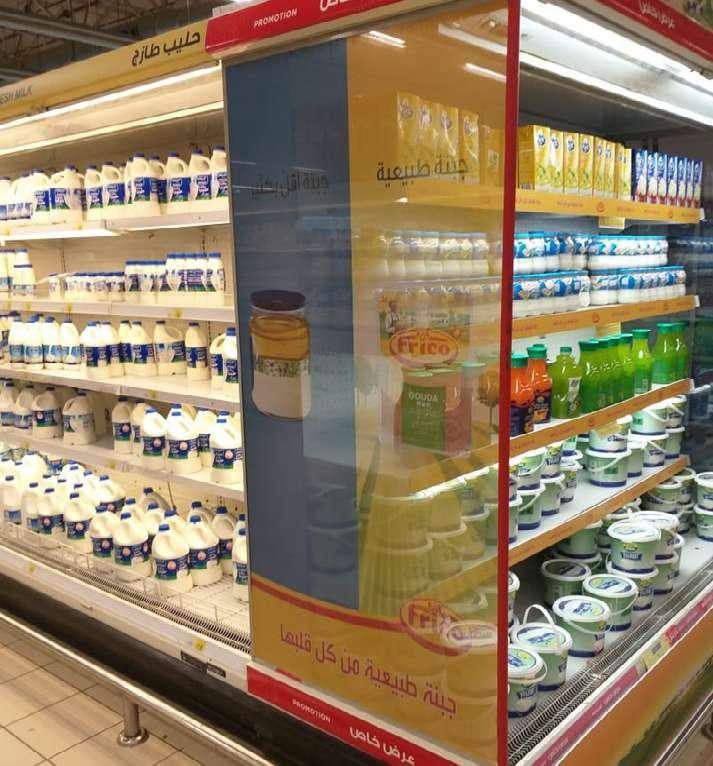
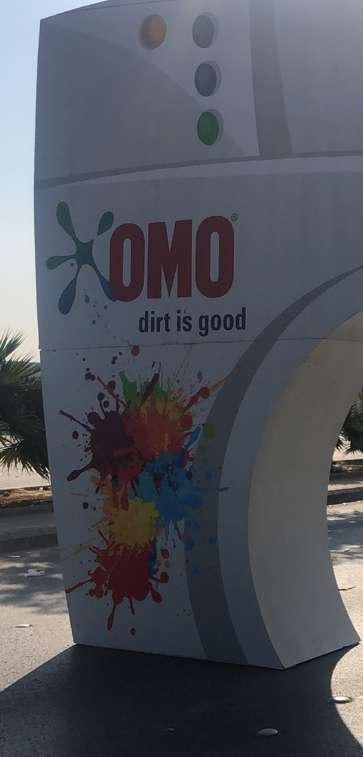
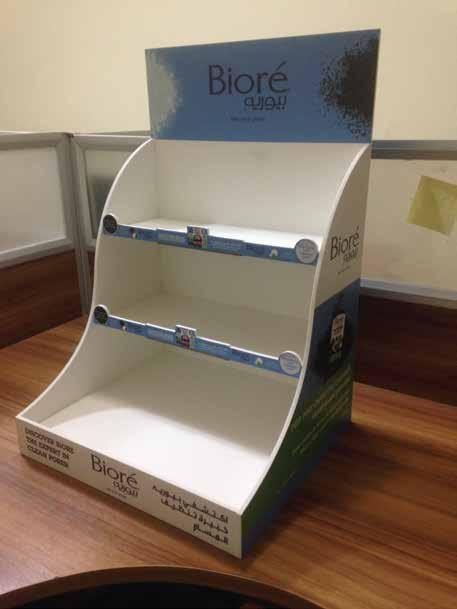
Display units, shelf pieces and stands we built for our clients’ stores.
Questions About POSM Production in Saudi Arabia
What trade marketing teams ask before a rollout across their stores.
What does POSM mean?
POSM stands for point of sale materials: everything a brand places in stores to influence the shopper at the moment of choice. It includes floor stands, gondola end kits, counter units, shelf strips, wobblers, danglers, posters, stickers and lightboxes. The term POP, point of purchase, is used for the same thing.
Do you make both the printed and the fabricated POSM?
Yes. Printed pieces such as posters, stickers, shelf strips and wobblers, and fabricated units in acrylic and wood such as counter units and floor stands, are produced under the same roof. That keeps colours and sizes consistent across the whole kit.
Can you work to our retailer's planogram and display rules?
Yes, and we ask for them at the start. Send the guidelines each chain has given you, and the units are designed within their limits on size, height, fixing and power. Approval of what goes into their stores stays with the retailer.
Do you build a prototype before production?
Yes. A full size prototype in the production materials is built before the run, so you can load it with product, check it against the fixture and test the packing and assembly. We recommend placing it in a pilot branch before approving the full quantity.
Can you pack a separate kit for each branch?
Yes. Send the distribution list with the branches and the quantity of each item per branch, and each kit is packed and labelled with the branch name and its contents. The branch then receives everything it needs in a single consignment.
Who installs the display units in the stores?
Either our own team installs them, or branch staff do it with the printed assembly guide that travels in each kit, or a mix of both by region. The choice depends on the store list, how complex the units are and what each chain allows.
Do we get proof that the POSM was installed?
Yes. Each installation is photographed, and the photos are collected in a report organised by branch. It shows which branches are complete and which need follow up while the campaign is still running.
Which material should we choose?
For a short promotion, printed board and light frames are usually enough. For a display that stays and is refreshed between campaigns, acrylic, wood or a metal look finish is the better investment. Heavy products and lit units need a rigid build whatever the campaign length.
Can the graphics be changed for the next campaign?
Yes, if the display is designed for it: changeable faces, slots for header cards and printed inserts for lightboxes. The next campaign then needs new print, removal of the old pieces and fitting, not new units. Graphics are printed in 1 to 5 working days after approval.
Where is the POSM made, and how do we start?
We have more than one location in the Kingdom, and your programme is produced in our own factory and installed by our own team. Send the store list, the formats and the campaign dates on WhatsApp at 0567069088 or through the quote page, and an itemised quote follows within 24 hours.
A POSM Rollout for Your Next Campaign?
Send the store list, the formats and the dates. Within 24 hours you have an itemised quote for POSM production in Saudi Arabia, covering fabrication, packing per branch, installation and the photo report.
More specific pages on this
If your question is narrower than this page, these are written for one question each.

