
Perfume and Cosmetic Display Stands
Perfume and Cosmetic Display Stands Built Around the Bottle
Perfume and cosmetic display stands decide how a fragrance, an oud oil or a skincare range meets the customer before any salesperson does: the tester a hand reaches for, the step that lifts the hero bottle above the range, the gondola a shopper walks round, the bay on a pharmacy wall. We design each unit around the bottle and the brand, make a sample with the real product on it, then produce the run in our own factory, pack it per store and install it with our own team. This page covers what a complete brief needs: the tester, light, security, the store's rules and the rollout.
Why Fragrance and Beauty Need Displays of Their Own
A bottle of perfume is glass, liquid and a scent nobody can see. Displays for this category face questions that a box of chargers or a bag of coffee never raises, and the first of them comes at the moment of trial.
The customer smells before buying
Fragrance is chosen with the nose, so the tester is the most handled object in the whole department. It needs a fixed place, a blotter within reach and room for a wrist under the nozzle. A unit that hides the tester or makes it awkward to lift loses the sale at the very moment of trial.
Glass and liquid are the product's face
The colour of the juice, the cut of the glass and the weight of the cap are what the customer sees first. Light coming from below through a frosted top makes the liquid glow, while light from the front mostly bounces off the glass as glare and hides the colour. So the bottle is lit from the right side and the background is kept quiet.
Small, costly and easy to pocket
A full size fragrance is worth a great deal for its size and fits in a palm. Before any sketch, the brief settles what stays open to try, what sits behind glass or in a locked drawer, and what is shown as a factice: the empty or colour filled dummy bottle perfume houses use in windows and on high shelves.
The brand stands beside its rivals
In a department store or a perfume hall, a brand's counter stands a few steps from its competitors under the same lights. The unit has to read as that house at a glance, through material, colour and light, while staying inside the height and footprint the store allows.
Services That Meet at the Beauty Counter
The display units come out of our factory, and these teams join them under the same roof when a launch or a season needs them.
Printing & Promotional Gifts
Seasonal header cards, back panel graphics, shelf talkers and printed faces for lit panels, printed in 1 to 5 working days once the artwork is approved.
Acrylic & Wood Fabrication
Tester trays, bottle risers, lit plinths, mirror panels and locked cases, cut on CNC and laser machines and assembled in our factory.
Promoters & Brand Ambassadors
Beauty advisers and hosts for a launch week in store, with a supervisor, who know the range before the first customer arrives.
Branding & Creative Studio
Brand colour references, logo artwork and each season's campaign visual resized for every unit, so the counter, the gondola and the window speak with one voice.
Digital Solutions
A small screen in a back panel for the campaign film, or a tablet beside the testers that records a customer's preferences where the store allows it.
Experiences & Events
Launch evenings and scent experiences staged around the new display, such as a discovery corner for a fragrance reaching the market for the first time.
Social Media & Content
Pictures and short clips of the finished display on opening day, for the brand's accounts and for the head office.
Custom Exhibition Stands
When the brand takes a stand at a beauty show, the same factory builds it and test assembles it before it ships.
Types of Perfume and Cosmetic Display Stands
Each type answers a different place in the store. Most brands order several of them in one material language, so the house reads the same from the window to the pharmacy shelf.
Counter displays and tester stands
A compact unit on the counter that holds the testers of a range in fixed wells, with a holder for paper blotters and a slot for used strips. Many houses add a small jar of coffee beans so the customer can reset the nose between scents. The wells are cut to the base of each bottle, so every tester goes back to the same place.
Bottle risers and steps
Steps and blocks of different heights lift the hero fragrance above the rest of the range. A tall flacon and a squat oud oil bottle need different rises, and a small lip on the front edge stops a heavy bottle from sliding when someone knocks the counter.
Beauty gondolas and towers
A free standing beauty gondola is walked around, so it is designed on every face: product on the sides, testers at hand height, stock or a locked compartment in the base, and the brand on a crown at the top. A slimmer tower carries a single range in a mall corridor or at the end of an aisle inside the store.
Wall bays and back panels
The brand's share of a perfumery or department store wall: shelves of glass or acrylic, a lit back panel with the house name, and a lower zone for stock or gift sets. Bays are drawn to the store's own wall module so they slot in between the neighbouring brands without a gap or an overlap.
Illuminated plinths and mirror trays
A lit plinth puts a single bottle in the spotlight on a shelf or in a window. Mirror trays double the product in the eye and show the back of the label, and they suit makeup and skincare at the testing point, where the customer also wants a mirror to see the result on the skin.
Units for pharmacies
Skincare and dermocosmetic brands in pharmacies get a small wall bay, a counter unit beside the pharmacist or a shelf section with a branded header. Space is tight and the route to the dispensary must stay clear, so pharmacy display units are shallow, easy to wipe and built onto the pharmacy's existing shelving.
From Brief to Every Store: How the Units Are Made
A counter for a flagship and the same counter for every branch follow the same path. The sample in the middle of that path is where most of the money is saved.
The bottles, the brand book and the store rules
We start from the products themselves or their exact measurements, the brand guidelines, and the rules the department store, the mall or the pharmacy chain has given you. A real bottle on the table answers what a drawing cannot: the weight of the cap, the shape of the base, the angle at which the label reads.
Design around the bottle
Wells, lips, steps and shelf spacing are drawn to the products. Testers sit at the height of a hand and a wrist, stock and gift sets lower down, and the hero fragrance where the eye lands first. You approve the drawings and rendered views together with the materials and colour sheet.
Material and colour samples
Acrylic colour, mirror, paint sheen, metal trims and wood veneer are agreed from physical samples under light close to the store's own, because gold, rose and black finishes shift a great deal between factory light and a perfumery spotlight.
A full sample with the real product
Before the run, a sample is cut and assembled in our factory and loaded with the real bottles and testers. Your team, and the store's visual merchandising team where they ask for it, check the angle, the light, how a tester comes out and goes back, and how easily the unit cleans.
The run, packed per store
Once the sample is approved, the run is produced from the same files. Each branch then gets its own boxes holding its units, graphics and fixings, marked with the branch name and contents and matched to the distribution list you send, so no store opens a carton meant for another.
Installation by our own team
Our own team installs the units in each store within the hours the mall or the retailer allows, removes the protective film, levels and anchors where needed, and photographs each installation so you know what stands where.
How Long Display Units Take
The sample
It depends on the design, the materials and how quickly approvals come back from the brand and the store. The quote states the date.
The production run
It depends on the quantity, the finishes and any lit or locked parts. The quote gives a date for each stage.
Installation across stores
It depends on the store list, where the stores are, and the night or early morning installation hours each mall allows.
Seasonal graphics
New header cards and printed faces are printed in 1 to 5 working days once the artwork is approved.
What Shapes the Cost of a Beauty Display
The price of perfume and cosmetic display stands is built from the drawing of each unit and the list of stores it must reach, which is why there is no fixed price list. Ask every supplier about the lines below: a quote that is silent on one of them cannot be compared with a quote that names it.
Material and finish
Clear acrylic is the economical base. Mirror, coloured or frosted sheet, lacquered wood, veneer and metal trims in gold or rose tones add material and preparation, and a high gloss finish adds the most time because every flaw shows on it.
Light
LED in plinths, shelves and back panels adds wiring, a driver for each lit section and the work of hiding both. A unit that must run from the power point the store provides is drawn around that limit.
Security
Locks, closed cases, tethers or anchors for testers, and fixings into the store floor or wall are named lines, because each one adds parts and time on site.
Variants
A unit is cheapest when the same design repeats in every branch. When counter depth changes from store to store, a wall module comes in another size, or pharmacies join the list, each case needs a drawing and a sample of its own.
Quantity and packing
Cutting files, jigs and the sample are paid for once, so each unit carries less of that cost as the quantity grows. Mirror and gloss faces need protective packing for the road, and every store kit is counted and labelled separately, and both appear in the quote.
Installation and refresh
Installation by our own team is priced by the store list and the hours each mall allows, and where transport applies it is a named line in the quote. Designing the unit for changeable graphics costs a little more at first and saves a new build every season.
Send photos of your products, the stores or counters where the units will stand, and any guidelines from the retailer. An itemised quote reaches you within 24 hours. Request a quote or message 0567069088 on WhatsApp. If your brand also takes a stand at a beauty show, our guide to exhibition stand cost in Saudi Arabia explains how that budget is built.
Inside the Store: Planograms, Approvals and Related Pages
Department stores, perfume chains and pharmacy chains usually work to a planogram and a visual merchandising guide. That guide sets the height and footprint of each unit, the sight lines across the department, the lighting allowed, the store's own wall module, where power is available and how testers may be shown. The mall, in turn, sets the installation hours, floor protection and the works allowed inside the shop. We prepare the drawings, material samples and full sample unit the store asks for, and the approval is the store's alone. For product displays of every kind see acrylic display stands, and for a programme that covers every branch of a chain see POSM production in Saudi Arabia. If the brand is opening a corner or a kiosk in a mall corridor, the mall kiosks page is the place to start, and the lit sign behind the counter or on the shop front is covered under illuminated signs and light boxes. For the brand's presence at the Beautyworld beauty show in Riyadh see a Beautyworld Riyadh exhibition stand, and for handing samples to shoppers in malls and stores see product sampling in Saudi Arabia.
Choosing the Right Unit for Your Counter
The right unit follows from where the product is sold and how the customer meets it. These questions settle most briefs.
Is the product tried before it is bought?
Fine fragrance and oud are tried in most cases, so the tester point leads the design and the stock can sit behind it. Lipsticks and creams are tried as well and need a mirror and tissues close by. Gift sets and boxed products are picked up and read, so they want open shelves at hand height.
Does a beauty adviser serve the customer?
Where an adviser hands over the product, a closed counter with testers on top and stock behind works well. Where customers serve themselves, as in many pharmacies and self service perfumeries, everything has to be within reach, clearly labelled and easy to put back.
How valuable is each item?
The higher the value, the more of the range moves behind glass or into locked drawers, while open testers and factices do the selling on top.
How many stores, and how different are they?
A flagship can have a unit drawn for its exact space. A rollout across a chain needs a core design with a small set of variants, measured in the real stores and approved on a sample.
How often will the look change?
If the brand runs a campaign every season, keep the body permanent and the faces changeable: slots for header cards, printed faces in lit panels, tops that can be re-covered. The next season then needs print and a visit, not new units.
Where Beauty Displays Usually Go Wrong
Each of these is cheap to prevent on the drawing and costly once the units are standing in the stores.
Acrylic that clouds or cracks near testers
Perfume is mostly alcohol, and alcohol and many glass cleaners attack acrylic, leaving a fine web of cracks around cut edges and drilled holes that the trade calls crazing. Tester wells need a removable liner or a tray in a material that tolerates alcohol, and the cleaning guide should rule out alcohol based sprays.
Light that warms the juice
Heat and strong light change a fragrance over time, and an old halogen spot or a driver boxed in under a bottle warms it day after day. Use LED sources, give the driver ventilation away from the product, and leave the brightest positions to factices.
Testers that walk away
A loose tester gets knocked over, put back in the wrong well or carried off. Anchor testers with a flexible tether or a weighted well, mark them clearly as testers, and make the place each one returns to obvious.
A burner beside the acrylic
Oud houses often show a lit incense burner at the point of sale. Acrylic softens and marks at temperatures far below those of a burning coal, and the smoke leaves a film on clear surfaces. Give the burner a metal or stone base, space around it, and keep it away from acrylic edges.
Mirror and gloss that arrive scratched
Mirror acrylic and high gloss faces scratch in transit and under rough cleaning cloths. They travel with their protective film on, the film comes off at installation, and the store team receives a soft cloth and a written cleaning routine.
A unit taller than the store allows
A gondola that blocks the view across the perfume hall, or a back panel above the store's height line, is refused or cut down on site. Ask for the visual merchandising guide first, and draw to it.
One Factory for Acrylic, Wood, Paint and Light
Our factory brings design, CNC and laser cutting, joinery, paint, acrylic and large format print together, and our own team goes out from it to install, so every store receives the counter you approved as a sample and not a near copy of it. We have worked for Swarovski and Gucci Flora, and for Kinan, Saudia Holidays and Johnson & Johnson MedTech.
Display Stands From Our Factory
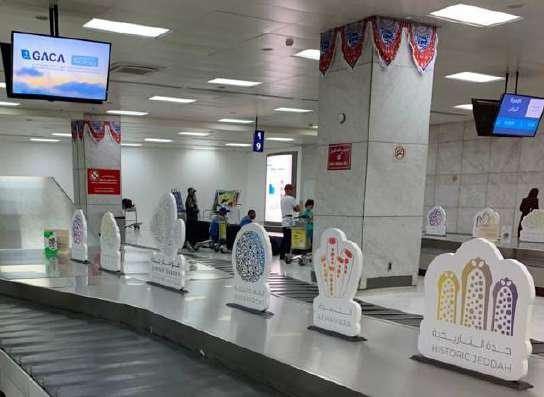
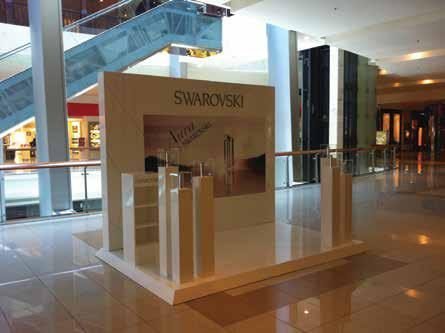
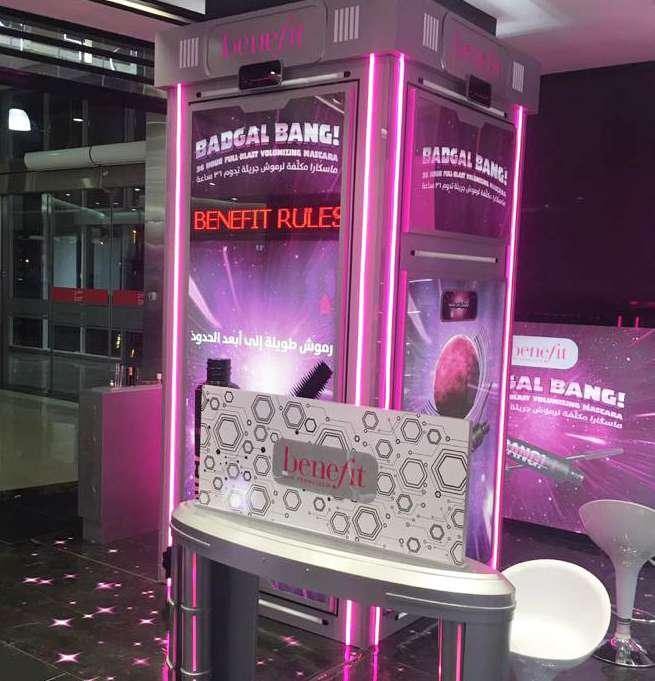
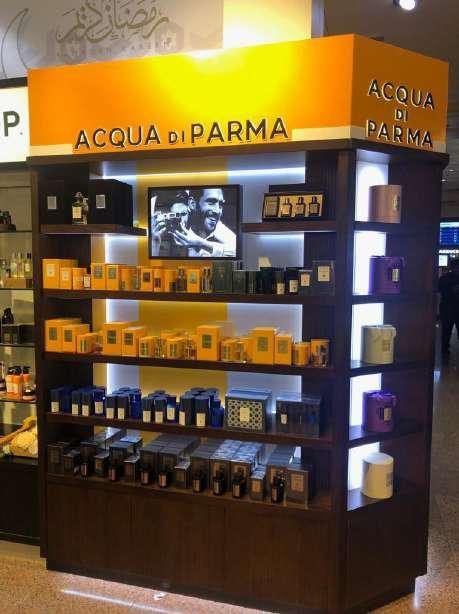
Product stands and showcases we built for shops and exhibitions.

Questions About Perfume and Cosmetic Display Stands
What brand, retail and trade marketing teams ask before they order.
What are perfume and cosmetic display stands?
They are the units that present fragrance, oud, makeup and skincare in stores: counter displays and tester stands, bottle risers, gondolas and towers, wall bays, lit plinths and pharmacy units. They are designed around the products and the brand, then made in the quantity the store list needs.
Which material suits a perfume display best?
Clear and mirror acrylic show glass and liquid well and are light to move. Lacquered wood or veneer gives warmth and weight that suit oud and niche houses, and metal trims add a premium edge. Most displays combine them, with alcohol resistant surfaces wherever testers are used.
How do you stop testers from being damaged or taken?
Each tester sits in a well cut to its base, and it can be tethered or anchored so it lifts for use and returns to the same place. High value stock stays behind glass or in locked drawers, and factices carry the display in the open positions.
Will the lighting harm the fragrance?
Well planned lighting should not. LED gives off little heat at the product, drivers are placed away from the bottles with ventilation, and the brightest positions can hold factices while real stock sits lower.
Can you work to our department store's planogram?
Yes, it is the first thing we ask for. Send the planogram or the visual merchandising guide, and the units are drawn inside its limits on height, footprint, wall module and light. The decision to accept them rests with the store's management.
Do you make a sample before the full quantity?
Yes. A sample is cut and assembled in our factory and loaded with your real bottles, so you can test the testers, the light and the cleaning. The run starts only after you approve it.
Can the same counter go to all our stores?
Yes. Once the sample is approved, the run is made in our factory and packed per store, with the store name and contents on each box. Where counters differ between branches, we draw a core design with a small set of variants, each approved on its own.
Do you make display units for pharmacies?
Yes. Skincare and dermocosmetic brands order shallow wall bays, counter units beside the pharmacist and branded shelf headers that fit the pharmacy's existing shelving. Send photos and measurements of a typical pharmacy and the units are drawn to it.
Can the display change for Ramadan, Eid or a new launch?
Yes, if it is designed for that from the start. Header slots, printed faces in lit panels and tops that can be re-covered let the look change each season with new print and a visit from our team. Seasonal graphics are printed in 1 to 5 working days after approval.
Where are the units made, and how do we start?
We have more than one location in the Kingdom. All fabrication happens in our own factory and our own team installs. Start with photos of the products and of a counter or shelf in one of your stores, send them on WhatsApp at 0567069088 or through the quote page, and the itemised quote follows within 24 hours.
A New Counter for Your Brand?
Send the products, the stores and the season you are planning for. Within 24 hours you have an itemised quote for your perfume and cosmetic display stands, covering the sample, the run, packing per store and installation.
More specific pages on this
If your question is narrower than this page, these are written for one question each.

