
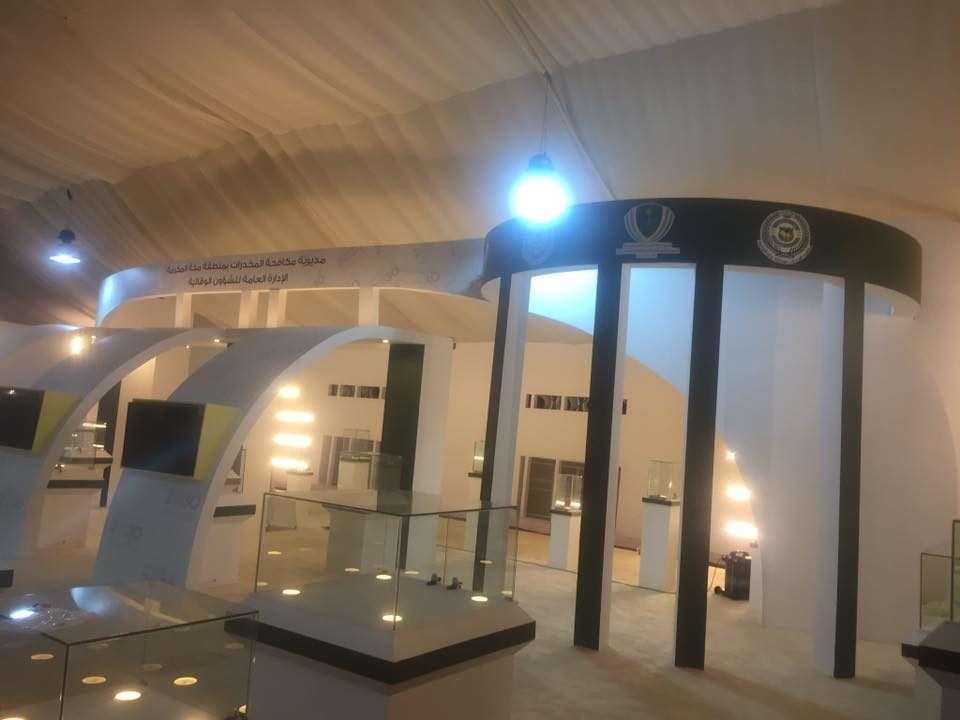
If you are about to exhibit for the first time, the vocabulary arrives before the show does. The organiser sends a space contract full of exhibition terms such as space only, frontage and build-up. The builder sends a quote with fascia, raised floor and artwork. Both assume you already speak the language. This glossary is written to be read once, start to finish, before you sign either paper.
Start with the word everyone asks about. A booth, a stand and what Arabic calls a janah are, in practice, the same thing: the space where your company meets visitors, and everything built on it. Booth is the American word, and it is the one the Saudi market adopted in everyday speech. Stand is the British word, and it is the one organisers write in their manuals and forms. Janah is the formal Arabic you will read in official letters and contracts. A pavilion is something else: a group of booths gathered under one country, ministry or authority, with a shared look.
Each entry below gives the term as manuals write it, the word you will hear on the floor in Saudi Arabia, a plain explanation, and why it touches your budget or your deadline.
The fifteen exhibition terms you will hear most
If you only have a minute, read this table. Every row is explained in full in the sections that follow.
| Term in manuals | Said in Arabic | Meaning in one line |
|---|---|---|
| Booth, stand | booth, stand, janah | Your space at the show and what is built on it |
| Pavilion | janah watani | A group of booths under one country or authority |
| Space only, raw space | masaha khaliya | Bare floor with nothing on it |
| Shell scheme | shell scheme | Ready walls, name board, carpet and basic light from the organiser |
| Island | jazira | A space with aisles on all four sides |
| Corner | zawiya | A space open on two sides |
| Frontage | wajiha | The length of the side facing the aisle |
| Custom stand | booth mukhassas | Designed and made for one brand |
| Modular stand | booth miyari | A reusable aluminium frame with a skin that changes |
| Double deck | double deck | A booth with an upper floor |
| Exhibitor manual | dalil al-arid | The rule book and timetable of the show |
| Build-up, move in | tarkib | The days before opening when stands are built |
| Tear down, move out | fakk | The hours after closing when stands are removed |
| Official contractor | al-muqawil al-rasmi | The company the organiser appoints for hall services |
| Artwork | artwork | The final files that are ready to print |
The space you book
These are the words of the organiser’s sales team and of the space contract. They decide what you pay the organiser and how much of your booth can be seen.
- Hall (sala). One of the enclosed rooms of the venue. Large shows fill several. The hall you are in decides who walks past, so before you accept a location ask who else exhibits there and where the entrance doors are.
- Floor plan (mukhattat al-sala). The organiser’s drawing of the hall with every space, aisle, door and column. Read it for what is not said on the phone: a column inside your space, a fire exit beside it or a service door behind it, each of which changes what can be built.
- Stand number (raqm al-janah). The code that identifies your space on the floor plan, usually a hall reference followed by a position. It goes on every form, freight label and pass request, and a wrong number delivers your shipment to somebody else’s space.
- Aisle (mamarr). The public walkway between spaces. Nothing of yours may stand in it or reach over it, not a roll up and not a host with a tray. A main aisle carries far more people than a side one.
- Space only, also raw space (masaha khaliya). Bare floor marked out with tape and nothing else: no walls, no carpet, no power. You bring a booth builder, and the organiser asks for drawings before anything goes up. Its price per square metre is the lower one in the contract and your total spend is the higher one, because the whole structure is yours to pay for.
- Shell scheme (the same words in Arabic). A ready structure the organiser hands over with the space: panel walls, a name board, carpet, basic lighting and usually a socket. It costs more per square metre than bare floor but the booth arrives built, so it suits a first outing or a late decision.
- Inline, also row stand (booth al-saff). A space with one open side and neighbours on the other three. It is the least expensive position and the most common one for a booth of 9 square metres. Everything rests on the one wall that faces the aisle.
- Corner (zawiya). Open on two sides where two aisles meet. Organisers usually price it above an inline space of the same area, and it earns the difference only if the booth design leaves both sides open instead of walling one up.
- Peninsula, also end stand (ras al-saff). Open on three sides at the end of a row, with its only wall shared with the neighbours behind. It is seen from three directions, which leaves a single back wall to carry both storage and the tall graphic.
- Island (jazira). Open on all four sides with aisles all round. It has no back wall, so the booth needs a centre such as a tower or a store room, and it takes the longer lead time: 8 to 10 weeks from brief to opening.
- Frontage (wajiha). The length of the side that faces the aisle. Two booths of 18 square metres are not equal: the one with its long side on the aisle shows a much wider face than the one with its short side there. Ask for the dimensions, not the area alone.
- Open sides (jihat maftuha). The number of sides with no neighbour: one for inline, two for a corner, three for a peninsula, four for an island. The contract states it, and a builder cannot price the booth without it, since every open side removes a wall and adds a visible edge.
The booth itself
These words belong to the builder’s drawings and quote. Each one is something that is made, hired or installed, which makes each one a line with a price.
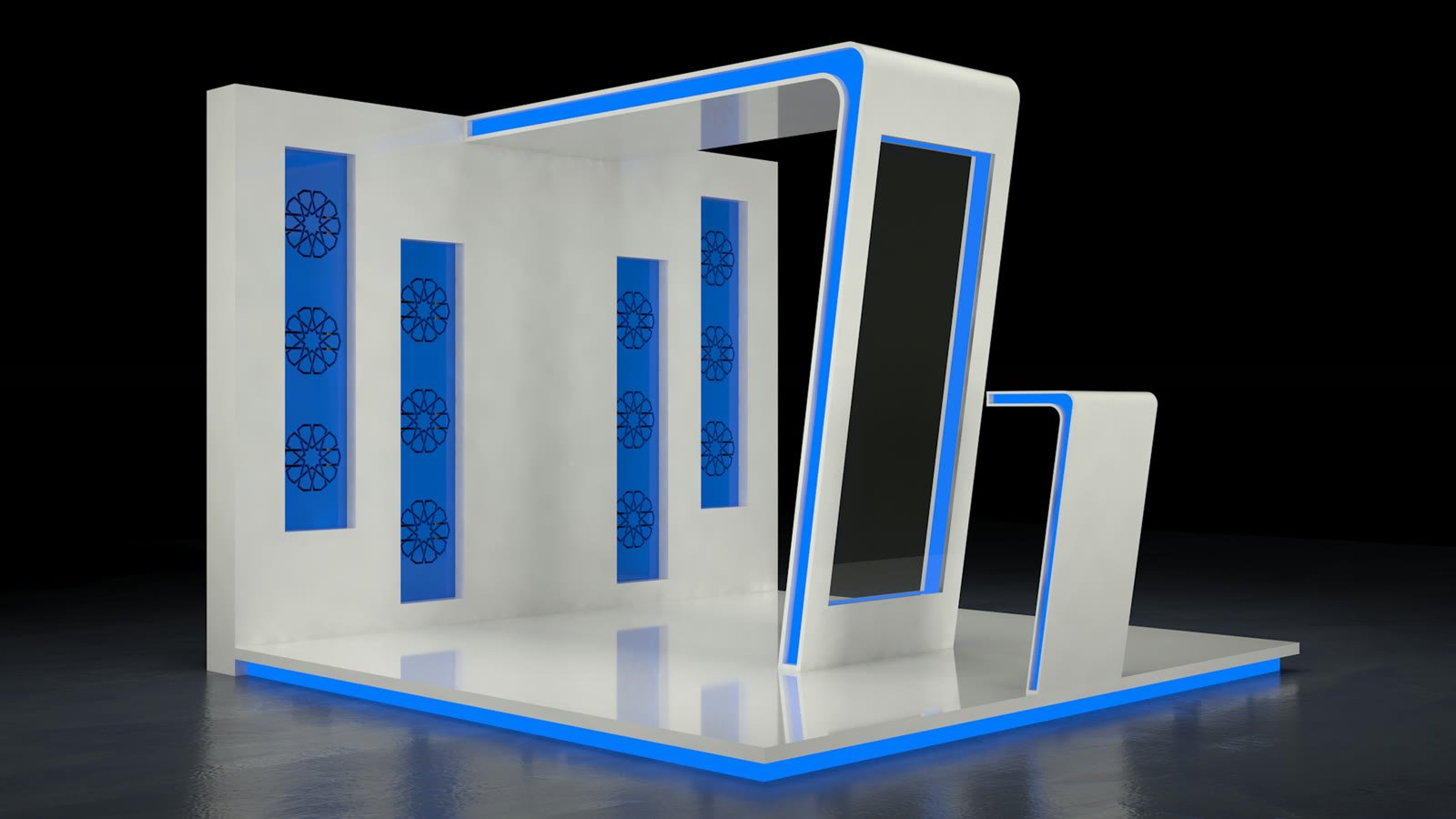
- Custom stand, also bespoke stand (booth mukhassas). Designed and made for one brand on one space, in timber, metal, acrylic and print. Nothing in it is standard, which is why it needs 6 to 8 weeks from brief to opening and carries the largest build line.
- Modular stand, also system stand (booth miyari). Built from an aluminium frame that reconfigures to different spaces, with a printed skin that changes for each show. The frame is paid for once or hired, and with new graphics it is ready in 2 to 4 weeks.
- Portable display (ard mahmul). Anything that travels in a bag and goes up without tools: a roll up, a pop up, a folding counter. It suits a table top event or a shell scheme space, and one person can set it up.
- Double deck, also two storey stand (double deck). A booth with an upper floor reached by stairs. The organiser treats it as a structure, not as decoration, and asks for an engineering file. Allow 8 to 10 weeks.
- Raised floor, also platform (ardiya murtafia). A low timber deck under the whole booth, laid over the hall floor, with cables and pipes running beneath it. It adds a line to the quote and a rule to follow: organisers usually ask for a ramp or a sloped edge.
- Fascia, also name board (fascia, or lawhat al-ism). The strip above the open side of a shell scheme that carries your company name and stand number. The organiser prints it from a form, so the spelling you send before the deadline is the spelling the hall sees.
- Back wall (al-jidar al-khalfi). The wall that faces the aisle from the rear of the space, and the largest surface of the booth. It carries the main message, and where it sits on a shared boundary its rear face is normally left clean and blank toward the neighbour.
- Counter (counter). The reception desk of the booth, where the first conversation starts, usually with a lockable cupboard. It comes as a plain unit inside a shell scheme package, or it is made in the brand’s identity as a line of its own.
- Store room (makhzan). A small locked room inside the booth for cartons, bags and giveaways. It takes floor away from visitors, so on 9 square metres a deep back wall with a door does the same job, and a real room starts to make sense near 36 square metres.
- Lightbox (light box). A frame with light inside and printed fabric stretched across its face. It needs a power point where it stands and files prepared for backlighting, and both are settled before the design is approved.
- Rigging and hanging banner (taliq). Rigging means suspending something from the roof of the hall, most often a banner above the booth. Not every hall or position allows it. It is ordered from the organiser’s side with its own form and date, and your builder does not install it alone.
- Truss (truss). An aluminium lattice beam that carries spotlights, screens or banners. It either stands on its own legs inside your space or hangs from the roof, and in the second case the rigging rules apply to it.
Paper and approvals
None of these words is built, and any one of them can stop a build. They live in the exhibitor manual, and each has a date attached.
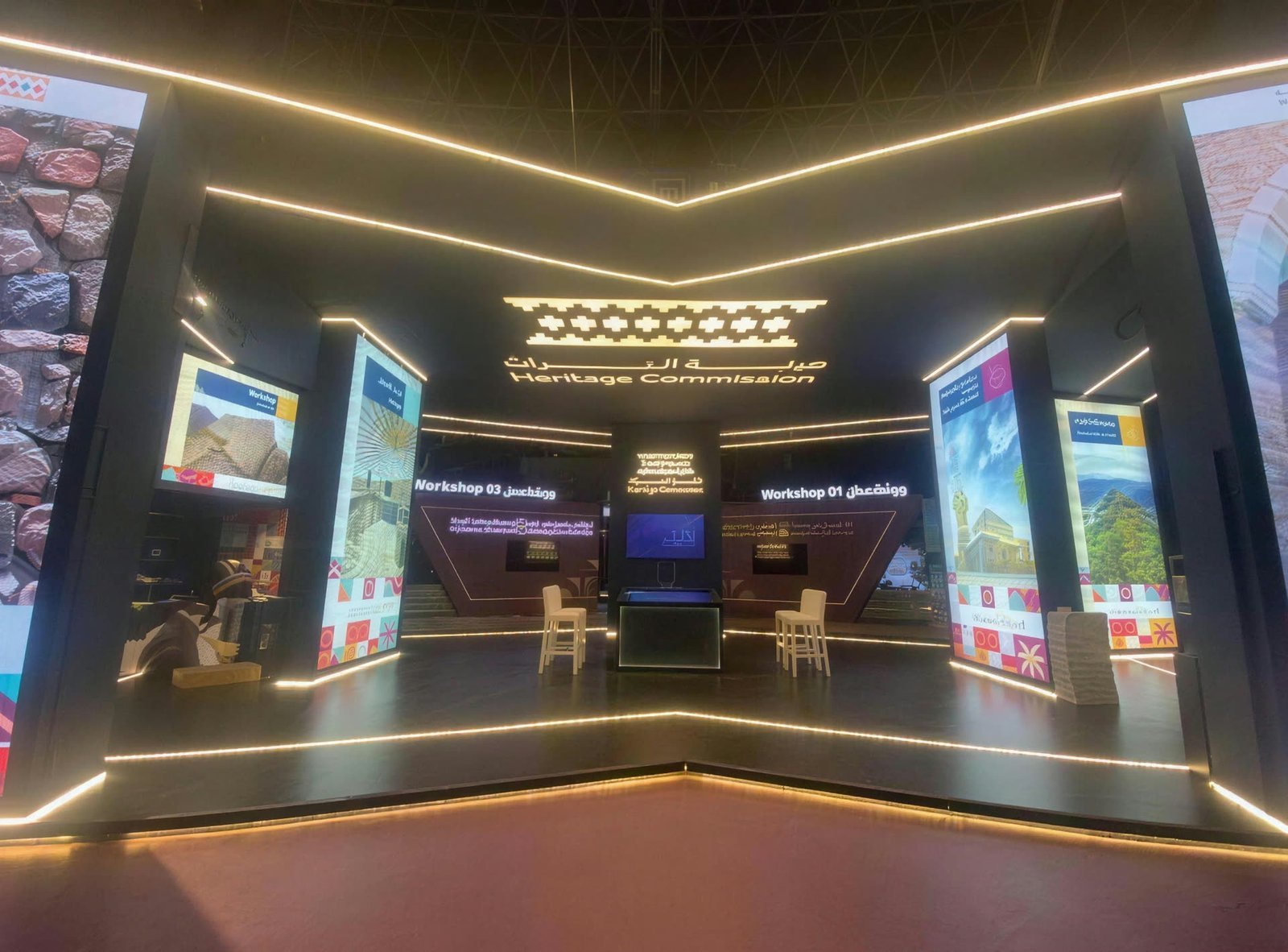
- Exhibitor manual (dalil al-arid). The organiser’s book for one edition of one show: heights, deadlines, forms, hall timetable and order prices. Rules differ from show to show even inside the same venue, so last year’s manual is not a safe reference for this year.
- Stand drawings submission (taqdim al-mukhattatat). A space only exhibitor must send plans, elevations and a rendered view for approval before a set date. The organiser or the venue approves, and the builder prepares the file. Late drawings can mean no permission to build.
- Height limit (hadd al-irtifa). The maximum height allowed for walls and structures. The manual states it, and it often differs between shell scheme rows, space only plots and positions near the hall walls. It is read before the first sketch, because a booth designed above it is simply redrawn.
- Contractor registration and passes (tasarih al-muqawil). The builder you appoint is registered with the organiser, and every worker needs a pass to enter during build-up and tear down. Passes are requested ahead by name, and a crew without them waits at the gate while time runs.
- Damage deposit (tamin al-adrar). A refundable sum some organisers hold against damage to the hall or waste left in it. It comes back after the space is handed over clean, so ask who pays it, you or the builder, and when it returns.
- Risk assessment and method statement (taqyim al-makhatir). Two short documents. The first lists what could hurt someone during the build, the second describes the order of work and the equipment used. The builder writes both, and a large booth is not approved without them.
- Fire retardant certificate (shahadat muqawamat al-hariq). Proof from the supplier that the fabric, carpet, timber or panels resist flame. An inspector may ask for it on site, so its place is in the builder’s folder before the truck moves.
- Power order (talab al-kahraba). Electricity is not part of bare floor. It is ordered from the organiser’s side by load, and by whether you need supply that stays on overnight for a fridge or a server. The builder works out the load, and one of you places the order.
- Late order surcharge (rasm al-takhir). Most order forms carry two prices: one before the deadline and a higher one after it, with orders placed on site the highest of all. Nothing about the service changes except the date you asked, which makes this the easiest cost to avoid.
Time: from build-up to tear down
A show has a calendar of its own, and the contract names its parts with these words. Dates of the coming shows, from their official sources, are in our Saudi exhibitions calendar.
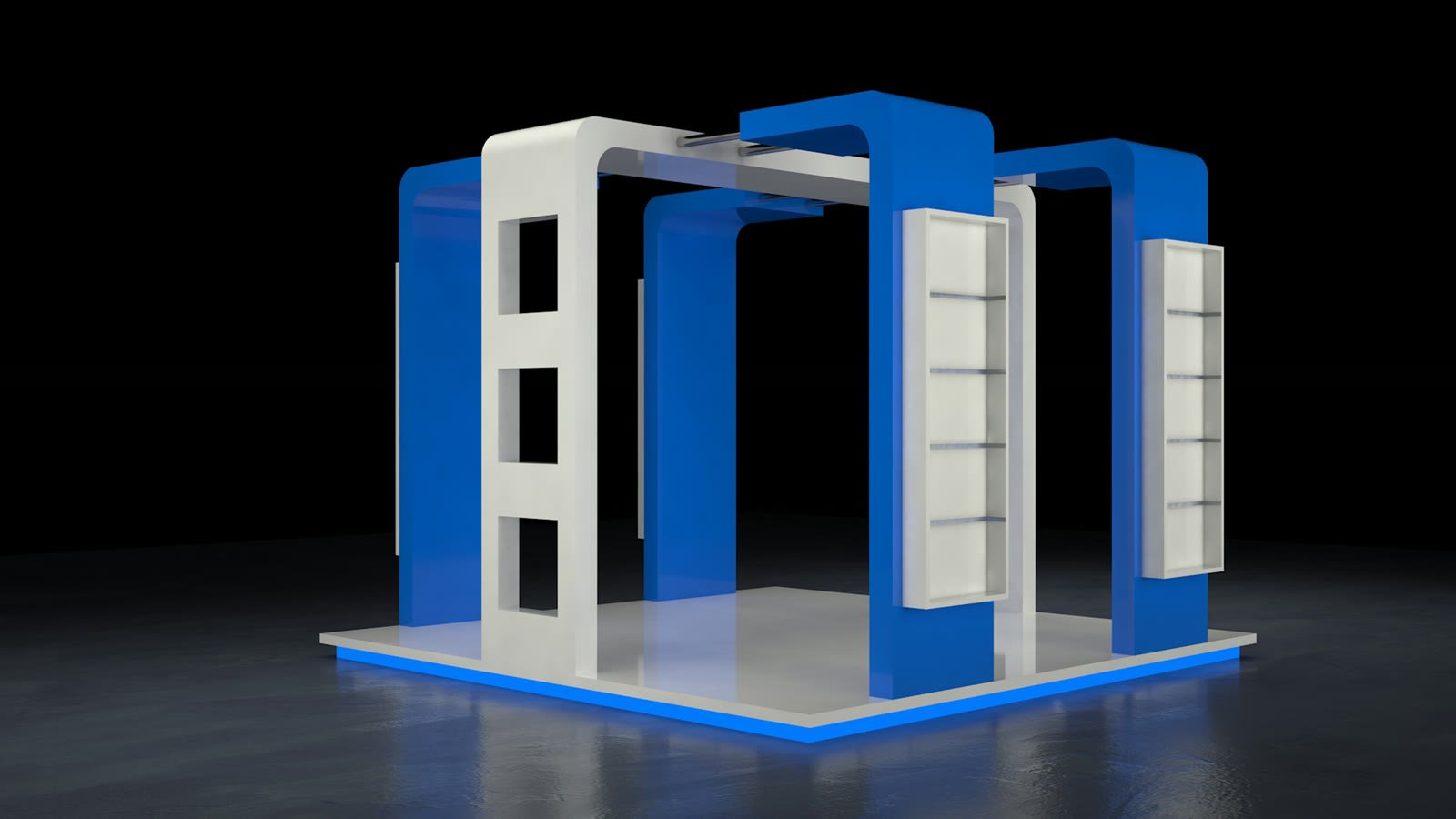
- Build-up, also move in (tarkib). The days before opening when the hall is handed to contractors. Space only booths enter first and shell scheme exhibitors last, quite often on the day before opening only. Your slot, your gate and the vehicle rules are in the manual.
- Show days (ayyam al-ard). The days the show is open to visitors. No building work is allowed, and deliveries are limited to set hours before opening, so whatever was forgotten waits for the next morning.
- Tear down, also move out or breakdown (fakk). The period after closing when everything leaves. It is much shorter than build-up and begins on the last evening itself, which is why a booth is designed to come apart fast. What follows is in our guide to dismantling, transport and storage after the exhibition.
- Early access (dukhul mubakkir). Extra build time before the general build-up begins, requested for a large or complex booth. The organiser grants it, sometimes for a fee, and it has a request date of its own.
- Deadline (akhir mawid). The manual holds a list of them, not one: drawings, name board text, power, passes, rigging. Put them all into one calendar on the day the manual reaches you, because they fall weeks before the show, not days.
- Lead time (muddat al-tanfidh). The time a builder needs from an approved brief to a finished booth. A rental kit from stock takes 5 to 10 working days, an upgraded shell scheme 2 to 3 weeks, and printed graphics 1 to 5 working days once the files are approved. The step by step version is in how long an exhibition stand takes.
People: who answers for what
Most of the confusion at a first show comes from not knowing who answers which question. These are the parties.
- Organiser (al-munazzim). The company that owns the show, sells the space, writes the manual and approves drawings. Your space contract is with the organiser, and every question about rules goes there.
- Venue (markaz al-maarid). The owner of the halls. It sets the limits of the building itself: floor loading, hanging points in the roof, fire rules, door sizes. You rarely deal with it directly, but its rules sit inside the organiser’s manual.
- Official contractor (al-muqawil al-rasmi). The company the organiser appoints to supply hall services to every exhibitor: shell scheme, electricity, rigging, furniture hire and sometimes freight handling. Some services can be bought from nobody else, and its order forms are in the manual.
- Appointed stand builder (al-munaffidh). The company a space only exhibitor chooses and pays to design and build the booth. The exhibitor names it to the organiser on a form, and from then on it handles drawings, passes and the build.
- Exhibitor (al-arid). You: the company whose name is on the space contract. The organiser holds the exhibitor responsible for everything on the space, the builder’s work included, so choosing a builder is also choosing a level of risk.
- Promoter (promoter). A person engaged for the show days to stop visitors at the edge of the booth, hand out samples and open the conversation. A promoter needs a product briefing and an entry badge, and is booked by the day.
- Host (mudif). The person who receives visitors at the counter, serves coffee and points them to the right member of your team. The host’s role is hospitality. The promoter’s is reaching people who have not stepped in yet.
- Supervisor (mushrif). A title two people carry. The site supervisor runs the build crew and is the person you speak to during build-up, and the team supervisor manages promoters and hosts through the show days.
The official contractor is not the stand builder you appoint
This is the distinction a new exhibitor misses more than any other. The official contractor works for the organiser and serves the whole hall. A stand builder works for one exhibitor and answers for one space. If you book a shell scheme, the official contractor builds it and you may need nobody else. If you book space only, you are free to appoint your own builder, and that builder still orders electricity and rigging through the official contractor’s forms.
The Touch is the second kind. We are a builder appointed by exhibitors, working on the space they have booked, and we are not the official contractor of any show. Approvals rest with the organiser and the venue. Our part is to prepare the drawings and paperwork they ask for, to build the booth in our own factory and to install it with our own team.
Exhibition terms for print and graphics
The last words reach you when the printer asks for files. They decide whether the graphics on your booth come out sharp, at the right size and on time.
- Roll up (roll up). A printed banner that winds into a base and pulls up on a pole. It is the smallest item of exhibition kit and travels in one bag, and its place is inside your space, not in the aisle.
- Pop up (pop up). A folding lattice frame that opens into a straight or curved wall, covered by printed panels or a single piece of fabric. It turns a shell scheme wall or a meeting room into a branded background without tools.
- Backdrop (back drop). Any large printed surface that stands behind something: a stage, a counter, a photo corner. The word names the job, not the method, so always state the size and how it stands.
- Artwork (artwork). The final files that go to print, made to the exact size of each surface. A logo and a few photos are not artwork. Someone has to lay them out on the builder’s template, and the print clock starts only when the artwork is approved.
- Bleed (ziyadat al-qass). Image that extends past the finished edge, so cutting or stretching never leaves a white line. The builder’s template shows how much to add, and text is kept away from the edge for the same reason.
- Vector file (vector). A file that describes shapes with lines, not dots, so a logo can grow to the size of a wall and stay sharp. Ask your designer for the logo in a vector format. A picture copied from a website blurs when enlarged.
- Vinyl (vinyl). Printed self adhesive film applied to panels, a counter or glass. It is the usual way to dress shell scheme walls, and it is used once, because it does not survive being peeled off.
- Fabric graphic (qumash matbu). Print on stretch fabric with a sewn edge that presses into a frame. It folds into a bag and is used again, which makes it the usual skin for modular frames and lightboxes.
How files and proofs are handled in production is part of our printing service.
Which words appear in the organiser’s contract and which in the builder’s quote
Once the exhibition terms are clear, the two papers separate. Read each one for its own words, and question any word that turns up in the wrong paper.
- In the space contract and the organiser’s order forms: hall, stand number, area, frontage and open sides, space only or shell scheme, what the shell scheme package includes, power order, rigging, passes, damage deposit, deadlines and late order surcharges, build-up and tear down hours.
- In the builder’s quote: design and drawings, a custom or modular structure, raised floor, back wall, counter, store room, lightbox, truss, artwork and print on fabric or vinyl, transport where it applies as a named line, installation, supervision on site, dismantling and storage.
- In both papers, so settle who handles it: electricity (ordered from the organiser, calculated by the builder), drawings submission (prepared by the builder, approved by the organiser), contractor passes and the damage deposit.
A quote that is silent on the third list is not cheaper. It is incomplete. How the lines of a quote add up is explained in our guide to exhibition booth prices, and the choice between the first two words of the contract in custom stand vs shell scheme. Anyone considering an upper floor should read the double deck stand rules before booking the space.
From the glossary to a brief
With these exhibition terms you can write a brief that a builder can price: the name of the show, the hall and stand number, the area with its dimensions, the open sides, space only or shell scheme, and the dates in the manual. Send it with the manual itself attached. Our exhibition stands service replies with an itemised quote within 24 hours, and every booth is fully test assembled in our factory before it ships. What can be built, from a rental kit to a custom island, is set out on our exhibition booths in Saudi Arabia page, and frames that are used again on the modular and portable stands page.
We have more than one location in the Kingdom, and your project is built in our own factory and installed by our own team. If your show is in Riyadh or Jeddah, notes on the halls are on our pages for exhibition stands in Riyadh and exhibition stands in Jeddah, and how we work between cities is on the event management in Saudi Arabia page. Words shift a little from one country and one organiser to the next. For a picture of the industry worldwide, the general reference is UFI, the global association of the exhibition industry. And when a manual defines a term in its own way, the manual decides.
Frequently asked questions
Is a booth different from a stand?
No. Both words name one thing: your space at the show and what is built on it. Booth is the American word in everyday use in the Saudi market, and stand is the British word found in organisers’ manuals. If the form says stand and the builder says booth, they mean the same space.
What is included in a shell scheme?
Normally panel walls, a name board with the company name and stand number, carpet, basic lighting and a power socket, and some packages add a table and chairs. The exact list is in the exhibitor manual and differs from show to show. Anything not on it is an extra order, graphics on the walls included.
What does space only mean?
That you rent marked floor and nothing else. Walls, flooring, lighting, power and furniture are yours to provide, through a builder you appoint, and the organiser approves the drawings before the build.
Who approves my booth design?
The organiser, sometimes together with the technical team of the venue. The builder prepares the drawings and submits them, and neither the builder nor you can approve them. A shell scheme space that only receives graphics usually needs no more than the name board form.
What is build-up?
The days before opening when contractors build the booths, also written as move in. Its dates and hours for each kind of space are in the manual. Plan to finish well before it ends, since the final hours are for cleaning and for your team to set out products.
Do I need a contractor pass?
As the exhibitor you receive exhibitor badges for the show days. Everyone who builds needs a contractor pass for build-up and tear down, requested ahead through the organiser’s system. If you appoint a builder, the builder arranges passes for its crew. If you plan to set up a roll up in a shell scheme yourself, ask whether the exhibitor badge admits you during build-up.
What is a double deck?
A booth with an upper floor, used for meeting rooms or hospitality above the display area. The organiser treats it as a structure, so it needs drawings and calculations from an engineer and a minimum area that the manual states. It takes 8 to 10 weeks from brief to opening.
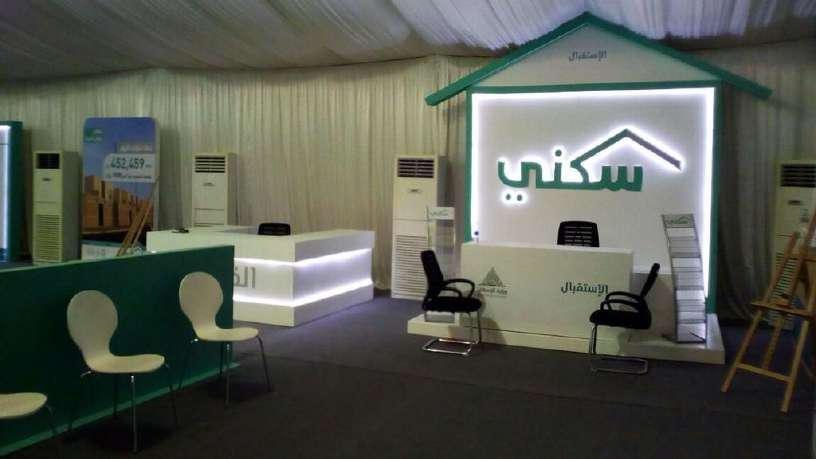
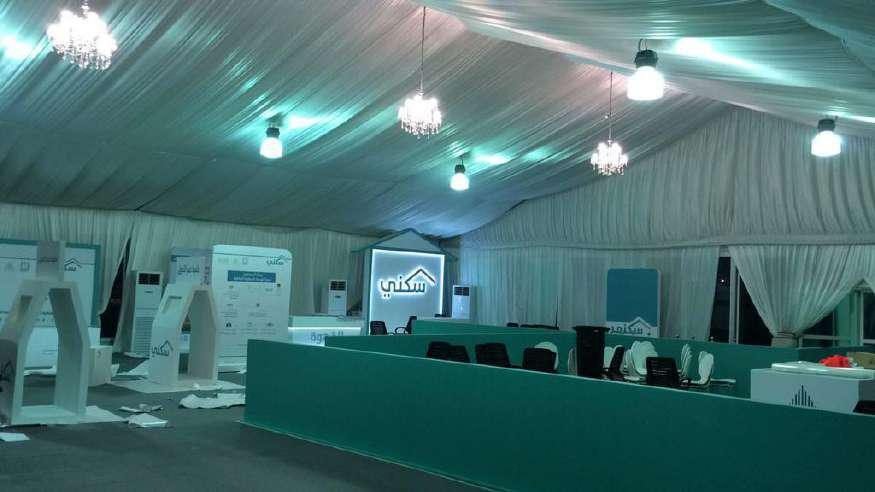
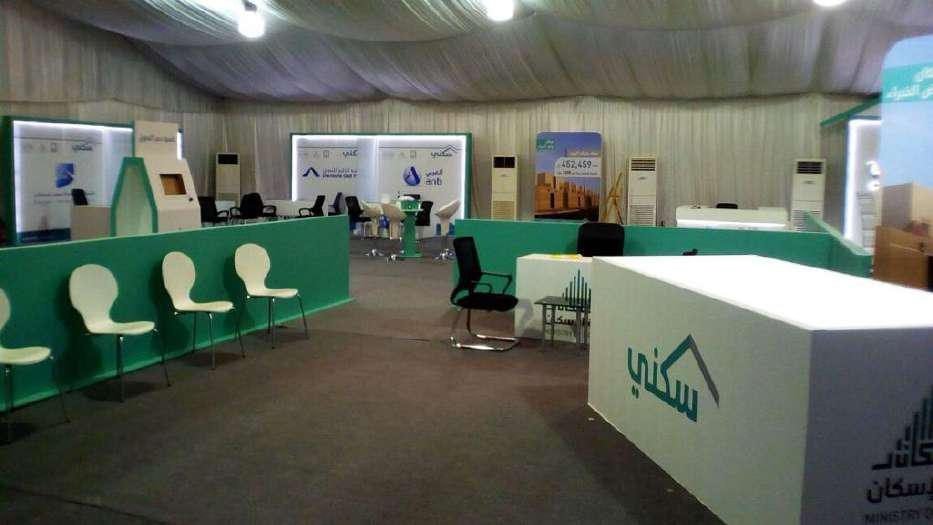
From Our Factory to the Show Floor
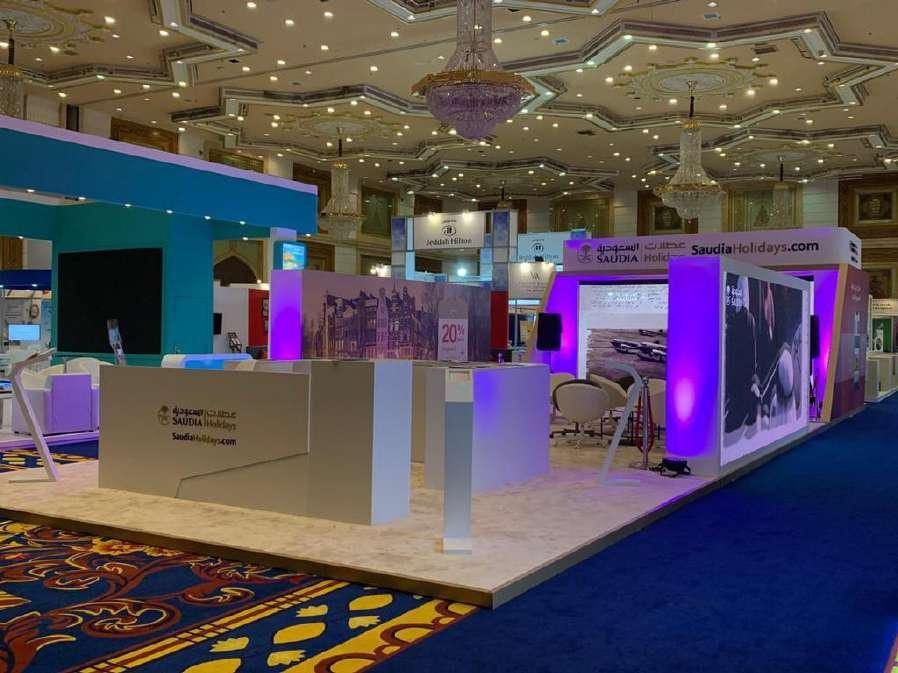
Photographed on site after handover, no renders.
Have a project and want a real number?
Send the area, the date and the city, and we come back with an itemised quote within 24 hours. No commitment, and no vague all-in price.

