
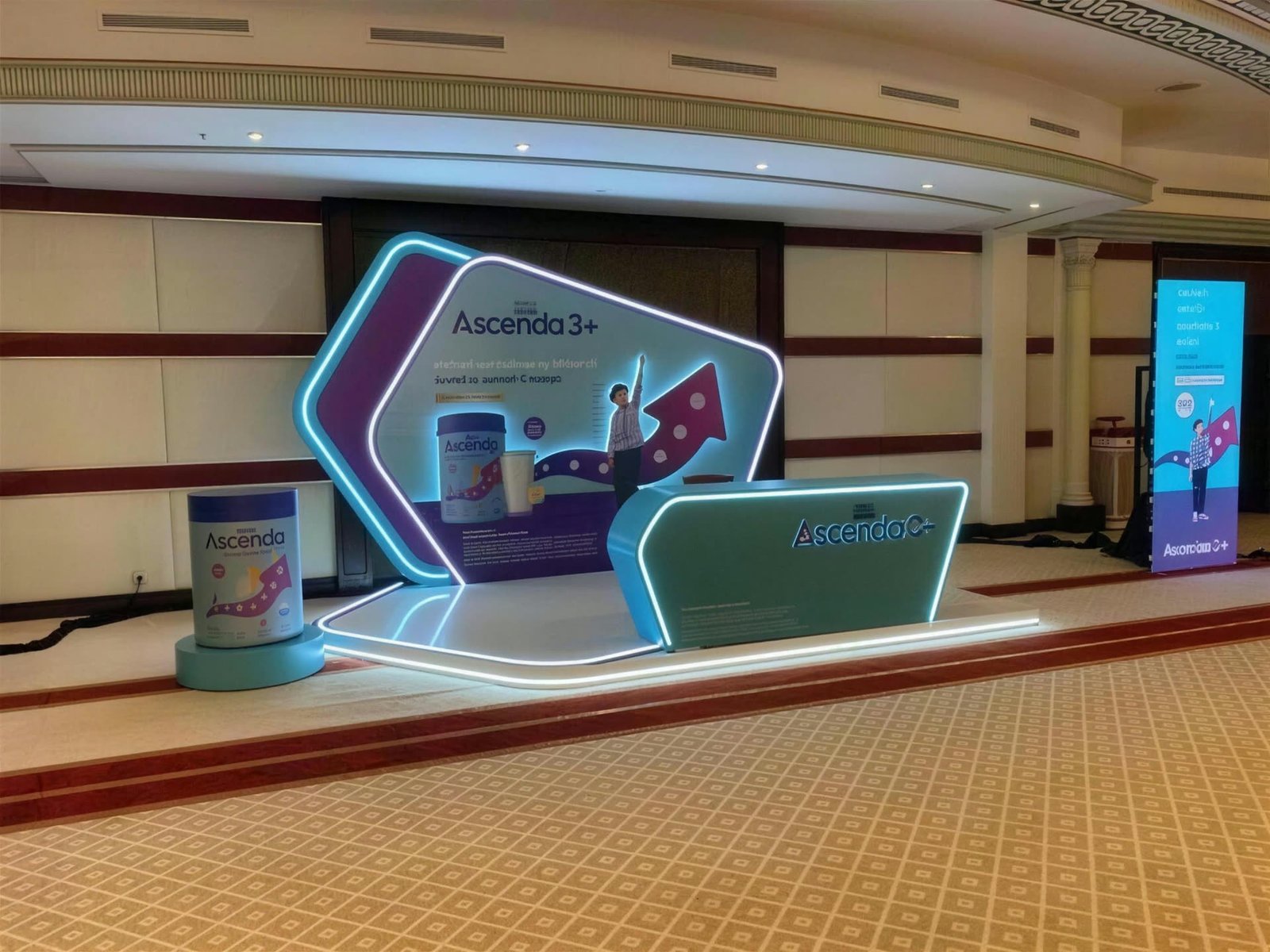
The first question on most calls is not “what does the stand cost?” but “is there time?”. The honest answer is that there is always time for some stand, but not always for the stand you have in mind. A custom stand needs eight weeks from brief to opening day, a modular stand with new graphics four, and a rental kit from stock a matter of days. Between those figures sit the weeks that are lost in almost one place only: approval loops.
This guide answers how long an exhibition stand takes with a schedule read backwards from opening day: the three dates the organiser fixes and never moves, the weeks each kind of stand needs, where the time usually goes, and what is still possible when only three weeks are left.
The short answer, by type of stand
| Type of stand | From brief to opening day | What sets the time |
|---|---|---|
| Custom stand on an island space, or a double deck | Eight to ten weeks | The organiser’s drawing approval, fabrication and the dry assembly |
| Custom inline or corner stand | Six to eight weeks | Two design approval rounds, then the workshop |
| Upgraded shell scheme | Two to three weeks | Graphics, a counter and lighting, no structure |
| Modular stand you own or buy | Two to four weeks | New graphics and the configuration for the space |
| Rental stand from stock | Five to ten working days | Printing the graphics only |
These figures assume decisions are taken on the day they are due. Every day of delay in approving the design is added to the end of the schedule, not the middle, because the workshop does not start before approval and the organiser does not move the opening.
The three dates the organiser fixes
Before any schedule, open the exhibitor manual and find three dates, because everything else is counted from them:
- The deadline for drawings. For any stand above the standard height or carrying a structure, and it comes weeks before opening day. Miss it and the stand is treated as a shell scheme.
- The build window. Two to four days before opening, with fixed hours and booked lifting equipment. A stand that needs more needs prior permission and an extra charge.
- The dismantling window. Usually the night the show closes, sometimes only a few hours. What is not out in time is taken out the hall’s way.
The opening dates themselves, for every show in Riyadh, Jeddah and Dammam from its official source, are in our Saudi exhibitions calendar for 2026 and 2027. The countdown starts there.
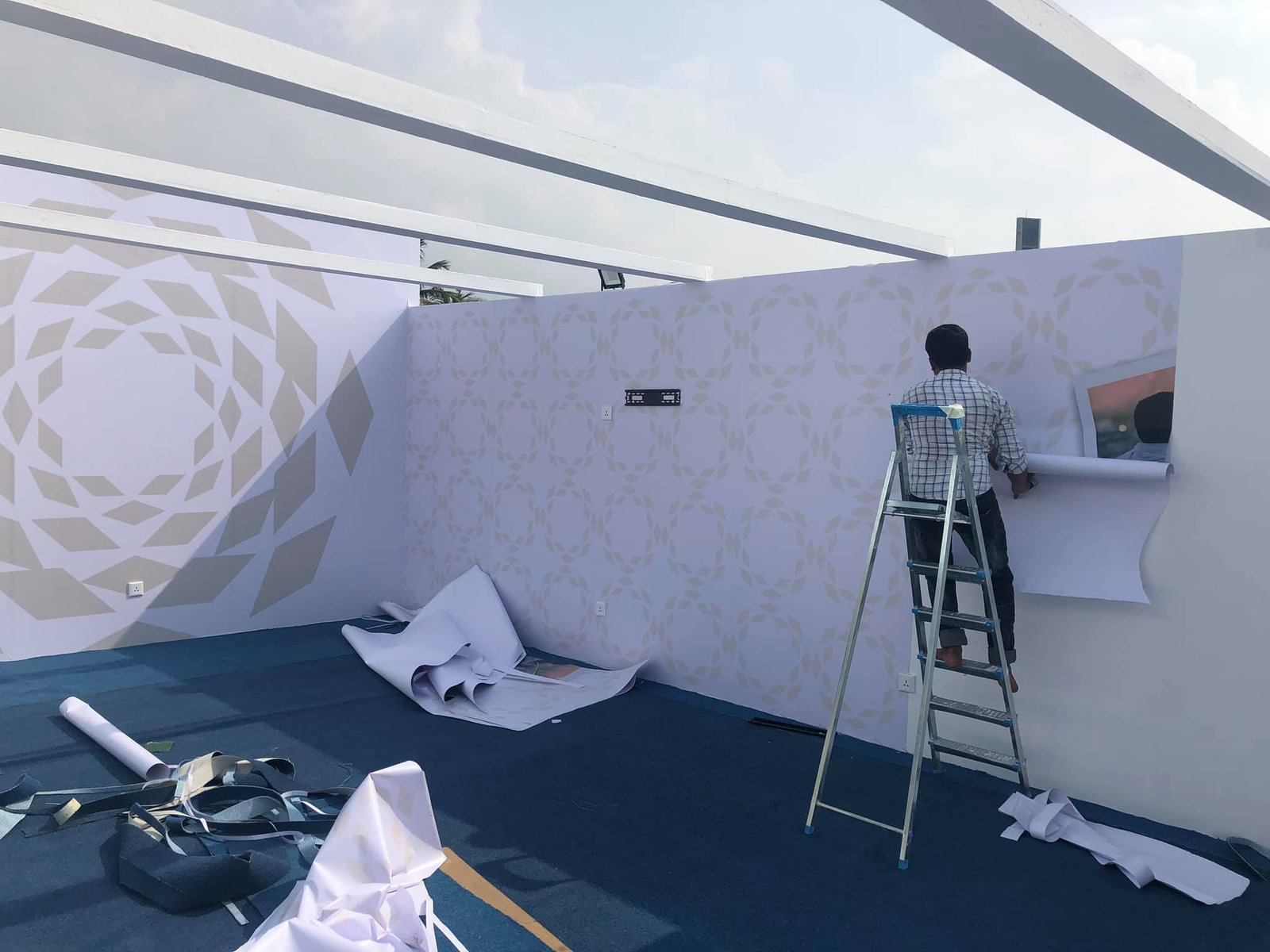
The schedule backwards: a custom stand in eight weeks
This is the schedule we actually work to for a custom stand of medium size. Read it from the bottom up if what matters to you is “when do I have to start”.
- Eight weeks before opening day: the brief. Space, open sides, show name, goal, budget and the exhibitor manual. One day on your side saves a week later.
- Seven weeks before: the concept design. A 3D view, a plan and a lighting plan in three to five working days, then a first approval round.
- Six weeks before: the final design and the organiser submission. Changes closed, and the drawings the organiser asks for sent before its deadline. From here the material is cut.
- Five and four weeks before: the workshop. Frame, joinery, acrylic and lighting. Any change requested here is paid for twice.
- Three weeks before: print. Graphics are printed after the final files are approved, to the real panel sizes rather than the estimated ones. Stand printing needs one to five working days depending on the material.
- Two weeks before: the dry assembly. The stand is fully built in the workshop, photographed, its parts numbered, then dismantled and packed. This week is what turns the build night in the hall into a night of reading numbers instead of a night of discoveries.
- One week before: transport. A day for Jeddah, one to two days for Riyadh and Dammam with a margin. Furniture, screens and giveaways travel with the stand, not after it.
- The build window: installation. Two days for a medium stand, three for a large island, and the organiser’s inspection on the last day before opening.
- Opening day. The installation team is there for the first hour, for any loose panel or spotlight that does not switch on.
The part most schedules leave out is what comes after opening day: the dismantling night needs as much planning as the build night, and our article on dismantling, transport and storage has the whole order.
Where the time usually goes
In five years of schedules, the weeks were almost never lost in the workshop. They were lost here:
- Design approval by more than one person. Three approvers mean three rounds of changes. Agree on the one decision maker before the brief.
- The logo and the final files. A low-resolution logo or an identity that is not yet closed stops the print, not the design. Ask for the files in the first week.
- The organiser’s drawings. Whoever discovers the drawing deadline after it has passed loses the height and the structure, and goes back to a shell scheme.
- Imported items. Furniture, a screen or a fitting ordered from abroad needs weeks of customs, not days of shipping. The local alternative is decided in week six, not week two.
- Holidays. Eid al-Fitr and Eid al-Adha close workshops, printers and transport for days, and many Riyadh shows fall right after them. Count the week before Eid as half a week.
A working rule: the schedule we send with the quote carries one date in bold, the last day for design approval. Everything after it is fixed; everything before it is in your hands.
Only three weeks left: what is still possible
The show is in three weeks and nothing has been booked. This happens every month, and the honest options are three:
- A modular stand from stock with new graphics. A configuration drawn on your space in a day, graphics printed in days, set up in hours. Read about modular and portable stands before you decide.
- Upgrading the shell scheme the organiser gives you. Full-height graphics, a counter, better lighting and flooring, in one night. The cheapest way to stop looking like the stand next door.
- A small custom stand with no tall structure. Possible in three weeks if the design is approved on day two and stays within the standard height, at a price that carries the rush.
What is not possible in three weeks: a double deck, a structure that needs the organiser’s drawing approval, or any imported item. Whoever promises you those is selling you a build night you will not sleep through.
The city changes the schedule
Our workshop is in Jeddah, which means exhibition stands in Jeddah gain a full day in the schedule: the stand goes from the workshop to the hall in the morning, is installed the same day, and any missing part arrives within the hour. Riyadh and Dammam add a transport day plus a margin, so we ship a day before the build window and keep the kit on site overnight. Our page on exhibition stands in Dammam covers the Dhahran Expo windows specifically, because its industrial shows need heavy fittings that have lifting equipment booked early.
Mistakes that eat the weeks
- Starting the design before reading the exhibitor manual. Then the design is redone after the height limit or the column positions are discovered.
- Approving a “preliminary” design as final. Then changes are requested after cutting, each one paid for twice and taken out of the print week.
- Printing the graphics before the dry assembly. So the millimetres of difference are found on a printed panel instead of a file.
- Booking transport in the last week. Trucks to Riyadh before the large shows are booked weeks ahead.
- Ignoring Eid in the count. Eid week is a lost week in the workshop, the print room and on the road.
- Measuring success after the show without a goal before it. The schedule starts with the goal too, so read how to measure exhibition success before the brief, not after.
Cost follows the schedule: a rush is priced, and the dry assembly that looks like an extra line is what saves an extra night in the hall at the hall’s price. The full breakdown is in exhibition stand cost in Saudi Arabia, and the Center for Exhibition Industry Research, CEIR, finds that most budget overruns at shows come from last-minute decisions, not from the price of the stand.
Frequently asked questions
How long does an exhibition stand really take?
Eight weeks for a medium custom stand from brief to opening day, ten for a large island or a double deck, four for a modular stand with new graphics, and five to ten working days for a rental stand from stock.
What is the first date I should know?
The organiser’s deadline for drawings, because it comes weeks before opening day and decides whether a tall structure is allowed at all. Then the build window and the dismantling window, all in the exhibitor manual.
Can a custom stand be built in three weeks?
A small one with no structure above the standard height, yes, if the design is approved on day two and the rush is priced in. A double deck or anything that needs drawing approval, no; the honest choice then is modular or an upgraded shell scheme.
Where is the time lost in most projects?
In design approval by more than one person, in logo and identity files that are not ready, in imported items, and in Eid weeks. The workshop is rarely the reason.
Do Riyadh and Dammam need more time than Jeddah?
One to two days more, for transport and a margin. We ship a day before the build window and keep the kit on site, so opening day does not change; the shipping day moves earlier.
When are the graphics printed?
After the final files are approved and the real panel sizes are fixed, which is three weeks before opening day. Printing earlier means printing twice.
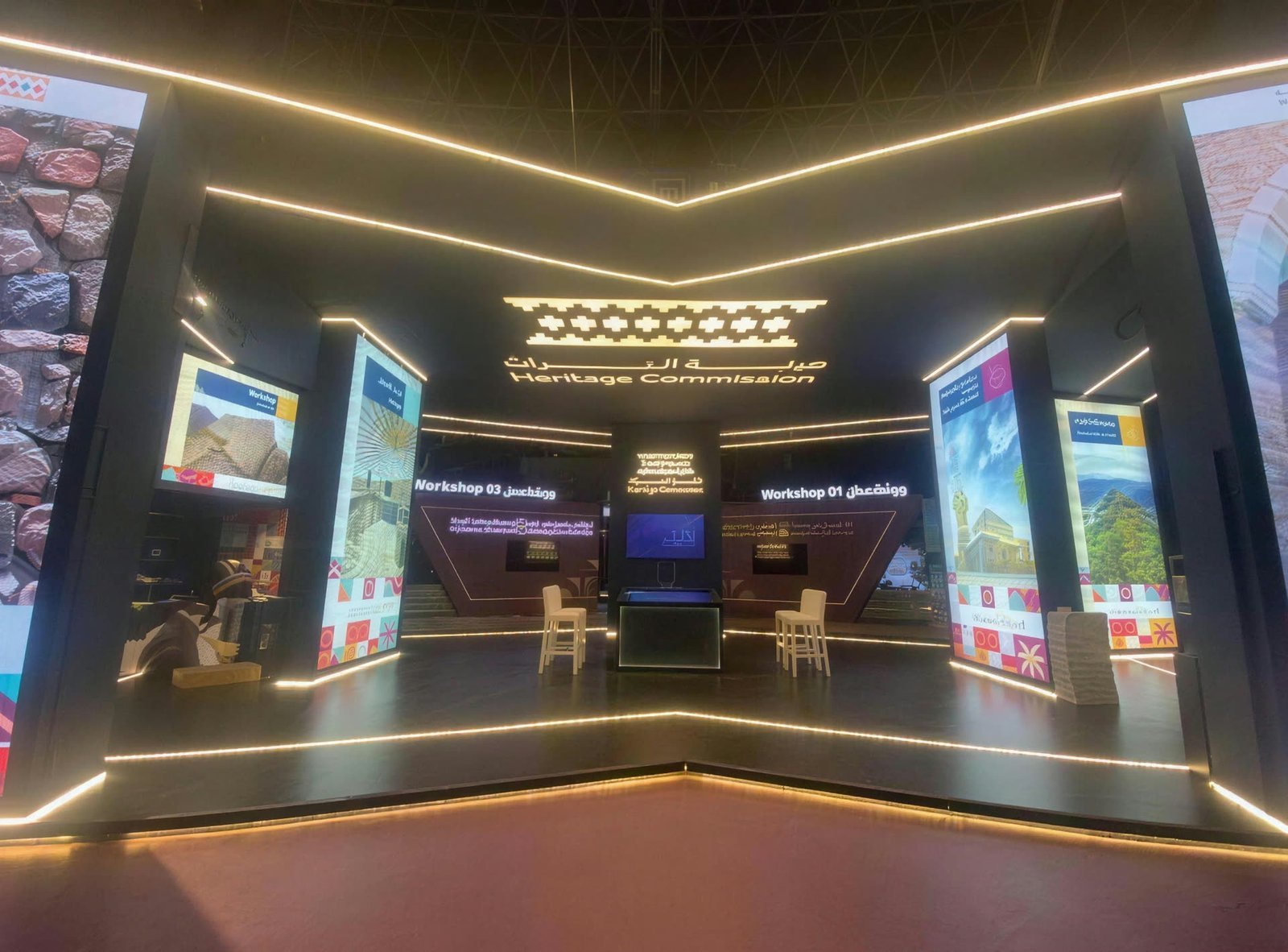
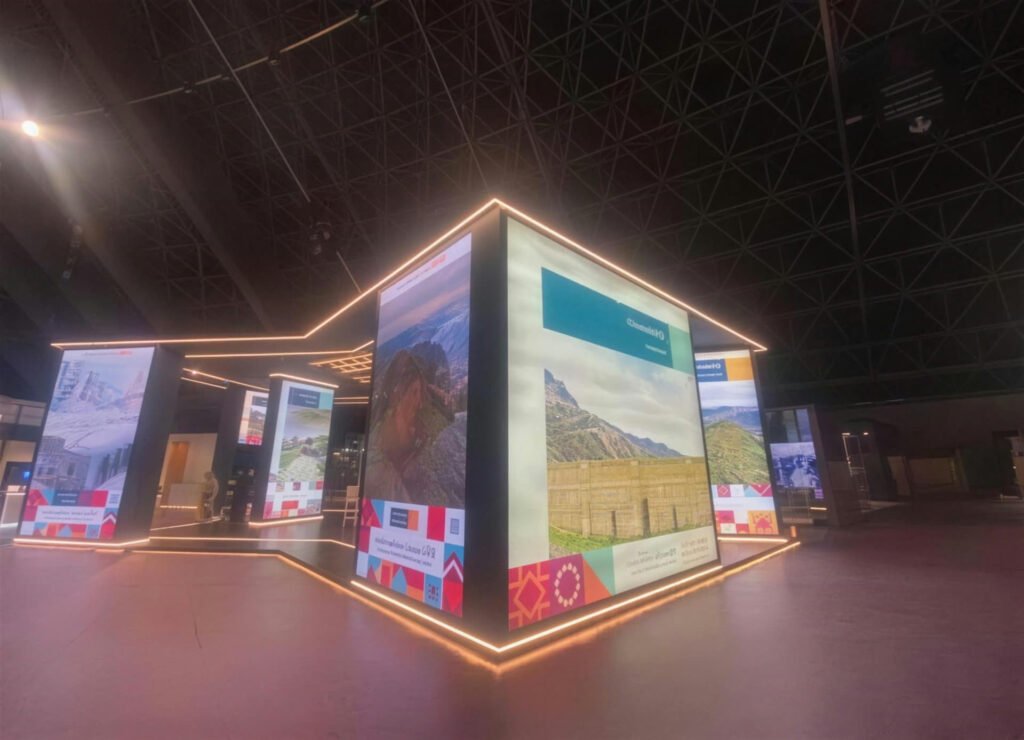
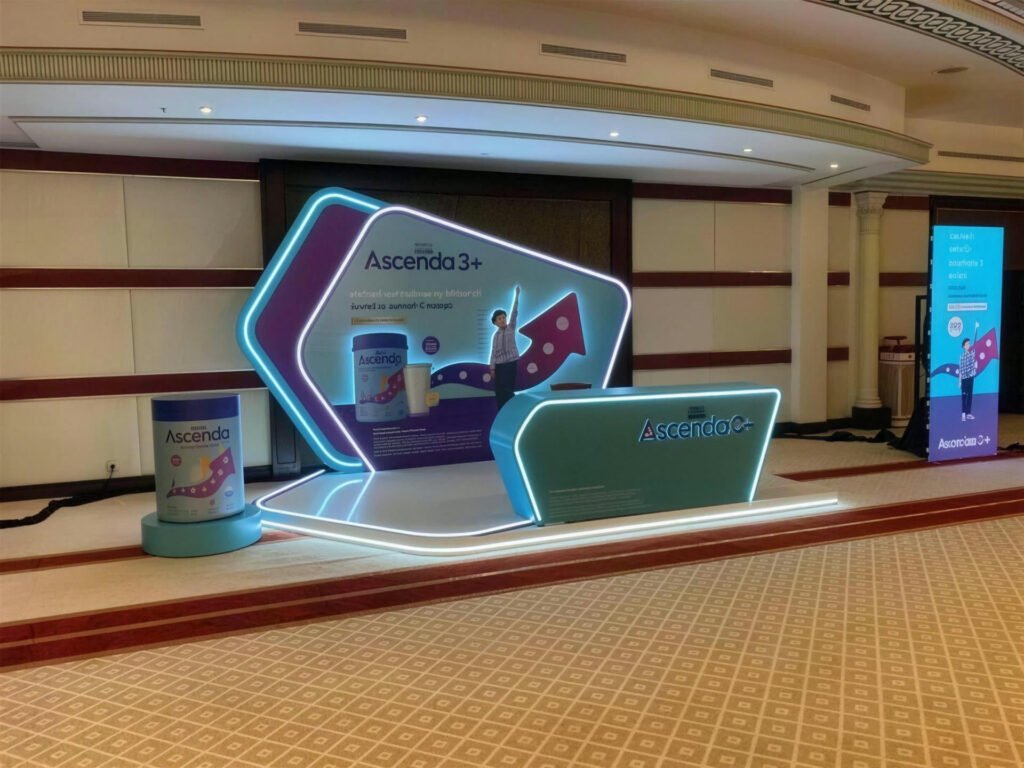
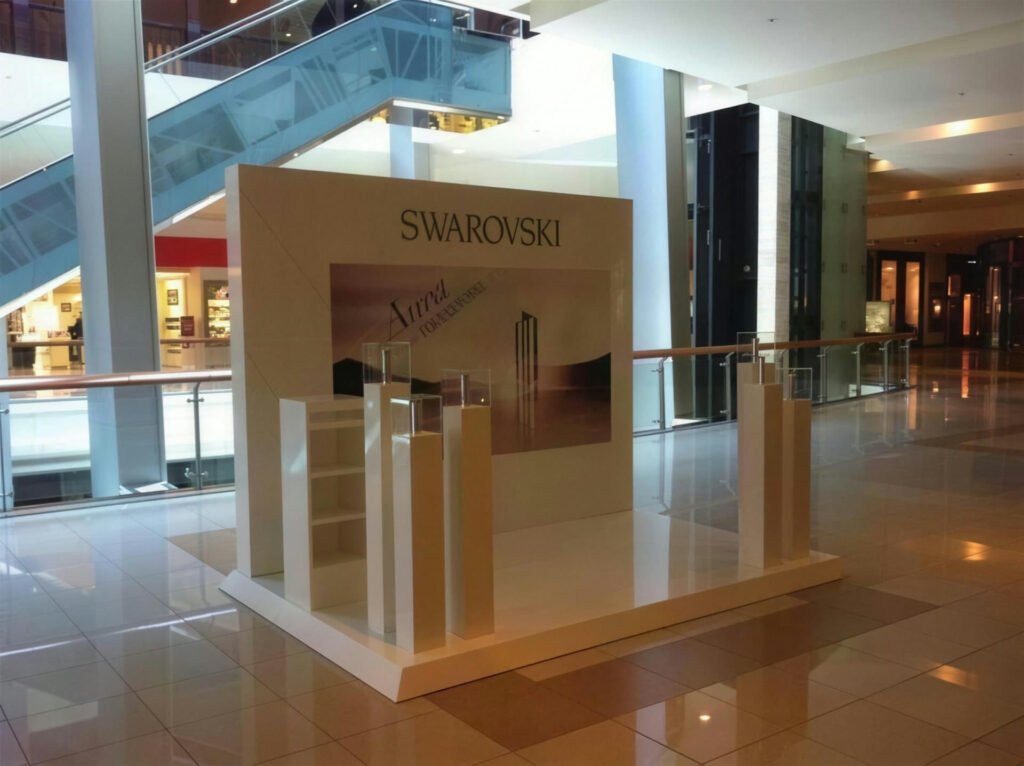
Stands we designed, built and installed
Photographed on site after handover, no renders.

Have a project and want a real number?
Send the area, the date and the city, and we come back with an itemised quote within 24 hours. No commitment, and no vague all-in price.

