
Coffee Booth
Coffee Booth Drawn Around the Machine and the Queue
A coffee booth is not an ordinary counter with a logo on it. The espresso machine sets the length and depth of the worktop, water needs a way in and a way out, the queue needs room that leaves the aisle clear, and the lit sign has to be readable from the back of the line. At The Touch we design the coffee booth or kiosk, build it in our own factory and install it with our own team in the mall, the exhibition hall or the seasonal site. The machine, the baristas, the coffee and the food licences stay on your side, and we build around them. This page covers what to settle before the drawing, what moves the price, and when renting beats owning.
Why a Counter With a Logo Is Not Enough
A coffee booth works long hours among steam, water and crowds. These points separate a booth that helps the barista from one that slows every cup.
The machine decides the counter
An espresso machine is heavy and hot, with a grinder beside it and a knock box for spent grounds below or close by. So the worktop is only drawn once the specification sheet arrives from your machine supplier: width, depth, weight, and where the water inlet, the drain and the power socket sit. The top that carries it rests on a sturdy frame underneath, never on a lone board.
Water in and water out
At many exhibitions and most outdoor sites there is no water point near the booth. The booth then runs on a clean water tank, a waste water tank and a pump, provided your machine allows it. Those tanks need a cabinet with a door that is easy to reach, because the barista will swap them during the shift, not after it.
Order, pay and collect in different places
When people waiting for their cup stand where the next customer orders, the whole line stalls. A well planned booth separates the order and payment point from the pick up point, and the direction of the queue is set on the plan before anything is built, so it neither blocks the aisle nor hides a neighbour's front.
A sign seen from afar, a menu read from the line
Visitors decide from a distance that this is where the coffee is, then read the menu while they wait their turn. So the lit sign crowns the booth, and the menu sits at the eye level of someone at the back of the queue, with few items and large letters.
What Completes the Coffee Booth
The body and the worktops come from our factory. Our other teams add these, so the booth is complete in a single order.
Printing & Promotional Gifts
A printed menu, labels for bean bags and tins, and graphics that wrap the booth body. Graphics are printed in 1 to 5 working days once approved.
Acrylic & Wood Fabrication
Lit acrylic letters, a small menu holder for the counter and clear bins that show whole beans, cut on our CNC and laser machines.
Promoters & Brand Ambassadors
Hosts who greet visitors, keep the line in order and hand out samples under a supervisor. The baristas come from your own team.
Branding & Creative Studio
A logo, a colour palette and a menu style for a young coffee brand, settled before the booth is drawn.
Digital Solutions
A screen menu that changes with the time of day and the season, and visitor sign up on a tablet. The point of sale system comes from your provider.
Experiences & Events
An opening day, a tasting session or a latte art contest that makes the counter a place people head for, not one they pass.
Social Media & Content
Photos and short clips of the bar at work, the pour and the steam, posted from the site itself.
Custom Exhibition Stands
When the coffee bar is one part of a larger stand at a show, the whole stand is designed and built together.
Which Coffee Booth for Which Place
The words coffee booth are used for quite different things. Decide which one you mean before asking for a quote, because each type changes the drawing and the price.
A coffee bar inside an exhibition stand
A company treating its stand visitors to good coffee, or a coffee brand exhibiting at a food and hospitality fair. The bar is part of the stand and runs for the show days only, and the exhibitor manual and the organiser decide whether selling is allowed or only free serving.
A coffee kiosk in a mall
A unit that trades every day for months or years, locks at night and opens each morning, under the design guide of the mall. It is the closest type to a small cafe, so it needs more storage for cups, lids, milk and beans.
A mobile coffee booth
A booth made in sections that bolt together, or a body on braked castors, that moves between events and sites. It is drawn to fit the truck door and the venue entrance, and its corners are protected because it will be loaded and unloaded many times.
An outdoor kiosk for a season or a winter market
In the open the unit needs shade, a weighted base that is not fixed into the ground, graphics that survive sun and dust, and lighting that keeps it visible in the evening, when the site fills with visitors.
A specialty coffee bar
Roasters and specialty brands want the customer to watch the brew: a low counter for hand pour over, room for scales and kettles, and a shelf that shows each crop in its bag next to an origin card.
A Saudi coffee and tea corner
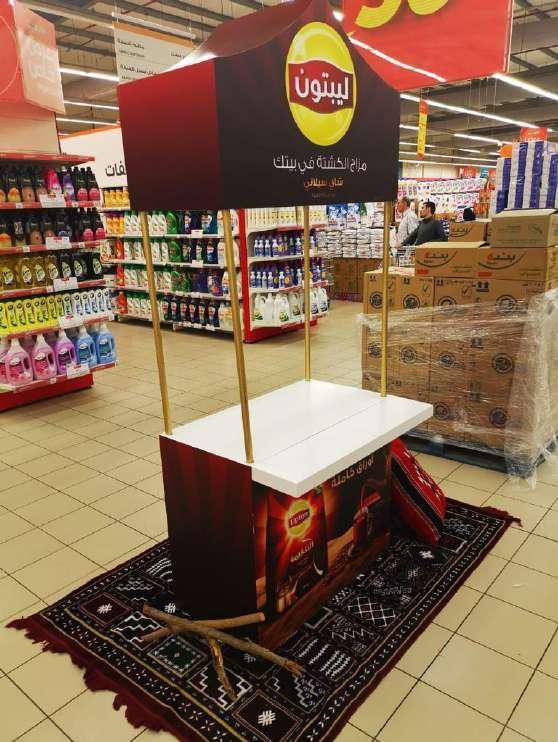
Hospitality with dallahs and dates at a conference or a company celebration, or a tea brand's kiosk inside a supermarket. Character leads here: wood, patterns, warm light and a serving table where the guest stands instead of a queue.
Coffee Booth Design, From Spec Sheet to First Cup
The order matters here: whoever draws before knowing the equipment ends up drawing again.
The equipment list and the site
We start from what will run in the booth: the machine, the grinder, the fridge, the ice maker and a blender if there is one, each with its specification sheet from the supplier. Beside it goes the site: the mall plan and guide, the exhibitor manual of the show, or the rules of the outdoor venue.
The workflow behind the counter
We draw where the barista stands and where the order taker stands, where milk and ice come from, and where spent grounds and cups are thrown. The shorter the reach between grinder, machine and pick up point, the shorter the wait for every cup.
Services drawn, not assumed
A load schedule lists the power each appliance draws, so the venue can supply enough capacity. We fix whether water comes from a connection or from tanks, where the drain runs, and where the vents for the milk fridge under the counter sit.
Materials, brand and samples
Surfaces that take water and heat around the machine, the brand's wood or colours on the front, a lit sign and a menu. Real samples of colour and surface are approved together with the rendered views before any cutting starts.
Build and test assembly
The booth is built in our own factory and fully assembled before it ships. The openings for the machine, the grinder and the fridge are checked against the sizes on your equipment list, and the lighting and the sign are switched on and tried.
Installation and handover
Our own team installs in the hours the venue sets and stays for the opening, then your equipment technician connects the machine. After a short event we dismantle, and the booth can wait in our storage until the next season.
How Long a Coffee Booth Takes
A coffee booth designed from scratch
6 to 8 weeks from brief to opening, the same as a custom stand.
A modular frame with new graphics
2 to 4 weeks, with a counter and a sign in your brand.
A ready rental kit
5 to 10 working days from a confirmed order to a booth ready for delivery.
Menu and graphics
1 to 5 working days once the design is approved, and a new menu follows the same route.
What a Coffee Booth Costs and What Moves the Number
We publish no fixed price for a coffee booth, because the same footprint can be built to very different levels. These are the lines that push the price of a coffee kiosk up or down, named so you can compare offers fairly.
Footprint and shape
A small kiosk with a straight counter is a different job from an island served on every side, or from a stand with a bar and seating. At exhibitions spaces of 9, 18 and 36 square metres come up often, and what is drawn inside them sets the quantities.
Rent or own
A rental kit is priced by the days from the day it leaves to the day it returns, while an owned booth is paid for once and comes back every season. The choice follows how many times the booth will work in a year.
The surfaces around the machine
Laminate on boards with sealed edges is the economical end, while veneer, solid wood and curved fronts add hours. What matters most is that the surface takes water and heat where the barista works.
The water cabinet and services
A booth that runs on tanks needs a cabinet with doors and shelves that carry the weight of the water, and hidden routes for pipes and cables. The tanks and the pump themselves come from your equipment supplier.
Sign and lighting
A lit sign with raised letters, a light box menu with a face that changes, or the logo in neon flex: each option carries its own cost. A menu printed on a replaceable face costs less over time than a new sign every season.
Transport, installation and storage
Night installation in a mall, work on an open site, or keeping the booth in our storage between seasons are each named lines. Where transport applies, it is a named line in the quote.
Send the kiosk location, its size, your equipment list and the opening date, and an itemised quote for your coffee booth reaches you within 24 hours. Request a quote or message 0567069088 on WhatsApp. For how booth budgets are built in general, read our article on exhibition booth prices.
Mall, Show or Open Site: Who Approves the Coffee Kiosk
A coffee booth passes the approval of a party that is neither the builder nor the brand, and that party changes with the place. In a mall the design guide of the mall management rules, many malls ask for a separate approval for any food and drink activity, and they set the installation hours and the way water and power are connected. At an exhibition the organiser decides whether coffee may be sold on the stand or only served free, and some exhibition centres are tied to an exclusive catering contractor, so ask the organiser in writing before you build a plan around sales. On open sites and seasonal venues the operator of the site or the municipality decides what is allowed, along with its rules on shade and safety. In every case your brand obtains the municipal licence for the activity, the health certificates for the staff and the food safety approvals, while we prepare the drawings, the materials sheet and the technical details the approving party asks for. If the unit will sell more than coffee in a mall, the full picture is on our mall kiosks page, and if all you need is a tasting for a few days, one of our promotional counters may be enough. The lit sign and the backlit menu are covered on illuminated signs and light boxes, and a giant cup figure or raised letters above the booth on our letters and props page. For a short event, renting saves you from owning: see booth rental in Riyadh and booth rental in Jeddah. Ceramic mugs with your logo to sell at the counter come from logo mug printing.
How to Choose the Best Coffee Kiosk for You
The best coffee kiosk is not the biggest or the most expensive one. It is the one that fits how long it will trade, where it stands and how it serves. These questions settle the choice.
How many days will the booth work?
For an event or a show that lasts days, a rental kit with your brand graphics is enough. For a whole season, or a mall unit that sells every day, an owned kiosk made for its place is better value and tougher.
Will you sell coffee or serve it as hospitality?
Selling means a payment point, a queue and more stock. Hospitality on a stand or at a conference means an elegant serving table where the guest stands, with no long line and no cash drawer.
Is there water and a drain on site?
If there is a connection point nearby, the build is simpler. If there is not, ask your machine supplier whether it can run from a tank, and the counter is then drawn to carry the tanks and make swapping them easy.
Will the booth move from place to place?
A mobile coffee booth is designed from the start in sections that bolt together, or as a body on castors, with cases that protect it. A unit that stays in one place can be heavier and simpler.
Indoors or in the open?
Indoors, the lighting, the height and the rules of the mall or the show decide. Outdoors, sun, wind and dust decide, so the booth needs shade, a weighted base, and graphics and lighting made for outside.
Mistakes That Keep Coming Back in Coffee Kiosks
Each of these shows on the drawing to anyone who looks, and shows to the customer in the first busy hour if nobody did.
A machine bought after the counter was built
The new machine arrives wider or deeper than the opening, or its water inlet sits on the other side. Confirm the model of the machine and the grinder before the drawing starts, and send the specification sheet with it.
Boards swelling by the drip tray
Dripping water and milk steam reach the board edges, which swell and lose their facing. Around the machine and the sink, surfaces need a water resistant facing and sealed edges.
Power cutting out at the rush
Machine, grinder, kettle and fridge all run together in the busiest hour. If the load schedule did not reach the venue management early, the supply may fall short, and the breaker trips when the line is longest.
A fridge with no air
The milk fridge under the counter needs air coming in and going out. Shut in a cabinet with no vents, it overheats and stops, and the milk spoils in the middle of the day.
A queue across the aisle or a neighbour's front
A line that was never drawn goes wherever it likes, and the mall management objects or the next exhibitor complains. Set its direction on the plan, and put the menu where the people standing in it can read it.
A crowded menu nobody can read
A menu with many items in small letters slows every order, because the customer reads it at the till. Fewer items and clear prices at eye level move the line faster.
One Factory for the Kiosk, Its Sign and Its Light
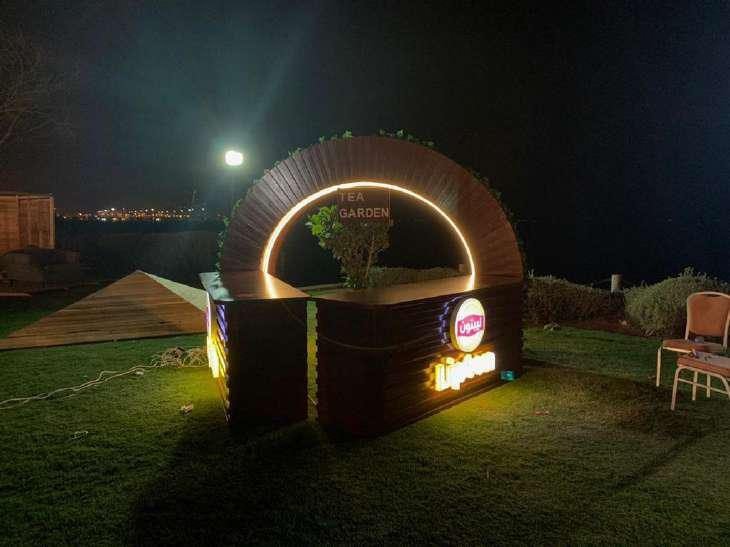
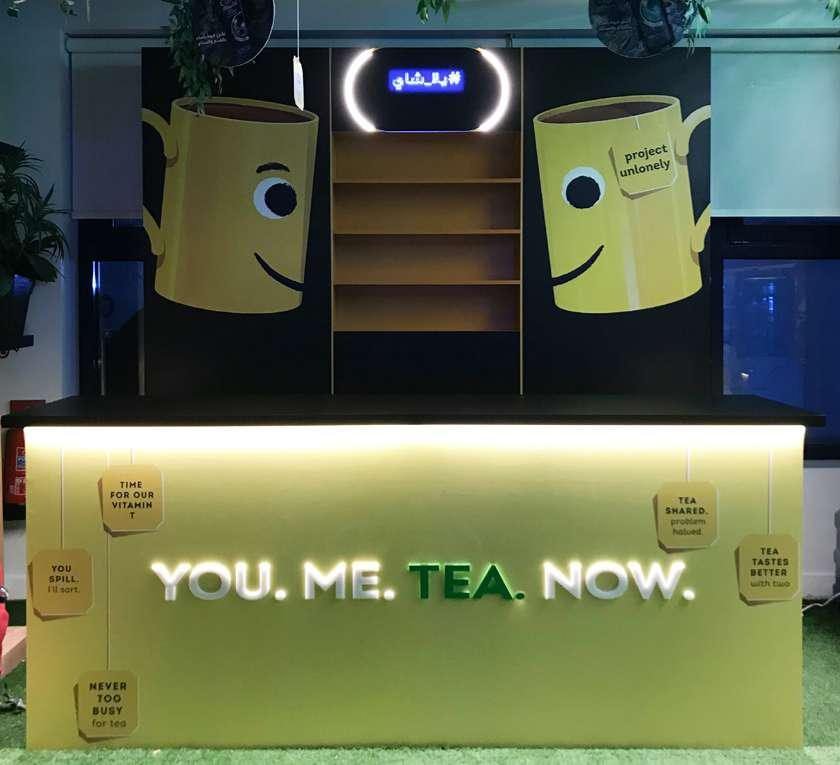
Design, CNC and laser cutting, joinery, paint, acrylic, large format print and installation all sit under one roof with us, so the counter, the lit sign and the menu leave the same factory in matching colours. Our delivered work includes kiosks for tea and hot chocolate brands: a tea kiosk inside a supermarket, an outdoor tea kiosk lit for the evening, a hot chocolate kiosk, and a tea counter topped with figures of mugs. We have worked for Kinan, the Heritage Commission, Saudia, Johnson & Johnson MedTech and Swarovski.
Kiosks and Corners From Our Factory
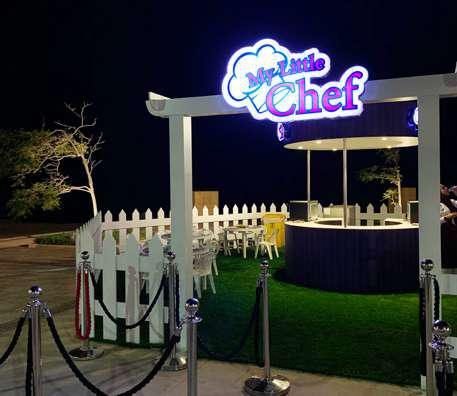
Mall kiosks and corners we built and installed for our clients.

Questions About a Coffee Booth
What cafe owners, roasters and coffee brands ask before they order.
How much does a coffee booth cost?
There is no single price, because the cost follows the footprint, the materials, the lighting, whether the booth is rented or owned, and whether it runs on water tanks. Send the location and your equipment list, and within 24 hours you have an itemised quote that names every line.
Do you supply the coffee machine and the baristas?
No. The machine, the grinder and the fridge come from your equipment supplier, and the baristas and the coffee from your own team. We build the booth around the sizes and loads of that equipment, and we can provide hosts who greet visitors and keep the line in order.
Can a coffee kiosk work without a water connection?
Usually yes, if your machine accepts running from a tank. The booth is then drawn with a place for clean water and another for waste water, behind doors that make swapping easy. Your machine supplier has the final word on this.
Do you rent coffee booths in Jeddah or Riyadh?
Yes. For an event or a show that lasts days you can rent a ready kit of counter, back wall, shelving and lighting with your brand graphics, ready for delivery 5 to 10 working days after the order is confirmed. Tell us the weight of your machine so the right counter is chosen for it.
What is a mobile coffee booth?
A booth made to be taken down, moved and set up again on different sites: sections that bolt together or a body on braked castors, with protected corners and cases for transport. It suits brands that take part in many events and seasons through the year.
Who obtains the permits and licences?
Your brand obtains the activity licence, the health certificates for the staff and the approval of the mall, the organiser or the site operator. We prepare the drawings, the materials sheet and the technical details those parties ask for, and revise them when they send comments.
How long does a coffee booth take to make?
A booth designed from scratch takes 6 to 8 weeks from brief to opening, and a modular frame with new graphics 2 to 4 weeks. The time the mall or the organiser needs for approval is part of that schedule, and the exact date is written in the quote.
Can you design the booth in our brand identity?
Yes, design is part of the job: a plan and rendered views that show the counter, the sign and the menu in your brand colours and materials. If the brand is new and has no logo yet, the work can start from the identity itself.
Can the kiosk serve more than one season?
It can, provided this is known before the drawing begins. It is then made in bolted sections with protected corners, kept in our storage between seasons, and given new graphics and a new menu for the next one without being built again.
Where is the booth built, and how do we start?
We have more than one location in the Kingdom, and your coffee booth is built in our own factory and installed by our own team. Send the kiosk location, its size and your equipment list on WhatsApp at 0567069088 or through the quote page, and an itemised quote follows within 24 hours.
A Coffee Booth for Your Next Season?
Send the location, the size, the equipment list and the opening date. Within 24 hours you have an itemised quote that names the counter, the cabinets, the sign, the lighting and the installation.
More specific pages on this
If your question is narrower than this page, these are written for one question each.

