
Digital Signage Screens
Digital Signage Screens Installed to Work Every Day
Digital signage is a fixed screen that sells for you every day: on the wall of a shop, above a restaurant counter, in a showroom, in a lobby or on the face of a building. We supply and install advertising screens across Saudi Arabia and prepare what plays on them. Permanent digital signage is not an event screen. It runs long hours, faces window light or street sun, and its content changes with every offer and season. This page explains the types, how to choose sharpness and brightness from viewing distance, what a screen needs from the structure, the power and the data, how content is managed remotely, and what moves the cost.
What Decides Whether a Screen Earns Its Wall
A permanent screen works in front of your customers every day. Before the brand, the size or the price, these four points decide whether digital signage does its job or becomes a glowing rectangle nobody looks at.
Viewing distance sets the sharpness
An LED surface is a grid of points of light, and the gap from each point to the next is what the trade calls pixel pitch. A fine grid stays a smooth picture for someone standing close, while a coarse grid breaks into dots up close but is enough from a distance, at a much lower cost. A digital signage screen behind a till, where a customer stands right in front of it, needs a fine grid. Outdoor advertising screens on a facade, read from the street, can be coarser.
Brightness follows the light around it
Indoor advertising screens under ceiling light need moderate brightness. Digital signage behind shop glass competes with daylight, and an outdoor screen competes with direct sun. What is enough indoors fades behind a window, and what the street needs tires the eye inside a shop. In a Saudi summer, daylight reaches deeper into a shop than most people expect, so we ask which way the frontage faces and when the sun reaches it before we name any panel.
Fixed digital signage is part of the building
It runs long hours every day, so it needs a frame that carries its weight, ventilation that takes its heat away, a way for a hand to reach any module that fails, and power and data arriving at its back. These are drawn before the order is placed, because changing them after installation means taking the screen down and doing the work twice.
Content is what the customer sees
Digital signage without a content plan shows the same advert for months until people stop seeing it. A content management system lets you change what plays and schedule it from your office or your phone, and our studio makes the adverts, the menus and the loops to the exact size of the screen in question.
What Works Around the Screen
Digital signage is a part of the place, not the whole of it. The people below share a roof with those who install it.
Printing & Promotional Gifts
The printed panels and window graphics around the digital signage, so the brand message stays fixed while the advert moves on to its next scene.
Acrylic & Wood Fabrication
Frames, cabinets and plinths for totem advertising screens, and a lit logo above or beside the screen, cut on the CNC and laser machines in our factory.
Promoters & Brand Ambassadors
Hosts with a supervisor for the opening day of a branch, or the launch of a product the screen shows for the first time.
Branding & Creative Studio
The identity and the content templates, settled before they reach the screens, so every advert carries the same logo, the same colours and the same type.
Digital Solutions
Interactive screens and touch kiosks where a customer browses products alone, next to the advertising screens that carry the offers.
Experiences & Events
The opening night of a new showroom or branch, with its stage, sound and light, when the digital signage is switched on for the first time in front of guests.
Social Media & Content
The same clips that play on the screen, cut for the brand's accounts, so the offer reaches people who never walked past the shop.
Custom Exhibition Stands
When the brand takes part in a show, we build the stand that carries its advertising screens, from the first drawing to dismantling.
Types of Digital Signage for Shops and Facades
The word screen covers very different equipment. Each kind of digital signage below has a place, a distance and a light it suits better than the others.
The indoor LED wall
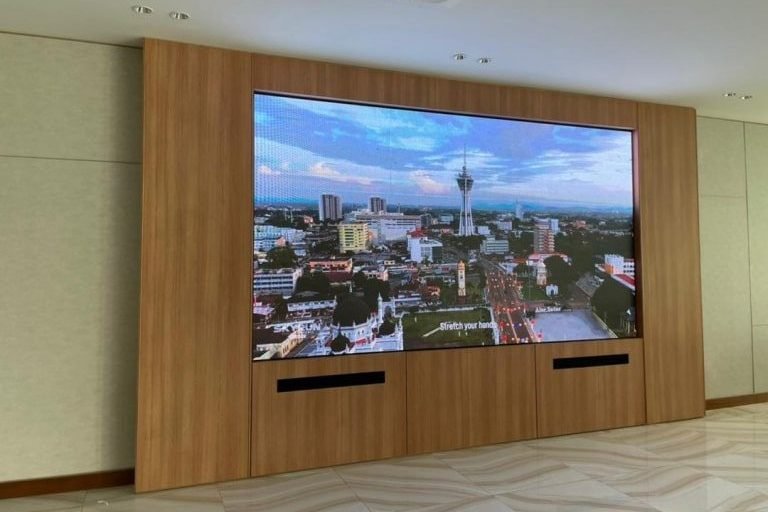
The largest form of indoor digital signage. Modules lock together into a single picture with no seams, in almost any width and height, on the wall of a showroom, a corporate lobby or a mall corridor. It holds its colour under the room's lighting and reads from far away, and it needs a frame and a video processor. Its pixel pitch is chosen from where the closest person stands, not from the finest option in the catalogue.
A video wall of display panels
Commercial digital signage panels with thin bezels, joined into a grid so they work as one large screen, sharp from a step away. They suit lobbies, clinic and hotel waiting areas and real estate sales centres. The thin frames between panels do show, so content is designed so that no line of text or face is cut by them.
Outdoor facade and pylon screens
LED panels sealed against dust and rain and built far brighter, to stay readable in the sun, mounted on the face of a building or on a freestanding advertising pylon in front of it. They are seen from the road, so the grid is coarser and the lettering larger. Outdoor advertising screens need a municipal permit, which the owner applies for.
Vertical standee and totem screens
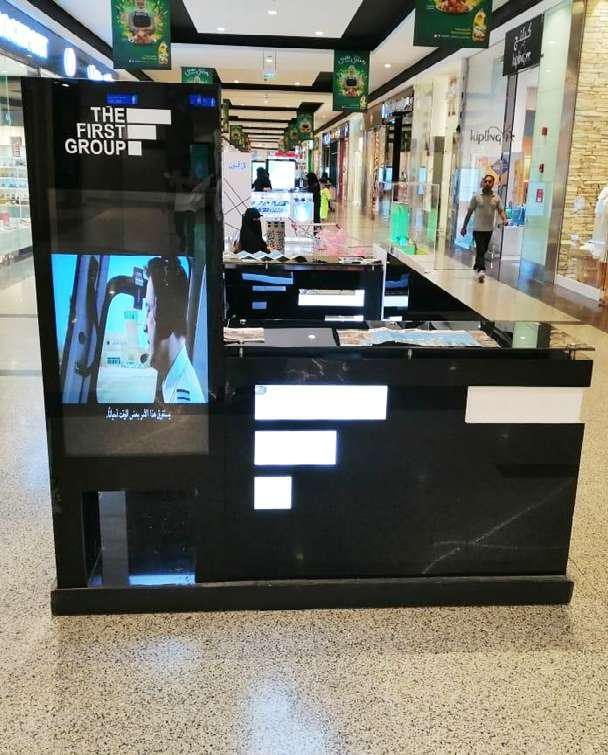
A portrait screen as tall as a person or taller, standing on a base at the entrance, in an aisle or beside a shelf, and showing the advert upright like a moving poster. It is the most mobile form of digital signage, easy to move when the layout changes, and its cabinet and base are made in the brand's colours in our factory.
Window displays and transparent LED on glass
Digital signage that faces the street from behind glass needs high brightness to compete with daylight, and sits far enough from the glass to allow air and cleaning. A transparent LED screen is made of thin strips of light fixed to the glass itself, so the inside of the shop stays visible while the advert moves across it, and black on it reads as clear window.
Digital menu boards
Digital signage above the counter that shows the menu with its photographs, changes by itself between breakfast, lunch and dinner, and lets you take off a dish that has run out or add a new offer from the content system with no reprint. The screens are arranged so that someone in the queue reads the whole menu before reaching the till, and one of them can run a moving advert between the menu sections.
The Screen, from Site Visit to Switch On
A digital signage project touches the wall, the electricity, the permits and the content. This sequence keeps each of them from surprising the others.
Survey the site and give the screen a job
We visit the site or work from photos and measurements, and agree with you what the digital signage is for: stopping passers by, selling one product, showing the menu or welcoming guests. Then we mark where the nearest and the farthest viewer stand, where the light comes from and how many hours a day the screen will run.
Choose the type, the size and the sharpness
The job, the distance and the light settle the kind of screen, its size, its pixel pitch and its brightness. We show it to you in a drawing of the real space, so you can judge its size from the door and from the street before you order.
Draw the structure, power and data
We draw the frame or the mount, the air gap, the service access from the front or the back, the power point and the route of the data cable. For an outdoor screen we prepare the drawings and the details the municipal permit asks for, and the owner submits the application.
Content and the management system
Our studio makes the first loop of adverts or the first menu to the exact pixel size of the screen, we set up the digital signage content management system, and we build the schedule: what plays in the morning, what plays at night, and what stops by itself when an offer ends.
Fabricate and install
Frames, cabinets and plinths are made in our own factory, and our own team installs the digital signage in the hours the site allows, at night where a mall requires it, then connects it to power and data at the points prepared for it.
Set up and hand over
We set the brightness against the light of the space, play the loop from start to finish, and train your team to change and schedule content and to restart the system. The manufacturer's warranty terms are handed over in writing, with the name of who to call if anything fails. If you want the content renewed every season, we stay with you after handover.
How Long It Takes
Indoor digital signage on a ready wall
It depends on the availability of the screen and the state of the wall and the power. The quote states the supply and installation date.
Outdoor advertising screens on a facade or pylon
It depends on the municipal permit, which sits outside our schedule, so it goes into the plan from the start.
The first content loop
It is produced while the screen is being supplied, so it is ready on the day of switch on and not after it.
Printed pieces around the screen
They are printed in 1 to 5 working days after the artwork is approved.
What Makes a Screen Cost More or Less
There is no price table here, because digital signage is priced from the place, the size, the sharpness and the content. What follows is what moves the figure, so that offers can be read side by side.
Area and pixel pitch together
Cost follows the surface, and it climbs steeply as the grid gets finer, because a finer screen packs many more points of light into the same area. A pixel pitch that suits the closest real viewer is usually the largest saving available.
Indoor or outdoor
Outdoor advertising screens are sealed against dust and rain and built for far higher brightness and for summer heat, so they cost more than indoor ones of the same size. Screens facing a window sit between the two.
Structure and mounting
Digital signage on an existing wall needs a bracket, a freestanding screen needs a cabinet and a base, and an outdoor pylon needs a structure of its own. The mounting height, the difficulty of access and any lifting equipment are all lines in the quote.
The content management system
A local player updated by hand is simpler at the start, while a system managed remotely across several advertising screens or branches is easier every day after. If the system runs on a subscription, the quote should say so plainly.
Content production
An advert made for the screen's own size, motion graphics, both languages and a menu with photographs are all work. A loop renewed every season costs more than a single loop, but it is what keeps digital signage visible.
Installation, warranty and follow up
The working hours the site allows, power that is ready or still needs preparing, spare parts, the manufacturer's warranty terms and the way service is requested. Ask of each line whether it is inside the price, and who is responsible for it.
Send photos and measurements of the space, the kind of business and where your customers stand. Within 24 hours you receive an itemised quote that names the type of screen, its size, its pixel pitch, its structure and its content system, with the warranty terms as the manufacturer sets them. Request a quote or message 0567069088 on WhatsApp. To understand sharpness in detail, our article on LED screen pixel pitch explains what the grid means and how it relates to viewing distance.
What the Landlord and the Municipality May Limit
Before digital signage goes onto a wall you do not own, ask who does. Malls have a tenant design guide that sets where advertising screens may stand, how bright they may be and in which hours installation is allowed. A building owner approves what is fixed to the facade, and an outdoor screen that faces a road needs a municipal permit. Some malls also ask that a screen face into the shop rather than the corridor, or that it dims at certain hours. None of this is ours to grant: we prepare the drawings and the details that are asked for, the owner of the site submits them, and the authority decides. If the screen is for a ceremony or a conference lasting a few days, it belongs to LED screen rental. A screen inside an exhibition booth has its own page on LED screens for exhibitions, and a temporary touch screen for an event is covered by touch screen rental. The sign that carries the shop's name above the screen belongs to illuminated signs and light boxes, the whole frontage the screen sits in to shop front design, and the menu itself, before it moves onto a screen, to restaurant menu design.
Questions to Answer Before a Screen Is Ordered
Answer these in writing and every supplier of digital signage quotes the same thing. Leave them open and every offer describes a different screen.
Who looks at it, and from where?
The closest viewer sets the pixel pitch, and the farthest sets the size of the picture and of the lettering. Digital signage behind a reception desk and a screen on a facade facing a road are different purchases, even at the same dimensions.
In what light, and for how many hours?
Steady indoor lighting, glass that lets the day in, or direct sun on a facade. Then how many hours a day the digital signage runs, and whether it runs at night. Those answers settle the brightness, the type of panel and the ventilation.
Who changes the content, and how often?
A member of staff in the branch, a marketing team for several branches, or us? Does it change daily with the products, or seasonally with the campaigns? The answer settles the kind of management system and how much studio work is needed. With several branches, have the content managed from one place.
What does the site allow?
The mall's tenant guide, the building owner's consent, the municipal permit for an outdoor screen and the hours in which installation is allowed. Know them before the order, not after the screen arrives.
Who answers when it goes dark?
Ask for the manufacturer's warranty terms, who visits if a module fails, whether spare parts are available, and how a repair is requested. Those answers belong in the quote, not in a phone call on the day of the fault.
Mistakes That Show After Installation
Each of these is cheap to prevent on the drawing and expensive to discover once the digital signage is on the wall.
A television advert stretched across the screen
An advert is composed for the shape of a television. On a portrait totem or a wide wall it is either stretched, so faces and logos grow fat, or shown between black bars that waste the surface you paid for. Digital signage content has to be made for the screen it plays on.
Lettering that cannot be read from the road
A paragraph that reads well on a phone is a smear from the opposite pavement. Keep to a few words per scene, in heavy letters, and give each scene long enough to be read. Thin fonts, Arabic or Latin, are the first to break up on a coarse grid. A simple test: shrink the scene to the size of a phone held at arm's length, and what you cannot read there, a passer by cannot read either.
Dim by day, glaring by night
An indoor screen behind sunny glass is invisible at noon, and outdoor advertising screens at full brightness after dark tire the eye and disturb the neighbours. Ask for brightness that suits the place, and a schedule that lowers it after sunset.
Heat with nowhere to go
A screen squeezed into a recess with no ventilation, or a sealed cabinet under summer sun, runs hot, ages early and loses modules. Leave the air gap the manufacturer asks for, and ask about cooling in every outdoor cabinet.
Content on a USB stick passed between branches
A screen updated from a stick that a member of staff carries stays on an old advert whenever the branch is busy. A digital signage system managed remotely changes every screen from one place and shows you which one has stopped.
A menu or an offer past its date
An old price on a menu board, or a Ramadan offer still showing in summer, does more harm than a screen that is switched off. Give every piece of content a start and an end date in the schedule, and a person who checks it.
One Roof for the Screen and What Surrounds It
We design, cut on CNC and laser machines, do the joinery, the paint, the acrylic and the large format print, make the content in our own studio and install with our own team, all under one roof. The frame that carries digital signage is therefore drawn and built by the people who will install it. Our work has carried the names of Kinan, Saudia Holidays, Ganache, Swarovski and Gucci Flora.
Screens From Our Work
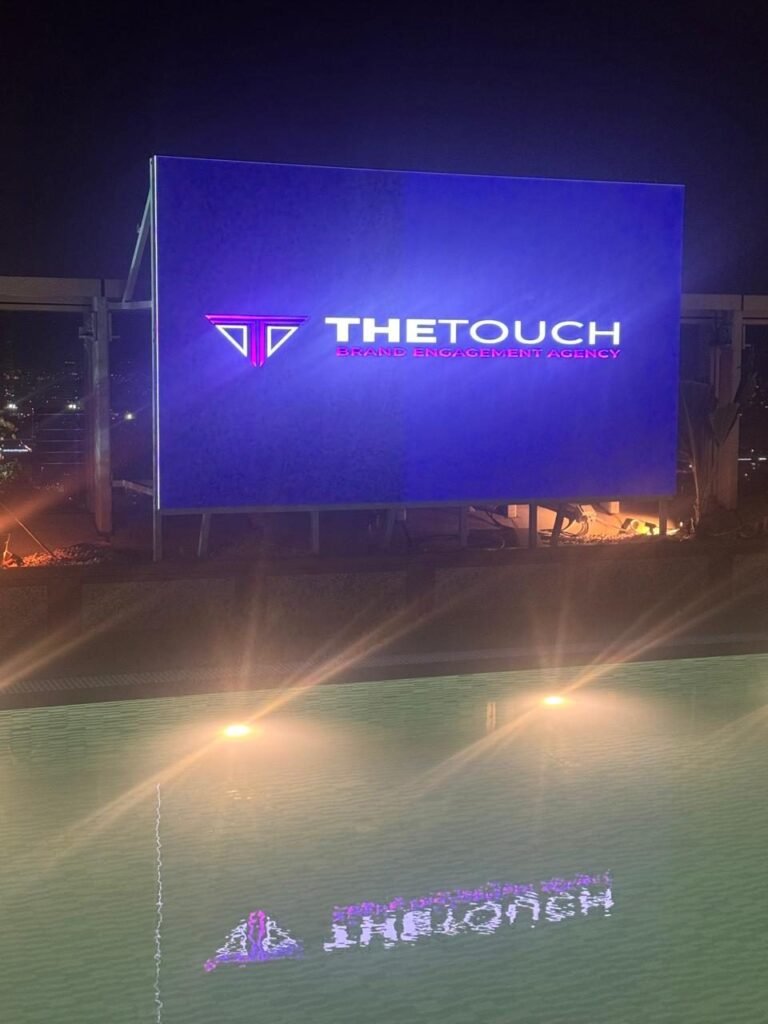
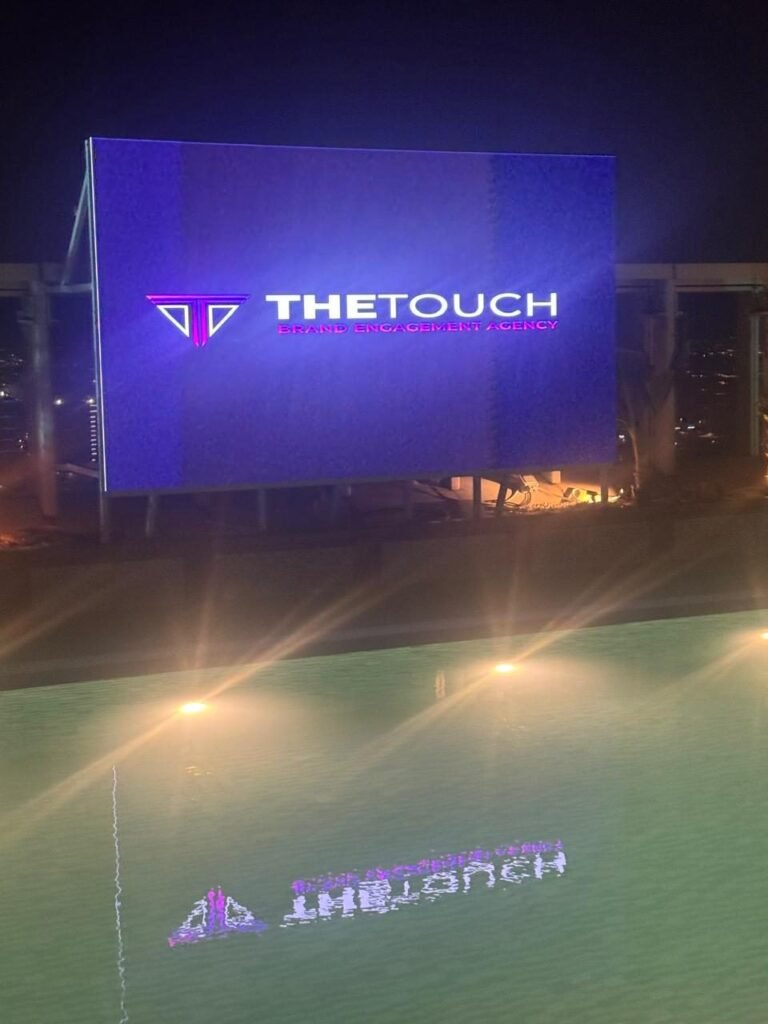
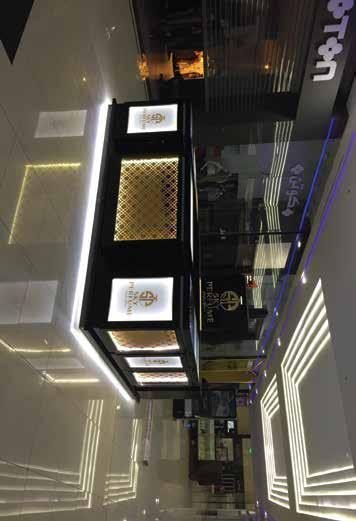
Display screens we installed at exhibitions and events.
Questions About Digital Signage
What buyers ask before digital signage is ordered.
How is a commercial display different from a home television?
Commercial digital signage displays are built to run long hours every day, at higher brightness, mounted in portrait or landscape, and managed from a content system. A home television is made for a few hours of viewing, so it runs hot, fades and fails sooner when left on all day, and its warranty may not cover that use.
Should we choose an LED wall or a video wall of panels?
For digital signage, an LED wall is a single seamless picture of any size that reads from far away, so it suits large walls and facades. Display panels are sharper up close and simpler at small sizes, but their bezels show when they are joined. Distance and size settle the choice.
What does pixel pitch mean, and how fine should it be?
Pixel pitch is the gap between neighbouring points of light on an LED surface. The finer it is, the closer a person can stand before the picture breaks into dots, and the more the screen costs. Choose it from the position of your closest viewer, not from the finest option on offer.
Can we change and schedule content remotely?
Yes, once the digital signage is linked to a content management system. You upload an advert from your office or your phone, set when it starts and ends and on which screen or branch it plays, and see which screens are online and which have stopped. The quote names the system and how it connects to the internet.
Do you produce the content as well?
Yes. Our studio makes adverts, loops and menus in Arabic and English to the exact pixel size of the screen, designed for silence because most advertising screens play without sound. We can build templates your team edits alone, or stay with you to renew the content every season.
Does an outdoor screen need a municipal permit?
In most cases yes, and the owner or the tenant applies for it. We prepare the drawings the permit asks for, which usually show the size of the screen, its position on the facade, the structure and the fixing method, and we do not promise approval, because the decision belongs to the municipality. Put the permit in the plan before ordering the screen.
How bright should the screen be?
Digital signage should be as bright as the light it competes with. An indoor screen under ceiling light needs a moderate level, a screen behind glass needs high brightness and outdoor advertising screens in the sun need the highest. Just as important is lowering it at night, on a schedule or with a light sensor, so the screen does not dazzle people passing by.
What warranty comes with the screen, and who maintains it?
The warranty on digital signage comes from the manufacturer, and its terms are stated in writing in the quote for the screen you choose. The quote also states how service is requested, how spare parts are supplied and who to call. We do not promise a period before we know the screen and its maker.
Do you install digital signage in Jeddah and other cities?
Yes. Our team installs in Jeddah, Riyadh and the Eastern Province, and we have worked in more than 30 cities across the Kingdom, for shops, showrooms, restaurants, clinics, hotels, corporate lobbies and real estate sales centres. Frames and cabinets are made in our own factory and shipped to your site.
How do we start?
Send photos and measurements of the space and the kind of business on WhatsApp at 0567069088 or through the quote page, and tell us where your customers stand and what the screen should say. An itemised quote naming the screen, its structure, its content system and the installation comes back within 24 hours.
A Screen in Your Next Branch?
Send photos and measurements of the space and the job you want the digital signage to do. The itemised quote that comes back within 24 hours names the screen, its structure, its content system and its warranty terms.
More specific pages on this
If your question is narrower than this page, these are written for one question each.

