
Restaurant Menu Design
Restaurant Menu Design From the First Dish to the Last Reprint
Restaurant menu design decides what a guest orders before the waiter reaches the table. For a restaurant, a cafe or a hotel outlet it is also a production job: the menu has to be printed on something that survives spills, stand on the table, hang above the counter and open on a phone through a QR code, in Arabic and English, with prices that will certainly change. This page covers the layout, the food photographs, the formats and materials, the information a Saudi menu now has to carry, and what to settle before you sign, so the menu you approve on screen is the menu your guests hold.
What a Well Planned Menu Does for the Bill
A hungry guest reads a menu quickly, often with the waiter standing beside the table. Restaurant menu design is deciding in advance what that guest sees in that short moment, and in which order.
It steers the eye to what you want sold
Guests scan a menu, they do not read it line by line. The first spots the eye lands on when the menu opens, the top of each section and any dish framed in a box or placed beside a photograph tend to be ordered more often. That is where the dishes with the best margin go, while the cheaper staples sit where regulars will find them anyway.
It makes the price easy to accept
A column of prices lined up along the edge of the page invites a guest to compare numbers and pick the lowest. A price placed at the end of the description, in the same size as the text, is read after the dish has already been chosen in the mind. Dotted leaders running from each dish to a price column are an old habit worth dropping.
It speaks to everyone at the table
A single table in a Saudi restaurant may hold an Arabic reader, an English reader and someone ordering for a child. A menu set in both languages, each in its own direction with the dish names in matching places, saves the waiter from translating every line and cuts the wrong orders that go back to the kitchen.
It carries the brand onto the table
The menu is the piece of your identity a guest holds the longest. Its paper, colour, logo and typeface either agree with the facade, the cups and the packaging or quietly contradict them, and guests notice when a carefully fitted room is let down by a tired sheet in a scratched plastic sleeve.
What Usually Comes With the Menu
A new outlet seldom orders the menu alone. These pieces come with it in most orders, and all of them are made in house from the same identity.
Printing & Promotional Gifts
Table cards, takeaway menus, stickers that seal a delivery bag and giveaways for opening day, all printed from the colour reference approved for the menu.
Acrylic & Wood Fabrication
Acrylic table stands and QR holders carrying your logo, and wooden boards or clip menus cut on the CNC and laser machines in our factory.
Promoters & Brand Ambassadors
Hosts with a supervisor for an opening week or a tasting day, who hand guests the new menu and explain its dishes.
Branding & Creative Studio
The restaurant identity, typefaces and colour rules the menu is built on, prepared in Arabic and English before the first page.
Digital Solutions
The page a table QR code opens, updated when prices change, with a link for each branch so the scans from every place can be counted.
Experiences & Events
Opening nights and tasting sessions for a new menu, with their printed programmes and table cards ready on the day.
Social Media & Content
The same dish photographs turned into posts and short clips that announce the new menu on your accounts.
Custom Exhibition Stands
For a food brand at a hospitality or food show, a stand with its own counter and a menu board built into its wall.
Menu Formats for Tables, Counters and Walls
Restaurant menu design starts with where the menu will live. A table menu, a counter board and a hotel room card are read in different ways, made from different materials and replaced at different times.
Single card menus
One sturdy card printed on both faces, for a cafe, a lunch offer or a tasting menu. It is the cheapest format to reprint, which makes it the right choice where items change with the season. A heavy or laminated card survives being wiped between guests without its corners going soft.
Folded and booklet menus
When the list grows long the menu opens like a small book: a folded sheet for a medium list, or stapled or spiral bound pages for a full restaurant with sections for breakfast, mains and drinks. Some restaurants slide the pages into a leather or wooden cover, in which case the cover is chosen first and the pages are sized to fit it.
Laminated and washable menus
Lamination seals the print against oil, sauce and wet hands, and a synthetic paper that feels like card can be washed with the rest of the tableware. Both resist the handling that leaves an ordinary paper menu stained and limp soon after opening.
Acrylic table stands and QR holders
A clear acrylic menu stand holds an offers card or a QR code on every table, and can carry your logo printed or engraved. It is ordered in a quantity that covers the tables of every branch, so every piece matches in shape, size and colour.
Menu boards above the counter and on the wall
In a cafe or a quick service outlet the menu becomes a board read from a distance: large printed panels in acrylic or wood, with a panel per category so one section can change on its own. A back lit version makes food photographs glow in a dim space.
Room service, buffet and pool menus
A hotel outlet needs its own set: a room service folder that stays in the room, small cards naming each dish along the buffet line, and a pool menu on a material that survives sun and water. All of them follow the design system of the main restaurant menu.
How Restaurant Menu Design Works, Step by Step
Most menu problems start before anyone opens a design program: the list is not final, the photographs are not ready, or the prices arrive after the file has gone to print. These steps keep the order right.
The list, the margins and the guest
We start from your full list of dishes and drinks, the items you most want to sell, and who sits at your tables. A family restaurant, a specialty cafe and a hotel lobby lounge each order their sections differently, and their guests read at a different pace.
Sections, order and names
Items are grouped into sections in the order people eat, from starters to desserts, and each dish gets a short name in both languages and a description that says what is on the plate. Long stories about the chef and the sourcing belong on the website or the QR page.
Food photographs, or none
A good photograph sells a dish and a poor one hurts it. We photograph the dishes in our studio setup or in your kitchen, styled and shot quickly before the food changes under the lights. A fine dining menu often looks better with no photographs at all.
Layout in Arabic and English
Arabic runs right to left while English runs left to right, so a bilingual menu is laid out as mirrored columns or as separate faces, never as text poured into a single grid. Typefaces are chosen so both scripts carry the same weight and neither looks like a guest on the page.
Proof, sample and the regulatory check
You sign a proof that checks every name, price and icon. A printed sample on the real material shows how the menu reads under your own lighting, and whether the icons the authority asks for are clear at the size chosen for them.
Produced and packed per branch
Once signed, the menus are printed in our own factory, finished and packed for each branch separately, with spares if you ask for them. The open files stay with you, so a later price change means editing a line, not starting over.
How Long a New Menu Takes
Design and layout
Depends on the number of items, whether the list and prices are final and how quickly approvals come back from your side. The quote states the date.
Food photography
Depends on the number of dishes and whether the kitchen can prepare them on the day. The shoot date is fixed in the quote.
Printed menus
Printed in 1 to 5 working days from a signed file, depending on the material, the finish and the quantity.
Stands and wall boards
Depend on the quantity, the material and any lighting. The quote states the date in writing.
What Restaurant Menu Design Costs, Line by Line
We publish no fixed price list for restaurant menu design, because menus with the same number of pages can be very different amounts of work. These are the lines a fair quote names.
Number of items and languages
A long list in Arabic and English takes more layout time than a short card, and every extra version, such as a breakfast, delivery or Ramadan menu, is a file of its own with its own checks.
Photography
A shoot is priced by the number of dishes and the styling they need. Your own photographs cost less, but only if they are sharp, well lit and consistent with each other, or the menu looks patched together.
Material and finish
Paper, heavy card, synthetic paper, lamination, a cover, acrylic or wood: each material and finish is its own line, and anything washable or rigid costs more at first and less over its life.
Quantity and branches
Menus for every table of several branches, packed per branch, cost more in total and less per copy than a short run. Digital print suits small numbers and frequent changes.
Boards, stands and lighting
A printed wall panel, an acrylic stand for each table or a back lit board each adds fabrication, and lighting adds wiring and a power point that has to be on the wall before installation.
Reprints and updates
Changing prices on an insert or on the QR page costs far less than reprinting a full bound menu. Ask how reprints are priced before you choose the format, not after.
Send your list of dishes, the languages, the number of tables and branches, and the formats you have in mind. We reply within 24 hours with a quote broken into lines. Request a quote or message us on WhatsApp at 0567069088. If the restaurant needs its whole identity before the menu, our guide to what shapes the cost of branding explains how that price is built.
Saudi Menus Carry More Than Prices: Rules and Related Work
Since July 2025 the Saudi Food and Drug Authority has required restaurant and cafe menus to show extra information beside the items: icons for the time of physical activity needed to burn the calories of a meal, a salt icon beside meals high in salt, and the caffeine content of drinks. The authority states that this covers physical menus, online menus and online food ordering platforms. The figures come from your own recipes and nutrition data. What restaurant menu design adds is room for the icons and numbers at every item, at a size that can actually be read, so confirm the current requirements for your outlet with the authority before the menu goes to print. The printed pieces that sit beside a menu, such as delivery leaflets and flyers, have their own page on brochure and flyer printing. Dish photographs come from product photography, and if the restaurant still needs its mark, start with our logo design company page. Back lit boards above a counter are covered in depth on illuminated signs and light boxes, table stands and holders on acrylic display stands, the page a table QR code opens on landing page design, and the facade sign over the door, with its licence, on shop signage.
The Best Menu Design Is the One That Fits Your Outlet
No single menu is right for every restaurant. These questions settle the format and the material for your restaurant, cafe or hotel outlet before a design file is opened.
How often do prices and dishes change?
If the list changes with the seasons or prices move often, keep the main menu simple and put what changes on an insert, a separate card or the QR page. A bound menu with prices printed inside suits a list that stays the same for a long time.
How do guests order?
At a table with a waiter, the menu is held and browsed, so a booklet or a folded menu works. At a counter, guests decide while standing in a queue, so a wall board with photographs and short names does the job, with a takeaway card for next time.
How hard will the menu be used?
A family restaurant, a beach outlet or a busy food court needs rigid menus that can be washed. A quiet fine dining room can use a heavier uncoated paper that feels good in the hand and is replaced more often.
Printed, QR, or both?
A QR menu is cheap to update and easy to translate, but many guests still prefer to hold a menu, and some older guests would rather not use a phone at dinner. Most outlets keep a printed menu and add a QR code for the full list, the photos and the delivery link.
Which languages, and in what order?
Arabic first with English beside it suits most outlets in the Kingdom. A place with many guests from abroad can add further languages on the QR page only, so the printed menu stays easy to read.
Menu Mistakes Guests Notice Before You Do
Each of these is cheap to fix on the proof and expensive once copies sit on every table of every branch.
Prices printed inside a bound menu
Any price rise then means reprinting the whole booklet or covering numbers with stickers that guests see and ask about. Prices that move belong on an insert, a replaceable page or the QR menu.
Arabic that reads backwards
An English layout with Arabic text poured into it puts the Arabic dish names on the wrong side and breaks the reading order. Each language needs its own direction, and the Arabic is checked on the proof by someone who writes Arabic every day.
A photograph that does not match the plate
A dish styled differently from what the kitchen serves brings complaints and embarrasses the waiter. The dish in the photograph should be cooked by your own kitchen, with your portion, your garnish and your plates.
Small type in a dim room
Restaurants are often softly lit in the evening. Type that looked clear on a bright screen becomes hard to read at the table, so the sample is checked under your own lighting before the run.
A QR code that leads nowhere
A code printed on every table that opens an expired link, a slow PDF or a page asking for an app download is worse than no code. The link should point to a page you control, so the address stays the same while the menu behind it changes.
Missing the icons the authority asks for
A menu printed without the activity, salt or caffeine information the Saudi Food and Drug Authority requires has to be done again. Collect the figures from the kitchen before the layout starts, and leave room for them at every item.
From Layout to Table Stand Under One Roof
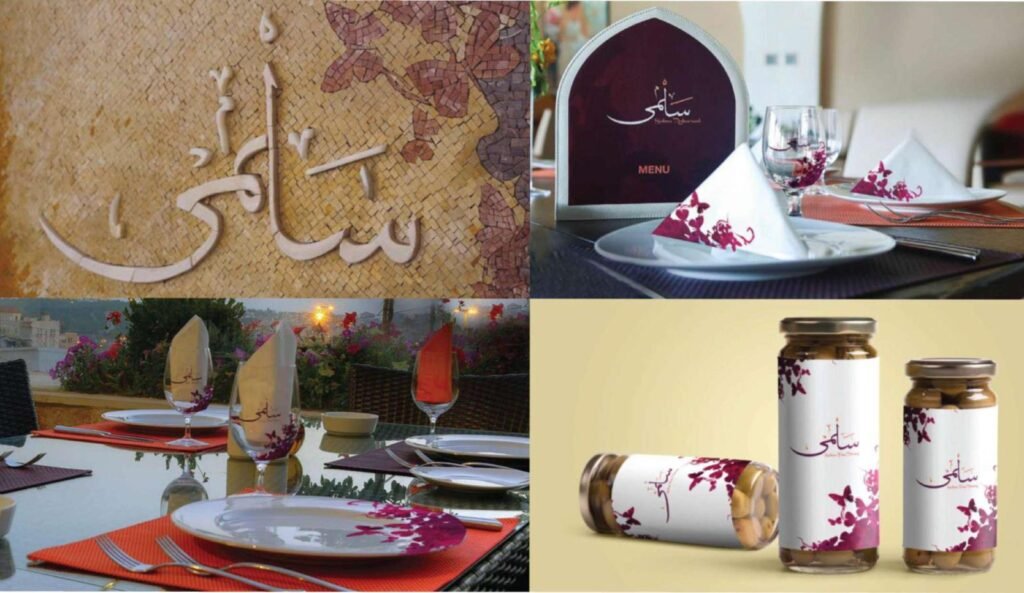
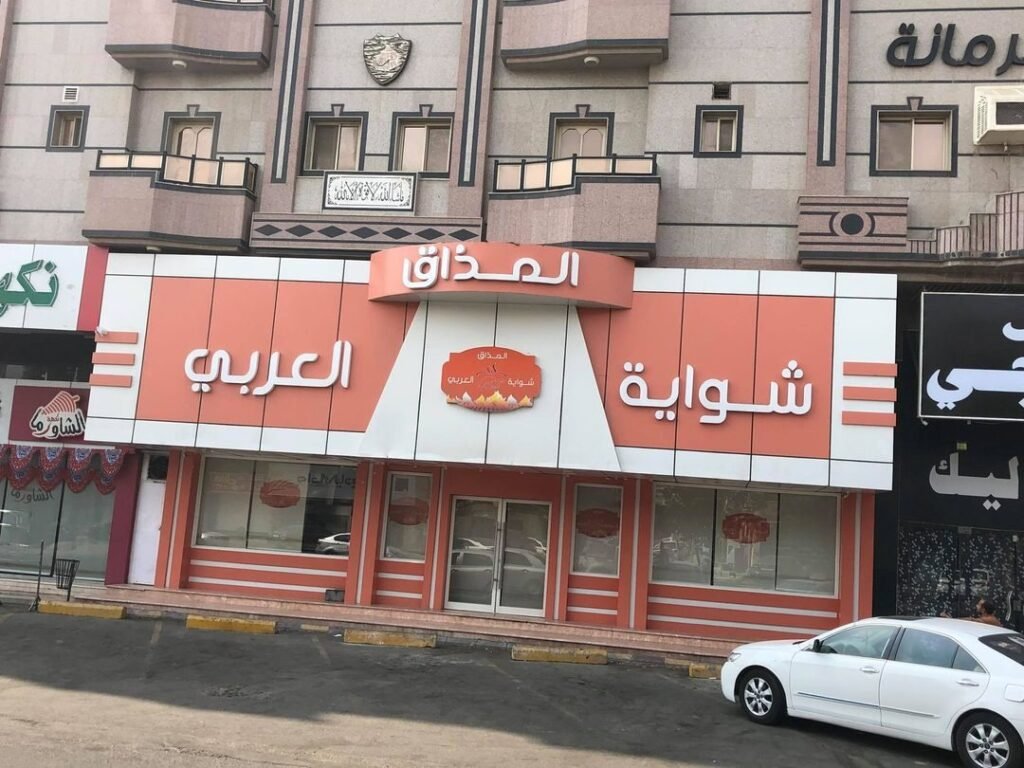
Design, photography, large format print, acrylic, CNC and laser cutting, joinery and installation all sit with our own team, so the menu, the stand that holds it and the board above the counter come from one approved file and one colour reference. Our studio work includes restaurant identities, branded items for the table, food packaging and a restaurant facade sign. We have worked for Ganache, Oceanera, Kinan, Saudia Holidays, Al Khaleej Al Gharbiya and Johnson & Johnson MedTech.
Design From Our Studio
Identities, print and design work we delivered to clients.


Questions About Restaurant Menu Design
What restaurant and cafe owners and hotel outlet managers ask before they order a new menu.
Do you design and print the menu, or only design it?
Both. We lay out the menu in Arabic and English, photograph the dishes if you need it, and print the menus in our own factory along with acrylic table stands and wall boards. You can also send a finished file and order the production alone.
How much does restaurant menu design cost?
It depends on the number of items, the languages, whether photographs are needed, the material and the quantity for all branches. We publish no fixed price, and the itemised quote names each of these as a separate line, so you can drop or change any of them.
Can you photograph our dishes?
Yes. Each dish is styled and shot quickly, before the food changes under the lights, in our studio setup or in your own kitchen. The same files are then cut for the menu, the wall board, the delivery apps and your social accounts.
What is the best material for a menu that is wiped every day?
Heavy card with lamination, or a synthetic paper that can be washed, both survive daily cleaning. For a busy counter, a rigid acrylic or composite panel is more practical than paper of any kind.
Do we have to show calories or other nutrition information?
The Saudi Food and Drug Authority requires restaurant and cafe menus to show, among other things, the physical activity time needed to burn a meal's calories, a salt icon on high salt meals and the caffeine content of drinks, on printed and online menus. Check the full current requirements for your outlet with the authority, and we lay out the information you supply.
Can the menu work with a QR code?
Yes. The QR code on the table or the printed menu opens a page in Arabic and English that we build for you and that is updated when prices change, without reprinting the code. Each branch can have its own link, so you see how many guests scan in each one.
How should we handle prices that change?
Keep prices off the parts that are expensive to reprint. Put them on an insert, a separate card, a replaceable board panel or the QR page, and keep the open design files so a change means editing a line rather than designing the menu again.
Do you make menu boards for the wall above the counter?
Yes. Printed panels in acrylic, wood or composite, and back lit boards where the food photographs are printed to glow without looking washed out. Each category sits on its own panel, so one section can be swapped alone.
How long does a new menu take?
Printing from a signed file takes 1 to 5 working days, depending on the material and the quantity. Design and photography depend on how final the list is and how quickly approvals come back, and the quote states each date.
Where is the work done, and how do we start?
We operate from more than one location in the Kingdom, and your menus, stands and boards are produced in our own factory and installed by our own team wherever installation is needed. Send the list of dishes, the languages and the number of tables and branches on WhatsApp at 0567069088 or through the quote page, and the quote follows within 24 hours.
A New Menu for Your Restaurant?
Send your list of dishes, your languages and your opening date. Within 24 hours you receive a quote that names the design, the photographs, the materials and the quantities for every branch.
More specific pages on this
If your question is narrower than this page, these are written for one question each.

