
Product Photography
Product Photography for Stores, Catalogues and Ads
Product photography for a business is not one good picture. It is a set of images that has to work on a marketplace listing, in your own online store, in a printed catalogue, on packaging and in a paid ad, and every one of them has to show the product exactly as the customer will receive it. We agree the shot list with you, build the lighting around the material in front of the camera, shoot in our studio setup or on your site, and deliver files named, sized and ready for each channel.
Why Product Photography Is a Sales Tool, Not Decoration
Online, the image stands in for the product. The buyer cannot pick it up, turn it over or hold it to the light, so the photographs have to answer those questions for them, which is why brands hire a product photography company instead of taking a quick shot on the warehouse desk.
The image is the shelf
In a store, a customer handles the product before paying. On a marketplace, the main image is the only thing they see among many competing listings, at the size of a thumbnail. A clean image with good lighting that reads at that size earns the click that a better product with a weak picture loses.
Honest pictures, fewer returns
A buyer who receives a different shade, a smaller box or a duller finish than the listing showed sends it back and writes a review. True colour and true proportions protect the margin on every order, not only the look of the page.
A consistent range looks like one brand
When every product in the catalogue is shot from the same angle, at the same camera height and under the same lighting, the store page looks like one brand. Images taken at different times by different people make even a strong range look like mixed stock.
One shoot, many uses
A shoot planned properly feeds the listing, the social posts, the paid ad, the printed catalogue and the packaging at once. Planning for all of them on the day costs far less than booking a second shoot because a crop or a background was never captured.
What Sits Around the Shoot
Product photography is one service of a team that also prints, makes acrylic and runs campaigns, so the images move straight into the next job.
Printing & Promotional Gifts
The same files go to the printed catalogue, the shelf graphics and the gift box, with graphics printed in 1 to 5 working days once the artwork is approved.
Acrylic & Wood Fabrication
Acrylic risers, plinths and display stands made in our factory, to lift a product in the frame or show it in the store after the shoot.
Promoters & Brand Ambassadors
Models and hosts for lifestyle frames where a hand, a wrist or a person shows the product in use.
Branding & Creative Studio
The brand guide, colour references and layouts that the style guide for the shoot is built from.
Digital Solutions
Images prepared for the online store, the product pages and the screens where the range is shown.
Experiences & Events
Launch events where the product is revealed to guests, with the same product images on the backdrop and the screens.
Social Media & Content
Posts, reels and stories cut from the same shoot, with vertical frames and short clips planned on the shot list.
Custom Exhibition Stands
Exhibition stands whose product walls and graphics carry the same photographs, so the stand looks like your store.
Kinds of Shot in a Product Photography Brief
Each kind of shot does a different job, and a good brief names the ones each product needs instead of asking for everything for everything.
Clean white background for marketplaces
The main listing image on most marketplaces is the product alone on pure white, filling most of the frame, with no text, props or badges. The white has to be truly white in the file, not light grey, yet the product still needs a soft shadow or reflection under it so it does not look cut out and floating. Each platform publishes its own image rules, so check the current ones before the shoot.
Lifestyle and styled shots
The product in a setting that tells the buyer who it is for: a perfume on a dressing table, a coffee machine on a kitchen counter, a bag on a shoulder. Surfaces, props and colours come from the style guide, so the setting supports the brand instead of competing with it for attention.
Flat lay, shot from above
Products arranged and photographed from directly overhead. It suits sets, kits, gift boxes, clothing and anything best understood as a collection of parts. A flat lay needs a camera exactly parallel to the surface and even lighting across the whole area, or the edges of the frame fall into shadow.
Details and textures
Close ups of what a buyer would check by hand: the stitching, the engraving, the weave of a fabric, the grain of leather, the clasp on a bracelet. In very close work only a thin slice of the product is sharp, so frames focused at different depths are merged into one image, a technique called focus stacking.
360 spin and short product video
A 360 spin is a sequence of frames taken as the product turns on a turntable, which lets the buyer rotate it on the product page. Short clips show what a still cannot: a lid that clicks shut, a fabric that moves, a liquid that pours. Both need the lighting fixed for the whole rotation so the surface of the product does not flicker.
Range and group shots
The whole collection, every colour option or a full set in one frame, used for the category banner, the opening page of the catalogue and the launch post. A group is lit as one scene, so it is planned and shot as its own setup rather than assembled later from single images.
How a Shoot Runs From Brief to Files
Most of the quality of product photography is decided before the camera is switched on.
Channels first
We start from where the images will be used: which marketplaces, your own store, social channels, a printed catalogue, packaging, ads. Each channel has its own crop, background and file needs, and naming them first decides the angles and the space left around the product in every frame.
Shot list and style guide agreed
The shot list names every product, every angle and every kind of shot. The style guide fixes the background, surfaces, props, camera height, shadows and the mood of the lighting, with reference images. You approve both before the shoot, so nothing on the day is left to taste.
Samples prepared
Products arrive clean, unused and complete, with labels straight and the protective film left on until the last moment. Clothing is steamed, boxes are checked for dents, and a spare unit helps with anything that marks easily. Checking the samples against the shot list on arrival shows a missing item before the shoot day, not during it.
Lighting set and the first frame approved
The lighting is built for the material, so glass, metal, fabric and food each get their own setup. The first frame of each setup, with a colour reference card in it, is approved before the rest of the range is shot to match it.
The shoot, in the studio setup or on site
Small and medium products are shot in our studio setup, where the light can be controlled completely. Large machines, furniture, fitted interiors and products that cannot travel are shot on your site, with the lighting taken to them.
Retouching, colour check, naming and delivery
Each image is cleaned of dust and seams, checked against the real product for colour, cropped and exported for every channel on the list, then named by product code and angle and delivered in folders by channel.
How Long a Product Photography Shoot Takes
The quote
An itemised quote within 24 hours of receiving the product list and the channels.
The shoot day
Depends on the number of products, the kinds of shot and the lighting setups the materials need. The quote states the dates.
Retouching and delivery
Depends on the depth of retouching, the number of channels and any spins or video. The quote states the delivery date.
Print from the same shoot
Graphics carrying the images are printed in 1 to 5 working days once the artwork is approved.
What Shapes the Cost of Product Photography
We publish no price list for product photography, because two products of the same size can need very different work. These are the lines that move a quote, named so offers can be compared fairly.
The shot list
The number of products, and the angles and kinds of shot each one needs. A white background front view per product is the simplest brief, and each added angle, detail or styled frame adds setup and retouching time.
Difficult materials
Glass, polished metal, jewellery, perfume bottles and food take longer to light than a matt box, because reflections and transparency have to be controlled frame by frame, and the lighting changes with each one.
Styling, props and models
Surfaces, props and, where the brief needs them, models for lifestyle frames are each a named line, and so is a location when the scene cannot be built in the studio setup.
Retouching depth
Dust removal and a clean background are the base of every image. Removing a label to replace it, building composites or cleaning heavily marked samples is more work, and the quote says which level each image gets.
Video and 360 spins
A spin needs a turntable sequence for each product, and a short clip needs planning, lighting for movement and editing, so both are quoted per product on top of the stills.
Where and how the images are used
The number of channels, crops and sizes delivered, and whether images go to print and packaging at full resolution, all add export and checking time.
Send the product list, a photo of each item and the channels you sell on. An itemised quote for your product photography reaches you within 24 hours. Request a quote or message 0567069088 on WhatsApp.
Where the Images Go: Store, Marketplace, Catalogue and Print
Product photography earns its cost when one shoot feeds every place the product appears. On a marketplace the white background image leads the listing and the detail frames fill the gallery under it. In your own store the lifestyle frames carry the category pages and banners, and our digital solutions team prepares the pages and screens they appear on. Square and vertical crops become posts, reels and stories through our social media and content service, and the style guide behind them comes from the work of our branding and creative studio. Cut out images at full resolution go to the printed catalogue and to packaging through printing and promotional production, and to shelf talkers, wobblers and display stands in POSM production. The same shots also make the insert card and the box sleeve for corporate gifts. Photography and coverage of conferences, launches and exhibitions, including events we did not build, is a separate service with a page of its own.
Questions to Settle Before You Book
These decisions shape a product photography brief. Answer them first, and the quote, the shoot and the files follow.
Studio setup or your site?
Products that travel easily suit our studio setup, where light, background and time are fully controlled. Products that are large, installed, fragile or cannot leave the production line are shot where they are, and the site then needs a clear area, power and a quiet hour with nobody walking through the frame.
Which shots does each channel need?
A marketplace needs the white background main image first. Your own store and ads need lifestyle frames. A catalogue needs one consistent angle across the whole range. List the channels, and the shot list almost writes itself.
Are hands or models needed?
Products whose size or use is unclear on their own, such as watches, bags, tools and cosmetics, read better with a hand or a person. Decide early, because model frames need their own lighting, styling and the consent of the people who appear in them.
Stills only, or video and spins too?
If the product moves, opens, pours or changes with the angle, a short clip or a spin answers questions a still cannot. If it is flat and simple, extra detail frames usually do more for the same money.
The whole range at once, or in batches?
Shooting the whole range in one setup gives the most consistent catalogue. If new stock arrives through the year, record the camera height, lens, distance and lighting of the first shoot, so later batches match the earlier ones.
Where Product Photography Usually Goes Wrong
Each of these is cheap to prevent before the shoot and expensive to fix once the listing is live.
Colour that does not match the product
Mixed light sources, an uncalibrated screen or a heavy filter shift the colour, and the customer receives a shade the listing never showed. A colour reference card in the first frame of each setup and a calibrated screen for retouching keep the file close to the real product.
The studio reflected in the product
Glossy boxes, glass, chrome and screens act as mirrors and show the camera, the lighting stands and the room. Black and white cards placed around the product decide what it reflects, so the reflections become clean lines that describe its shape.
A range that does not match itself
Products shot on different days at different heights and distances jump about when they sit side by side on a category page. One setup, one camera height and one framing for the whole range keep the grid calm.
Retouching that changes the product
Smoothing a fabric that creases, brightening a colour or reshaping a bottle makes a nicer picture and a worse review. Honest retouching removes dust, seams and marks on the sample, and leaves the shape, size, colour and texture as they are.
Crops that cut into the product
An image framed tightly for the website loses the cap or the handle when a marketplace crops it square or a story crops it vertical. Leaving space around the product at the shoot lets every crop be made later without cutting into it.
Files nobody can find
Images left under camera numbers end up on the wrong listing, or get shot again because nobody can find them. Naming each file by product code, colour and angle, and sorting the files into folders by channel, keeps the shoot usable for years.
Product Photography From a Team That Also Prints and Builds
Photography and video production, design, large format print, acrylic and installation all sit with our own team, which is why images from a shoot can go straight into a catalogue, a gift box or an exhibition stand without passing between suppliers. We have worked for Swarovski, Gucci Flora, Ganache, Oceanera, Kinan and Johnson & Johnson MedTech.
Events We Delivered
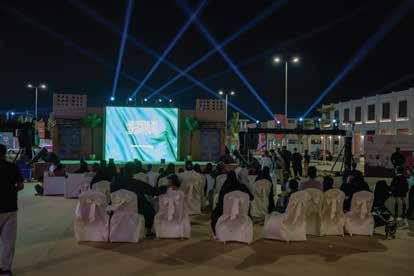
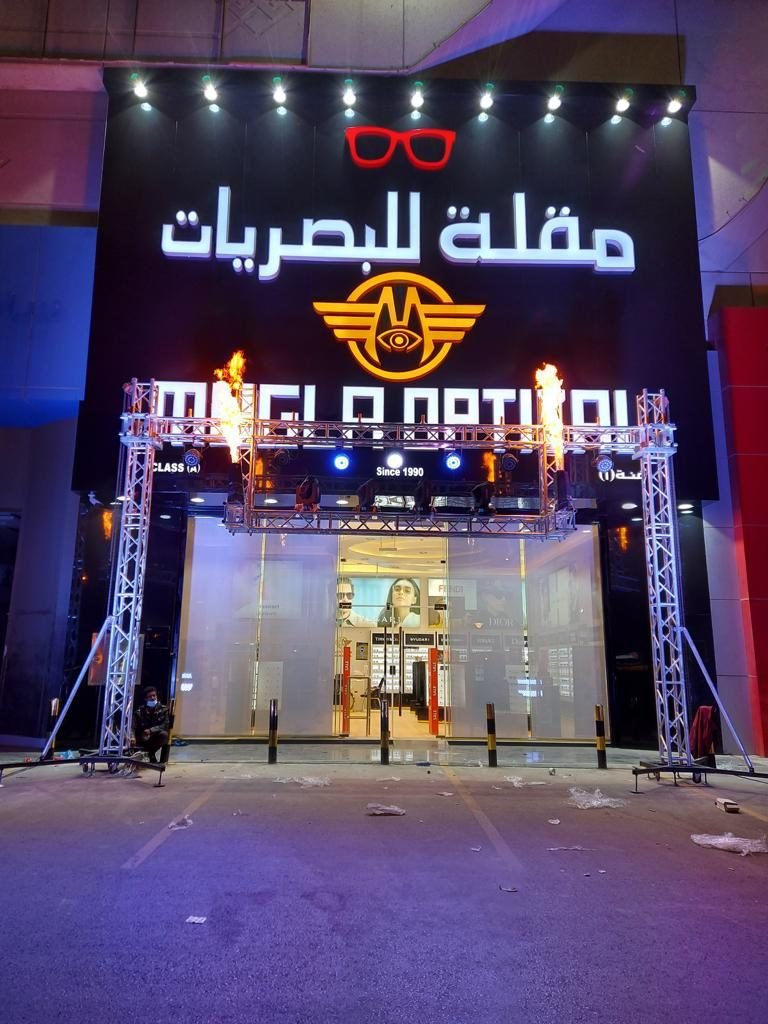
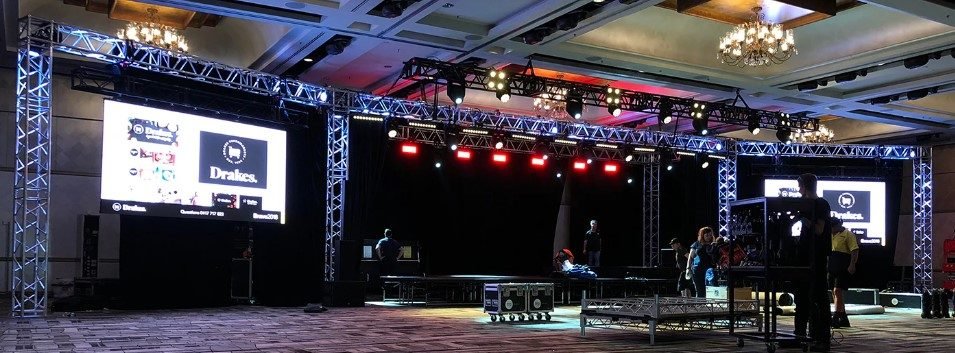
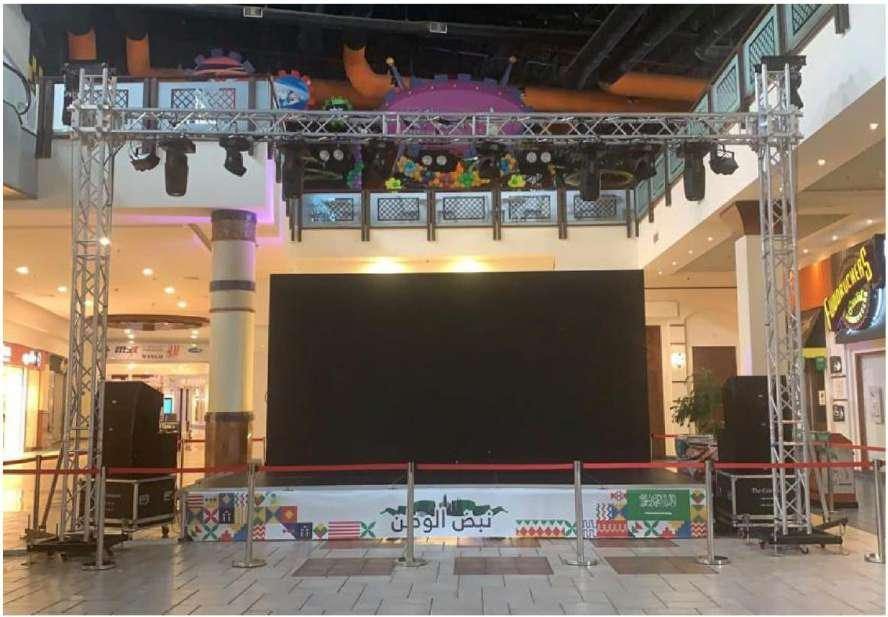
Stages, platforms and event set-ups our team built and ran.

Questions About Product Photography
What brands, stores and manufacturers ask before booking a shoot.
How much does product photography cost?
It depends on the number of products, the kinds of shot each needs, how difficult their materials are to light, and whether video, spins, models or props are included. We do not publish a price list. Send the product list and the channels, and an itemised quote follows within 24 hours.
Where does the shoot take place?
In our studio setup, or on your site when the products are large, installed or cannot travel. We have more than one location in the Kingdom. The quote states where the shoot happens, and where transport applies it is a named line in the quote.
Do you shoot white background images for marketplaces?
Yes. The main image is shot on a background that exports as pure white, with the product centred, filling most of the frame and sitting on a natural shadow. Marketplaces publish their own image rules and change them from time to time, so we work from the current rules of the platforms you sell on.
How do you photograph glass, jewellery and perfume bottles?
With lighting built around the material. Glass and perfume bottles are lit from behind or from the sides so their edges show as clean lines and the liquid shows its colour, while the label gets its own soft light from the front. Jewellery and polished metal sit in soft, diffused light with cards that control what they reflect, and fine detail is focus stacked so the whole piece is sharp.
Can you photograph food products?
Yes. Food is styled and shot quickly, because it changes under the lights within minutes, and a stand in can hold its place while the lighting is set. Packaged food is shot like any other pack, with care for the colour of the contents shown on the label.
Will the photos look exactly like the product?
That is the aim of every step. Colour is checked against a reference card and the real sample, and retouching removes dust and marks without changing shape, size, colour or texture. A photo that flatters the product brings returns and bad reviews.
What files do we receive?
Images exported for each channel on the shot list: marketplaces, the online store, social crops, ads, and full resolution files for print and packaging. Each file is named by product code and angle and sorted into a folder for its channel, so your team can upload without renaming anything.
Can new stock be shot later with the same look?
Yes. The setup of each shoot is recorded: background, camera height, lens, distance and lighting. New colours or new products are shot to the same record, so they sit beside the first batch on the category page without standing out.
Can the same photos be used on packaging and in a printed catalogue?
Yes, if that is planned at the shoot. Print needs higher resolution files, clean cut out edges and colour prepared for the press, so these go on the shot list from the start. Our print team then uses the same files for the catalogue, the box sleeve and the shelf graphics.
Do you also make product videos?
Yes. Short product clips, 360 spins and unboxing videos are planned on the same shot list and shot under the same lighting, so the stills and the video look like one campaign. Longer brand films are quoted as a separate brief.
Product Photography for Your Next Launch?
Send the product list, a photo of each item and the channels you sell on. Within 24 hours you have an itemised quote that names every shot, every lighting setup and every file you will receive.
More specific pages on this
If your question is narrower than this page, these are written for one question each.

