
Shop Sign Licence in Saudi Arabia: What Balady and the Municipality Ask For

A shop sign licence in Saudi Arabia is the municipal permission that lets a sign stay on a shop front, and today it runs through Balady, the electronic platform of the Ministry of Municipalities and Housing. This guide is written only from official pages: the service cards on Balady, the illustrated beneficiary guide the platform publishes for its sign service, and the commercial sign guides that municipalities have published on the same platform. We read them in November 2026. Rules are revised from time to time and each city can have its own, so treat this page as a map and the current card on Balady as the final word.
At The Touch we make and install shop front signs, and we prepare and follow the municipal licence with the client. That is why we read these pages closely: a sign drawn without them can be built well and still be refused. Below you will find the two Balady services people mean when they talk about a sign licence, the rules the city guides apply to a facade, the application screen by screen, what the fees depend on, a checklist of what to prepare, and the mistakes that most often hold an application back.
Two Balady services behind a shop sign licence in Saudi Arabia
The phrase covers two different things on the platform, and knowing which one applies to you saves an application filed in the wrong place.
The shop sign inside the commercial licence
The sign that carries your trade name above your own door is tied to the licence of the shop itself. On the Balady card for Issuing a Commercial License, the documents list opens with an exterior photograph of the shop in which the signboard is clearly shown. The same list asks for the lease, the ownership deed or an investment contract, a copy of the building permit and, for activities that qualify for an instant licence, the safety equipment invoice or a safety report from Civil Defence. A sanitation contract may be requested depending on the activity and the type of contract. In other words, the municipality looks at the sign as part of the shop’s file, not as a separate object.
The operational licence for an advertising or promotional sign
The second service is called Issuing an Operational License for an Advertising or Promotional Sign, and it is where people land when they search for an advertising sign licence. Its Arabic card draws a line that clears up a common confusion: a promotional sign advertises a third party, while an advertising sign advertises the establishment itself. The card lists three requirements: a valid commercial register, a valid commercial licence and an investment contract. It states that each request covers one sign only, so a shop with a facade sign and a separate free standing sign in front of it files two requests. Filing is electronic only, through the Balady portal, by the owner or manager of the establishment or an authorised representative, with no visit to the municipality.
The same card says when a building permit is needed as well, and it limits that to five cases: signs at city entrances, signs on building facades and walls, signs on permanent and temporary fences, signs on buildings under construction and signs on vacant land. Signs on buildings and streets need the approval of the municipality only, while a sign on a vehicle needs the approval of both the municipality and the traffic department.
Your city’s sign guide is the rulebook
Approval of a shop sign licence in Saudi Arabia does not rest on the form alone. Municipalities publish commercial sign guides that set where a sign may go, how large it may be, how it is lit and what it may say. The regulations page on Balady collects them, and when we checked it carried the regulatory guide for commercial signs in the city of Riyadh and the commercial signs guide of the Tabuk Region municipality, dated 2025. Find the guide that covers your shop before anyone draws a line.
The Tabuk guide explains the order in which rules apply. First comes the urban code, or the design guidelines for Saudi architecture in the area where the shop sits, where they exist. Then comes the regulatory sign guide issued by the municipality whose area includes the shop. Areas of a special nature that have their own sign controls sit outside the general guide. So two shops in two cities, or even in two districts, can face different rules for the same sign.
The Riyadh guide works by urban classification. It divides the whole city into zones, among them main and secondary commercial corridors, mixed use areas, commercial, industrial, service and residential areas, and areas with a distinct character such as the historic centre. The zone decides which sign types are allowed. The guide asks anyone who wants to change, replace or add a sign to check first which types are permitted and whether a permit is needed, and it sets out six steps: obtain the guide and learn how it is organised, check the classification of your area, check the sign types allowed there, read the rules for the type you chose, respect the general rules and design standards, and design the sign on the model that matches it. The guide also requires the applicant to contract with accredited companies to meet its requirements, so ask the Riyadh municipality what that means for your sign before you contract with anyone.
What the guides check on a shop facade
The details differ from city to city, but the Tabuk guide gives a clear picture of what a reviewer looks at. These are its main rules for the most common shop sign, the sign parallel to the facade:
- The outside sign is made of raised letters only and sits on the band of wall between the ground floor and the floor above.
- No added background behind the letters other than the main facade materials, unless the letters cannot be fixed to the facade directly; then the background must suit the building.
- Shop signs on one building share the same size, height, dimensions and fixing method, and sit on one level.
- Lighting is hidden behind hollow letters; floodlights and other added lights are not allowed.
- Cables and fixings must not show in any form.
- No shop signs or letters on upper floors, apart from the brand sign the guide describes, and businesses on upper floors share one sign at the building entrance.
- A sign must not block first floor windows or run over architectural features such as columns, bands and ornaments.
- The lower edge of the sign sits at least 2.40 metres above the ground, the sign is no taller than one third of the shop front height and no wider than the shop front, and it projects no more than 25 centimetres from the facade.
- When the licence is cancelled, the sign comes down and the facade is returned to its state before installation.
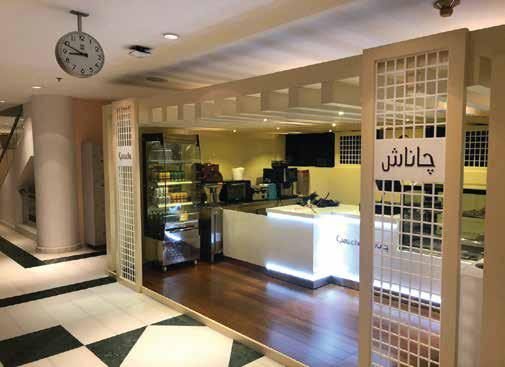
Content has rules of its own. The Tabuk guide limits what a sign says to the data in the municipal licence. The company or shop name must be written in Arabic, and the English name in Latin letters may stand beside it as long as the two are visually balanced; when the text runs on two lines, the Arabic sits on top. A registered trademark may be used inside the sign.
Signs the guides do not accept
The Tabuk guide lists signs that may not be used: signs fixed on rooftops, signs that go beyond the limits of the building, abandoned signs, moving, colour changing and digital signs, signs shaped like the product or imitating it (allowed only on signs perpendicular to the facade), signs used as cladding on architectural walls, and signs with laser beams. The Riyadh guide likewise states that a sign raised above a building roof is not permitted, and it defines one kind of temporary sign as a paper, card or fabric sign meant to be shown for no more than thirty days.
Where each requirement comes from, and who checks it
When papers from several places meet in one file, it is easy to lose track of their source. This table ties each requirement to the official page that states it and names the party that rules on it.
| Requirement | Official source | Who checks it |
|---|---|---|
| Valid commercial register and valid commercial licence | Balady card for the operational sign licence | The platform, at filing |
| Investment contract | Balady card for the operational sign licence | The municipality |
| Exterior photograph showing the signboard | Balady card for Issuing a Commercial License | The municipality |
| Building permit | Both cards; for facade and wall signs specifically on the sign card | The municipality |
| Position, size, lighting and wording of the sign | The regulatory sign guide for your city | The municipality, at review |
| Sign materials | Tabuk guide: compliance with the Saudi Building Code and the Saudi Standards, Metrology and Quality Organization | The municipality |
| Approval of the landlord or the mall | Your contract with the owner | The landlord or mall management |
Applying on Balady, step by step
The platform publishes an illustrated beneficiary guide for the operational sign licence, and these are its steps in brief. The service card itself is on the Balady page for the advertising or promotional sign licence; read it as it stands on the day you apply.
- Log in. National ID or residence number, password and security code, then a verification code sent to the mobile.
- Find the service. From View All Products to the Commercial Licenses product, then the service, where its card shows how to apply, the requirements, and the conditions and fines.
- Start and verify. The mobile number is entered and confirmed with a code, then the applicant role is chosen: owner or manager of the establishment, or authorised representative or account manager.
- Establishment details. The commercial registration is entered, and the platform retrieves the establishment name, its number and the source of the register.
- Board information. Choose in order from the lists: sign classification, installation mechanism, board type and display method, then enter the length and width under sign area. If the installation mechanism is vehicles, a section for vehicle details appears.
- Location. Choose region, city, district and street and pick the spot on the map; the municipality, the secretariat, the coordinates, the plot number and the plan number fill in automatically.
- Attachments. Upload the required documents.
- Fee calculator. Accept the beneficiary declaration, open the sign requirements from their button if needed, choose the number of years to pay for and press calculate to see the total fee.
- Submit and track. Submit the request, then follow it under My Requests, where its status and details are shown.
What the fees depend on
For the sign service behind a shop sign licence in Saudi Arabia, the card describes the service as free, while the beneficiary guide shows a fee calculator step in which the applicant chooses the number of years to pay for and the platform works out the total before submission. So the amount depends on your sign and the period you choose, and the platform is what sets it. The commercial licence card points to the fees calculator on Balady and notes that Civil Defence fees, where they apply, are separate from the municipal invoice; the application does not move on and the municipal invoice is not issued until they are paid. The payment channels it lists are Sadad, Visa, Mastercard, mada and Apple Pay.
In our quotes, the drawings and the paperwork for the application appear as a priced line of their own, while the official fees are paid to the municipality at its own rates, outside the price of the sign. How the rest of the quote is built is explained in our article on shop sign prices.
Checklist for a shop sign licence in Saudi Arabia
Every item below appears on an official card or in a sign guide. Having them ready before you open the application saves rounds of back and forth:
- A valid commercial register and a valid commercial licence, with the trade name exactly as it appears in the licence data.
- The lease, the ownership deed or the investment contract, as the card asks.
- A copy of the building permit where your sign type is one of the cases that need it, facade and wall signs among them.
- An exterior photograph of the shop with the sign clearly visible, for the commercial licence file.
- The length and width of the sign measured on the real facade, since the platform asks for them under sign area.
- The location details: region, city, district and street, and the spot on the map.
- The sign guide for your city, read in full, and the classification of your area if the guide works by zone as the Riyadh guide does.
- A design that writes the name in Arabic and keeps the position, size and lighting within the guide.
- The approval of the landlord, and of the mall management if the shop is inside a mall.
- A separate request for each sign, because one request covers one sign.
How The Touch handles the sign and its licence
We make and install shop front signs, and we prepare and follow the municipal licence with the client. The work runs like this. We read your city’s guide before the first sketch and design the sign to its rules on position, size, lighting and wording. We prepare the technical drawings, the facade photographs with the sign drawn on and the documents the application asks for. The application is filed from your establishment’s Balady account, in the role of owner, manager or authorised representative as the card requires, and we stay with it alongside you until a decision is made. The sign is made in our own factory and fixed by our own team. We never promise an approval or a date: the municipality decides, and the landlord or the mall gives its own separate approval.
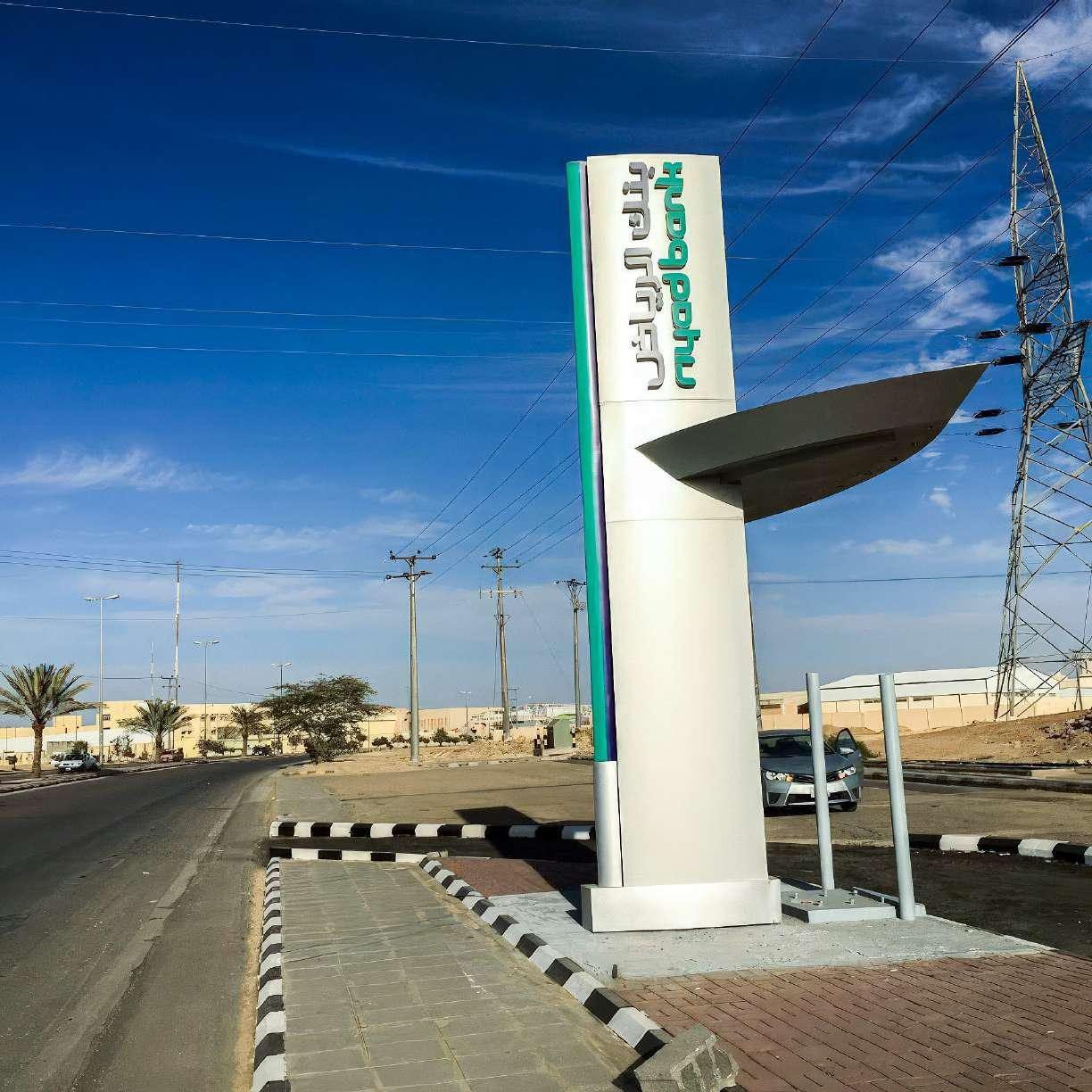
For the types of sign and the full service, see our page on shop signage, and for lit letters and lit cabinets, illuminated signs and light boxes. If your project covers several branches or a whole building, signage company in Saudi Arabia explains how every sign is gathered into one schedule, and if the whole shop is being fitted out, see retail fit-out. For design ideas that stay within the rules, read shop sign design ideas.
After approval: upkeep and removal
A shop sign licence in Saudi Arabia does not end the owner’s duties. The Tabuk guide requires the sign to stay clean and tidy, to be repaired when wear weakens how well it can be seen, and to be repaired in a way consistent with the approved permit. The ground around the base of a free standing sign must be kept clean and in good order, and compliance should be checked regularly with attention to safety. A sign must not endanger road users, block the pavement, above all routes used by people with disabilities, or obstruct any device used for security, surveillance or measuring vehicle speed. Any sign the municipality considers unsafe must be corrected or removed completely, together with its supporting structure. And when the licence is cancelled, the sign is removed and the facade is restored.
Mistakes that hold a shop sign licence back
Most delays to a shop sign licence in Saudi Arabia come from a handful of slips that are easy to avoid once you know them, and every one of them traces back to a rule on Balady or in a city guide:
- Fixing or lighting the sign before approval. A sign out of line with the rules can be ordered corrected or removed, so plan the opening around the decision, not the other way round.
- Wording that does not match the licence data. An added slogan or a different spelling of the name breaks the rule that limits content to the licence data.
- Floodlights and visible cables. The guides ask for hidden lighting and fixings nobody can see.
- Forgetting the landlord or the mall. Their approval is separate from the municipality’s, and they often have rules of their own.
- Two signs in one request. One request covers one sign, and a free standing sign is another request.
- Carrying one city’s rules into another. What one city accepts, another may refuse; the local guide is the judge.
- Leaving the old sign after the business closes. Removal and restoring the facade are conditions in the guide.
Questions about the shop sign licence in Saudi Arabia
Does my shop sign need a licence?
Yes. The Riyadh guide asks anyone who wants to fix a sign on a building to apply for a permit from the authorities concerned, and the Balady card for the commercial licence asks for a photograph of the shop with its sign showing. The sign is part of the shop’s file with the municipality.
What is the difference between an advertising sign and a promotional sign?
According to the Balady service card, a promotional sign advertises a third party, while an advertising sign advertises the establishment itself. One service covers both, and the classification is chosen at the board information step.
Which documents does the licence ask for?
The operational licence card lists a valid commercial register, a valid commercial licence and an investment contract, plus a building permit for facade and wall signs and a few other named cases. The commercial licence card asks for an exterior photograph showing the sign, the lease or deed and a copy of the building permit. Read the current card on the day you apply.
How much does a shop sign licence cost?
We do not quote an amount, because the platform calculates it. The card describes the service as free, and the beneficiary guide shows a fee calculator where you choose the years to pay for and see the total before submitting. Fees are paid to the municipality, while preparing the file is a separate line in our quote.
Can The Touch file the licence application for me?
We prepare the drawings, the facade photographs and the documents, and we follow the application with you until a decision is made. The application is filed from your establishment’s Balady account by the owner, the manager or an authorised representative, as the card states. Approval belongs to the municipality alone.
Does the sign have to be in Arabic?
The Tabuk guide requires the company or shop name in Arabic and allows English beside it in visual balance, with Arabic on top when the text runs on two lines. Check your own city’s guide, since each municipality words its rules in its own way.
How long does a shop sign licence in Saudi Arabia take?
The service card states an expected period, but the municipality sets the pace, so we do not promise a date. We advise building the opening date around the approval, and our quote gives the fabrication and installation dates counted from the moment it is issued.
Signs From Our Factory
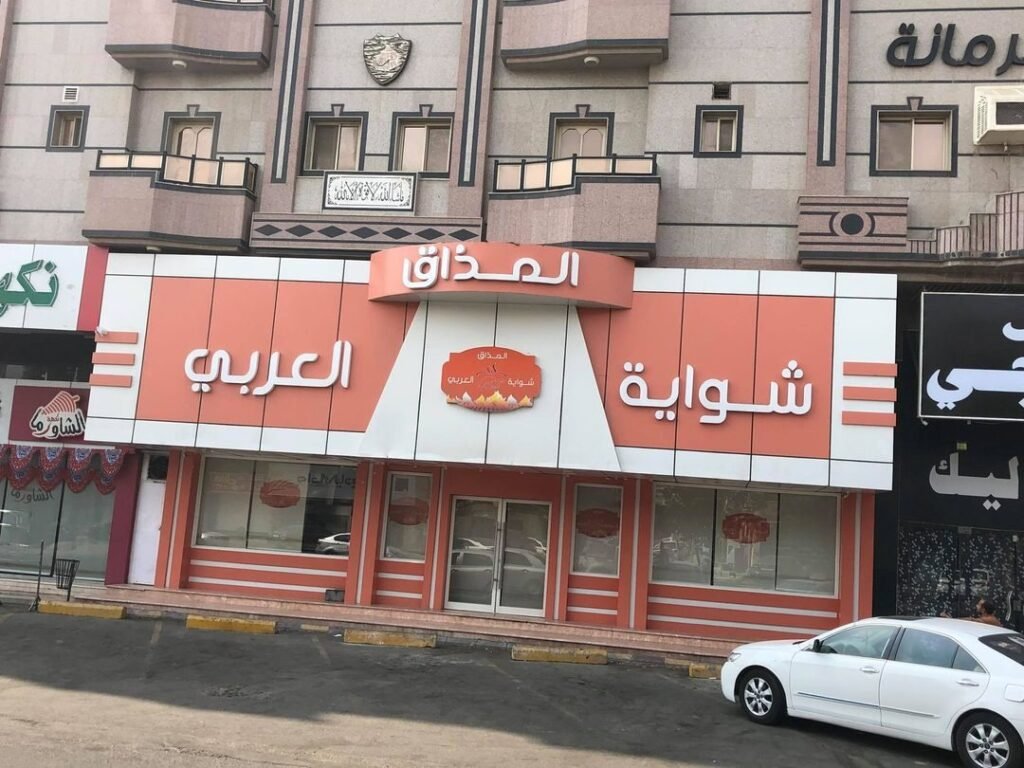
Photographed on site after handover, no renders.


Have a project and want a real number?
Send the area, the date and the city, and we come back with an itemised quote within 24 hours. No commitment, and no vague all-in price.

