
What a Company Profile Should Include: Each Section and the Proof Behind It
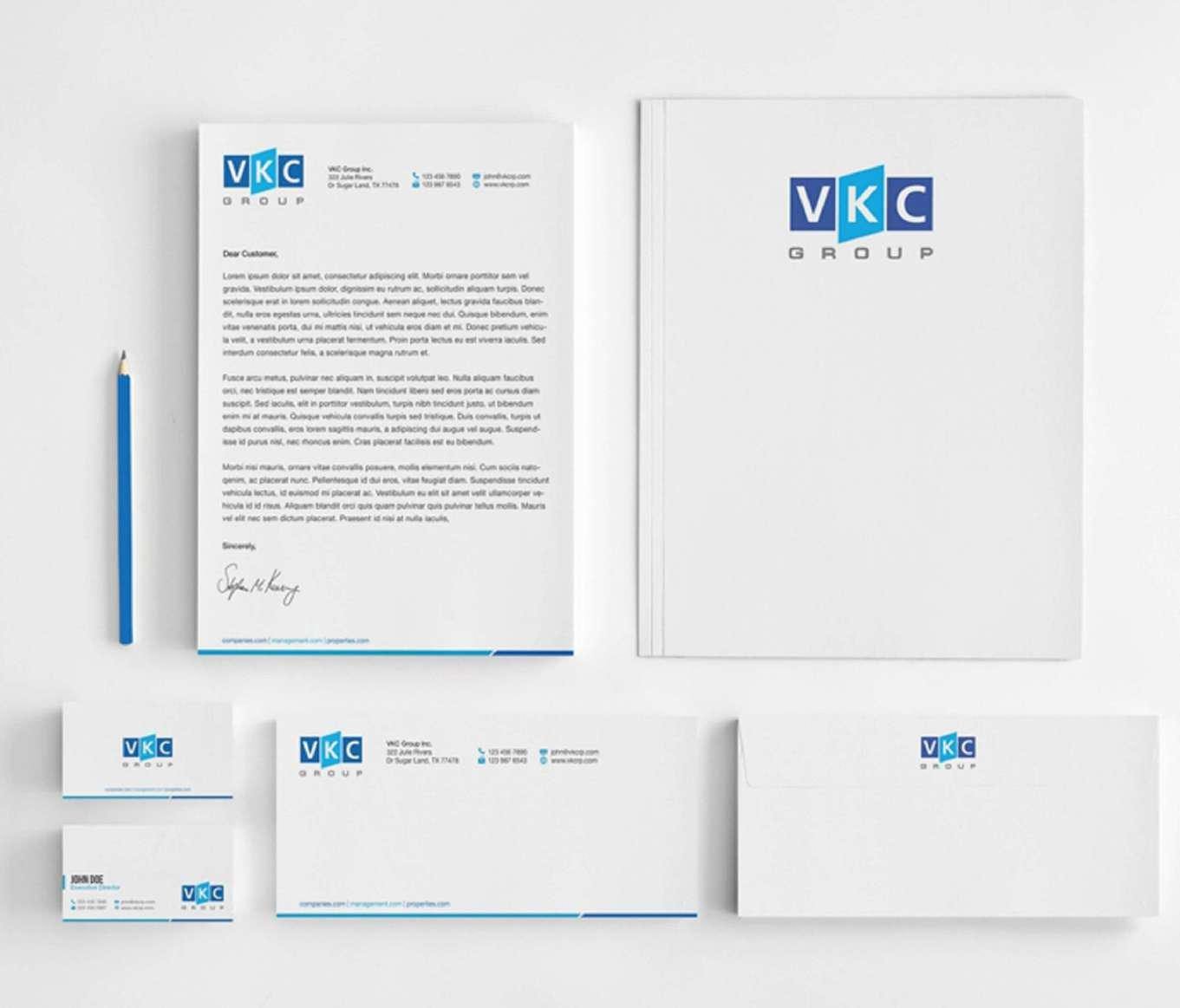
Before you brief a designer, settle what your company profile should include, because design can only arrange the words and pictures it is given, and it cannot invent a fact. This guide is for a company preparing its first profile, or rewriting an old one that no longer looks like the business, usually because a tender is about to open, a government registration has asked for a company profile, or a new partner wants to know who it is dealing with. It walks through each section in the order a reader meets it, says what goes in and what stays out, then covers the evidence buyers look for and ends with a checklist to run before the file leaves your hands.
A company profile is not a brochure and it is not a presentation. A brochure sells a product or a campaign, and a presentation is built for a speaker who stands beside it and explains. A profile has to work alone, on a desk or a screen, read by someone who has never met you and has a decision to make. Every section below earns its place by answering a question that reader already has, and a section that answers no question is cut, however good it looks.
What a company profile should include, in the order it is read
Order decides half the result. Readers skim from the front, so the sections that prove who you are come before the sections that describe what you hope to become. The sequence below suits most companies in the Kingdom, whether they build, supply, consult or manufacture. Move a section only when you have a clear reason to. If the tender booklet sets a different order of sections, its order wins over everything here.
The cover
The cover carries the company name exactly as it appears on the commercial registration, in Arabic and English, together with the logo, a line that says what the company does and the edition date. The date is the item most often forgotten, yet it is the quickest way for anyone to tell whether the copy in their hands is current. Use a photograph of your own work or a clean composition from your identity, never a stock picture of a handshake or a city skyline that could belong to anyone. When the profile is prepared for a particular tender, the inside cover is the place for the tender name and its reference as the booklet states them.
Who we are
This section answers simple questions in simple sentences: what the company does, since when, where and for whom. Add the legal form, the ownership if you are willing to state it, and the scale of the business in terms a reader can check, such as the regions you cover and the kind of clients you serve. A short message from the chairman or the founder can sit here, kept to a few lines and saying something a reader will remember, not a welcome that reads like every other welcome.
Vision and mission, written plainly
Most vision statements could be pasted into a competitor’s profile and nobody would notice. Write yours so that it fits only you. The test is easy: put another company’s name in place of yours, and if the sentence still holds, it says nothing. A plain mission names the customer, names the work and names the standard you measure yourselves against. If the company has values, keep the list short and give each value a sentence on how it shows in daily work, such as the way a site is handed over or a complaint is handled. Where your direction connects to the Kingdom’s Vision, say how in a concrete line rather than placing its emblem on the page and leaving it there.
Services or products
Arrange what you offer the way a buyer searches for it, not the way your departments are organised inside. Each service has a heading, a short description of its scope and a line that makes clear what you carry out with your own people and equipment and what you deliver through partners. That last line is what a procurement reviewer reads most closely, and candour there is safer than ambition. If the list grows long, keep the core services in this section and gather the minor ones into a single closing line. The services section is the one most likely to swell, so guard it.
Sectors you serve
A sectors section tells a reader quickly whether you have worked in their world: healthcare, government, retail, hospitality, energy, education or industry. For each sector write a sentence on what you usually do there, and add a client or a project type when you have permission to name it. Leave out sectors you touched once in passing. A short list you can support with proof is stronger than a long list you cannot defend in a meeting.
Projects and clients, only with permission
Projects are the heart of most profiles and the section a buyer opens first. For each selected project give its name or a description, the location, the scope you delivered yourselves, the year if you choose to state it, and a photograph of the finished work. Choose projects that resemble the reader: a similar size, a similar sector, a similar scope. Client names and logos appear only once each client has agreed in writing. Many government entities and large companies do not allow their names in a supplier’s marketing at all, and a logo wall built without asking can lose more than it wins. Where permission is missing, describe the project without the name: a hospital fit-out in the Western Region is description enough and still persuades. In the edition prepared for a bid, pick the projects closest to its scope.
Team, organisation and certificates
Show the organisation chart, the leadership with a line on each person’s background, and the key roles a buyer will deal with day to day. Team photographs show your real people at work, taken with their consent. Then list the certificates the company holds, such as a quality management certificate, an environmental or occupational safety certificate or a sector licence, each with the issuing body and its validity. Name them in the profile and keep the scanned copies in an appendix or a separate file, so that renewing one certificate does not force you to reprint the whole book. A tender committee looks in this section for the people who will actually run the work, and their CVs belong in an appendix.
Quality, health and safety
Buyers in construction, industry, healthcare and facilities management read this section with care. Explain how quality is checked before work is handed over, who is responsible for safety on site, and how incidents are reported and what is learned from them. Write the system you actually run, not the one you wish you ran. A safety page that promises everything and a site photograph of a worker without a helmet cancel each other out in an evaluator’s eyes.
Contact
Close with a contact page a reader can act on: the main number, a general email, the website, the national address, a map location, and the name and direct line of the person who handles tenders or partnerships. A QR code that opens the website or the map saves a step for anyone holding the printed copy. Test every number and address on the day the file is closed, because the contact page goes out of date faster than any other part.
A tender profile and a marketing profile
Many companies try to make a single file do both jobs and end up with something too long for a client and too vague for a tender committee. Everything a company profile should include appears in both editions; what differs is the order and the tone. A tender profile follows the evaluator’s list and proves compliance. A marketing profile follows the buyer’s curiosity and builds confidence. The table sets them side by side.
| Point | Tender or prequalification profile | Marketing profile |
|---|---|---|
| Who reads it | An evaluation committee holding a list of requirements | A client, partner or investor deciding whether to get in touch |
| Order of sections | The order of the tender booklet or the prequalification form | The story first: who we are, what we do, what we have delivered |
| Tone | Documented facts, nothing without a paper behind it | Confident and easy to read, still with no claim you cannot prove |
| Projects | Similar projects with scope, value where requested and a reference at the client | Selected projects chosen for impact and closeness to the reader |
| Documents | Registration, licences and certificates named, copies in appendices | A brief mention, copies on request |
| Format | A file uploaded to the portal, sometimes a bound copy as well | A printed copy for meetings and a light file for email and phones |
| Update | Checked against every new tender | Refreshed when the work or the brand changes |
The practical route is to write the content once and assemble both editions from it. The tender edition opens with a compliance index that maps every requirement in the tender booklet to the section and page that answers it, so the evaluator neither searches nor assumes. The marketing edition drops the appendices and gives photographs and projects more room. In government procurement the booklet sets out what must be submitted, and many tenders run through the Etimad platform, so read the booklet before deciding what belongs in the profile and what belongs in the separate technical and financial offers. A profile never replaces a document a tender asks for by name; it introduces the company that stands behind those documents.
Arabic and English versions
In the Kingdom a company profile is usually needed in both Arabic and English. Government entities generally expect Arabic, while international partners and many private buyers read English. Decide early which language leads, because the decision changes the writing itself. Text written in Arabic and then translated reads differently from text written in English and then translated, and the best result comes from writing each language for its own reader from the same facts, not from carrying sentences across one at a time. Each item a company profile should include must appear in both versions with the same facts.
There are a few common arrangements. Separate books are the easiest to read and to send. A single book that opens from both covers, Arabic from the right and English from the left, puts both languages in the reader’s hands as one object. Parallel columns on every page suit short profiles only. Whatever you choose, the company name, project names, figures and certificate titles must match exactly across the versions, because a bilingual reviewer will compare them. Names of people and places follow the spelling in official documents, and each version keeps one style of numerals from start to finish. Arabic pages are designed in their own direction, with tables, timelines and arrows reading from the right, and an English page is never simply flipped to become an Arabic one.

Length and format: print, PDF or an interactive file
There is no correct length for a profile, and length follows the reader rather than a rule about what a company profile should include. The right length is the shortest file that answers the reader’s questions with evidence. A young company with a focused offer may need only a slim profile; a contractor with a long project record and several divisions needs more, and is better served by moving detail into appendices than by stretching the main body. Ask of every page whether the reader would miss it if it disappeared. If the answer is no, it belongs outside the file.
Format is a choice made with the reader in mind, and most companies end up with more than one:
- Print. A bound copy suits meetings, reception desks, exhibitions and tenders that ask for hard copies. Paper, binding and finish change how the profile feels in the hand, and colours on paper can shift from the screen, as our guide to print colour matching explains. The letterhead, cards and folders that travel with the profile come from the same files through corporate stationery printing.
- A PDF for email and portals. A light file with real text that can be searched and copied, compressed to pass through email and portal upload limits. This is the version most people will actually open, usually on a phone.
- An interactive file. A PDF or web version with a clickable index, links to the website, email, phone and map, and links to project films. It suits partners and investors who move around the file more than they read it straight through, and a short film from corporate video production shows the factory or the site in a way a page cannot.
Whatever the format, keep the master content in an editable form your own team can reach, so that next year’s update changes the facts without rebuilding the design from nothing.
The evidence buyers look for
A buyer or evaluator reads a profile looking for proof, and in the Kingdom part of that proof is formal, with a shape everyone recognises. Beyond its sections, the most important thing a company profile should include is proof. Expect a serious reader to look for these:
- Registration details. The commercial registration with the registered name as it stands, the activity it covers, the national address, the VAT registration and membership of the chamber of commerce. Copy them as they appear on the documents and do not reword them.
- Licences and classification. Sector licences, contractor classification where it applies and any approvals from the authority responsible for your activity. An expired licence named in the file does more harm than a licence left unmentioned.
- Compliance certificates. Many tenders ask for the Zakat certificate, the social insurance certificate, the Saudization certificate and sometimes a local content certificate. These are usually attached to the bid rather than placed inside the profile, but the profile must not contradict them in a name or an activity.
- Photographs of real work. Finished projects, the team on site, the factory or the warehouse, the fleet. Readers can tell a stock picture from a real one, and a real photograph of modest work persuades more than a borrowed image of a famous landmark. A supplier whose products are the proof needs product photography that shows the item as the buyer will receive it.
- Consistent figures. Headcount, years in business, the count of projects and the size of the fleet must match what the website, the presentation and the tender forms say. A contradiction is the fastest way to lose a reviewer’s trust.
- References a reader can check. A client who has agreed to take a call is worth more than a whole page of logos.
Common mistakes in company profiles
Most weak profiles are not weak because of the design. They are weak because of decisions about what the company profile should include, taken before the design began. These mistakes repeat across every sector.
- Starting with the design before the content. When the designer starts while the text is still unwritten, gaps are filled with placeholder copy that survives into the final file, or pages are rebuilt every time a paragraph changes.
- Listing everything. An endless list of services makes the reader doubt you specialise in any of them. Choose what you do well and what you want to be hired for.
- A vision that says nothing. General lines about leadership and excellence are skipped unread, and they take space that a project deserved.
- Stock photographs. An office that does not look like yours or a site you never worked on tells the reader you have nothing of your own to show.
- A single file for every reader. A profile that speaks to the committee, the client and the investor in the same voice fully convinces none of them.
- Figures nobody approved. A number that marketing rounded up and an evaluator then questions in a meeting embarrasses the whole company. Every figure in the file has an owner inside the business who signs it off.
- A translation done at the last minute. The second language translated on the day of sending shows its errors on the first reading, and a bilingual reviewer reads both.
- No edition date and no owner. A file with no known date and nobody responsible for it keeps being sent long after the management, the projects and the certificates have changed.
Checklist: what your company profile should include before you send it
Go through this list with someone who did not write the file, because fresh eyes see what the writer has stopped noticing.
- The registered name in Arabic and English matches the commercial registration on the cover, the contact page and the footer.
- The edition date is printed on the front or back cover.
- The who we are section answers what, since when, where and for whom in a paragraph a stranger can follow.
- The vision and mission pass the competitor name test.
- Every service states what you deliver with your own team and what goes through partners.
- Every project has a location, a scope and a real photograph, and every client name and logo has written consent.
- Certificates are listed with issuing body and validity, and none has expired.
- Site photographs show no breach of protective equipment rules.
- The figures are the same in the profile, on the website, in the presentation and on the tender forms.
- Each language version has been proofread by a reader whose first language it is.
- The tender edition carries a compliance index, and the marketing edition carries no heavy appendices.
- The sections of the tender edition follow the order of the booklet.
- The PDF holds real text, travels by email, and every link in it works.
- Every phone number and email on the contact page was tested on the closing day.
- Each edition has a single owner in the company who keeps it current.
How The Touch prepares a company profile
Once you know what your company profile should include, design becomes quicker, easier and more honest. Our company profile design page explains how we work: we write the content with you in Arabic and English from interviews with your team and the documents you hand us, the facts and figures come from you and you approve each one before it reaches a page, then we design the Arabic and English pages each in its own direction, photograph the team and projects where pictures add proof, print the paper edition and prepare the interactive PDF.
If what you need is a deck for a speaker at a meeting or a conference, that is a different job, covered on our presentation design page: a deck is built for someone to talk through, while a profile is built to stand alone. If the profile will be handed out at a trade show, the exhibitor checklist reminds you when to print it alongside the rest of the material. Tell us who the file is for, the languages, the formats you need and the material you already have, and an itemised quote reaches you within 24 hours.
Frequently asked questions
What is company profile design?
It is the work of turning what a company knows about itself into a file a stranger reads and believes: writing the content, ordering the sections, designing the pages in the company’s identity and preparing the printed and digital editions. The design is the visible part, but the content decides whether the file does its job. That is why good work starts with questions, not with colours.
Who should write the content of a company profile?
The facts always come from the company, while the writing can be done by an internal writer or by whoever designs the file. What matters most is a single person inside the company who gathers information from the departments and approves every figure. A writer who interviews the founder and the department heads produces clearer text than copy written in a hurry to fill a gap.
We are a new company with few projects. Do we need a profile?
Yes. What a company profile should include does not change with the age of the company, but let it lead with what you have: the founders’ experience, the licences, the capabilities, the team and the projects you have, described precisely. Do not fill the space with general phrases or borrowed pictures, because an evaluator values candour more than bulk. The file grows naturally with every new project.
Is a company profile the same as a brochure or a presentation?
No. A brochure promotes a product or a campaign, a presentation accompanies a speaker who explains it, and a profile introduces the whole company and works with nobody there to explain it. These pieces can draw on the same content, but each has its own order and length.
Do we really need a vision and mission section?
You need it when it says something specific about your company, and you can drop it when it is general talk. Some prequalification forms ask for the vision and mission by name, so check the booklet. If you keep it, make it a few clear lines rather than a full page.
How often should the profile be updated?
Review it every year, and sooner after a major project, a new certificate or a change in management. Check the tender edition against every new booklet, because requirements differ from one entity to the next. A good update changes the facts inside the existing design without rebuilding it.
Should we put client logos in the profile?
Only after each client has agreed in writing. Many government entities and large companies do not allow it in supplier material, and ignoring that can damage the relationship itself. Where permission is missing, describe the project by its sector, region and scope without the name.
Design From Our Studio
Photographed on site after handover, no renders.




Have a project and want a real number?
Send the area, the date and the city, and we come back with an itemised quote within 24 hours. No commitment, and no vague all-in price.

