
Corporate Video Production
Corporate Video Production Built Around a Single Message
Corporate video production starts from a purpose: a company film for the board and the website, a product video, an advert for social media, a recruitment film, a project or factory film, a customer testimonial or a training video. We write the script with you, shoot with models or your own staff, then edit, grade the colour, add licensed music and motion graphics, and deliver Arabic and English versions cut for every screen it will play on. Most of what decides the result is settled on paper, before a camera is booked.
Why a Company Video Is Decided Before the Camera Rolls
A camera records whatever is put in front of it. Corporate video production is the work of deciding what deserves to be there, and these decisions carry most of the result.
A single message per film
A film that tries to say the company is established, innovative, local, global, hiring and selling all at once leaves the viewer with nothing to repeat. Agree first on the sentence a viewer should remember and the audience it is meant for, then write the script. Everything beyond that becomes another film or a separate short cut.
Changes on paper cost less
Moving a scene in a script takes minutes. Moving it on the shooting day means a crew waiting, a location booked again and a model paid twice. That is why the script and the storyboard are approved in writing before a single shot is scheduled, and any change after that is a written decision rather than a passing request.
The screen decides the frame
A film for a wide conference screen, a vertical advert for a phone and a loop on an exhibition stand that plays with no sound are different jobs. Knowing every place it will play lets the camera operator frame each shot so it survives being cut down later, instead of losing heads and logos in the crop.
Places and people need permission
Factories, project sites, hospitals, government buildings and malls each have someone who decides whether a camera may enter, and where. Staff who appear agree to it in writing. These permissions take time, so they are requested while the script is being written, not on the morning of the shoot.
What Joins the Production
Video is one of several services under the same roof. These are the ones a production draws on most.
Printing & Promotional Gifts
The printed backdrop behind an interview, and the stand graphics that carry the same image as the video. Graphics are printed in 1 to 5 working days.
Acrylic & Wood Fabrication
Product plinths, logo blocks and set pieces cut in our own factory for a product video, so the scene looks like your brand rather than a generic studio.
Promoters & Brand Ambassadors
Models, presenters and hosts chosen with you for the roles in the film, and an MC who presents the company on camera and then on the stage where it is screened.
Branding & Creative Studio
The brand guide applied to every title, name strap, colour and end card, so the video and the printed material look like the same company.
Digital Solutions
Event registration websites and the page a QR code opens, so a viewer the video has persuaded has somewhere to go next.
Experiences & Events
Launches, conferences and corporate nights where the film is premiered, with photo booths and projection mapping around it.
Social Media & Content
The service this production belongs to: the content plan, the reels and stories cut from the video, and posting on your accounts.
Custom Exhibition Stands
The stand the film will play on, designed and built in our own factory and installed by our own team.
What Corporate Video Production Covers
Each kind of video has its own audience, its own length and its own way of being shot. Naming the kind in the brief settles much of the script before it is written.
The company film
Who you are, what you do and why a client, a partner or an investor should believe it, told through your places, your people and your work rather than adjectives. It plays on the website, in meetings, at the start of presentations and on stage. It also ages slowly, which makes it the film most worth the care.
Product videos and social media adverts
The product in use, its details close up, and the reason to buy in the opening seconds, because a viewer on a phone decides almost at once whether to keep watching. Adverts for social media are shot vertical from the start and carry text on screen, since many people watch them with the sound off.
Recruitment and culture videos
Real employees at their real desks, lines and sites, saying in their own words why they stay. These videos attract applicants who fit and tell a new hire what to expect. They also need clear consent that covers what happens to the footage if someone in it later leaves the company.
Project and factory videos
A building rising, a production line running, a project handed over. These need site access, safety rules respected on camera, protective equipment worn correctly by everyone in the frame, and often a shoot spread over the stages of the project, so the start, the middle and the result all appear.
Testimonials and case studies
A client explaining the problem, what was done and what changed. A testimonial is an interview, not a memorised text: questions are prepared, the client answers in full sentences, and the edit keeps the client's own words. Approval of the final cut by the client who speaks is part of the job.
Training, explainer and motion graphics videos
A procedure, a safety rule, a service journey or a year of results explained step by step, often with motion graphics instead of a camera. A training video is watched to learn, so it is built in short chapters a viewer can return to, with on screen text that repeats the key step.
How Corporate Video Production Runs From Brief to Final Files
Each stage is approved before the next one starts, so nothing reaches the edit that was not agreed.
The brief and the message
We start with who the film is for, the single message it carries, where it will play and what the viewer should do after watching. You send the brand guide, any earlier videos and the people and places you want shown. The brief ends with that message written as a sentence everyone signs off.
Script and storyboard approved
The script sets every line of voice over, every interview question and every piece of on screen text, in Arabic and English. The storyboard draws each scene as a frame, so you see the film before it is shot. Both are approved in writing, and the shooting plan is built from them.
Locations, permissions and casting
Each location is visited, its light and noise checked, and its owner asked, because the site owner decides where cameras may go and when. Casting chooses a model or a member of your staff for each role, and everyone who appears signs a release that names where the footage will be used.
The shooting day
The shooting plan lists every scene, its location, its time, who must be there and what they wear. Interviews are recorded with a microphone on the speaker in a quiet room, each scene is shot wide and close, and every frame is set so the vertical version still works.
Edit, colour, music and motion graphics
The edit follows the approved script, then the colour is graded so every location looks like part of the same piece. Music is licensed for the uses you need, the voice over is recorded, and the titles, numbers and graphics are animated. You review each cut, and your comments are gathered in a combined list for each round.
Versions and delivery
The approved master becomes its versions: Arabic and English, with subtitles burnt into the picture or supplied as separate files, a wide version for screens, vertical and square cuts for social media, and a silent loop for the stand. Files arrive named, in the formats and sizes each platform asks for.
What Decides the Delivery Date
Script approval
The production clock starts when the script and the storyboard are signed off. A text that goes through many rounds of comments moves every later date with it.
Locations and permissions
A factory, a project site or a government building may need written permission that takes its own time. The shooting day is fixed once that permission is in hand.
Shooting days and people
More locations, more people on camera and senior staff with busy diaries spread the shoot over more days.
Edit, animation and versions
The amount of motion graphics, the number of language versions and cut downs, and the review rounds decide how long the edit takes. The quote states the date.
What Shapes the Cost of a Production
There is no price list for corporate video production, because each film is priced from its own script. These are the lines that move the figure, so that two offers can be compared line by line.
Shooting days and locations
Every day on location adds crew, equipment and travel time, and every move between locations takes hours out of the day. A script that keeps its scenes in fewer places costs less to shoot than one that travels across the Kingdom.
Crew and equipment
A simple interview needs a camera operator and a camera. A product video with lighting that changes between shots, a moving camera and several angles at once needs a larger crew, and every extra pair of hands is a line in the quote.
Faces and voices
Models, a presenter and voice over artists for each language are paid for their time and for how long and where the video is used. Filming your own staff saves the fee but needs their time and their consent.
Motion graphics and animation
Animated titles over footage cost little. A data story or a full explainer built entirely in motion graphics is designed and animated scene by scene, and the hours follow the number of scenes.
Music and footage licences
Library music, a specially composed track and stock footage are each licensed for a defined use, territory and period. A licence for paid advertising costs more than one for your own website.
Versions, subtitles and review rounds
Each language version, each subtitle file and each cut down for a platform adds editing time, and so does every review round beyond those included in the quote.
Send the kind of film, who it is for, where it will play, the locations and the date you need it by. An itemised quote reaches you within 24 hours. Request a quote for your video or message 0567069088 on WhatsApp. If the video is made for a stand you are also planning, the budget for the stand itself is set out line by line in our guide to exhibition stand cost in Saudi Arabia.
Where the Video Works: Stands, Screens and Accounts
Corporate video production earns its cost when the film plays in every place the company meets people. On an exhibition stand it loops on a screen with the sound off, so the message has to work through on screen text and pictures alone, and the opening shots must make sense to a visitor who arrives halfway through the loop. On LED screens for exhibitions it is exported at the real shape and brightness of the wall, which is rarely the shape of a website video. On social media the same footage becomes vertical and square cuts, reels and stories through our social media and content creation service. In a sales meeting it opens the company profile and the presentation, and at a launch it is the moment the lights go down, which the product launch events team plans around. Stills of the product taken in the same week through our product photography service keep the video and the catalogue looking alike. Filming during a conference, a gala or an exhibition, where the event sets the timing and the camera follows it, is a different service, event photography and coverage. This page is about the planned production, where the script sets the timing and the camera is there for that alone.
Live Action, Motion Graphics or Both Together
Motion graphics is not a cheaper film. It is the right tool for some messages and the wrong one for others, and these questions show which yours is.
Is the message a number?
Growth, market share, a project timeline, the results of a year: figures are understood faster as animated charts and counters than read aloud by a speaker. Motion graphics draws the figure, moves it and holds it on screen until the viewer has taken it in.
Is it something a camera cannot see?
What happens inside a machine, the path of data through a system, a service journey across many departments, a building that does not exist yet. Animation explains these, and a camera adds little.
Is the proof in your people and places?
If the argument is that your factory is real, your team is skilled and your projects are finished, shoot them. Animation cannot prove that something exists. Live action can.
Would a mix serve you best?
Most company videos combine the two: filmed scenes that build trust, with animated titles, maps and figures on top that explain. The mix is decided in the storyboard, so the camera operator leaves space in the frame for the graphics to sit in later.
Will the text be Arabic?
Arabic letters join and run right to left, and some animation tools made for Latin text break the joins or reverse the order. Ask to see Arabic motion graphics the studio has already produced, and approve the Arabic typefaces in the storyboard, not in the last cut.
Where Company Videos Usually Go Wrong
Each of these is cheaper to prevent on paper than to repair in the edit.
The text rewritten on set
A manager watching the shoot asks for a new line, then another, and the scenes stop matching the storyboard until the edit no longer holds together. Every change goes back to the approved script and is agreed before it is shot.
Staff who freeze on camera
An employee asked to read a text word for word sounds like someone reading. Interviews with prepared questions and natural answers work better, and a model or presenter takes the lines that must be said exactly.
Permission that arrives late
The crew reaches the factory gate and security has no record of the shoot, or a mall allows cameras only before opening. Written permission, the names of the crew and the hours allowed are confirmed with the site owner before the day.
Music that gets the film muted
A popular song with no licence leads a platform to mute the video or block it in some countries. Every track is licensed for the uses the video will have, and the licence is kept with the delivery files.
A wide video cropped for phones
Footage shot only for a wide screen loses faces, products and logos when it is cropped to vertical. Shots are framed for both shapes on the day, with the important action kept near the centre.
Subtitles burnt into the only master
English subtitles burnt into the only master leave nothing clean for the Arabic version. A clean master without text is kept, and subtitles are delivered as separate files or as separate versions for each language.
Video, Design and the Stand From One Company
Photography and video production, motion graphics, design, large format print, acrylic and installation all sit with our own team, so a finished film reaches an LED wall, a printed backdrop or an exhibition stand without a second supplier in between. We have worked for Saudia, Saudia Holidays, the Heritage Commission, Kinan, Ascenda and Johnson & Johnson MedTech.
Events We Delivered
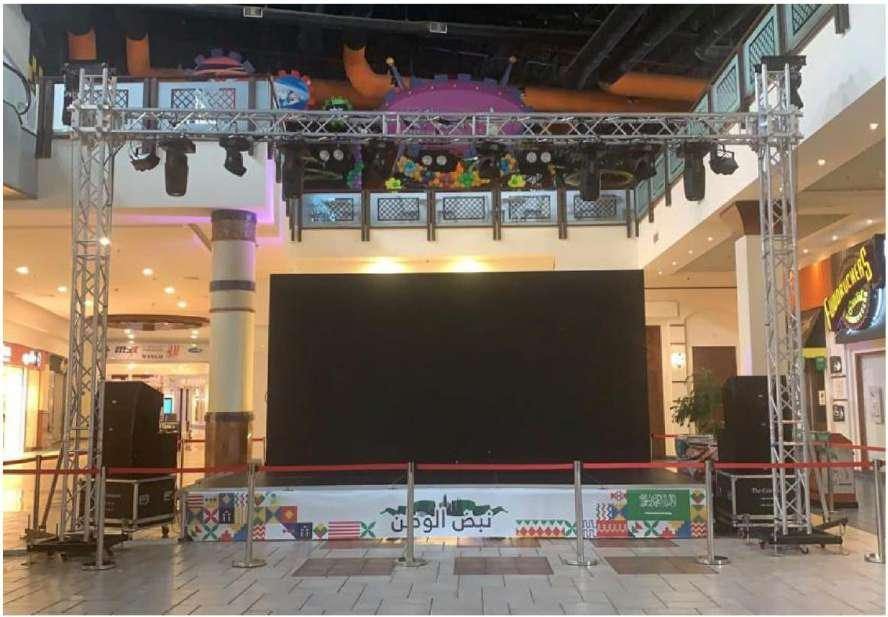
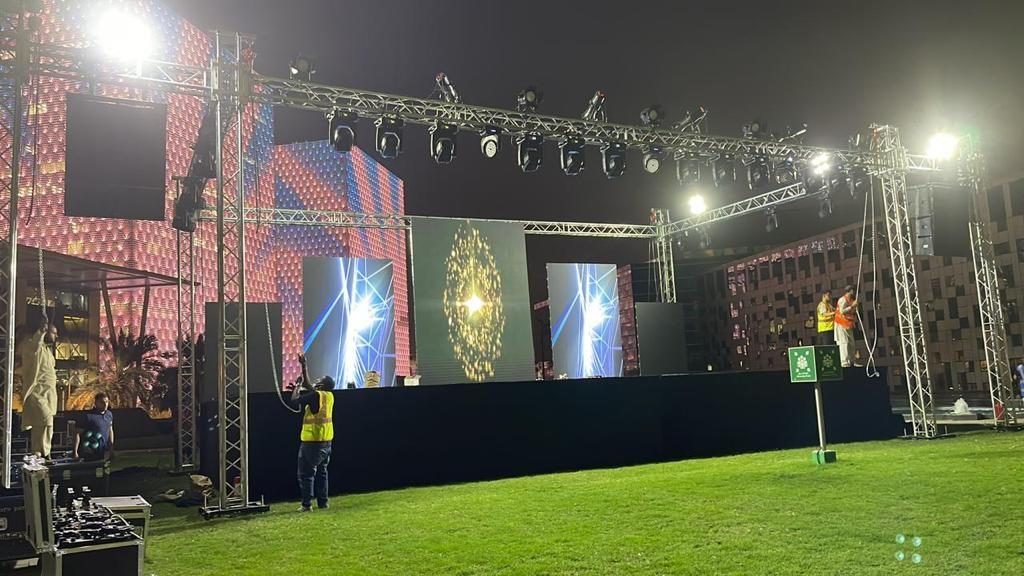
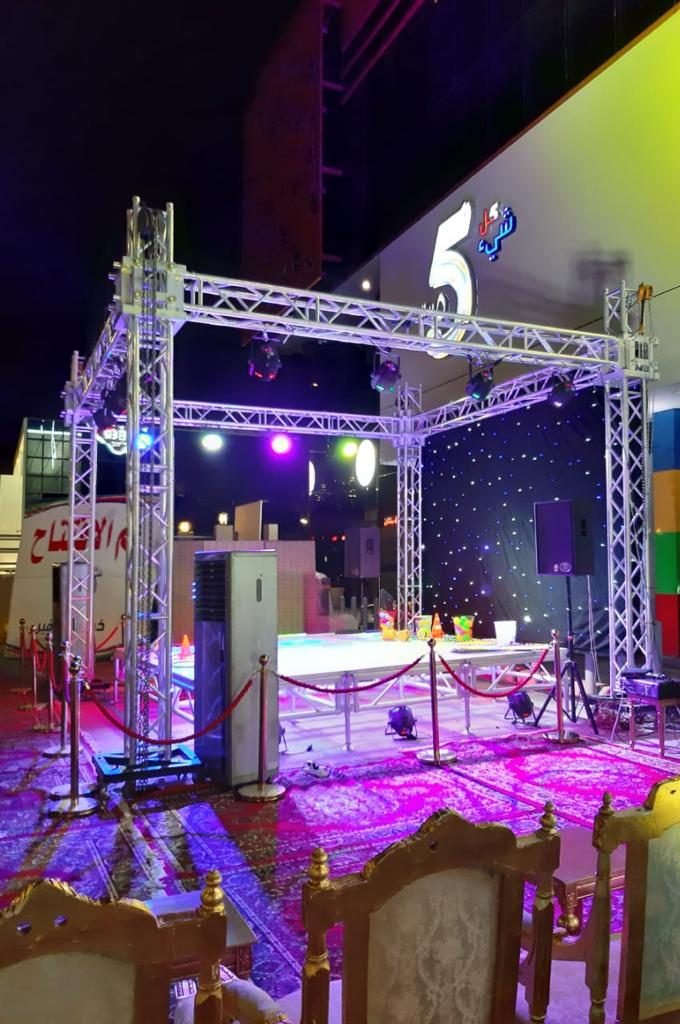
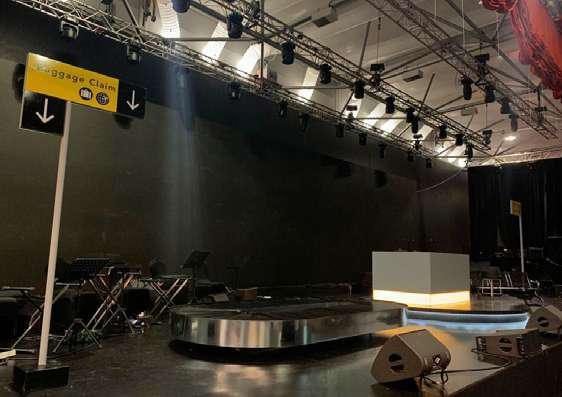
Stages, platforms and event set-ups our team built and ran.

Questions About Corporate Video Production
What companies and government entities ask before they commission a video.
What does your corporate video production include?
The brief and the message, the script and storyboard, locations and casting, the shoot, then the edit with colour, music and motion graphics, and finally the versions. You can also start from footage you already have, and the quote lists each stage as its own line.
Who writes the script, you or us?
Either works. We write it from the brief and the material you send, or develop a draft your team has started. In both cases the script and the storyboard are approved in writing before anything is shot.
Can our own employees appear instead of models?
Yes, and for recruitment, culture and project videos they are usually the more convincing choice. Staff do best in interviews with prepared questions rather than reading lines. Everyone who appears signs a release, and you decide whether it covers continued use if they later leave.
Do you provide models and presenters?
Yes. Models, presenters and hosts are cast with you for the roles the script needs, and their fee depends on how the video is used and for how long. A presenter who appears on camera can also deliver the same message on stage at your event.
Who arranges permission to shoot at our site?
The site owner decides where and when a camera may go, whether that is your own factory, a client's project, a mall or a government building. You request the permission or introduce us to the person who grants it, and we supply the crew list, the equipment and the shooting hours they ask for.
Can the film be in Arabic and English?
Yes. The script is written in Arabic and English from the start, the voice over is recorded in each language, and subtitles are either burnt into each version or delivered as separate files. Writing for both languages from the first day avoids an English video with an Arabic translation squeezed on top.
Do you make motion graphics on their own?
Yes. An explainer, a data story, an animated logo or titles for footage you already have can all be produced as motion graphics with no shoot at all. Arabic typography in motion is approved in the storyboard, so the letters join correctly.
Is the music licensed?
Every track is licensed for the uses the video will have, such as your website, social media, events or paid advertising, for a stated period. The licence is delivered with the files, so any platform claim can be answered.
What files do we receive?
A high quality master, a clean version with no text for future edits, the Arabic and English versions, subtitle files, the cut downs for each platform and a silent loop for screens if you asked for one. Any use of footage or music beyond what was agreed is settled in writing.
How do we start, and where do you shoot?
We have more than one location in the Kingdom and shoot across its cities. Send the kind of film, its audience, where it will play and your date on WhatsApp at 0567069088 or through the quote page, and an itemised quote follows within 24 hours.
A Video for Your Company?
Send the message you want people to remember and where the film will play. Within 24 hours you have an itemised quote that names every shooting day, every version and every licence.
More specific pages on this
If your question is narrower than this page, these are written for one question each.

