
What is POSM? Point of Sale Materials, POP and How a Store Rollout Works
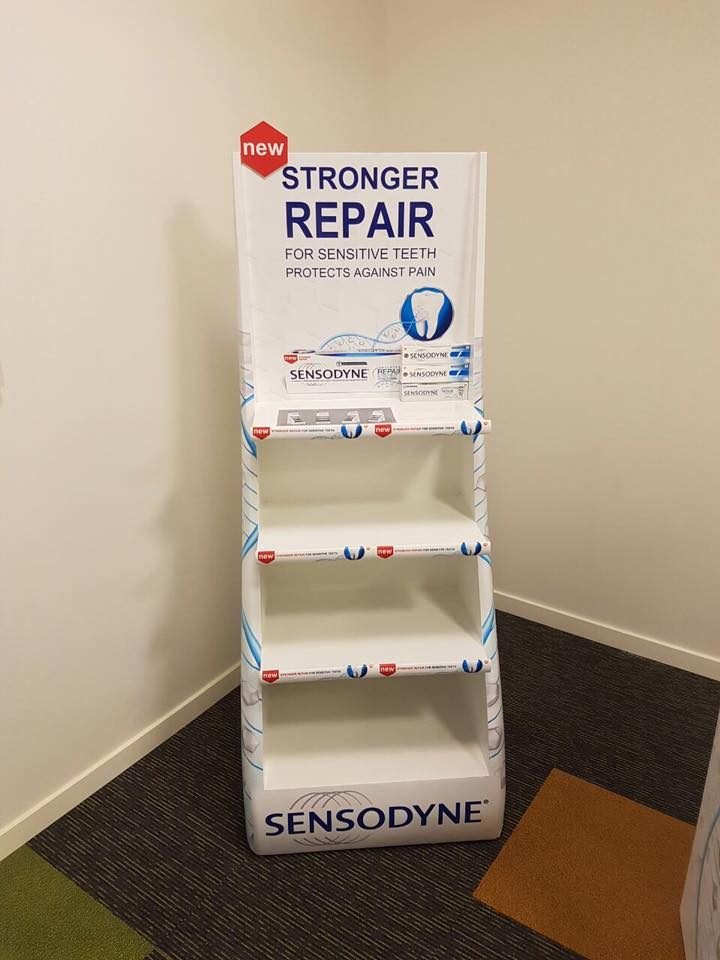
What is POSM? The letters are short for point of sale materials: every display, sign and printed piece that a brand places inside a shop to sway a shopper while the decision is being made. A card clipped under the price on a shelf, a cardboard unit of a new snack by the entrance, a lit panel above a pharmacy counter and a sticker on the floor pointing towards an aisle are all POSM. The word comes from trade marketing, the function that sells through retailers instead of straight to consumers, and it covers both the light paper pieces made for one promotion and the acrylic or wooden units built to stay in the store campaign after campaign.
This guide is for the brand or trade marketing manager in Saudi Arabia who has to brief, approve or defend a POSM budget, and for the student who met the acronym in a course and wants it explained with real store examples. It answers what is POSM in plain terms, separates it from POP, walks through each family of items, explains how hypermarket and supermarket chains approve what enters their aisles, and follows a rollout from the first sample to the photograph that proves a unit is standing where it should. A glossary table near the end collects the vocabulary in one place.
What is POSM, and how is it different from POP?
Point of sale is the place where a sale is completed. In a shop that once meant the till, and in everyday language it still does: a POS system is the cash register and its software. To keep the materials apart from the machine, the trade added the M, and POSM became the name for everything a brand brings into the shop in order to sell there.
POP means point of purchase. Many people use POP and POSM for the same thing, and in most briefs they are. When the industry does draw a line, it is about viewpoint. Point of purchase is the shopper’s side: the spot where a person decides and picks up the product, which can be a shelf in the middle of an aisle far from any till. Point of sale is the retailer’s side, the counter where money changes hands. Suppliers in the United States tend to say POP display, while companies in the Gulf and in Europe more often write POSM on their purchase orders. When a multinational’s regional office sends a campaign toolkit to its team in the Kingdom, expect both words in the same file.
A third term sits around both: below the line. Advertising on television, radio, roadside billboards and social channels is called above the line, because it reaches a broad audience wherever it happens to be. POSM is below the line: it speaks to the person who has already walked into the store, and its job is to turn intention into a purchase, not to build awareness. That is why its budget usually belongs to the trade marketing or channel team and is negotiated with the retailer itself, while the advertising budget lives elsewhere in the company.
The type of store changes the whole plan. Modern trade means the chains: hypermarkets, supermarkets, pharmacy chains, electronics and beauty retailers, each with a head office that sets rules for all its branches. Traditional trade means the independent shop, in the Kingdom above all the neighbourhood grocery known as the baqala, where the owner decides alone, the shelves are narrow and the counter beside the cash register is the most valuable spot in the room. A well planned POSM programme prepares a version for each.
The families of POSM items, explained
Most pieces fall into a handful of families according to where they sit in the store. The names below are the ones written on briefs and purchase orders.
- Shelf talker. A small printed card attached to the shelf edge, usually in the price channel, that says one thing about the product above it: new, on offer, award winning, a short claim. It is cheap and close to the product, and it is the piece most often lost when a store worker refills the shelf.
- Shelf strip. A long printed strip running along the shelf edge across the full width of a brand’s block, so the shopper sees where the range starts and stops. It is also called a shelf edge strip or a shelf stripper. It has to match the profile of the retailer’s price channel, and that profile differs from chain to chain.
- Wobbler. A printed shape on a short flexible arm, fixed to the shelf so that it moves slightly as people walk past. The movement is the whole idea: the eye picks up motion before it reads words. A wobbler carries a logo or a very short message, never a paragraph.
- Stopper. A panel that projects from the shelf edge at a right angle, into the aisle, so a shopper walking along sees it from a distance instead of only when standing in front of it. Its name explains its purpose: it interrupts the walk. Because it sticks out, many chains limit its size so trolleys can pass.
- Dangler. A printed piece hanging from the ceiling, a shelf or a hook, often printed on both faces and sometimes turning in the air conditioning. Danglers mark a zone from far away, for example the corner of a large hypermarket where a promotion is running.
- Floor stand. A free standing unit that carries product and graphics, known in the trade as an FSDU, short for free standing display unit. It can be corrugated board for a short promotion, or acrylic, wood or metal for a permanent spot. Its strength is that it creates new selling space away from the regular shelf, which is exactly why retailers control where it may go.
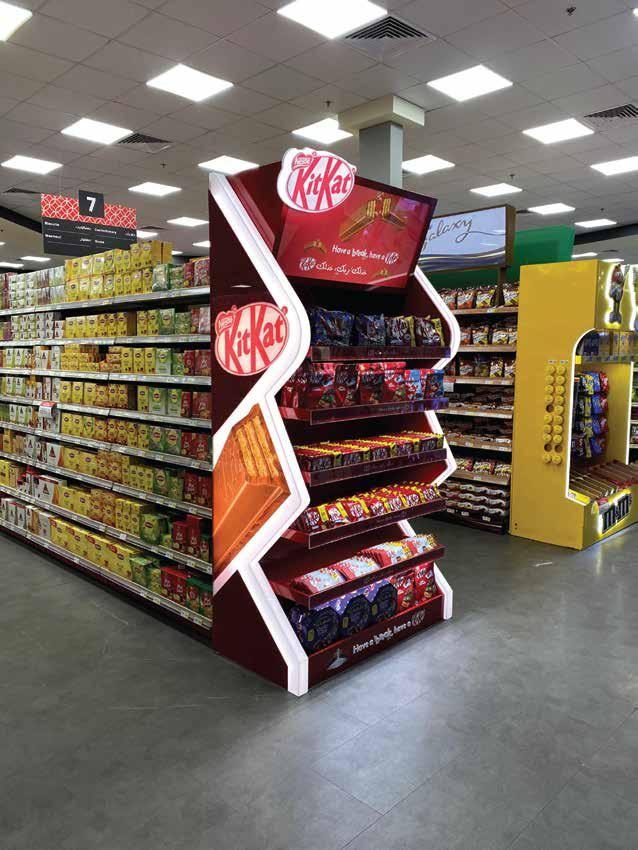
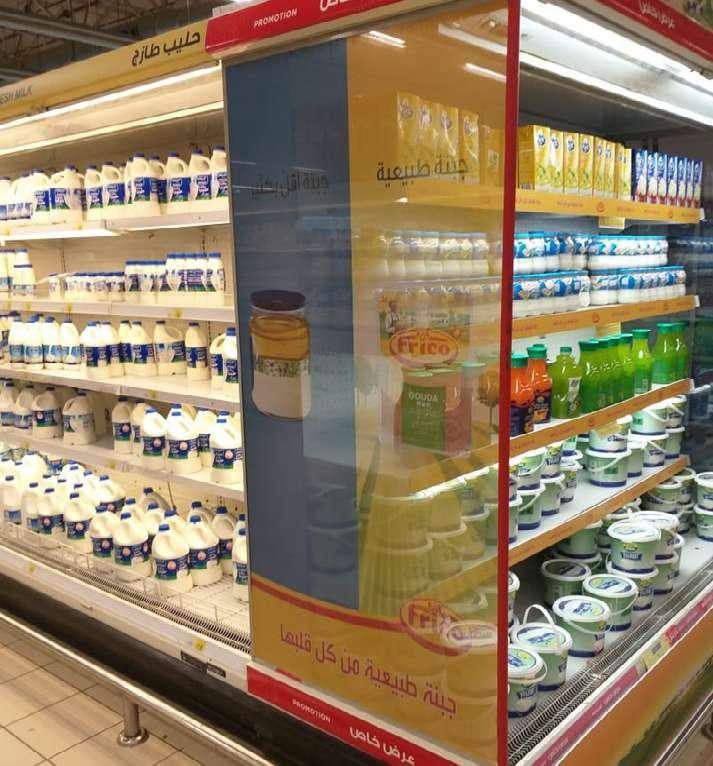
- Gondola end. The shelving bay at the end of an aisle, facing the main walkway, also called an end cap. It is the most seen shelf in a supermarket, so chains sell it to suppliers for fixed periods. The POSM here dresses the existing fixture: a header above, printed side panels, shelf strips and sometimes a base wrap, while the product fills the shelves.
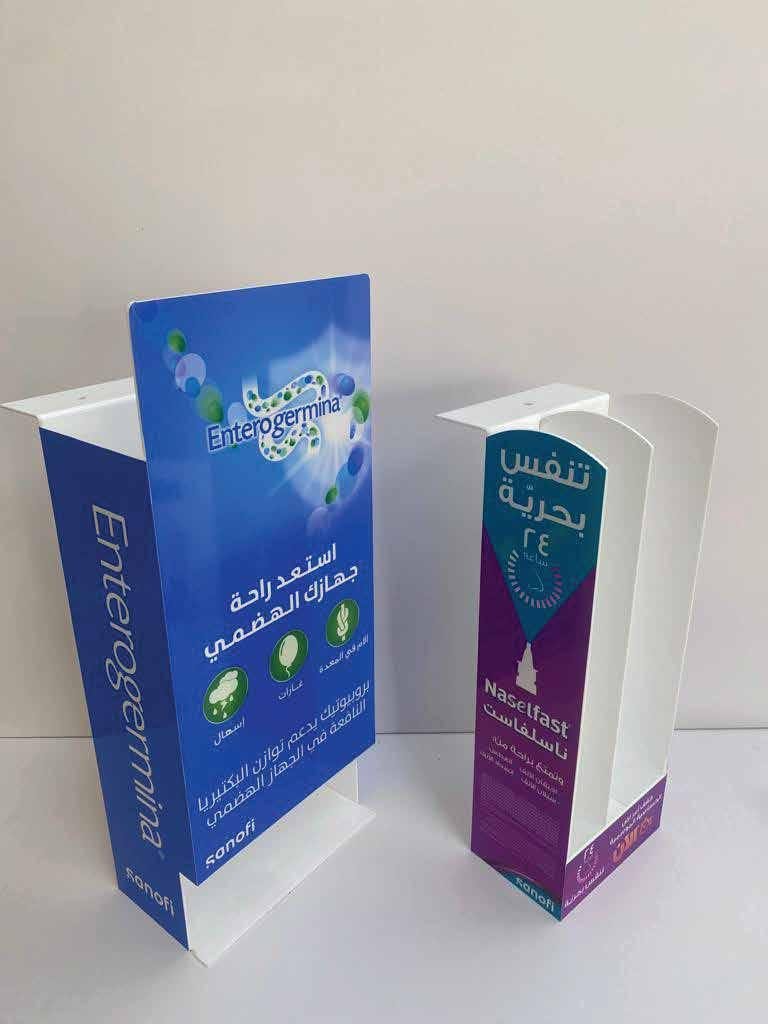
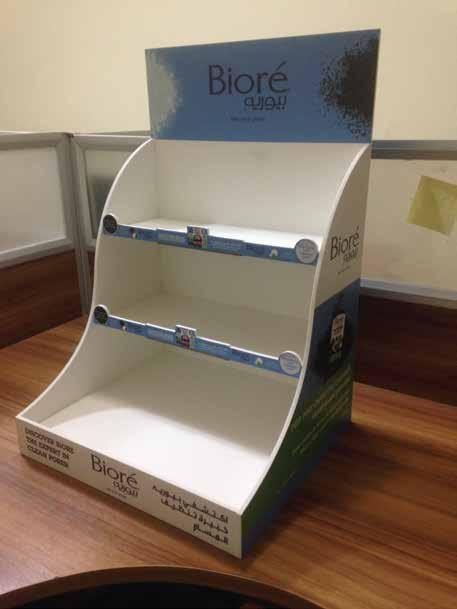
- Counter unit. A small display that sits on the counter beside the cashier or the pharmacist, also called a CDU, a counter display unit. It holds impulse items, testers or leaflets. Counter space is tiny and everyone wants it, so a unit wins on its footprint, its stability and how easily it wipes clean.
- Light box. A frame with a printed face lit from behind, mounted on a wall, above a counter or on top of a floor unit. It stays readable under bright store lighting and its printed face can be swapped for each campaign, but it needs a power point and the store’s agreement to use it.
- Floor graphics. Printed vinyl applied to the floor under a laminate that resists slipping and the scrubbing machine. They lead the shopper from the entrance to an aisle, or mark out the space in front of a display. They need the store’s permission and a floor surface that lets them stick and then come away without a trace.
Around these sit other pieces you will meet on briefs: the header board that tops a bay, the dump bin that holds loose product in a heap, the pallet display that brings a whole pallet onto the shop floor inside a printed skirt, branding that wraps the retailer’s own fridges and freezers in vinyl, and shelf ready packaging, the outer carton designed to tear open and sit on the shelf as a small display of its own.
Permanent or temporary POSM
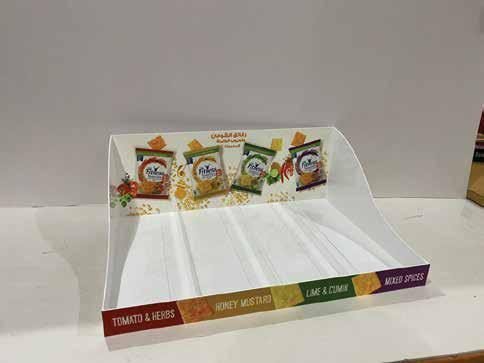
Every brief makes this choice, sometimes without saying so. Temporary POSM is made for a single promotion and thrown away or recycled when it ends: paper, card, corrugated board, foam board and light plastic sheet. Each piece is cheap, quick to print and easy to ship flat, and the store is rarely upset when it disappears. Its weakness is that it bends, fades and tears, and a tired display says something about the brand printed on it.
Permanent POSM is built to last: acrylic, wood, metal, glass and lit units with their wiring. It costs more on the first day, but when the frame is designed for changing graphics, each new campaign needs nothing except fresh print. Many brands now treat their key stores this way: a permanent unit is the stage, and temporary print is the script that changes.
Between the two there is a middle class, sometimes called semi permanent, for pieces expected to survive several campaigns without staying for good, such as a sturdy board floor stand on a plastic base, or an acrylic counter unit with a printed insert that slides out.
Choosing is partly arithmetic and partly politics. The arithmetic: how long the unit must stand, how often the graphics will change, how heavy the product on its shelves will be, and what it costs over its whole life rather than the price of the first batch. The politics: a permanent fixture in a chain store is a commitment, and the retailer will want to know who owns it, who maintains it, what happens when the agreement for that space ends and who takes it away. Ask those questions before ordering acrylic for a space you hold for one promotion.
How retailers and hypermarket chains approve POSM and planograms
In a chain store nothing reaches the floor because a brand would like it there. The space belongs to the retailer, and most chains in the Kingdom manage it through a planogram: a drawing for each bay that shows which product sits on which shelf, how many facings it gets and where the price label goes. The planogram is usually agreed between the retailer’s category team and its suppliers, and quite often one large supplier acts as category captain, proposing the layout for the whole category.
Pieces that sit on the shelf, such as talkers, strips and wobblers, must fit that planogram and the shelf hardware. Pieces that create new space, such as floor stands, pallets and gondola ends, are a separate negotiation. Secondary placement, the trade’s name for any selling spot outside the regular shelf, is usually bought or earned within the commercial terms that the key account team agrees with the chain, often as part of a yearly joint business plan. Trade marketing then designs inside what was bought.
Approval normally passes several desks. The buyer or category manager agrees the space and the period. The visual merchandising or store operations team checks the unit itself: height, footprint, stability, fixing, whether it blocks sightlines or fire equipment, whether it needs power, and whether the artwork follows the chain’s own rules on logos, prices and language. Some chains want a physical sample at head office, others accept drawings and photographs of a prototype. After all that, each store manager still has the last word on his floor, and a unit that gets in the way of his staff or his customers will not stay long.
A few habits shorten the path. Ask the chain for its display guidelines at the start of the brief, not once the artwork is finished. Measure the real fixtures in more than one branch, because a single chain may run older and newer shelving side by side. Clip on instead of drilling, since hardly any retailer lets a supplier make holes in its shelves. Agree the start date, the end date and who removes the pieces. A mall corridor has a different landlord and different rules, covered in our guide to what a mall requires before any display.
Rolling POSM out to many stores
Making one handsome unit is easy. Making the right kit for every branch on a distribution list, landing it in the same week and knowing it went up is the real work of a POSM programme. A rollout tends to run in this order.
- Store census. Before design, find out what each store has: fixture types, gondola end widths, counter depths and whether a free power point exists. Field merchandisers or a short store audit with photographs can gather this.
- Samples and prototype. Print proofs for the paper pieces and a full size prototype for anything built, in the real materials and loaded with real product. This is where colour is matched across board, vinyl and acrylic, a problem explained in our article on print colour matching.
- Approval. The brand team signs off, then the retailer, then ideally a pilot store, where the unit goes up exactly as every other branch will receive it.
- Production and packing per store. The full run is made, then packed into a kit for each branch against the distribution list, with a label naming the branch and its contents and a picture guide to assembly in Arabic and English.
- Delivery. Some chains accept deliveries straight to each branch, while others ask suppliers to send everything through the chain’s own distribution centre on booked slots. Ask early, because the answer changes how kits are packed and labelled.
- Installation. By an installer team, by the brand’s merchandisers or by store staff following the guide. The more complex the unit, the more it needs trained hands.
- Photo proof. Each installation is photographed, ideally with the date and the store name on the picture, and the photographs are grouped by branch so the brand can see which stores are complete and which need a visit.
- Removal. On the end date the old pieces come down. Leave this out of the plan and the next campaign will share the shelf with the last one.
Glossary of POSM terms
If the question is simply what is POSM vocabulary made of, this table is the answer: the terms that turn up most often on briefs, quotes and the display guidelines chains send out. The Arabic edition of this guide carries the same table with the Arabic words used in Saudi stores beside the English ones.
| Term | Also called | What it means |
|---|---|---|
| POSM | Point of sale materials | All display and printed material a brand places in a store to sell |
| POP | Point of purchase | The same materials seen from the shopper’s side, often used as a synonym |
| Below the line | BTL | Marketing that reaches people at a specific place, such as the store, instead of through mass media |
| Planogram | Shelf plan | The retailer’s drawing of which product goes on which shelf |
| Facing | Product front | A single product front visible on the shelf; a brand’s space is counted in facings |
| Share of shelf | Shelf share | The portion of a category’s space that a brand occupies |
| Secondary placement | Off shelf display | Any selling spot outside the regular shelf |
| Shelf talker | Shelf card | A small card on the shelf edge carrying one message |
| Shelf strip | Shelf edge strip | A strip along the shelf edge across a brand’s block |
| Wobbler | Wiggler | A printed shape on a flexible arm that moves as people pass |
| Stopper | Shelf blade | A panel that stands out into the aisle at a right angle |
| Dangler | Hanging card | A printed piece hanging from the ceiling or a shelf |
| FSDU | Floor stand | A free standing display unit with its own shelves |
| Gondola end | End cap | The bay at the end of an aisle facing the main walkway |
| CDU | Counter unit | A small display that stands on the counter |
| Light box | Lit panel | A frame with a printed face lit from behind |
| Floor graphics | Floor stickers | Printed vinyl on the floor that leads to an aisle or a display |
| Shelf ready packaging | SRP | An outer carton that opens into a small display on the shelf |
| Compliance | Execution | Whether the pieces went up as planned, in the right place and on time |
How to measure POSM
A POSM budget is easier to defend when the measures are agreed before the first piece is printed. Start with execution, then move on to effect.
- Compliance. Of the stores that received a kit, which ones installed it, in the agreed place, by the agreed date? The photo report answers this store by store.
- Survival. Go back to a sample of stores midway through the campaign and count what is still standing and still intact. Light pieces vanish first, and the gap tells you how many spares to send next time.
- Visibility and share of shelf. Does the brand block read clearly from the aisle, and did its share of the shelf move while the pieces were in place?
- Sales against control stores. Compare sales in stores that had the display with similar stores that did not, over the same period. This is the cleanest test of effect, and it needs sell out data from the retailer or a research panel, agreed in advance.
- Cost per store. Divide the full cost, packing, delivery, installation and removal included, by the stores that actually displayed it. A unit that never left the stock room still cost money.
Measure the same way from one campaign to the next so the results can be compared, because a figure on its own says little until it sits beside the figure from the previous campaign.
Common POSM mistakes
- Designing from a render. A unit drawn on screen without the real fixture, counter or end bay in front of the designer arrives too wide or too tall, or with a header that hides the price.
- One kit for every store. A hypermarket, a small supermarket and a baqala have very different space. A core design with smaller versions reaches more branches than one large unit that only the biggest stores can take.
- Too many words. A shopper gives a wobbler a glance. A logo, a product picture and a few words do more than a list of benefits.
- Forgetting Arabic. Global artwork often arrives in English only. In Saudi stores shopper facing text is expected in Arabic, usually with English beside it, and the Arabic needs a native editor and a typeface that suits the brand.
- No spares. Talkers, wobblers and stickers get knocked off and binned. Ordering exactly one per store means the rest of the campaign runs without them.
- Permanent build for a temporary slot. Lit acrylic units for a gondola end held for a single promotion leave the brand with stock it has nowhere to put.
- No owner after delivery. If nobody is responsible for installing, checking and removing, the kit stays in its box, and the brand finds out only when it asks for the photographs.
- Ignoring safety. A floor stand that tips when a child pulls at its top tier, or a dangler hung near a sprinkler head, is taken down by the store the same day, and rightly so.
Where The Touch fits in a POSM programme
The Touch designs and makes POSM for brands across the Kingdom, the fabricated and the printed parts together. Design, CNC and laser cutting, joinery, paint, acrylic and large format print sit under one roof, so a floor stand, its header and its shelf strips come from the same files and the same colour proof. A full size prototype is built in our factory from the production materials before the run, kits are packed and labelled per branch against your distribution list, and the units are installed by our own team or by branch staff using a printed guide, with a photo report per branch at the end. The whole programme is set out on our page for POSM production in Saudi Arabia.
Some parts have pages of their own. A stand made to show a single product on a shelf or a counter is on acrylic display stands, and tester units and gift set holders for beauty counters on perfume and cosmetic display stands. Shelf stickers, product labels and floor stickers come from sticker and label printing, and graphics are printed in 1 to 5 working days once the artwork is approved. When a brand moves from a display inside someone else’s store to a branded corner or a shop of its own, that is retail fit out.
We have more than one location in the Kingdom, and every project is built in our own factory and installed by our own team. We have worked for Swarovski, Gucci Flora, Ganache, Kinan and Saudia Holidays. Send the store list, the items and the campaign dates, and an itemised quote reaches you within 24 hours.
Frequently asked questions about what is POSM
What does POSM stand for?
POSM is short for point of sale materials. It covers every display and printed piece a brand places in a store to sell there, from a small card on the shelf edge to a lit floor unit. Some teams write POS materials, which means the same thing.
Is POP the same as POSM?
In practice, yes: most briefs use point of purchase and point of sale materials for the same pieces. When a difference is drawn, POP looks from the shopper’s side, where the product is chosen, and POSM from the retailer’s side, where it is paid for. Agree one word inside your team and use it on every purchase order.
What is the difference between a wobbler, a stopper and a shelf talker?
All of them attach to the shelf edge. A shelf talker is a flat card that faces the person standing in front of it. A wobbler sits on a flexible arm and moves to catch the eye, while a stopper juts into the aisle at a right angle so that people walking along the shelves see it.
What is a planogram and why does it matter for POSM?
A planogram is the retailer’s plan for each bay, showing which product sits where and how many facings it gets. Shelf pieces have to fit it, and a strip or a talker that covers a price label or a neighbouring product gets removed. Ask for the planogram of the bays you are dressing before the artwork starts.
Should we choose permanent or temporary POSM?
It depends on how long the space is yours, how often the graphics will change and how heavy the product is. Board and paper suit a single promotion. Acrylic, wood and lit units earn their cost when the same spot is held across several campaigns and only the print changes.
Who installs POSM in the stores?
It can be an installer team, the brand’s own field merchandisers or store staff following a picture guide packed in the kit. Simple pieces such as talkers and stickers are usually fitted by merchandisers, while floor stands, lit units and gondola end kits need trained hands. Whoever installs should also photograph the result and take down the previous campaign.
How is a POSM campaign measured?
Begin with compliance: which stores installed the kit, where and when, shown by a photograph per store. Then check how many pieces survive midway, and compare sales in stores with the display against similar stores without it. Agree these measures and the data source with the retailer before the campaign starts.
POSM From Our Factory
Photographed on site after handover, no renders.
Have a project and want a real number?
Send the area, the date and the city, and we come back with an itemised quote within 24 hours. No commitment, and no vague all-in price.

