
Acrylic Signage
Acrylic Signage for Offices, Clinics and Receptions
Acrylic signage is what most companies choose when they fit out or refresh their own premises: the logo behind the reception desk, a sign on every meeting room door, arrows in the corridors and a directory beside the lift. The material looks like glass and weighs far less, it takes print and light, and it can be cut to the finest stroke of an Arabic logo. This page explains the types of indoor sign, how acrylic is cut, printed, engraved and lit, how it is fixed without damaging walls or glass, and how to plan a whole floor so every sign on it follows one system.
Why Acrylic Signage Suits an Office Interior
An indoor sign is read at close range, touched, cleaned every day and sometimes changed. Acrylic signage copes with all of that better than most materials an office fit out has to offer.
The look of glass without its risk
A clear acrylic panel has the depth and shine of glass, yet it is much lighter and it does not shatter into sharp pieces when something hits it. That matters in a reception where visitors lean on the counter, and on a door sign that a tea trolley or a file cart can catch.
Fine enough for Arabic script
Arabic logos and names carry dots, thin joining strokes and tight curves. A laser follows them exactly, so the dots stay crisp, the strokes keep their weight and the word on the sign is the word in your brand guidelines, not a thickened copy that has lost its grace.
Print, engraving and light on one sheet
The same sheet can be printed on its face or from behind, engraved, cut into letters, or lit from its edge or from the back. One material can therefore carry a whole family of signs, from the lit reception logo to a plain room plate, and every piece still looks related.
Easy to care for and easy to change
Acrylic wipes clean, does not rust and does not fade indoors. A sign can be designed with a slide in insert or a removable face, so a new manager, a renamed department or a new room number does not mean starting a sign from scratch.
What Comes With the Signs
Signs are one part of a refreshed office. These services are made or arranged by teams under the same roof.
Printing & Promotional Gifts
Wall graphics, window vinyl, framed prints and the welcome pack on the reception desk. Graphics are printed in 1 to 5 working days once the artwork is approved.
Acrylic & Wood Fabrication
Reception counters, display shelving and award plaques cut on the same CNC and laser machines as your signs.
Promoters & Brand Ambassadors
Hosts with a supervisor for the day you open the new premises to clients and partners.
Branding & Creative Studio
Logo files, the matched Arabic and English typefaces and the colour references every sign is drawn from.
Digital Solutions
A screen in the reception for welcome messages, and visitor registration on a tablet at the desk.
Experiences & Events
An opening day for a new head office or branch, planned and run by us.
Social Media & Content
Photos and short video of the finished reception, ready for the announcement of the new premises.
Custom Exhibition Stands
The same identity carried onto your stand at the next show, built in our own factory and installed by our own team.
Types of Indoor Acrylic Signage
An office rarely needs a single sign. It needs a family, and each member has its own job, its own reading distance and its own way of being fixed. Showrooms, clinics and schools use the same family under other names.
The reception logo wall
The first thing a visitor sees, and the sign people photograph. It is usually built in layers: a clear or frosted back panel held off the wall on metal standoffs, with the logo printed or lit on top. The logo can also be cut as raised letters, and the choice depends on the wall and on how far the entrance door is from the reception desk.
Door and room signs
Identification signs tell visitors where they are: a meeting room name, a manager's office, a consulting room number in a clinic, a classroom in a school. They sit beside the door on the handle side, carry a number and a name, and change more often than any other office sign, so they are usually built with a replaceable insert.
Directional and wayfinding signs
Arrows and destinations at every point where a visitor stops to decide: out of the lift, at a corridor junction, at the entrance to a wing. A wayfinding sign answers one question, which way, and it fails when it crams in too many places or uses a name the staff themselves never say.
Floor directories
A directory beside the lift or at the entrance lists departments, rooms or tenants with their floor and direction. Built from separate strips on a backing panel, it can be updated a line at a time when a department moves, instead of being remade whole.
Safety and information signs
Fire exits, assembly points, extinguisher locations, prayer rooms, toilets, accessible routes, no smoking notices. Their symbols and wording follow the building's safety requirements, so the content comes from your facility manager or safety plan, and acrylic gives them the same look as the rest of the family.
Desk plates, certificates and printed panels
Name plates for desks and counters, frames for the commercial registration, licences and certificates on the reception wall, and printed acrylic panels for a vision statement or a values wall. Printing on acrylic gives these pieces a depth and shine that a paper print in a frame lacks. They are small, but they sit at eye level and are looked at longest.
How a Whole Floor Gets One Sign System
Acrylic signage ordered one sign at a time ends up in different fonts, heights and colours. A floor planned as a whole reads as one company from the front door to the last room.
A walk of the floor with the plan
We take site measurements and walk the route a visitor takes: entrance, reception, lift, corridors, meeting rooms. Every decision point and every door is marked on the floor plan, together with the wall or glass each sign will sit on and where power is available for a lit piece.
The signage schedule
A good signage schedule gives every sign a code on the plan and a line in a table: its type, its location, its text in Arabic and English, its finish, its fixing and whether it is lit. The schedule is approved as a whole, so no sign is forgotten and none is ordered twice.
Design and drawings in both languages
The sign family is designed from your brand guidelines: a matched Arabic and English typeface pair, one set of arrows and symbols, and one rule for where each language sits. Each sign type is then drawn to scale with its fixing, and production starts only after you approve the drawings.
Samples and proofs
Before anything is cut, judge the finish on a real offcut of acrylic, not on a screen, and have the reception logo printed full size on paper and held on the wall, then look at it from the door. Ask someone fluent in each language to read the text, and check room numbers against the plan.
Cut, printed, engraved and lit
Pieces are cut on CNC and laser machines from the approved files, then printed or engraved, polished at the edges and assembled. Lit pieces are wired and tested in our factory before delivery, so a faulty light module is not discovered after it is fixed to the wall.
Installed by our own team
Our own team installs every sign, levels and aligns it against the schedule, and peels the protective film off last so the face is not scratched during the work. The approved schedule stays with you as the reference for any later change.
How Long Office Acrylic Signage Takes
Printed graphics and vinyl
Printed in 1 to 5 working days once the artwork is approved.
A single reception logo
It depends on the lighting, the number of layers and whether the wall needs preparing. The quote states the date.
A whole floor or building
It depends on the number of sign types, how many are lit and when the floor is free for installation. The quote states the date.
A name or number change later
A new insert depends on how the sign was built, which is why changeability is decided at the design stage.
What Decides the Price of Acrylic Signage
We publish no price list, because acrylic signage for an office is priced from its schedule. These are the lines that move a quote, named so you can compare offers on the same basis.
How many signs, and how many are different
A run of identical door signs costs less per piece than the same number of different designs, because the first piece carries the setup. Fewer sign types, used consistently, also make the place look more organised to a visitor.
Lit or unlit
Edge lit, backlit and halo lit pieces add LED modules, drivers, wiring and testing, and they need a power point behind or beside them, which the fit out electrician has to provide before the wall is finished.
The print and the layers
A single face printed directly is the simplest option. Reverse printing with a white layer, stacked sheets, engraving filled with colour and mixed finishes on one sign each add machine time and hand work.
The finish
Clear sheet and standard colours are the economical end. Mirror sheet, a brand colour matched by printing or painting the back face, and polished edges on thick pieces all add material and preparation.
The walls and the access
Glass, concrete, gypsum board and tiled walls each take a different fixing. Work at height, work in an occupied office outside working hours, or a building with strict access rules adds installation time.
Changeable or fixed
Slide in inserts, removable faces and directory strips cost a little more at the start and much less every time a name changes. A sign glued shut is cheaper today and replaced whole later.
Send the floor plan, a list or photos of the places that need signs, and your logo files. An itemised quote for your office signage reaches you within 24 hours. Request a quote or message 0567069088 on WhatsApp. If the same identity is going onto a stand this year, our guide to exhibition stand cost in Saudi Arabia shows how that budget is built line by line.
Beyond the Head Office: Where the Same Sign System Goes
Acrylic signage in your premises is one expression of an identity that also appears at exhibitions, conferences and events, and the effort spent on the sign family pays off there too. The matched typefaces, the arrows and the colour references are the same files our branding and creative studio prepares for everything else the company publishes, and the cutting, engraving and lighting are part of our wider acrylic and wood fabrication service, which also makes reception counters, shelving and award plaques. Wall graphics, window vinyl and framed prints come from printing and promotional production. When your company exhibits, the materials and colours of the reception logo can return on a custom exhibition stand, and when it hosts a conference, the same wayfinding rules guide guests through a hall planned under exhibition and conference setup, with welcome messages on LED screens for exhibitions. Signs on a shop front or a building facade, with their municipal licence, are outdoor work with rules of their own. Acrylic stands that display products on a counter or a shelf are a separate subject as well.
Choosing the Right Sign for Each Spot in the Office
These decisions settle most of a signage schedule. Make them once for the whole floor, not sign by sign.
Clear, frosted, coloured or mirror?
Clear sheet shows the wall behind it, so it suits a calm, plain wall and needs strong colour in the print. Frosted sheet diffuses light, hides fingerprints and makes text easier to read over a busy background. Coloured sheet comes in a set palette, so an exact brand colour is reached by printing or painting the back face. Mirror looks rich in a reception but shows every scratch and needs a perfectly flat backing.
Direct print, reverse print or vinyl?
Direct UV print puts the ink on the face, which is quick and detailed, but the ink is then the outer surface that meets the cleaning cloth every day. Reverse print sits on the back face and is read through the sheet, so the front stays glossy and the ink is protected, and the artwork is mirrored before printing. Cut vinyl gives solid colour with crisp edges and is the easiest to replace. When printing on clear acrylic, a white layer goes under the colours, or the wall shows through the logo.
Engraved or printed?
Engraving cuts the text into the sheet, so it cannot wear away, reads well on clear and frosted panels and can be filled with colour. Laser engraving on cast acrylic comes out a frosted white, which is why cast sheet rather than extruded sheet is chosen for engraved signs. Printing is the better route for photographs, gradients and logos in many colours.
Lit or not, and how?
In an edge lit sign the LEDs sit in a base or a channel along one side, and the light travels inside the sheet until an engraved line or a cut edge lets it out. A backlit sign puts an opal white face over a light box and glows evenly. Halo lighting sits behind a logo held off the wall and washes the wall around it. Every lit sign needs its power planned before the wall is finished.
Tape, standoffs or a rail?
Light signs on glass and smooth painted walls can be held with high strength mounting tape, which leaves no holes. Standoffs, the metal spacers that hold a panel off the wall, need drilling but add depth and a shadow and hide the fixings under their caps. A rail lets signs be moved or swapped without new holes, which suits rented premises where the landlord restricts drilling.
Acrylic Signage Mistakes That Show Up After Installation
Each of these is easy to avoid on the drawing and awkward to fix on the wall.
Arabic letters that come out broken
When Arabic text passes through software that does not support it, the letters lose their joins and run left to right. It happens in cutting files more often than people expect, so check every Arabic line on the production proof itself, not only in the email.
White text on clear acrylic over a pale wall
On screen the text sits on a dark mock up. On the wall the pale paint shows through the sheet and the white letters disappear. A clear sign needs a colour printed behind the text, or a darker wall.
A reception logo judged on a screen
A logo that looks large on a laptop can look modest from the entrance door. Judge the size from where visitors first see it, with a full size paper print on the wall.
Tape on paint that has not settled
Mounting tape bonds to the surface it is pressed on. On fresh or dusty paint the paint itself lets go, and in a warm room a sign can slowly slide. Ask when the wall was painted and clean the spot before fixing.
Room numbers that do not match the plan
If the signs number the rooms one way and the evacuation plan or the meeting room booking system another, staff and visitors get lost and emergency instructions point to the wrong door. Fix the numbering once, in the schedule, before anything is made.
Cleaning with the wrong product
Glass cleaners containing ammonia or alcohol can cloud acrylic or leave fine hairline cracks across its surface. Cleaning staff need a soft cloth and mild soapy water, and a written note saying so at handover.
Cut, Lit and Installed by One Team
Our studio, our CNC and laser cutting, our large format print, our acrylic work and our installers all share one roof, and there are 10 CNC machines in our factory, so the sign drawn in the schedule is the sign that is cut and fixed on your wall. Companies we have worked for include Kinan, Saudia, the Heritage Commission, Ascenda and Johnson & Johnson MedTech.
Signs From Our Factory
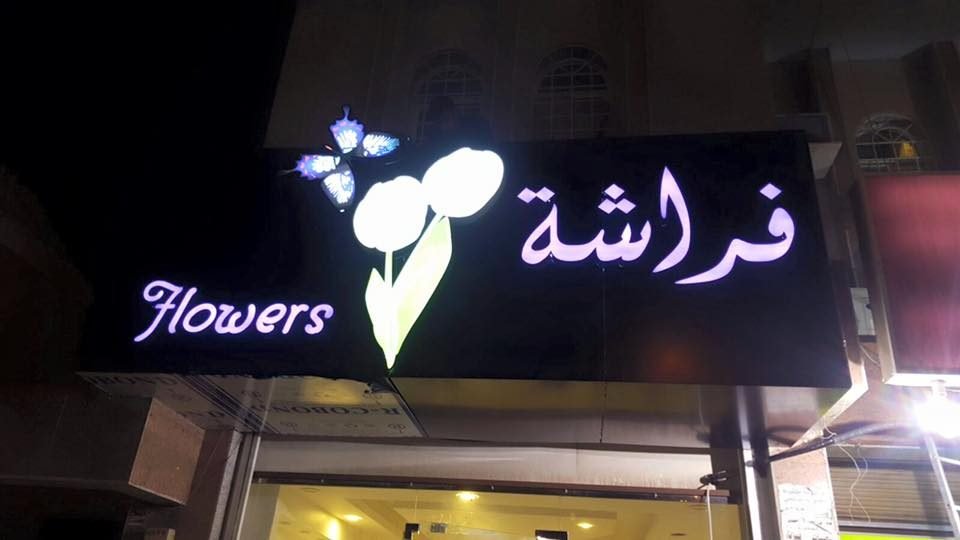
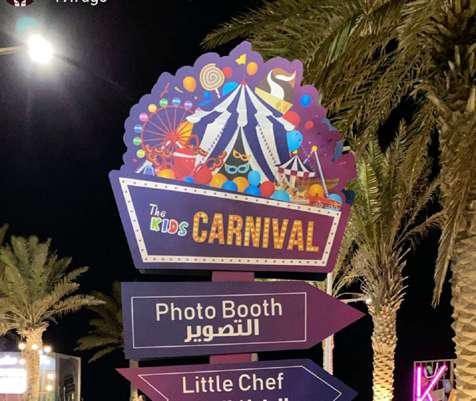
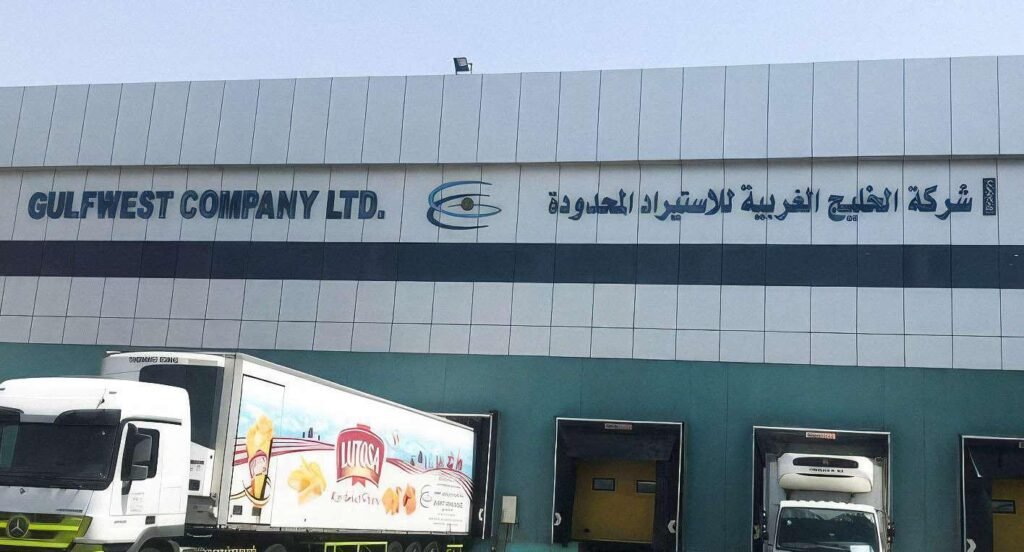
Company and shop signs we made and installed, lit and unlit.


Questions About Acrylic Signage
What facility managers and marketing teams ask before they order office signs.
What is acrylic signage used for in an office?
For almost every indoor sign: the reception logo, door and room signs, corridor arrows, floor directories, safety and information signs, desk plates and certificate frames. Acrylic is chosen because it looks like glass, is lighter and safer, and takes print, engraving and light on the same sheet.
Can our reception logo be lit?
Yes. It can be backlit through an opal face, halo lit behind a logo held off the wall, or edge lit in a clear engraved panel. A lit logo needs a power point behind or beside it, so tell your fit out contractor early, and every lit piece is tested in our factory before delivery.
What is the difference between direct print, reverse print and vinyl?
Direct UV print sits on the front face and suits detailed artwork in many colours. Reverse print sits behind the sheet, so the front stays glossy and the ink is protected from daily cleaning. Cut vinyl gives solid colours and sharp edges and is the simplest to replace.
Can acrylic signage be fixed to glass partitions without drilling?
Yes. Light signs are fixed to glass with clear high strength mounting tape. Glass partitions usually also need a frosted band at eye level so people see the glass and do not walk into it, and the room signs and the frosted band can be designed together so the glass looks deliberate.
Can Arabic and English share one sign?
Yes, and most office signs in the Kingdom carry both. The two scripts are set at sizes that look equal to the eye rather than at the same number, from a typeface pair designed to work together, with one rule for where each language sits on every sign.
How do we change names when people or departments move?
Plan for it at the design stage. Door signs can take a slide in insert, directories can be built from separate strips, and desk plates can carry a replaceable name. The frame stays on the wall and only the strip with the name is replaced.
How do you make signs readable for everyone?
With strong contrast between the letters and the background, plain letter shapes, and matt or frosted faces that do not glare under ceiling lights. Room signs sit beside the door on the handle side at a height that both a standing person and a wheelchair user can read, and arrows and symbols never rely on colour alone.
Do you design the signs or work from our files?
Both. We can design the whole sign family from your brand guidelines, or prepare production drawings from your designer's files. Production starts only after you approve the drawings.
How long does acrylic signage for a whole office take?
It depends on the number of sign types, how many are lit and when the floor is free for installation, and the quote states the date. Printed graphics and vinyl are printed in 1 to 5 working days once the artwork is approved.
Where are the signs made, and how do we start?
We have more than one location in the Kingdom. Your signs are made in our own factory and installed by our own team. Send the floor plan, photos of the spaces and your logo files on WhatsApp at 0567069088 or through the quote page, and an itemised quote follows within 24 hours.
Signs for Your Office or New Branch?
Send the floor plan and your logo files. Within 24 hours you have an itemised quote that lists every sign, its finish, its fixing and whether it is lit.
More specific pages on this
If your question is narrower than this page, these are written for one question each.

