
Frosted Glass Stickers
Frosted Glass Stickers and Window Graphics for Offices and Shops
Frosted glass stickers turn a clear pane into a decision about what people see: a meeting room that stays private while light still passes, a partition that carries the logo at eye level, a full height door that nobody walks into. On a shop front, window graphics in the same kind of film do a different job, carrying the name, the opening hours and the offer of the month to people walking past. This page explains the kinds of film, where a privacy band should sit, which face of the pane to use, and how a site survey, measuring and installation by our own team turn a sketch into film that sits flat and peels off cleanly when the time comes.
Why Glass Gets a Sticker: Privacy, Safety and the Brand
A sticker on glass is rarely decoration alone. In most offices, clinics and shops it solves one of the problems below, and naming the problem first decides the film, the height and the face of the glass it goes on.
Privacy without losing light
Open offices are built with glass partitions so that light reaches every desk, and then the meeting rooms need privacy. Frosted film blurs what happens inside while daylight still passes through. A band across the middle hides seated people and their screens, a full pane hides everything, and a pattern or a gradient sits somewhere between the two.
Making clear glass visible
A full height pane in a corridor or a frameless door can be almost invisible, especially when the light is behind it. A band, a row of dots or a line of logos at the heights where eyes naturally fall tells people there is a surface in front of them. Building management or the consultant on the project usually asks for it, and we make and fit what they specify.
The shop window that sells
For a shop, a cafe or a showroom, the front is the largest sign it owns. Printed window graphics carry the name and the logo, the opening hours on the door, the services on offer and the campaign of the moment to people on the pavement or in a passing car, with far less effort than changing the facade itself. A door sticker is read from close up, so it carries what a customer needs before walking in: the opening hours, the ways to get in touch and a clear push or pull.
Campaigns that change, a front that stays
Ramadan, national day, a product launch, an end of season sale: campaign window graphics come and go while the pane stays where it is. They are made with an adhesive meant to be removed, so the front can change with the calendar and return to clean glass when the season ends.
What Works Alongside the Film
Frosted glass stickers are often one part of a wider refresh of an office or a branch. These services work under the same roof and from the same approved artwork.
Printing & Promotional Gifts
Menus, flyers and offer cards that repeat the campaign on the window, printed from the same artwork so the counter and the front agree.
Acrylic & Wood Fabrication
Acrylic door plates, room name signs and logo panels made in our own factory, to sit beside the film on doors and partitions.
Promoters & Brand Ambassadors
Hosts at the door of a shop on opening day or during a campaign, inviting in the people the window has already stopped.
Branding & Creative Studio
Patterns, bands and logo layouts designed from your brand guidelines and drawn on photos of your own panes before anything is cut.
Digital Solutions
A QR code on the door or the window that opens the menu, a booking page or an ordering link, tested from the pavement before print.
Experiences & Events
An opening or a relaunch where the new front, the window campaign and the day itself are planned as one piece of work.
Social Media & Content
Photographs of the finished front and the new meeting rooms, ready for the announcement post.
Custom Exhibition Stands
Acrylic panels and showcases on a stand at a show, dressed with the same frosted and printed films.
Types of Glass Film and What Each One Does
Most requests for window graphics fall into the types below, and many projects mix several of them on the same front: frosted bands on the partitions, printed graphics on the street side and cut lettering on the door.
Plain frosted film
A single film that turns the pane milky and translucent, applied as a band or across the whole pane. It gives the look of etched glass with far less work, lets light through, and is the quiet, standard choice for meeting rooms, clinic consultation rooms and washroom windows.
Frost with a cut logo or pattern
The frosted film is cut before it goes up, so the logo, the company name or a pattern appears as clear shapes in the frost, or the reverse: frosted shapes on a clear pane. Stripes, geometric patterns drawn from the brand and rows of logos all work, adding privacy and identity in the same layer.
Printed frosted film
Colour printed onto a frosted base: a band in the brand colour, a gradient that fades from solid to clear, or an illustration that still lets soft light through. It is the choice when plain frost looks too clinical and the office wants its own colours on the partitions. It also suits clinics and children's centres that want a warm space rather than one that feels like a hospital.
Printed window graphics facing the street
A full colour print on white film, applied on the outside or read through the pane from inside, carrying the name, the logo, offers and campaign artwork. It blocks the view where it sits, so it is placed where the shop wants attention rather than where customers need to see in.
Stickers printed to read through the pane
Printed in reverse and applied on the inside face, the graphic reads correctly from the street while the film itself stays protected from weather and passers by. This suits opening hours, logos on doors and campaign graphics on fronts that face a busy pavement.
Cut lettering and safety marks
Letters and symbols cut from coloured or frosted vinyl with no background: the opening hours, push and pull on a door, the names of meeting rooms, and the bands or dots that make full height panes visible. Clean, precise and easy to replace when a detail changes.
From Site Survey to Film on the Glass
Frosted glass stickers are only as good as the measurements and the installation behind them. These are the stages, in the order we follow them on every site.
Site survey and photos
Our team visits the office or the shop, photographs every pane straight on, notes frames, handles, door closers, sensors and push plates, and checks which face of the glass can be reached and how. Old film, glue residue and scratches are recorded so that the quote covers their removal.
Measuring each pane
No two panes are quite the same, even within one partition. Each is measured on site and given a reference on a plan, so every piece of film is cut for a particular pane and nothing is trimmed by eye on the day of installation.
Design on photos of your space
The bands, logos and patterns are drawn onto photographs of your own panes. For privacy, the height of the band is marked against people seated at the meeting table and standing in the corridor, and confirmed on site with you rather than chosen from a drawing.
Approval and a sample against the light
You approve the layout and, for frosted and printed films, see a sample held against your own pane. Frost reads differently in morning daylight and under office lighting in the evening, and a sample settles the question before production starts.
Production in our factory
The film is printed, laminated where it faces sun or heavy cleaning, and cut to each measured pane in our own factory. Printed items are ready in 1 to 5 working days once the artwork is approved, packed and labelled by pane reference.
Installation by our own team
Our installers remove old film and glue, clean each pane, apply the new film without bubbles, trim it to the frame and leave the site clean. In offices and shops that cannot close, installation runs outside working hours when needed, on the date agreed in the quote.
How Long Window Graphics Take
Printed and cut film
Ready in 1 to 5 working days once the artwork is approved.
Site survey and measuring
Booked as soon as you send the location and photos, and the measurements feed the final quote.
Installation
On the date agreed in the quote, outside working hours when needed.
Your quote
An itemised quote within 24 hours of receiving photos of the panes and what you want on them.
What Sets the Price of Glass Film and Window Graphics
We publish no price list, because film on a pane is priced from the area, the type of film and the conditions on site. These are the lines that move the number, so you can compare quotes for window graphics on the same basis, whoever they come from.
Area and number of panes
The total area of film sets the base, and the number of separate panes adds handling: many small panes take longer to measure, cut and fit than one large pane of the same area.
Plain, cut or printed
Plain frosted film is the simplest. A logo or pattern cut into the frost adds design and cutting, and printed film adds printing and often a laminate. Many projects use plain frost on most panes and keep print for the few that face visitors.
Inside or outside face
Film on the outside of the glass faces sun, dust and street cleaning, and usually needs a laminate. Film printed to read through from the inside is protected but needs reversed artwork. The face is chosen pane by pane and named in the quote.
Access and height
Panes above head height, over a stairwell or above a shop entrance need ladders or access equipment and sometimes an extra installer. The survey records this so the quote reflects the real site rather than an estimate. In a shop that stays open, the work area is screened and kept tidy so the entrance stays safe for customers.
Removing old film
Peeling old film and cleaning off its glue is often slower than fitting the new film, especially when the old film has baked onto the glass in the sun. It is a named line, priced from what the survey found.
Timing and branches
Installation outside working hours, a phased rollout across floors or branches, and a seasonal swap of campaign stickers each change the plan. Each is a separate line, so you can see exactly what the timing adds.
Send photos of the panes, the location and what you want on them. An itemised quote reaches you within 24 hours. Request a quote or message 0567069088 on WhatsApp. If the film is for a stand at a show rather than a branch, our guide to exhibition stand cost in Saudi Arabia shows how that budget is built line by line.
Inside or Outside the Glass: Sun, Cleaning and Which Face to Use
Every sheet of glass has two faces, and choosing the right one decides how long a graphic looks new. Film on the inside face is protected from sun, dust, rain and the cleaner's squeegee, so frosted glass stickers in offices and most shop window graphics go inside, with printed graphics reversed so they read correctly from the street. The outside face is used when the inside is blocked by shelving, a fixed display or a blind, or when a graphic must look crisp without the reflection of the street on top of it, and the print then needs a laminate against sun and cleaning. On either face, film is cleaned with a soft cloth and a mild cleaner, never a blade or an abrasive pad, and edges are wiped toward the film rather than against them. Film on glass is one layer of a front: the overall look of the facade belongs to shop front design, the sign above the entrance to shop signage, and the whole interior of a new branch to retail fit out. Product labels, logo stickers and seals for packaging are covered on our sticker and label printing page.
Privacy Band, Safety Mark or Full Frost: Deciding on Site
Most of the choices on a glass project are made standing in front of the pane, not at a desk. These are the questions we answer with you during the survey.
How much privacy does the room need?
A meeting room where screens and papers matter may need a wide band or full frost. A manager's office may only need to hide seated people, and a training room may want a light pattern that keeps the space feeling open. Light, view and privacy are traded against each other room by room.
Where should the band sit?
A band hides what is behind it at the height of the eyes looking in, so it depends on who is looking and from where: a person walking a corridor, a visitor seated in reception, a colleague at the next desk. We hold up samples and mark the height on the pane with you, because a drawing cannot show sight lines. We mark it at the time of day the room is really used, because the light behind a pane changes what can be seen.
Does the pane need a safety mark?
Any full height glass panel or frameless door that people could walk into should carry a visible mark at the heights where eyes fall, for adults and for children where children visit. Your building management or fit out consultant sets the requirement; the mark itself can be a plain band, dots, the logo or a pattern that matches the frosted film.
Logo in the frost, or frost around the logo?
A clear logo cut out of a frosted band reads elegantly and keeps privacy. A frosted logo on a clear pane is lighter and suits fronts where people should see in. Against a dark interior, a printed white logo may read better than either.
Permanent, or changed with the season?
Office film is meant to stay, so it uses a permanent adhesive. Campaign stickers on a shop front are meant to change with the calendar, so they use a removable adhesive that peels off cleanly when the next campaign arrives.
Glass Film Problems Visible From Across the Street
Film on a pane is seen from both sides and in every light. Each of these problems comes from a skipped step, and each is avoided on the survey or on the day of installation.
Bubbles and lifting edges
Dust left on the pane, film fitted dry in strong heat or edges pressed into the frame cause bubbles and corners that lift. A cleaned pane, the right application method and a neat trim just short of the frame keep the film flat.
A band at the wrong height
A band chosen from a drawing can sit exactly at the eye line it was meant to block, or just above it. Marking it on site, with people seated and standing, avoids doing the whole job twice.
Print fading on the street side
Printed film facing strong sun without a laminate fades and dulls far sooner than film protected on the inside face. The face and the laminate are chosen together during the survey.
Glue and scratches left behind
Old film scraped off in a hurry leaves patches of glue and blade marks on the glass. Removal is planned, with the right tools and cleaners, before the new film goes up.
Film fighting the hardware
Film run over a handle, a door closer, a sensor or a push plate creases and peels away. Each piece is cut around the hardware recorded during the survey.
A campaign that will not come off
A permanent glue used on a seasonal sticker leaves residue when the season ends. Campaign window graphics use a removable adhesive from the start, so the next campaign goes onto a clean pane.
Film Designed, Made and Fitted by One Team
Design in our studio, production in our own factory and installation by our own team sit under one roof, so the frosted glass stickers in the meeting room, the logo on the partition and the campaign on the shop front come from the same approved artwork and the same measurements. We have worked for Kinan, the Heritage Commission, Ascenda, Al Khaleej Al Gharbiya and Johnson & Johnson MedTech.
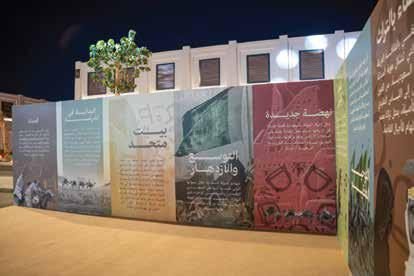
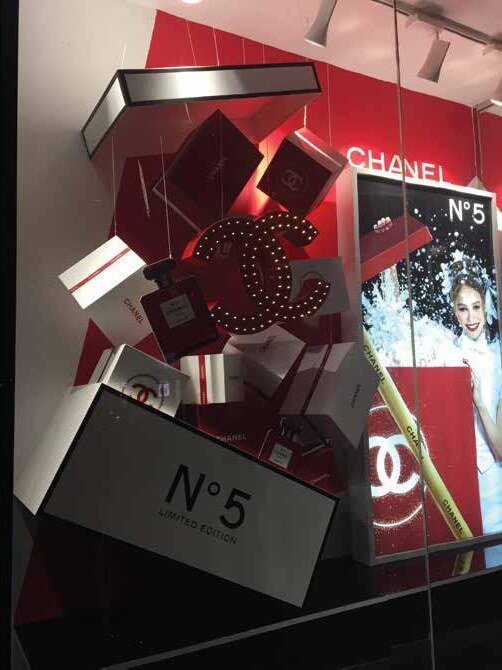
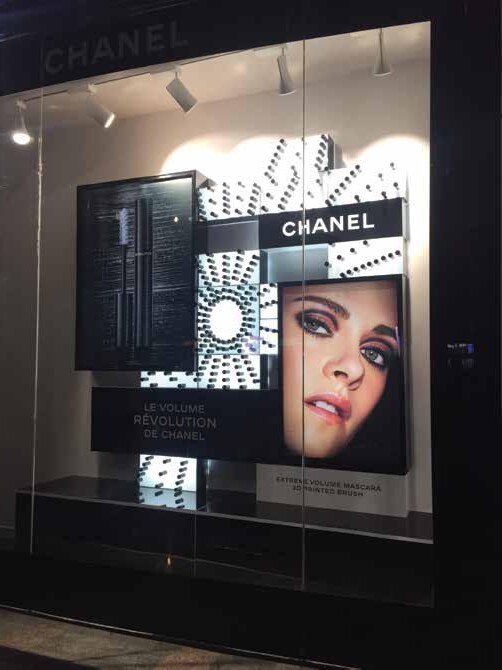
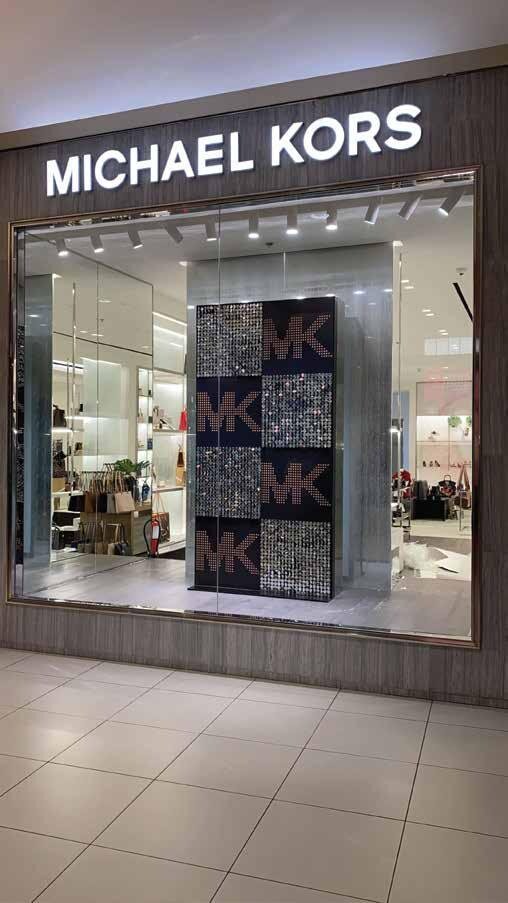
Graphics From Our Work
Walls, windows and stands we dressed with graphics we printed and installed.

Questions About Frosted Glass Stickers
What offices, shops and clinics ask before film goes onto their panes.
Does frosted film still let light in?
Yes. Frosted film is translucent: it blurs shapes and blocks the view while daylight and office lighting still pass through. That is why frosted glass stickers are used on meeting rooms and glass partitions, where a solid sticker would make the space feel closed and dark.
Can you put our logo on a frosted glass partition?
Yes. The logo can be cut out of the frosted film so it shows as clear, applied as a frosted logo on a clear pane, or printed in your brand colours. The layout is drawn on a photo of your own partition and approved before cutting.
How high should a privacy band be?
It depends on who is looking and from where, seated or standing, so there is no single right height. During the survey we hold samples against the pane and mark the band with you, then draw it onto the photos for your approval.
Do glass doors need safety stickers?
Full height panes and frameless doors that people could walk into should carry a visible mark at eye level. Your building management or fit out consultant sets what is required, and we make and fit the band, the dots or the logo row in a style that matches the rest of the film.
Should shop window stickers go on the inside or the outside?
Inside wherever possible, because the film is then protected from sun, dust and cleaning, and printed graphics are reversed to read correctly from the street. The outside face is used when the inside is blocked, and the print then gets a laminate.
Will seasonal window stickers leave marks?
Not when they are made for the purpose. Campaign stickers use a removable adhesive that peels off cleanly at the end of the season, and our team can remove the old campaign and fit the new one in the same visit. The swap is booked before the season starts, so the new campaign is up on its first day.
Can you remove the old film from our glass?
Yes. Removing old film and its glue is a separate line in the quote, priced from what the survey finds. It is done with the right tools and cleaners, so the pane is left clean and unscratched before new film goes up.
Do you measure and install, or only print?
We do the whole job, for frosted glass stickers and window graphics alike: the site survey, measuring every pane, design on photos of your space, production in our own factory and installation by our own team, outside working hours when needed.
How do we clean frosted glass stickers?
With a soft cloth or sponge and a mild, non abrasive cleaner, wiping toward the edges of the film rather than against them. Blades, scrapers and scouring pads should never be used on the film.
How long do window graphics take, and how do we start?
Printed film is ready in 1 to 5 working days once the artwork is approved, and installation is booked for the date agreed in the quote. Send photos of the panes, the location and what you want on them on WhatsApp at 0567069088 or through the quote page, and an itemised quote follows within 24 hours.
Frosted Glass Stickers for Your Office or Shop Front?
Send photos of the panes, the location and what you want on them. Within 24 hours you have an itemised quote that names the film, the face of the pane, the survey and the installation date.
More specific pages on this
If your question is narrower than this page, these are written for one question each.

