
Event Photography and Coverage
Event Photography and Coverage for Moments That Happen Once
Event photography and coverage is booked for a single day and judged for years: the photo in the annual report, the reel posted while guests are still in the hall, the interview a sponsor shares, the video the board watches. We photograph and film conferences, launches, galas, forums, festivals and exhibition booths, including events another company built or organised, with a shot list agreed before the day, respect for protocol and privacy, and selected photos for your accounts on the same day.
Why Coverage Is Planned Before the Doors Open
A photographer who arrives with a camera and no plan comes back with good looking pictures of the wrong things. These are the reasons good event photography and coverage starts in the week before the event, not at the door.
The important moments happen once
The minister arrives, the agreement is signed, the ribbon is cut, the winner lifts the shield. Nobody repeats these for a camera that was pointing at the buffet. Each one needs a set position, someone following the run of show minute by minute, and a lens already aimed at the right spot just before it happens.
Social media now, the archive later
Your social media team wants a handful of strong pictures and a vertical video tonight, while people are still talking about the event. Your management, sponsors and PR team want the full edited set, the recorded sessions and a highlight film afterwards. Coverage that serves both is planned as separate deliveries from the start.
Protocol and privacy decide where the camera stands
Senior guests come with their own protocol teams, some areas are closed to cameras, and some guests or families prefer not to appear at all. A photographer who knows these rules before the event works quietly around them. One who learns them on the night creates the awkward moment everyone remembers.
Sound decides whether an interview can be used
A face can be corrected in the edit. Hall noise, a humming air conditioner or music from the next stand cannot be taken out of a video once it is recorded. Interviews need a microphone on the speaker, a quieter corner chosen in advance and a little light on the face, or the best answer of the day stays in the archive.
What Comes With the Cameras
Coverage is one of several services under the same roof. These are the ones that most often join it at the same event.
Printing & Promotional Gifts
A printed backdrop behind the stage and at the photo spot, so every group picture carries the logo. Graphics are printed in 1 to 5 working days.
Acrylic & Wood Fabrication
Award shields and podiums with a logo that reads clearly in a photograph, made in our own factory.
Promoters & Brand Ambassadors
Hostesses and hosts with a supervisor, who bring guests to the photo spot and keep the stage steps clear for the photographer.
Branding & Creative Studio
The brand guide applied to the edit: the logo card at the end of each video, the colours of on screen text and the title of every session.
Digital Solutions
Event registration websites and attendance systems, so the photographer works from the same guest list that is used at the door.
Experiences & Events
Photo booths, rotating video booths and projection mapping, and the full event when you want one company to run it.
Social Media & Content
The service this coverage belongs to: reels, stories and posts prepared for your accounts during the event, and the content plan around them.
Custom Exhibition Stands
When you exhibit, the stand itself, designed and built in our own factory and installed by our own team.
What Event Photography and Coverage Includes
Coverage is a set of separate deliverables. Choose the ones you will actually use, because each one adds people on the day and hours in the edit. Studio pictures of products are a separate service, product photography, and are not part of event coverage.
Stills
Arrivals at the entrance, the welcome, every speaker on stage, the panel from the side, the audience listening, handshakes, signings, award moments, the group photograph, and the details your team designed: the stage, the backdrop, the table settings, the name badges. Stills are the part of event photography and coverage that ends up in reports, press releases and next year's sponsor file.
Video of the sessions
A recorded keynote or panel needs a steady camera facing the stage, sound taken from the hall mixer rather than the camera microphone, and often another angle on the speaker or the audience. This video is the raw material for the archive, for the speakers and for clips cut later.
Highlight film
A short edited film of the whole event: the set up, the key moments, a few words from guests, the brand at the start and the end. It is the video people actually watch to the end, and it is cut after the event from everything that was filmed.
Interviews and testimonials
Speakers, the host, sponsors and guests answering a few prepared questions on camera. Interviews give the highlight film a voice and give your social media short pieces that stand on their own. They are scheduled into the day, so a busy guest is not chased across the hall.
Reels and stories during the event
Vertical video shot for phones, edited on site and sent while the event is running: the arrival of a guest of honour, the opening line of a keynote, the crowd at a launch. Reels are filmed differently from a highlight film, so they have a plan of their own, not a crop of the horizontal footage.
Live posting
Selected photos and clips sent to your social media team during the event, or published on your accounts by our team after your approval. The approval route is agreed in advance: who reviews, who posts, and which guests or areas never appear.
How Event Photography and Coverage Is Prepared
Most of what makes coverage good happens before the photographer presses the shutter.
The brief and the run of show
We start from the event itself: what it is, who attends, which moments matter to you and where the content will be used. The run of show, minute by minute, tells the coverage team when each moment happens and where the photographer and the video operator need to be just before it.
The shot list agreed before the day
A written list of what must be captured: VIPs and speakers by name, signing moments, the stage, the booth, the crowd, the sponsor logos, the details. You approve it, and on the day it is the checklist, not a memory.
Protocol, privacy and consent
We agree with you which areas are closed to cameras, which guests must not be photographed, whether families or separate sections are covered at all, and who decides about photographing children. The organiser decides each of these, and the coverage team follows the decision.
The venue check
Where the light comes from, where cameras can stand without blocking guests, where the hall sound can be taken for video, which corner is quiet enough for interviews, and what the venue allows: a tripod in the aisle, cables on the floor, a camera on the balcony.
The day itself
Positions are set before guests arrive, the stage and the details are photographed while the hall is still empty, and the shot list is ticked off as the programme runs. Selected photos for social media are sent during the event, so your team posts while people are still talking about it.
The edit and the delivery
After the event the full set is edited, colour corrected and named by day, session and person, then delivered with the highlight film and the recorded sessions in the formats you asked for.
What Arrives When
On the day
Selected photos and short vertical video clips for social media, sent while the event is still running.
After the event
The full edited set of photos, sorted and named, ready for reports and the press.
The highlight film
Edited from all the footage once the photos are delivered. Its date depends on its length, the interviews and the review rounds, and the quote states it.
Recorded sessions
Delivered as full recordings. The date in the quote depends on how many halls were filmed and how much editing each session needs.
What Shapes the Cost of Coverage
We publish no price list, because event photography and coverage is priced from the programme of the day. These are the lines that move a quote, named so you can compare offers fairly.
Hours on site
Coverage is counted in hours, from the first shot of the set up to the last guest leaving. An early start to photograph the empty venue, a long evening or an event across several days each adds to the total.
Photographers and video operators
A single photographer can cover a small launch. A conference with parallel halls, a gala with a stage and a separate section, or a festival spread across a large site needs more people, and every video operator brings equipment of their own.
Interviews and sound
Interviews add a microphone set up, some light and someone to arrange the guests. Taking a clean feed from the hall sound system for recorded sessions also needs the venue's sound team.
Editing on the day
Reels and live posting need an editor on site working while the event runs, in addition to the photographer and the video operator behind the cameras.
Editing after the event
The length of the highlight film, the number of sessions to edit, subtitles in Arabic and English, and a version of each video for every platform all add editing time.
Travel and usage
Where travel applies, it is a named line in the quote. Use beyond your own channels, such as paid advertising that shows recognisable guests, is agreed in writing before the event.
Send the date, the city, the kind of event, the programme if it exists and what you want to receive afterwards. An itemised quote reaches you within 24 hours. Request a coverage quote or message 0567069088 on WhatsApp. If you also need the stand you will be filmed on, our guide to exhibition stand cost in Saudi Arabia explains how that budget is built.
Covering an Exhibition Booth for the Exhibitor's Own Channels
An exhibitor pays for the space, the stand and the team, and then often leaves the show with a few phone pictures. Coverage of a booth for the exhibitor's own channels starts before the doors open, while the aisles are empty and the photographer can capture the stand whole, lit and clean. It continues with the stand at work: visitors at the counter, product demonstrations, your team in conversation with customers, a VIP visit, short interviews with your managers, and reels prepared for your accounts during the show. The organiser sets the rules: when cameras may enter outside opening hours, whether a tripod may stand in the aisle, and whether neighbouring stands may appear. Ask for those rules early, and respect the right of other exhibitors not to be filmed. A hotel ballroom, a convention centre and a government venue each have rules of their own as well, and some events have their own media team, which a coverage team works beside rather than against. For a conference we plan and run ourselves, see conference organisers in Saudi Arabia, and for gala dinners and staff nights, corporate party organisers in Saudi Arabia. Store and branch launches are on grand opening events. If you need the stand itself, start at exhibition booths in Saudi Arabia, and the full range of events we deliver is on our event management company in Saudi Arabia page. This coverage is part of our wider social media and content creation service.
How to Choose an Event Photographer and Video Team
A portfolio shows the best frames from many events. These questions show what you will get from yours.
Ask for a full set, not a portfolio
Ask for every edited photo from a single event similar to yours. A complete set shows whether the photographer catches names, signings and the audience, or only the pretty frames.
Ask how same day content reaches you
Who edits during the event, how the selected photos and video clips are sent, and whether your team or theirs posts after your approval. If the answer is that everything comes after the event, the social moment is gone.
Ask how they work with protocol
A good coverage team asks for the protocol contact, the closed areas and the list of guests not to be photographed before the day. A team that does not ask will find out on the night, in front of the guests.
Ask what protects the files
Cameras that write to a backup card, copies made before leaving the venue, and a delivery that does not rely on a single laptop. Losing the keynote recording because a card failed is not something an apology fixes.
Ask what you receive and how it is named
Folders by day and session, file names that carry the event and the person, light copies for social media and full resolution for print, and video files in horizontal and vertical versions. And ask in writing what you may use the material for.
Where Event Coverage Usually Goes Wrong
Each of these is settled in the week before the event, and none of them can be fixed the day after.
The signing nobody photographed
The agreement was signed during a moment the photographer took for a break. A shot list tied to the run of show, naming each key moment and its time, is what actually prevents it.
A camera in front of the guest of honour
A photographer standing between senior guests and the audience, or crossing the stage during a speech, becomes the story of the event. Positions are agreed with protocol, and long lenses do the work from the side.
Interviews ruined by the hall
Music, applause and air conditioning are louder on a video recording than they feel in the room. Without a microphone on the speaker and a quieter corner, the answers cannot be used, however good the picture looks.
A face published that should not have been
A guest who asked not to appear, a family in a separate section, a child shown without the organiser's approval. Deleting a post after it has been shared does not undo it. The list of guests not to be photographed and the closed areas are part of the brief, and selected photos are checked against them before posting.
The stage screen burnt white
LED screens and spotlights are far brighter than the faces on stage. A photographer who sets the camera for the screen leaves the speaker dark, and one who sets it for the speaker turns the screen into a white rectangle. Settings are tested on the screens during the rehearsal or before the doors open.
Files nobody can find
A delivery of unsorted files carrying the names the camera gave them means your team spends a long time looking for the photo of a single speaker. Files are named and sorted by day, session and person before delivery.
Coverage From a Team That Builds and Runs Events
Photography, video and the content around them come from our own content team, in the same company that designs stands, builds them in our own factory, installs them with our own team and runs events. On an event we also built, coverage is planned with the stage drawings and the run of show in hand. We have worked for Kinan, the Heritage Commission, Saudia Holidays, Johnson & Johnson MedTech, Cartoon Network and Saudia.
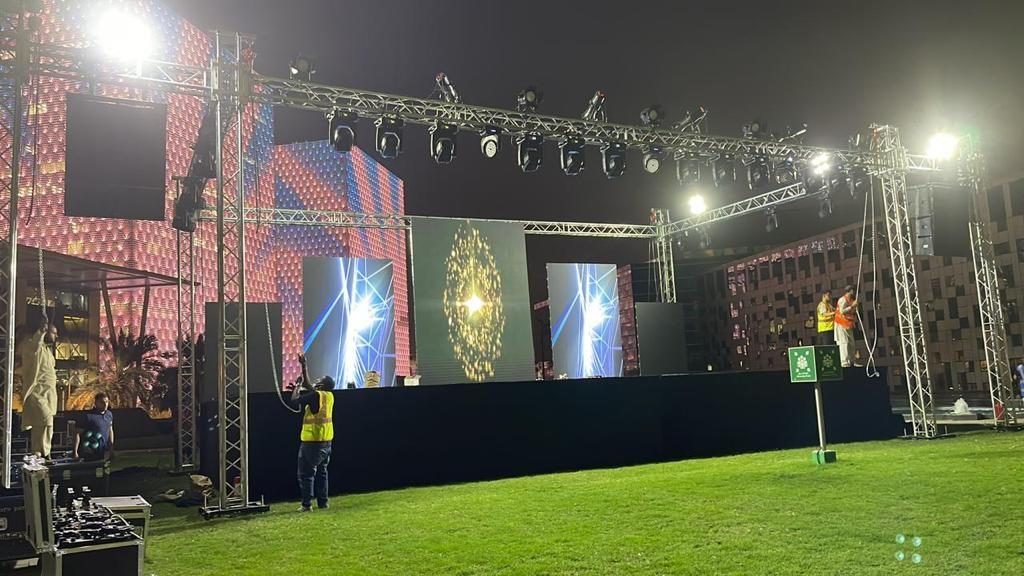
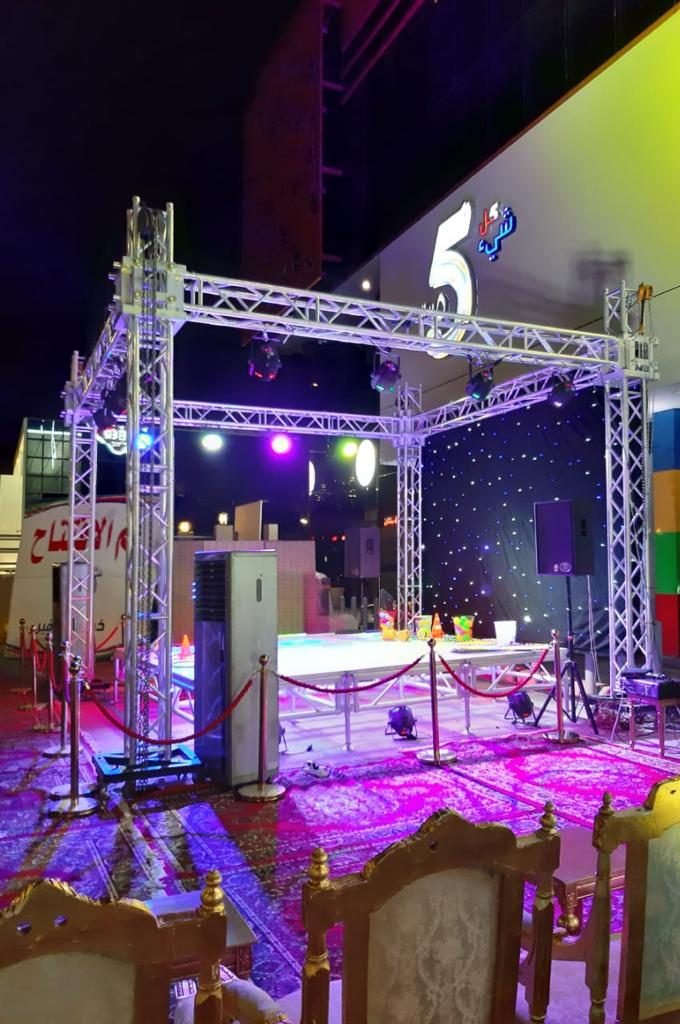
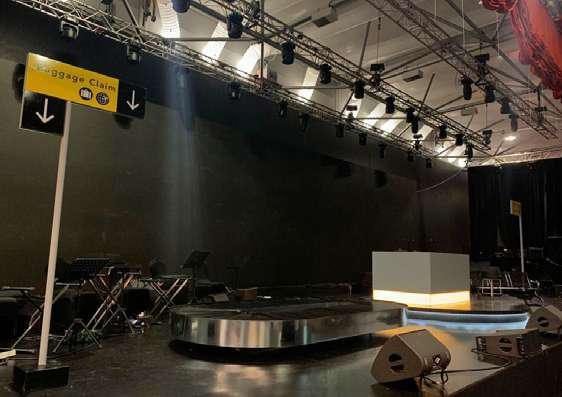
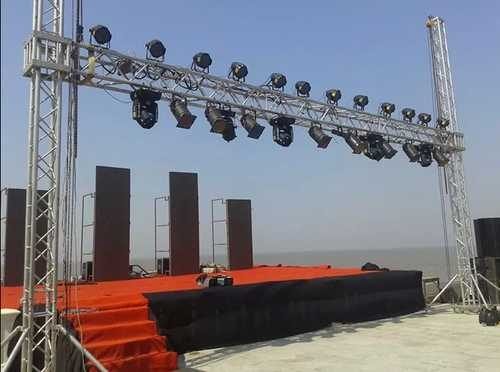
Events We Delivered
Stages, platforms and event set-ups our team built and ran.

Questions About Event Photography and Coverage
What organisers, companies and exhibitors ask before they book coverage.
Do you cover events you did not organise or build?
Yes. We photograph and film conferences, launches, galas, forums, festivals and exhibition booths run by other companies. We ask for the run of show, the protocol contact and the venue rules, and work alongside the organiser's own team.
What does your event photography and coverage include?
Stills, video of the sessions, a highlight film, interviews, reels and stories during the event, and live posting if you want it. You choose the parts you will use, and the quote lists each one as its own line.
Do we get photos on the same day?
Yes. Selected photos and short vertical video clips are sent during the event for your accounts, and the full edited set follows after the event. The date for the full set and the film is written in the quote.
How do you handle VIPs and protocol?
We ask for the protocol contact and the programme of senior guests before the day, agree camera positions with them, and work from the side with long lenses. Where the protocol team brings its own photographer, we coordinate with them rather than compete for the same spot.
What about guests who do not want to be photographed, separate sections and children?
The organiser decides, and we follow. Tell us which areas are closed to cameras, which guests must not appear, whether separate sections are covered, and how children are to be treated, and the brief carries these rules to everyone filming. Selected photos are checked against them before anything is posted.
What does a good interview need?
A quiet corner chosen in advance, a microphone on the speaker, a little light on the face and a short list of questions agreed with you. Each guest is booked into a time slot, so the interview does not compete with the programme and the video sound stays clean.
How are the files delivered and named?
Through a download link, sorted into folders by day and session, with file names that carry the event, the session and the person where known. Photos come at full resolution for print and lighter for social media, and video files in the orientations agreed.
Can you cover our exhibition booth for our own channels?
Yes. Our photographer captures the stand before the doors open, our video operator films your team and visitors at work, record short interviews with your managers, and prepare reels for your accounts during the show. Check the organiser's rules on filming in the hall and on showing neighbouring stands first.
Can we use the material in advertising?
Agree it before the event. Use on your own channels is the usual case. Paid advertising that shows recognisable guests needs their consent, and the organiser decides how that consent is gathered.
How do we start, and where do you work?
We have more than one location in the Kingdom and cover events in its cities. Send the date, the city, the kind of event and what you want to receive on WhatsApp at 0567069088 or through the quote page, and an itemised quote follows within 24 hours.
Coverage for Your Next Event?
Send the date, the city and the programme. Within 24 hours you have an itemised quote that names every hour, every camera and every photo and video deliverable.
More specific pages on this
If your question is narrower than this page, these are written for one question each.

