
Conference Organisers in Saudi Arabia
Conference Organisers in Saudi Arabia From the First Decision to the Final Report
A conference is decided long before its stage is built: by its purpose, its date, its venue, its programme and the people who sit at the control desk on the day. This page is written for a company, ministry, association or university looking for conference organisers in Saudi Arabia, and it follows the work in order, from the first decision to the report that closes the file. The Touch plans the event together with the programme of the day, runs it with its own operations team and hosts, and builds what the hall needs in its own factory. Whatever comes from the venue or from a specialist is named in the quote, line by line.
What Organising a Conference Really Means
The build is the part people see. Organising is the part nobody photographs: decisions taken in the right order, written down and owned by named people. Conference organisers in Saudi Arabia are judged on four things.
A single plan that everyone reads
The date, the venue, the programme, the speakers, the registration list and the budget sit in the same plan, with an owner and a deadline beside every line. When the opening moves, everything that hangs on it moves in that document, and no supplier works from the version of last week.
A date tested against the Saudi calendar
Ramadan and the Hajj season follow the Hijri calendar and arrive earlier every Gregorian year, so a week that was free last year may not be free this year. School holidays, the weekend and the large shows in the same city decide whether delegates and hotel rooms are available at all.
The route delegates walk, not the stage alone
Delegates judge the day from the car park: the gate, the queue, the badge, the sign to the hall, the seat, the coffee, the prayer room and the way out. Organising means walking that route on paper before anyone walks it in the venue.
A desk that decides on the day
A session overruns, a speaker is late, a guest of honour arrives early. A conference needs a control desk with a minute by minute cue sheet in front of it, and a named person from the host who can cut, swap or extend on the spot.
Our Services Around the Conference
These are the departments of The Touch that a conference draws on, and every one of them has a page of its own. Whatever comes from the venue or a specialist is written as such in the quote.
Printing & Promotional Gifts
The printed programme, hall signs and gifts for delegates. Graphics are printed in 1 to 5 working days.
Acrylic & Wood Fabrication
A lectern that carries the logo, lit lettering behind the speakers and name plates for senior guests.
Promoters & Brand Ambassadors
Hosts at the entrance, at registration and at the session doors, briefed on the programme and led by a supervisor.
Branding & Creative Studio
The conference identity on the backdrop, the screens, the badges and everything delegates read.
Digital Solutions
Attendee registration, screens that show the programme and the hall map, and data you receive after the conference.
Experiences & Events
The service behind every hosted event, with an operations team that runs the day from the first arrival to the last departure.
Social Media & Content
Photography and video coverage of the sessions, with content published while the conference is still running.
Custom Exhibition Stands
For a sponsor that wants a stand of its own design beside the conference hall.
Six Kinds of Conference and What Changes for Each
The word conference covers very different days, and conference organisers in Saudi Arabia plan each of them differently. The kind decides who approves the programme, how delegates are invited and what the room has to do.
A government or ministry forum
Protocol leads. The arrival of the patron sets the moment of opening, the front row is seated by rank, and the opening follows a known order that commonly begins with a recitation from the Quran. Guest lists go to the gate in advance, and every text shown on screen is approved before it appears.
A corporate annual meeting
The audience is internal, so invitations and registration are simple, and the weight moves to the content: results, strategy, awards. Confidential slides mean a closed room, a rule on phones and filming, and an early decision on what may be published afterwards.
A scientific or medical day
A scientific committee owns the programme. Abstracts and posters have a submission deadline and sessions run to the minute. Where the day carries accredited training hours, the committee applies to the accrediting body, and the attendance of delegates is recorded by name for every session.
An association or sector forum with sponsors
Sponsors pay for part of the event, so their benefits become a schedule of their own: a speaking slot, a logo on screen, seats and a position in the accompanying exhibition. How that exhibition is built is explained on our setup page.
A dealer or partner conference
Delegates travel in from other cities, so the host has to settle who books flights and rooms and who meets arrivals. The programme usually mixes a plenary with product sessions and an evening event, and each of them needs a different room layout.
An international, bilingual conference
Arabic and English share the stage. That means interpretation from a specialist supplier, headsets handed out and collected, slides and speaker captions in both languages, and the question of visas and invitation letters for speakers from abroad, which the host has to answer early.
The Six Stages From the Decision to the Report
A conference is organised backwards from its opening hour. Each stage closes with a decision in writing, and the next stage starts from it.
The first decisions
Why the conference is held, who it is for and what delegates should do after they leave. Then the date, tested against Ramadan, the Hajj season, school holidays and the other events in the city, and the name of the person at the host who approves. Send these and an itemised quote reaches you within 24 hours.
The venue and the permit question
The hall is chosen to fit the programme, not the other way round: capacity, breakout rooms, prayer space, parking and access for the build. At the same time the host asks the venue which licences the event needs and who files them.
The programme and the speakers
Sessions, breaks and prayer times are fixed first as a skeleton, then filled with names. Each speaker receives a briefing, a slide template, a deadline and a rehearsal slot, and a ready room is set aside near the stage. The programme is not printed until the speakers have confirmed in writing.
Invitations, registration and badges
Invitations go out with a closing date for the list. Each name is collected in Arabic and in English as its owner wants it printed, the badge types and their colours are agreed, and the badges are produced from the closed list, with a known route for names that arrive late.
Rehearsal and the day
The run of show is rehearsed on the finished stage with the presenter, the screens and the microphones. On the day the control desk follows the cue sheet item by item, hosts work the route delegates take from the entrance to the seat, senior guests are met at the door and walked to their places, and a named person from the host decides.
The report and next year
How many delegates attended each session, the feedback results, the photographs, the recordings and what each sponsor received are gathered in a short report. Lists, templates and reusable pieces are stored, so the next edition does not start from zero.
How Long It Takes, and What Sets It
The quote
Itemised and with you within 24 hours, once the brief gives the date, the city, the expected count of delegates and the kind of conference.
Printed material
Graphics are printed in 1 to 5 working days once the artwork is approved, so the programme has to be final before that.
The conference as a whole
Set by the size of the conference, by when the venue is free and by how early the programme is fixed. The plan states the dates.
The deadlines inside the plan
Speaker slides, the registration list and sponsor logos each get a closing date, counted back from the opening and written in the plan.
What Moves a Conference Budget
A conference has no price list, because no two of them share a programme. These are the factors that move the total, named so that a committee can compare offers from conference organisers in Saudi Arabia line against line.
Delegates and days
The count of delegates sets the hall, the catering, the badges, the hosts and the seats. Each added day repeats the venue hire, the crew and the hospitality, and adds an overnight reset of the rooms.
The venue and what its package includes
A hotel usually sells the hall together with catering and a basic technical package, while a convention centre or a university hall may hire out the room alone. Ask what is inside the price before comparing venues.
Parallel sessions
Every breakout room that runs at the same time as another needs its own screen, sound, technician, host and sign. A programme held in a single plenary hall costs less to run than the same hours split across rooms.
Languages
Interpretation brings interpreters, booths, headsets and a desk to hand them out, all from a specialist supplier. Print, slides and captions in both languages add design and checking time to every item.
Recording, photography and streaming
A photographer alone is a modest line. Filming every session, editing and publishing it, or sending the plenary live to another room, multiplies cameras, operators and hours. Decide what will really be used after the conference.
The date and the notice
Halls, rooms and crews cost more when the conference falls in a busy season of the city, and short notice removes the cheaper options. A date fixed early is the least expensive decision in the budget.
Send the date, the city, the kind of conference, the expected count of delegates and the venue if it is booked. An itemised quote reaches you within 24 hours, and it says who supplies each line: our team, the venue or a named specialist. Request the conference quote or write to 0567069088 on WhatsApp. A sponsor planning a stand of its own beside the conference can budget it from our guide to exhibition stand cost in Saudi Arabia.
The Venue, the Permits and Who Supplies What
Hotel ballrooms, convention centres and the halls of universities and ministries host most conferences in the Kingdom. A hotel ballroom brings catering, rooms for speakers and parking in a single contract, but it is released late and has to be returned on time. A convention centre gives capacity, height and truck access, and it asks for more: its own rules, often its own contractors for power and rigging, and build days booked in advance. A university or ministry hall often belongs to the host itself, and comes with fixed seating, a fixed stage, gate security that wants the guest list beforehand and little room for registration. In each of them ask the same questions: the capacity in the seating layout you need and not in the layout of the brochure, breakout rooms close enough that moving between sessions does not eat the break, loading doors and rigging limits, a prayer space sized for the delegates, and a separate section or entrance where the host asks for it. Then the permit question. Depending on the kind of event, a licence may be required from the authority that regulates exhibitions and conferences, and the venue may need clearances of its own. The venue and the relevant authority decide what applies, and the host or the venue submits the application. We prepare the drawings and the paperwork we are asked for. The physical side, meaning the stage, the registration desks, the signage and the sponsor booths, is covered on our exhibition and conference setup page, and the welcome structure at the door on event entrance arches and gates. For the wider service see our event management company in Saudi Arabia page and the city pages for Riyadh, Jeddah and Makkah, where the Hajj and Umrah seasons change the working hours. The hosts at registration and in the hall belong to our promoters and brand ambassadors team, and printed programmes, signs and gifts are made by printing and production.
How to Choose Among Conference Organisers in Saudi Arabia
Five tests that fit into a single meeting. Put them to every company on your list.
Ask how the day will be written down
The answer you want is a run of show, minute by minute: each item with its time, its owner and what appears on screen with it, prayer breaks included. A company that answers with photographs of a handsome stage is talking about the build, not about running a day.
Ask who supplies each line
No company owns everything a conference needs. A straight answer separates what the organiser does with its own team from what comes from the venue and what comes from a specialist such as an interpreter or a caterer, and the quote repeats that split in writing.
Ask who decides on the day
You want a name on each side: the supervisor the organiser puts in the hall, and the person on your side with authority over the programme. If either name is missing, the decisions of the day are taken by whoever speaks loudest.
Ask how a change is handled
Speakers withdraw and sessions move until the last week. Ask how a change reaches the screens, the printed programme, the hosts and the presenter, and what the latest date is for a change that still has to be printed.
Ask what you receive afterwards
A conference that ends with an invoice and nothing else has wasted its data. Ask for the attendance figures, the feedback results, the photographs and the files in a form your team can build on next year.
Six Mistakes Hosts Make
None of them is about design. Each is a decision taken late, or taken by nobody.
Fixing the date before looking at the calendar
A date picked from the diary of the chief executive can land in Ramadan, in exam week or in the week of a large show that has filled every hotel in the city. Check it against the Hijri calendar and the events of the city before it is announced.
A programme with no room for prayer
An agenda copied from a conference abroad runs straight through Dhuhr and Asr. Delegates leave anyway, and the session after it opens to rows of empty seats. Build the breaks from the prayer times of that city on that date.
Slides that arrive on the morning
A speaker who walks in with a laptop and a file nobody has seen brings a different screen ratio, missing fonts and a hunt for a cable. Slides are collected in a single template by a deadline and loaded on the show computer before the rehearsal.
Registration that never closes
A list left open until the opening means badges written by hand at the desk and a first hour queue of delegates that lasts through the opening session. Close the list on a date, print from it, and decide beforehand how a late name gets its badge.
Sponsor promises nobody tracks
Benefits written into a sponsorship file are forgotten once the contract is signed, until the sponsor counts its logos on the day. Turn each promise into a line with an owner, and photograph each benefit as it is delivered.
Nobody with authority at the control desk
When a minister arrives early or a panel overruns, the technicians look for someone to ask. If the decision maker is seated in the front row with a silent phone, the time is lost. Name the person and seat them at the desk.
The Team and the Factory Behind the Conference Day
The Touch has more than one location in the Kingdom. Whatever your conference needs built is made in our own factory, where design, CNC and laser cutting, joinery, paint, acrylic and large format print share a roof, and it is installed by our own team, who stay through the event and dismantle afterwards. Hosts work under a supervisor. Our stands and displays have stood for Kinan, the Heritage Commission, Saudia Holidays, Johnson & Johnson MedTech and Cartoon Network.
Conferences We Set Up
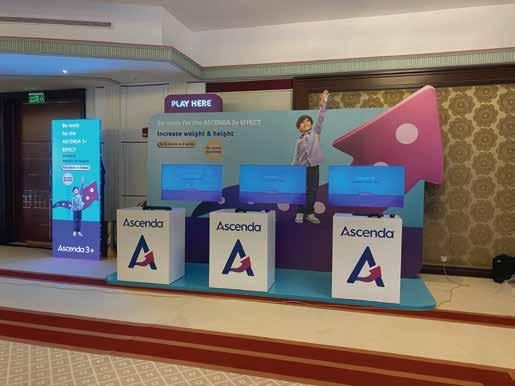
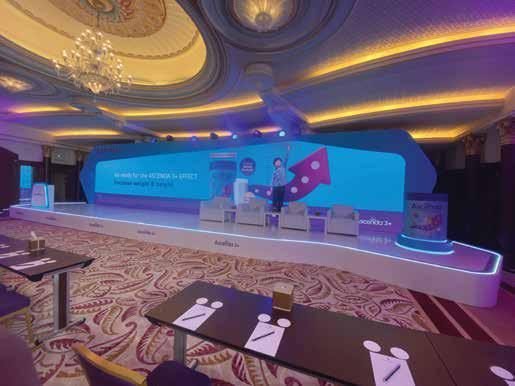
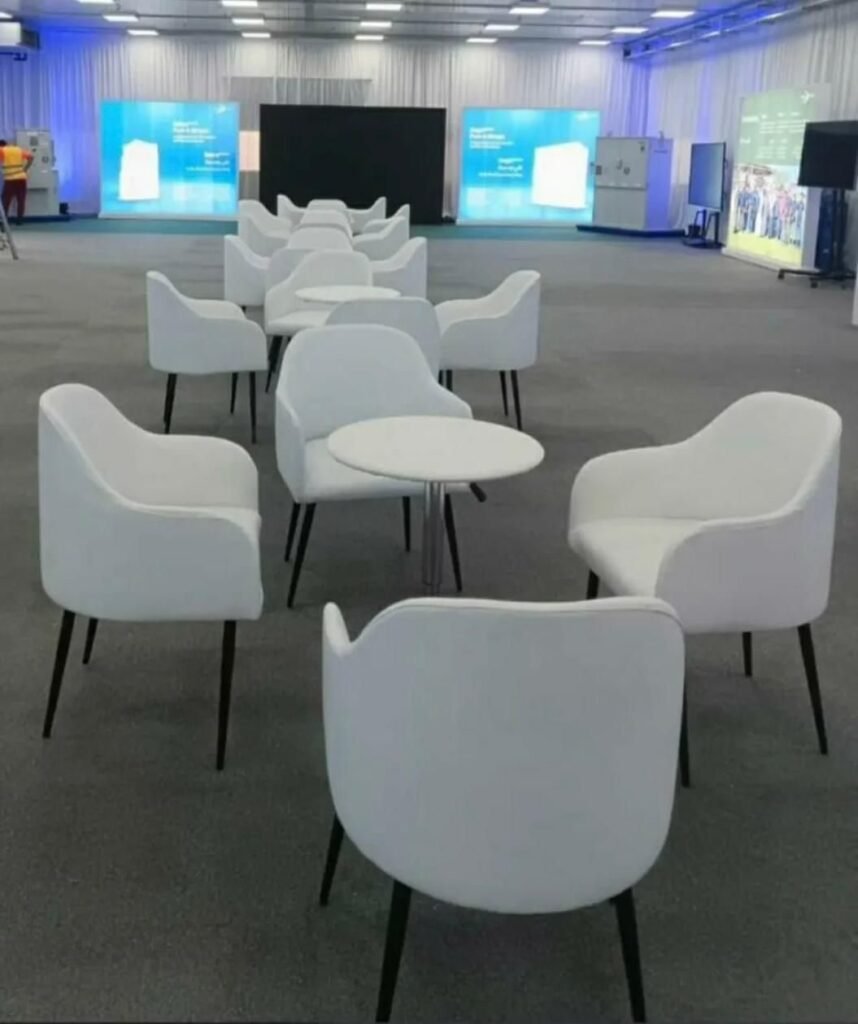
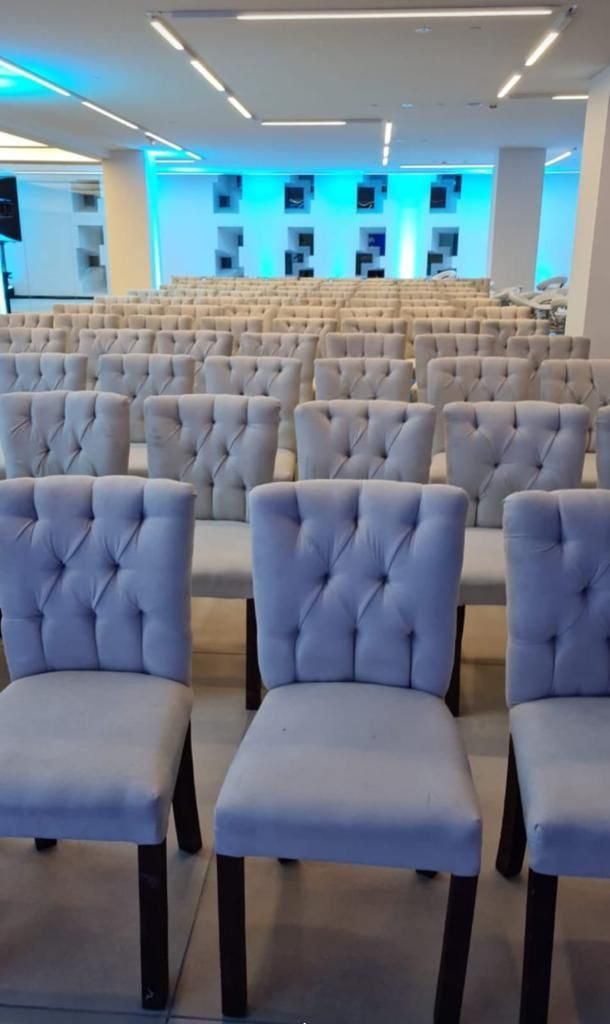
Conference halls and stages our team prepared for clients.

Questions Hosts Ask Conference Organisers in Saudi Arabia
What a committee, a communication department or an executive office wants to know before its first conference.
What do conference organisers in Saudi Arabia actually do?
They turn the decision to hold a conference into a plan with dates and owners: the venue, the programme, the speakers, registration, the staff of the day and the closing report. The stage and the signs are a part of that, not the whole. A good organiser also tells you plainly which lines come from the venue or from a specialist.
Which parts does The Touch deliver with its own team?
Planning the event together with the programme of the day, the operations team and the hosts with their supervisor, the identity and the print, attendee registration, photography and video coverage, and everything that is built for the hall. What is built is made in our own factory and installed by our own team.
Do you book speakers, interpreters, catering or hotel rooms?
Those are not our own services. Speakers are invited by the host, catering normally comes with the venue, sound is usually run by the technical supplier of the venue, and interpretation, travel and rooms are arranged with the venue or a named specialist. The quote says who supplies each line, so no line is left without an owner.
Who applies for the licence or the permit?
The venue and the relevant authority decide which licences a conference needs, and the application is submitted by the host or by the venue. We prepare the drawings and the paperwork we are asked for. Raise the question on the day the hall is booked, not in the last weeks.
How early should we start?
It depends on the size of the conference, on the availability of the venue and on how early the programme is fixed. Send the brief as soon as a date is under discussion: the quote arrives within 24 hours, and the plan states every date.
How do prayer times enter the programme?
The breaks are built around them. The agenda is drafted from the prayer times of the city on the conference date, with a break long enough for the count of delegates and the size of the prayer space, and they appear on the cue sheet like any other item.
Can the sessions be recorded and photographed?
Yes. Photography and video coverage are part of our content service. Agree in writing with each speaker whether the talk may be recorded and published, and tell the photographer which areas or guests are not to be photographed, above all where a separate section has been set up at the request of the host.
Can the conference run in Arabic and English?
Yes, provided it is planned and not improvised. Decide the language of each session, order interpretation from a specialist supplier where it is needed, and prepare captions, slides and the printed programme in both languages. Choose a presenter who is at ease in both.
Can a committee approve everything in writing?
Yes. The committee receives a single itemised quote and deals with a single supervisor, every approval is kept in writing, and the approval sequence is fixed in the contract before delivery. Procurement and invoicing run the way your organisation normally requires.
What do we receive when the conference is over?
A closing report with the numbers and the photographs, together with the registration data. Pieces that can serve the next edition are kept in our storage. To start, send the date and the city on WhatsApp to 0567069088.
Planning a Conference This Year?
Send the date, the city, the kind of conference and the expected count of delegates. An itemised quote reaches you within 24 hours, with every line marked by who supplies it.
More specific pages on this
If your question is narrower than this page, these are written for one question each.

