
Graduation Ceremony Organisers
Graduation Ceremony Organisers for the Walk Every Graduate Remembers
Graduation ceremony organisers carry a single day that the institution has waited years for, and the families of its graduates even longer, and that day is judged on small things: a name read as it is written, a photograph taken at the right second, a mother who found her seat without asking anyone. We build the ceremony around those few steps across the stage. This page explains the kinds of ceremony, the venue and the stage, the procession, the names, seating for families and invitations, the patron's arrival, gowns, certificates and shields, coverage, the rehearsal and the report afterwards.
What Families Remember From a Graduation
Speeches are forgotten by the evening. What graduates and families keep is a handful of moments, and each one has to be planned in advance, because none of them can be repeated.
The name, read as it is written
A graduate who hears their name mispronounced in front of the hall remembers it for a long time. Names are read from a list the graduates have checked themselves, in Arabic and in English where the institution uses both, with a note on stress and vowels for every name that is easy to misread.
The photograph at the mark
Every graduate stops at the same marked spot to receive the certificate and shake the patron's hand, under the same light and facing the same camera. That is how each of the graduates gets a photograph as good as everyone else's, not only those in the front rows.
A seat the family can find
Families arrive early, with small children and elderly relatives, and want a clear view of their son or daughter crossing the stage. Seating by invitation, clear signs, hostesses at the doors and a section reserved for each faculty or class spare families the search and the argument at the entrance.
A ceremony that ends on time
A long list of names runs late unless it is controlled, and the hall empties before the last graduate crosses. Timings tested at the rehearsal, a procession that never stops and a reading pace agreed with the MC mean the last name is heard by as many people as the first.
Who Works on the Ceremony Day
Graduation ceremony organisers need many trades in one place, and a ceremony calls on most of what we do. These are the teams behind it, under a single quote.
Printing & Promotional Gifts
Invitations, seat cards, signs to each section, the printed programme and banners along the route from the car park to the hall. Graphics are printed in 1 to 5 working days.
Acrylic & Wood Fabrication
Award shields for top graduates and guests of honour, an acrylic podium and name plates for the front row, cut and engraved in our factory.
Promoters & Brand Ambassadors
Hostesses and hosts at every entrance and in the family sections, hosts who line up the graduates, and an MC who reads the names, all led by a supervisor.
Branding & Creative Studio
The look of the day: the backdrop artwork, the invitation, screen content between segments and the name slide shown as each graduate crosses.
Digital Solutions
A registration site where families confirm their seats, attendance taken at the gate, and screens that show the name and the photograph live.
Experiences & Events
The operations team that runs the day from the first car to the last family photograph, with a photo corner, a photo booth or a 360 booth.
Social Media & Content
Photographs and video of every graduate on stage, a highlight film of the ceremony and short clips for the institution's accounts.
Custom Exhibition Stands
For a university or institute that also exhibits at education fairs, the same factory builds its stands for the year.
The Ceremonies We Organise
Every graduation shares the moment of crossing the stage. The rest changes with who is graduating and who sets the rules.
University ceremony
The largest format: several faculties, a patron from the university leadership or a guest of honour, a formal procession of academic staff in their gowns, and a programme that usually opens with a recitation from the Holy Quran and the national anthem. The list of graduates is long, so the walk across the stage is the part that needs the most planning.
School ceremony
Younger graduates, proud parents and often small brothers and sisters in the hall. The programme is shorter, the stage has to suit students who are not used to standing on one, and the school usually wants a short performance or a word from a student between the segments.
Separate ceremonies for men and women
Many institutions hold the ceremony for male graduates and the ceremony for female graduates separately, on different days or in different halls, and set the rules for each. We plan each one as an event of its own, with its own staff on the floor, its own camera rules and its own family seating, as the institution decides.
College and institute ceremony
Technical colleges, health institutes and academies often graduate several programmes together. Each programme gets its own section, its own order of names and, when the institution asks, its own moment, such as the professional oath taken by medical and nursing graduates.
A company graduating a programme cohort
A company that has run a development or training programme for its staff closes it with a shorter ceremony on its own premises or in a hotel, with managers in the front row. The certificate matters as much as at a university, and the photographs go to the company's internal channels.
An outdoor or evening ceremony
Some institutions choose a courtyard, a stadium or a garden to seat a larger audience. Outdoors adds shade, wind, sound and lighting for an evening start to the plan, and a covered fallback the institution approves in advance.
How Graduation Ceremony Organisers Run It, From List to Report
The ceremony itself fills an afternoon or an evening. The work that makes it run smoothly starts the day the institution sends the list of graduates.
The date, the venue and the rules
We start from the date in the academic calendar, the venue, the patron, the expected attendance and the institution's own rules: separate sections, dress, which areas may be photographed and who approves the programme.
The list of names
The registrar's list becomes the order of the ceremony: by faculty, by programme, by honours or alphabetically, as the institution prefers. Each graduate checks their name in Arabic and English, and difficult names get a pronunciation note for the MC.
Stage, route and seating on one plan
The stage, the steps, the waiting area, the route back to the seats, the camera positions, the family sections and the seats for senior guests are all drawn on a single plan of the venue, so everyone works from the same drawing.
Invitations and family registration
Families register through a link, receive their invitation and seat, and show a code at the gate. The institution sees the confirmed attendance before the day and can close or extend registration.
Rehearsal with the graduates
The graduates walk the full route in the venue at least once, in the order of the list, while the MC reads. The rehearsal is where a missing name, a step that is too high or a slow pace shows up while it can still be fixed.
The day, then the report
The stage set, the backdrop and the shields are made in our factory and installed by our own team, who stay through the ceremony and dismantle afterwards. The institution then receives the photographs for graduates and families, the film and a report on attendance and how the day ran.
When to Book
The quote
An itemised quote within 24 hours of receiving the date, the venue and the scope.
Printed items
Invitations, signs and banners are printed in 1 to 5 working days once the artwork is approved.
Stage set and shields
Their date depends on the size of the set, the number of shields and when the design is approved, and the quote states it.
The venue
Graduation season fills halls and hotels at the same time, so the hall is booked as early as the calendar allows.
What Shapes the Budget
We publish no price list, because every ceremony is priced from its own scope. These are the lines that move a quote from graduation ceremony organisers, named so you can compare offers fairly.
The venue and its set up
A campus hall costs no rent, but everything has to be brought into it. A hotel ballroom comes with chairs, sound and catering, and has its own rules on build hours and fixings. A sports hall or an open site needs flooring, shade, power and lighting written as separate lines.
The stage and backdrop
A wide platform with steps on both sides, a ramp, a waiting area behind the wing and a backdrop carrying the institution's identity. Its size follows the hall and the flow of graduates, not the guest list.
Coverage of every graduate
Photographing each graduate at the mark takes a camera dedicated to the stage, another on the family sections and video for the film. Prints on the day or an online gallery for families are lines of their own.
Gowns and caps
Graduation gowns, caps and sashes in the institution's colours are arranged through a supplier, ordered by size from the list of graduates, and appear as a named line in the quote.
Shields, certificates and gifts
Award shields for top graduates and guests of honour are made in our factory. Certificate covers, folders and gifts for graduates are priced per item, and the names on them must be final before production.
Staff and hospitality
Hostesses, hosts and the MC are priced by the day. Hospitality for families and guests is arranged through a catering partner and appears as a named line in the quote.
Send the date, the venue, the kind of ceremony, the expected attendance and whether the men's and women's ceremonies are separate. An itemised quote reaches you within 24 hours. Request a quote or message 0567069088 on WhatsApp. For the line by line logic we use when pricing built pieces such as a stage set, see our guide to exhibition stand cost in Saudi Arabia.
Privacy, the Academic Calendar and What Sits Around the Ceremony
For graduation ceremony organisers, two decisions that belong to the institution shape a graduation more than any design does. The first is privacy. Where the rules say a section of the hall may not be photographed, the cameras face the stage only, that section stays out of frame, and the staff working inside it are arranged as the institution asks. Families read the rule on their invitation, so nobody is surprised at the door. The second is the academic calendar. A ceremony comes after final exams and after results are approved, because no name can go on the list or on a certificate before the registrar confirms it, and every institution is looking for halls in the same weeks before the summer break. So the list closes on a date agreed in advance, and a good plan keeps a last check of the names on the morning itself. The platform on its own is explained on our event stages page, and coverage of the day on event photography and coverage. Family registration and seat codes run through an event registration website, and invitations, programmes and signs come from printing and promotional production. A company marking a cohort with a wider celebration will find more under corporate party organisers, and every other kind of event we run starts at our event management company in Saudi Arabia page.
How to Choose Graduation Ceremony Organisers
Ask these questions before you sign. The answers show who has thought about the walk of the graduates and who has only thought about the stage.
How will each graduate be photographed?
A good answer names a mark on the stage, a fixed camera and light, and a way to match each photograph to the right name. An answer that only promises a photographer moving around the hall means the back rows will be missed.
Who checks the names?
Ask how the list is checked, by whom, and how late it can change. The graduates should see their own names before the day, and the MC should rehearse the list rather than read it cold on stage.
What happens at the rehearsal?
A rehearsal in the venue with the graduates, in the order of the list, is the real test. A walkthrough with the staff alone does not show how a long line moves on the steps.
How are separate sections and privacy handled?
Organisers who know this work ask for the institution's rules first, then build cameras, staff and seating around them, instead of offering the same plan for every ceremony.
What is made and what is bought in?
Ask which pieces the organiser makes itself and which come from suppliers, such as gowns or catering. Each should be a named line, so you know who answers for it on the day.
Where Graduations Go Wrong
Each of these happens somewhere every season, and graduation ceremony organisers who plan early avoid each of them on paper.
The certificate in the wrong hands
Certificates stacked out of order mean a graduate receives someone else's folder in front of the camera. Certificates are sorted in the order of the list, and the folder is checked against the name as it is read.
A name skipped or read twice
A graduate who stepped out of line, or a list changed after the rehearsal, breaks the order. Hosts hold the line in reading order, and the MC's copy is the same version as the one in the hands of whoever lines up the graduates.
A queue that stops
If each graduate waits at the foot of the steps while the photograph before them is taken, the line stalls and the ceremony overruns. The next graduate is already climbing while the one before reaches the mark.
Families without seats
An open invitation with no registration fills the hall before many families arrive. Seats by invitation, a limit per graduate set by the institution and an overflow hall with a screen prevent the dispute at the door.
Gowns that do not fit
Gowns ordered by guesswork run out in the common sizes. Sizes come from the list of graduates with a margin, and gowns are handed out at the rehearsal so problems show up early.
Photographs nobody can find
A full day of photographs with no names attached sends families searching through every file. Photographs are matched to the list in reading order, so each family finds their graduate quickly.
One Team From the Stage to the Shield
A graduation day calls on many trades at once, and with us they sit under one roof: design, joinery, paint, acrylic, large format print and CNC and laser cutting in our own factory, where the backdrop, the podium and the award shields are made before our own team installs them, stays through the ceremony and takes everything down. The Touch has more than one location in the Kingdom, hostesses and hosts work under a supervisor, and single projects of ours have put 300 to 1,200 organisers on the ground. We have worked for Kinan, the Heritage Commission, Ascenda, Saudia and Johnson & Johnson MedTech.
Celebrations We Delivered
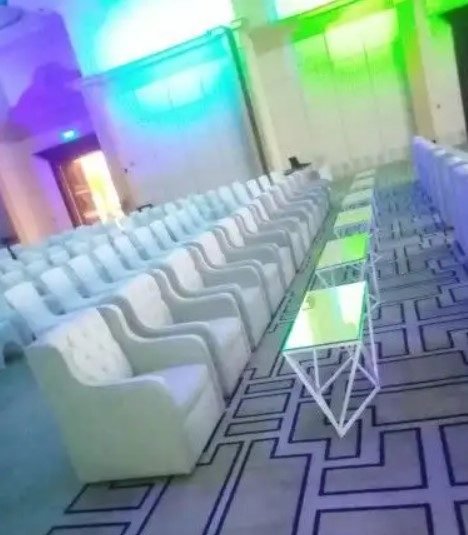
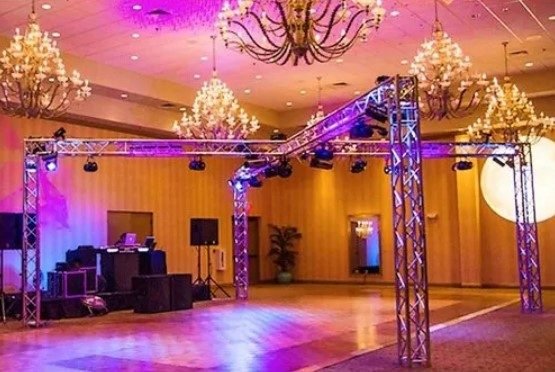
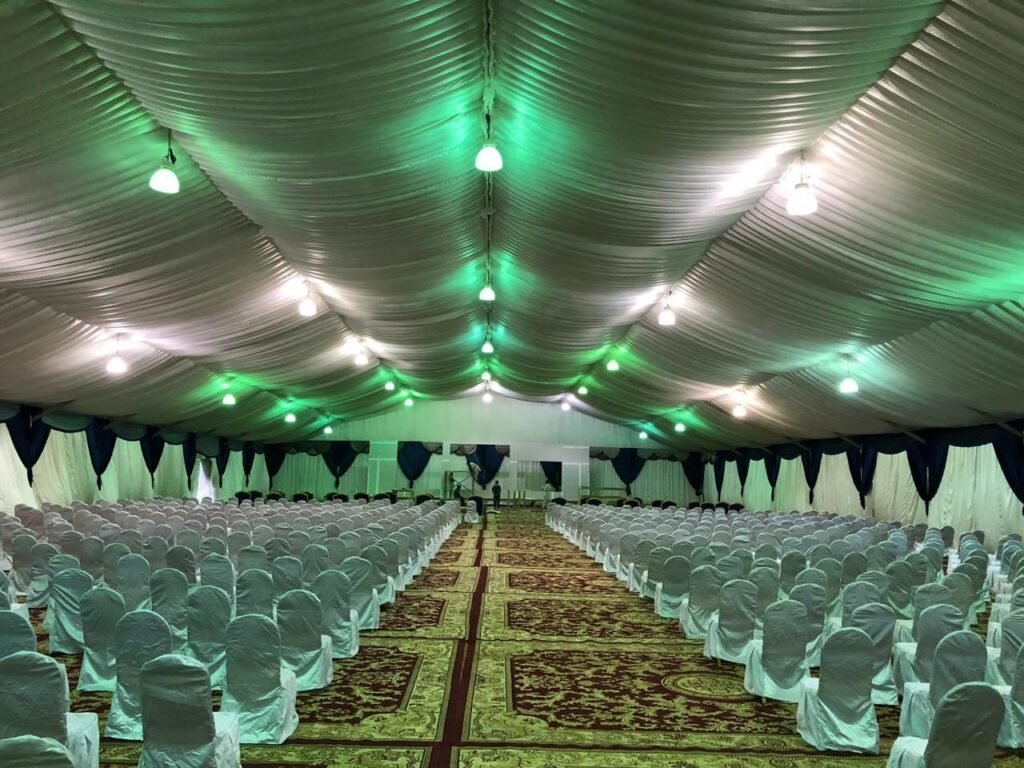
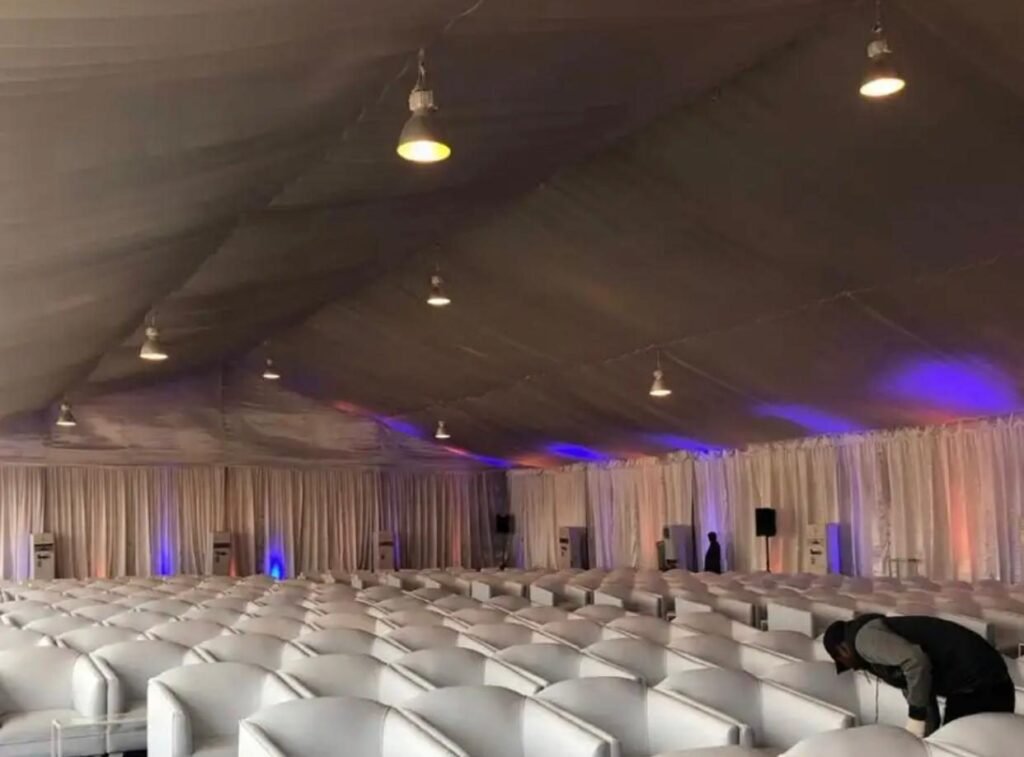
Corporate celebrations and occasions set up by our team.

Questions for Graduation Ceremony Organisers
What deans, school principals and event teams ask before they book.
Do you organise graduation ceremonies for universities and schools?
Yes. We organise ceremonies for universities, colleges, schools and training institutes, and for companies graduating a cohort from one of their programmes. We can take on the whole day or only the parts you need, such as the stage, coverage or family registration.
Can you run separate ceremonies for male and female graduates?
Yes. Each is planned as an event of its own, with staff, seating and camera rules set by the institution. Where the rules ask for it, the team working at the women's ceremony is arranged to suit it.
How do you make sure names are read correctly?
Names come from the registrar's list, and each graduate confirms the spelling in Arabic and English before the rehearsal. Names that are easy to misread carry a pronunciation note, and the MC reads the full list at the rehearsal.
Is every graduate photographed on stage?
That is what the mark on the stage is for. Each graduate stops at the same spot under the same light, and the photographs are matched to the reading order so they can be delivered by name.
What if the institution does not allow photography of some sections?
Then the cameras face the stage only, the restricted sections stay out of frame, and families are told on the invitation. If the institution brings its own photographer for a section, we work in coordination with them.
Do you supply graduation gowns and caps?
Gowns, caps and sashes are arranged through a supplier in the institution's colours and the graduates' sizes, and appear as a named line in the quote. Sizes are taken from the list, and gowns are handed out at the rehearsal.
Do you make the award shields and certificate folders?
Award shields are cut and engraved in our factory, and certificate folders and covers are produced in the institution's identity. The names must be final before production, so the list closes on an agreed date.
How do families reserve their seats?
Through a registration link sent with the invitation. Each of the families confirms its seats, receives a code to show at the gate, and the institution sees the confirmed attendance before the day.
When should we book graduation ceremony organisers?
As soon as the date is fixed in the academic calendar, because graduation season fills venues all at once. Printed items take 1 to 5 working days once approved, and the dates for the stage set and shields depend on their size and are stated in the quote.
Where are you based, and how do we start?
We have more than one location in the Kingdom. Everything built for your ceremony is made in our own factory and installed by our own team. Send the date, the venue and the kind of ceremony on WhatsApp at 0567069088 or through the quote page, and an itemised quote follows within 24 hours.
Planning This Year's Graduation?
Send the date, the venue and the kind of ceremony. Within 24 hours you have an itemised quote covering the stage, the names, the coverage and every family seat.
More specific pages on this
If your question is narrower than this page, these are written for one question each.

