
Pop Up Store
Pop Up Store A Real Shop With a Closing Date
A pop up store is a temporary shop that opens for a reason and closes on a date everyone knows: a product launch, a season, or a test of a new city before the brand signs a long lease. From its first morning it has to look and work like a real store, whether it stands in a mall atrium, a hotel lobby, an event or an open site, and then it has to leave the space as it found it. At The Touch we design the store, build it in our own factory, install it with our own team, keep its front busy with hosts and promoters under a supervisor, and dismantle it when the run ends. This page covers where a pop up store can stand, what goes inside it, who approves it and what moves its price.
Why Brands Open a Pop Up Store
A temporary shop costs less than a lease and stays open long enough to teach the owner something real about its customers. These are the reasons we hear most often in the Kingdom.
Testing a city before a lease
A brand that sells online, or trades in a single city, can open in a new mall for a season and watch real sales, real questions and real returns. If the numbers hold, the long lease is signed on evidence. If they do not, the set comes down and the cost stops with it.
A launch with a deadline
A new collection, a limited edition, or a product that arrives before its permanent shelf space does. A published closing date gives people a reason to come today rather than someday, and the queue on the first morning becomes part of the launch story on social media.
Catching the season
Ramadan nights, Eid shopping, National Day, Founding Day, the winter season and back to school fill malls and event grounds for a few weeks each year. A temporary shop puts the brand in front of those crowds without a year of rent behind it.
Going where the customer already is
A hotel guest, a festival visitor or the audience of a sports or cultural event will not cross the city to find your store. A pop up store inside the venue goes to them, with stock they can buy on the spot and a reason to visit the permanent store later.
What Comes With the Store
The shell and the fixtures are joinery. The rest of a pop up store comes from our other teams, all working under one roof.
Printing & Promotional Gifts
Wall graphics, window vinyl, price cards, shopping bags and opening day gifts. Graphics are printed in 1 to 5 working days, so a price change halfway through the run is a quick reprint.
Acrylic & Wood Fabrication
Risers that lift the product, lockable display cases, a glowing logo above the entrance and small acrylic holders for the price of each item.
Promoters & Brand Ambassadors
Hosts and promoters with a supervisor who welcome visitors, explain the product and demonstrate it. Selling and the till stay with the brand's own team.
Branding & Creative Studio
A look for the temporary shop that clearly belongs to the brand and still feels new, from the logo files to the window artwork.
Digital Solutions
A screen for the collection film, a tablet for sign ups and a registration page for a launch night guest list. Payment runs on your own provider's system.
Experiences & Events
An opening night, a private preview for guests or a talk inside the store, planned under the host's rules.
Social Media & Content
Pictures and short clips of the store and its opening queue, ready to post the same day.
Custom Exhibition Stands
If the collection later appears at a trade show, our factory makes that stand too.
Where a Pop Up Store Can Stand
Every site has an owner, a set of rules and a floor of its own. The site shapes the build more than the concept does.
A mall atrium or court
The most visible spot, and the most closely watched. A temporary store in an atrium is seen from every side and from the floors above, so it needs finished faces all round and a roof or canopy that looks good from upstairs. Building and dismantling happen at night, after the mall closes.
An empty unit on a short lease
Some malls and shopping streets let a vacant shop for a few weeks. The walls already exist, so the budget goes on fixtures, graphics and light rather than a whole shell. Nothing should be fixed into the landlord's walls or floor: freestanding units and leaning panels hand the unit back exactly as it was received.
A hotel lobby
Hotels invite jewellery, fashion, perfume and gift brands to meet their guests, often in high season. A lobby asks for calm: a compact store, a palette that sits with the hotel's interior, installation in the hours the management sets, and protection for the marble or carpet under every base.
An event or festival site
Inside a festival, a concert ground or a sports event, the store follows the organiser's manual and build days like any other exhibitor. Crowds arrive in waves around the programme, so the layout has to absorb a rush and empty again without the queue spilling into the walkway.
An open street site
A plot, a forecourt or a pedestrian street where the brand's audience passes. Open air brings sun, wind, dust and night dew, so the store needs a structure designed for the weather, shade over the entrance, sealed joints and graphics that survive the heat. The landowner and the municipality decide what may stand there.
A store that tours
One temporary shop that opens in several cities or malls in turn. Its parts are cut to pass the tightest doorway and goods lift of every venue on the tour, travel in protective cases and wait in our storage from one stop to the next, so each new opening is mostly a new floor plan and new graphics.
How to Set Up a Pop Up Store, From Brief to Closing Day
The order below protects the opening date. Each stage settles something the next one depends on.
The site, the dates and the host's rules
We start from what the host hands over: the plan of the spot, the dates of the run, the build and dismantling windows, and the design rules of the mall, the hotel, the organiser or the landowner. Where power comes from, how tall the store may be and which door the deliveries use are all written in those papers.
What is sold, and how
How many products, how much stock stays inside overnight, whether customers try things on, where they pay and how many staff work inside when the crowd peaks. These answers size the counter, the storage and the fitting area before any look is chosen.
Design and drawings for approval
A plan that traces the customer path, elevations of every face, rendered views, the list of materials and the lighting plan. You approve the concept first, then we draw up the set of documents the host asks for. The brand submits it, and the host decides.
Built and test assembled in our factory
The shell, the counter, the shelving and the display units are built in our own factory and fully assembled there before they travel, with the lights on and every door and drawer tried, so any problem is solved where the tools and the time are at hand.
Installation and handover
Our own team installs the store in the window the host allows, at night if it is in a mall, protects the floor and stays for the opening. Before the first customer arrives we walk through it with you: lights, locks, storage, the fitting area and the photo spot.
The run, then the dismantle
Hosts and promoters with their supervisor keep the front of the store lively through the run. When it closes, our team dismantles, returns the site clean, and sends the set to our storage if it will open again.
What Sets the Date
The host's approval
Malls, hotels and organisers review drawings at their own pace, sometimes over more than one round. A complete first submission saves the most time.
Size and enclosure
A closed store with walls, a ceiling and a fitting area takes longer than open fixtures inside an empty unit. Your quote gives the opening date it is planned around.
Wall and window graphics need 1 to 5 working days after sign off.
The quote
Send a full brief and the itemised quote follows within 24 hours.
Pop Up Store Prices: What Moves Them
Many people search for pop up store prices, and a fixed list would mislead them, because each temporary shop is priced from its own drawings and its own site. These are the lines that make two quotes differ.
Enclosed or open
A store with its own walls, ceiling and door is a small building in its own right. An open layout of counters and shelving inside an empty unit leans on the unit's walls and costs far less to build.
The fixtures inside
The selling counter, wall shelving, display tables, lockable storage and a fitting area are priced piece by piece. A fitting area with its own door, mirror and light is a separate line.
Finishes and light
Sprayed colour, metal trims, glass and lit cases are the costly choices. Laminate and printed panels are the economical route and still look sharp. Every lit shelf and case adds wiring as well as carpentry.
A single run, or many
A store built for one season can be simpler. One that returns the following year or tours several cities needs bolted sections, protective cases and storage, a bigger first bill that pays back each time the store reopens.
The site itself
Night work in a mall, a goods lift to an upper floor, floor protection in a hotel, or weather protection and shade on an open site each add labour and materials. Where transport applies, it is a named line in the quote.
Staff days
Hosts and promoters with their supervisor are quoted by the number of days in the run. The rent, the host's fees and the brand's own sales team sit outside our quote.
Send the site, the dates of the run and what you plan to sell. An itemised quote for your pop up store reaches you within 24 hours. Request a quote or message 0567069088 on WhatsApp. If the same launch also travels to a trade show, our guide to exhibition stand cost in Saudi Arabia explains how that budget is built.
Who Approves a Temporary Store
A temporary store always stands on somebody else's property, and the owner of that property decides. In a mall it is usually the specialty leasing team that offers the spot, while the operations team reviews the drawings, sets the build hours and issues passes for the crew. A hotel decides through its management, with an eye on guests, fire exits and the floor. At an event the organiser's manual rules, and on an open street site the landowner and the municipality decide what may stand and for how long. Selling also needs the brand's own commercial registration and any licence its activity requires. These approvals are the client's: we produce the drawings, material data and technical sheets each owner requires, and update them after every round of comments. If your brand needs a unit that stays on the mall floor for months rather than a shop for a season, see mall kiosks. If the goal is attention, samples and contacts rather than sales, the right page is mall activation in Saudi Arabia. When the temporary shop proves the market and a permanent branch follows, that is retail fit-out. For a ribbon, guests and a launch night at the door, see grand opening events. Product displays and lockable cases come from acrylic display stands, a branded picture moment from photo booth rental, and welcome staff from event hostesses.
Pop Up Store, Kiosk or Campaign Set?
These questions show which format you are really buying.
Will people buy on the spot?
If the goal is sales, with stock, a counter and payment, you need a pop up store. If the goal is attention, samples and names on a list, a campaign set is lighter and cheaper, and the till can stay in the brand's permanent store.
Does it need walls and a door?
A store with a fitting area, a calm interior or valuable stock wants an enclosed shell. Accessories and gifts sell well from an open layout or a kiosk on the mall floor, and both need less building.
How long is the run?
For a weekend, keep the build simple and reuse what you already own. For a season, spend on storage, a durable counter and finishes that stay clean after weeks of hands and cleaning machines.
Will it open again?
If the store may return next season or move to another city, say so before design begins. It then comes in bolted sections sized for the narrowest route, and it waits in our storage between openings.
Who sells, and how do customers pay?
Your own sales team and your payment provider run the sale. Decide where the counter, the card terminal and the bag storage sit, and test the signal at the site before opening day.
Mistakes That Close a Temporary Shop Early
Most of them are visible on the drawing, long before the first customer walks in.
No room for stock
The plan fills every wall with display and forgets the back store, so by the first evening cartons sit in the fitting area and under the counter. Ask the host when deliveries may come in, then size the storage for the stock between two deliveries.
An entrance that feels closed
A narrow door, a dim threshold or a counter squarely facing the way in makes passers by hesitate. The front of a pop up store should be open, bright and welcoming enough that stepping inside feels like no commitment at all.
A fitting area added at the last minute
A curtain that does not close, no hook, no mirror outside and an overhead spot that flatters nobody. A customer who cannot try a garment in comfort leaves without it.
Light that loses to the atrium
A mall court under a glass roof is bright at midday and dim at night. A store lit for one of those looks wrong in the other, so the lighting is planned for both and aimed at the product.
Approval requested too late
A concept approved internally and sent to the host at the last minute comes back with comments on height, materials or signage, and the opening date moves. Send the drawings as early as the host is willing to review them.
Forgetting the last night
Dismantling is left to the end, the site must be handed back clean inside the host's window, and stock still on the shelves slows the crew. Clear the stock first, and agree the dismantling hours on the day you book the space.
One Factory, From the First Drawing to the Dismantle
We draw, cut on CNC and laser machines, build the joinery, paint, make the acrylic, print large format and install, all under one roof, so the store the host approved is the store that gets built, lit and assembled. Our projects page shows mall sets, campaign stands and kiosks we have delivered. We have more than one location in the Kingdom, and every project is made in our own factory and installed by our own team. Brands we have worked for include Swarovski, Gucci Flora, Ganache, Oceanera and Saudia Holidays.
Kiosks and Corners From Our Factory
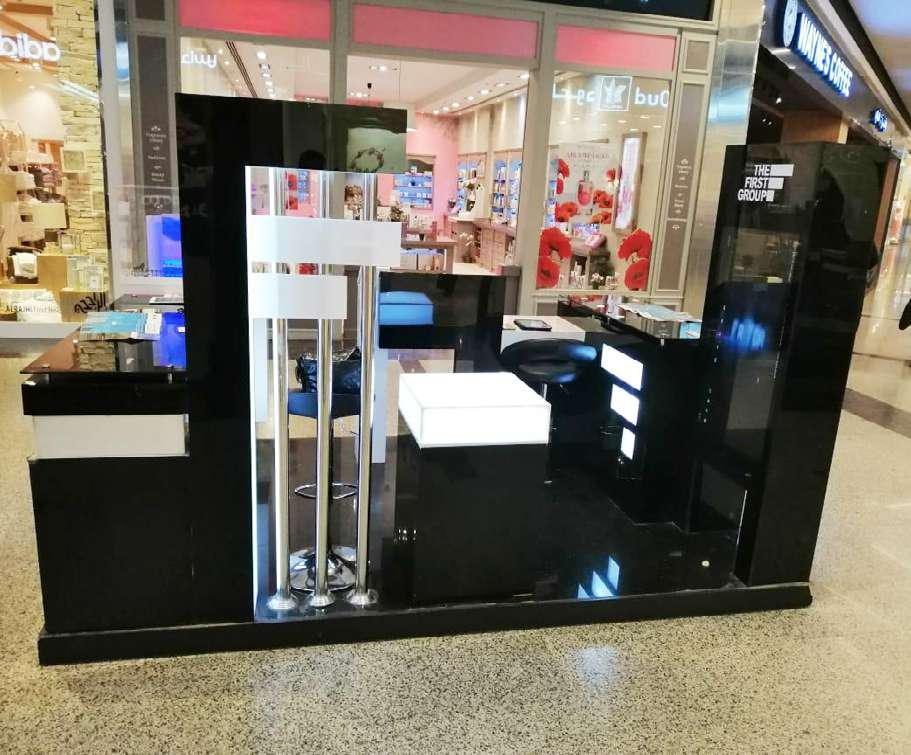
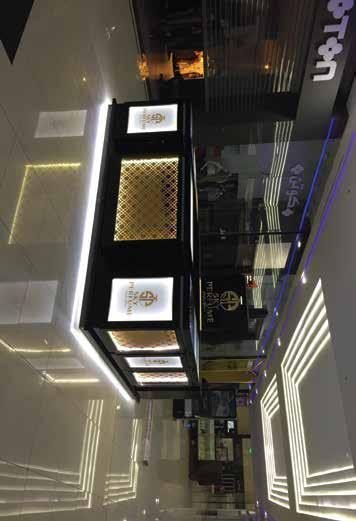
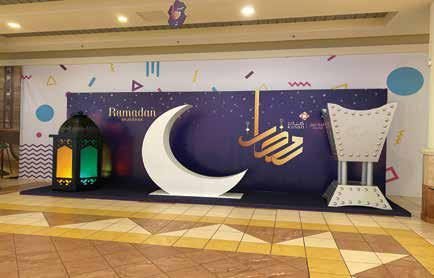
Mall kiosks and corners we built and installed for our clients.


Questions About a Pop Up Store
What business owners and marketing managers ask before they book a temporary shop.
What is a pop up store?
A temporary shop that opens for a fixed run, from a weekend to a whole season, then closes and leaves the site. It sells like any store, with stock, a counter and payment, which is what separates it from a campaign set built for attention or sampling.
How much does a pop up store cost?
There is no fixed price, because it changes with the site, whether the store is enclosed, the fixtures, the finishes, the number of days and whether it will open again. Send the site plan, the dates and what you sell, and an itemised quote follows within 24 hours.
Do you rent the space or get the approvals for us?
No. The brand books the space with the mall, the hotel, the organiser or the landowner, and the approval is the owner's to give and the brand's to request. Our part is the drawing set and technical file the owner wants, updated after each review.
Do your staff sell our products?
Our hosts and promoters, with their supervisor, welcome visitors, explain and demonstrate the product, and manage the queue and the photo spot. The sale, the stock and the till stay with your own sales team and your payment provider.
Can a temporary store include a fitting room?
Yes. A fitting area with a door or a curtain that closes fully, a hook, a bench, a mirror and soft light from the front is built into the layout. A full length mirror outside it helps too, so the customer can see the whole look.
Can a pop up store stand outdoors on a street?
Yes, where the landowner and the municipality allow it. An open site needs a structure designed for wind and heat, shade over the entrance, sealed joints and power agreed in advance. Many retailers keep street openings to the cooler months.
Can you set one up in a hotel lobby?
Yes. We design a compact store that sits well with the hotel's interior, protect the floor under every base and install in the hours the management sets. The hotel chooses the spot and approves the drawings.
Can the same store open in another city?
Yes, if that is decided before it is drawn. It is then made of bolted parts small enough for the tightest door and lift along the way, and it rests in our storage until the next opening. Each new site needs its own plan and its own approval.
Is a pop up store better than a kiosk?
They do different jobs. A kiosk is a unit on the mall floor that stays for months or years, with staff behind its counters. A pop up store is a short run, often with walls, a fitting area and room for customers to walk inside. Choose by how long you will stay and how people shop for your product.
Where is the store built, and how do we start?
We have more than one location in the Kingdom. Your store is built in our own factory and installed by our own team. Send the site, the dates and what you sell on WhatsApp at 0567069088 or through the quote page, and an itemised quote follows within 24 hours.
A Pop Up Store for Your Next Launch?
Send the site, the dates and what you plan to sell. Within 24 hours you have an itemised quote that names the shell, the fixtures, the lighting, the staff days and the dismantle.
More specific pages on this
If your question is narrower than this page, these are written for one question each.

