
Interactive Games for Events
Interactive Games for Events That Bring People to Your Stand
Interactive games for events give a passer by a reason to stop, a few moments of play and a result worth waiting for: a spin of a branded prize wheel, a quiz on a touch screen, a race against the lights on a reaction wall, a claw game dressed in your colours. Behind every good game sit decisions taken before the doors open: what the game is for, who can win what, how the prizes are spread across the days, and what the players leave behind for your sales team. This page explains how to choose the game, how it is built, how the prizes and the data are handled, and how it runs from the first player of the day to the last.
Why Interactive Games for Events Work on a Busy Floor
At an exhibition every stand competes for the same few steps of a visitor's attention. A game turns that contest around: people queue to come in instead of being chased, and they stay long enough to hear one thing about you.
Play draws a crowd a poster cannot
A wheel clicking down to a stop, or the buzzer on a reaction wall as the last light goes out, is heard and seen from the aisle. People gather to watch someone else play, every onlooker is a visitor standing on your floor rather than walking past it, and many of them decide to be next.
A score gives the conversation a start
After the play the host has something natural to say: the score, the prize, the question the player missed. That opening is easier for the sales team than stopping a stranger in the aisle, and it leads straight to the product.
The prize is a fair trade for a name
Visitors understand the deal: a chance at a prize in return for a name, a number and a field of interest, given with their consent. A game built for lead capture collects details from players who chose to give them, which is why they pick up the phone after the event and remember where they met you.
The game can carry the message
A quiz whose questions come from your product, or a reaction wall where each light stands for a feature, teaches while it entertains. Players remember the answer they got wrong and then heard from the host far better than a line they read on a wall while walking.
Who Builds and Runs the Game
A game is joinery, print, screens, people and a prize table at once. Each part comes from a team under the same roof.
Printing & Promotional Gifts
The wrap on the cabinet, the rules board beside the game, scratch cards, and branded giveaways from the small keepsake to the top prize. Graphics are printed in 1 to 5 working days.
Acrylic & Wood Fabrication
The prize wheel itself, the cabinet around a screen or a claw game, the reaction wall and acrylic boxes for a draw, cut on the CNC and laser machines in our factory.
Promoters & Brand Ambassadors
Hosts and hostesses who invite players in, explain the rules in a sentence, hand over prizes and log every winner, working with a supervisor.
Branding & Creative Studio
The look of the wheel, the screens and the prize table, and the wording and tone of the questions, taken from your identity.
Digital Solutions
The quiz or the screen game, a score board, registration on a tablet or a QR code, and the database you receive after the event.
Experiences & Events
The programme around the game: a launch, a national day celebration, a mall weekend or a stage moment where an MC announces the winners.
Social Media & Content
Clips of players in action and winners collecting, edited for your accounts while the event is still running.
Custom Exhibition Stands
The stand that holds the game, drawn with room for the players, the watchers and the queue, not a leftover corner.
Brand Activation Games and What Each Does Best
Each game suits a different goal and a different floor. These are the ones exhibitors and brands ask for most, and what each is good at.
Branded prize wheel
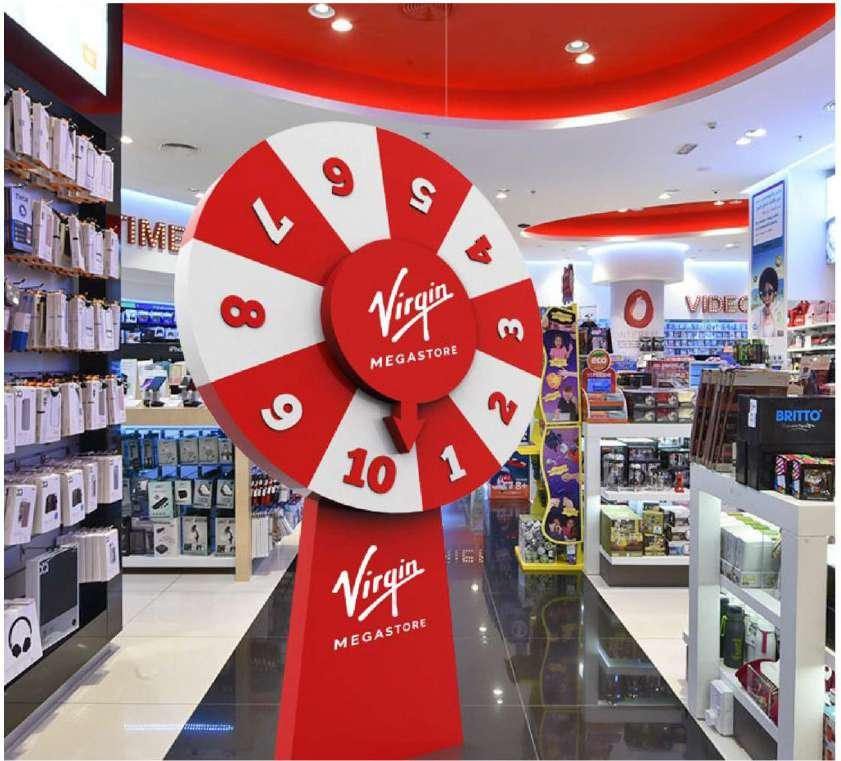
The most requested brand activation wheel of all, because everyone knows how it works without being told. A physical wheel is a piece of joinery: a balanced disc on a bearing, printed segments, pegs around the rim and a flapper that clicks it to a stop. The chance of each prize follows the width of its segment, so the top prize gets a narrow slice, and the slice sizes are fixed before the wheel is built, not after. A wheel on a screen does the same job with its odds set in software, and the prize list can change from day to day.
Touchscreen quiz
Questions about your product, your sector or the occasion, answered against the clock on a touch screen or a tablet. It is the game that teaches most, because a wrong answer is corrected in front of the player. Draw the questions at random from a larger bank so the people in the queue cannot memorise the answers from whoever plays before them, and offer Arabic and English on the first screen.
Reaction and speed wall
Lit buttons on a wall or a column switch on in random order, and the player hits as many as possible before the time runs out. Because every player gets the same time, scores compare fairly, which turns the day's leaderboard into a real race that visitors come back to. It suits sports brands, energy drinks, cars and anything sold on the idea of speed.
Motion and camera games
A camera reads the player's body and the screen answers: catch falling products, steer a car by leaning, match a pose to score. Nothing is touched, which keeps hands off the screen and lets families play together. The play zone is marked on the floor, and if the game keeps pictures of players, that is said clearly before they step in.
Claw and arcade style games
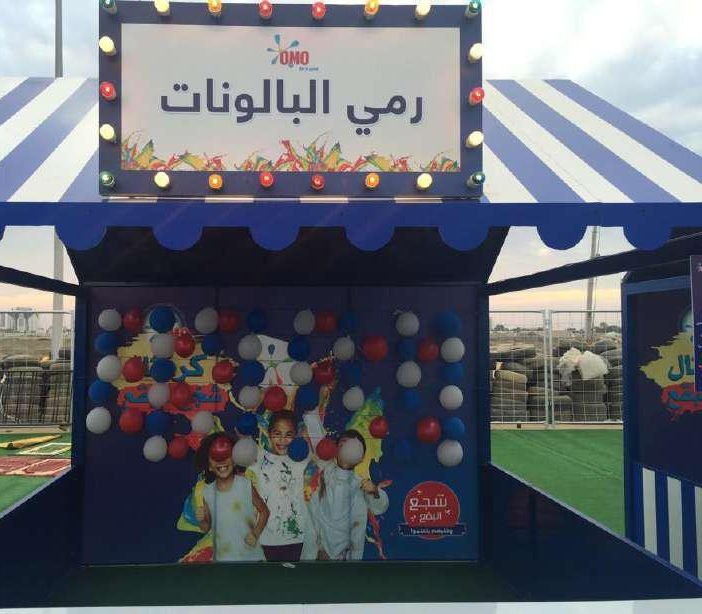
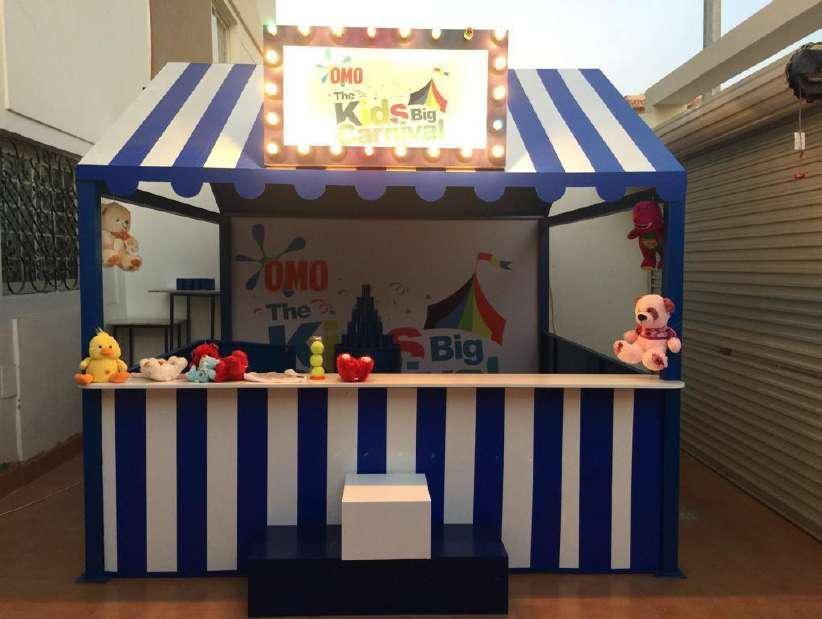
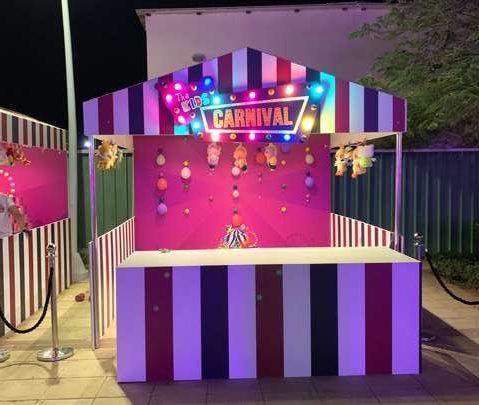
A claw machine, a ball toss into targets or a coin pusher style game in your look, with your products or branded prizes inside. The cabinet is joinery and print, and the mechanism is a ready unit fitted inside it. The win rule matters here more than anywhere: decide it, set the mechanism to it and state it on the rules board before the event, so no player feels cheated in front of a crowd.
Scratch cards, puzzles and team challenges
A scratch card handed out at the hall entrance and claimed at your stand moves people across the exhibition towards you. A puzzle, a giant jigsaw of your product or a team challenge suits a staff day or a conference break, where colleagues play together and the result is announced to everyone. Winning cards are numbered and printed in a controlled quantity, so the prize stock always matches the winning cards in circulation.
How Interactive Games for Events Are Planned, Built and Tested
Most of the work happens before the doors open. The game, the prizes and the data are settled on paper first, and only then come the timber and the screen.
The goal comes first
We start with what the game is for: traffic to the stand, contacts for the sales team, knowledge of a product, or plain fun at a family event. The goal picks the game. A brand that wants qualified leads gets a quiz with a registration step in front of it, and a brand that wants a crowd gets a wheel or a reaction wall the whole aisle can watch.
Rules and prize logic on paper
Before any drawing, the rules are written: who may play, whether they may play again, how a winner is decided, what each result wins and what happens when a prize tier runs out. Prizes and draws can fall under the organiser's or an authority's rules, so the client confirms them before anything is printed.
The build in our factory
The wheel, the cabinet or the wall is drawn around the way the game is played, then built in our factory: joinery, paint, acrylic and the printed wrap, with room inside for screens, buttons and cables, and a ventilated space so the computer does not overheat through the day.
The screen content
The quiz, the screen game and the registration form are produced in Arabic and English for the actual screen. Whether our digital team or your agency produces them, and who signs them off before shipping, is written into the quote.
Tested before the doors open
Every game is assembled and played in our factory before it ships, in the same way every stand we build is fully test assembled. The wheel is spun again and again to see that it does not favour a segment, the quiz is played by people who have never seen it, and the prize count in each tier is checked against the plan.
Run on the day, reported after
Our own team sets the game up, stays through the opening and takes it down when the event closes, while hosts and their supervisor run it hour by hour. Afterwards you receive the database and a report of plays, winners, prizes handed out and prizes left over.
How Long a Game Takes
A game inside a custom stand
6 to 8 weeks from brief to opening, the same as the stand around it, with the rules approved at the start of that period.
A game station in a modular stand
A modular stand with new graphics takes 2 to 4 weeks and can carry a wheel, a quiz screen or a reaction wall.
A wheel or a cabinet on its own
It depends on its size, the mechanism, the screen content and the prizes to be sourced. The quote states the date.
Rules boards, wraps and cards
Printed in 1 to 5 working days once the artwork is approved.
What Shapes the Cost of a Game
We publish no price list, because interactive games for events are priced one by one, from their rules and their drawings. These are the lines that move a quote up or down, named so offers can be compared fairly.
The build
A printed wheel on a simple stand is the economical end. A large wheel with lit segments, a cabinet with a screen or a wall full of lit buttons takes more joinery, wiring and paint, and the quote shows each piece on its own line.
The screen content
A quiz with a question bank in two languages, a camera game made around your products, or a score board linked to registration each add work. A game made for you costs more than an off the shelf game with your logo on it, and sits much closer to your message.
Hardware, rented or owned
Screens, tablets, cameras, buttons and the claw mechanism. Renting fits a single occasion, and owning pays off when the game goes on tour from show to show. Each item appears in the quote with its source and whether it is rented or purchased.
The prizes
The prize table can become a bigger line than the game itself. Branded giveaways, your own product, vouchers or a top prize: the quote separates what we produce from what you supply, and the plan spreads the prizes across the days.
Hosts and an MC
A game needs hosts for the full opening hours, and a busy stand may need an MC who announces winners loud enough for the aisle to hear. Their number follows the hours and the game stations, with a supervisor leading the team.
Data and reporting
Signing players up on a tablet or by QR code, agreeing the consent text, connecting the list to your CRM and writing the report afterwards are priced as a separate line. It is the line that turns a game from entertainment into names your team can call.
Tell us the event, its dates, the space and what the game should achieve. An itemised quote follows within 24 hours. Request a quote or message 0567069088 on WhatsApp. To see how a budget is put together line by line, read our guide to exhibition stand cost in Saudi Arabia.
Prizes, Draws and the Venue: Who Decides What
A game on your stand still lives under somebody else's rules. The exhibitor manual may cap sound, keep queues inside your space and ask you to order power on its own for screens and lit buttons. Some organisers and malls restrict prize draws, cash prizes or games of chance on their floor, and a competition linked to a purchase or open to the public can need a permit from the relevant authority. So the client confirms the prize rules with the organiser, and with the authority where needed, before the event; we prepare the drawings and details the venue asks for, and the approval stays with the venue. Personal data gathered through the game falls under the Kingdom's personal data protection law, so the consent wording is agreed before the form is built. A game is often one station inside a larger set of interactive brand experiences with touch tables and immersive rooms. If the picture is the prize, see photo booth rental, and the big screen that shows the scores to the aisle is covered in LED screens for exhibitions. A game that moves from mall to mall belongs with mall activation in Saudi Arabia, a game that ends with a taste of the product with product sampling in Saudi Arabia, and players who sign up ahead of the event use an event registration website. Games for young children are planned around age bands and safety rather than leads, and are a subject of their own.
Choosing the Game by the Goal
Start with what you want from the event, and the game nearly chooses itself. These questions settle most briefs for interactive games for events before anyone talks about hardware.
Do you want traffic or leads?
For traffic, pick a game the aisle can understand and watch from a distance: a big wheel or a reaction wall. For leads, put a short registration before the play and a field that tells the sales team what the player is interested in, so the list becomes prospects and not just names.
Should players learn something?
If your product has a point people miss, a quiz or a matching game teaches it. Write the questions around your message rather than general trivia, and let the host explain the right answer after a wrong one, because that is the most valuable moment of the game.
Who are the players?
Business buyers at a trade show prefer a quick quiz or a challenge won with knowledge. Families at a mall or a national celebration prefer a wheel, a claw game or a camera game. Interactive games for national day work best in the occasion's colours, with questions about the Kingdom and its history.
How much space is there?
On a stand of 9 or 18 square metres, a single game station with room to watch beats several cramped ones. A reaction wall or a camera game needs a clear zone in front of it, and on 36 square metres or more the game can sit at the corner that two aisles can see.
Will the game travel?
If it will appear at several events, build it in sections that travel in cases, with content that can be changed, and keep it in our storage between dates. For a single event, spend on the moment itself and on the prize.
Where Brand Activation Games Go Wrong
Each of these mistakes with interactive games for events is easy to settle on paper. On the day, each one costs you the goodwill of visitors.
The top prize goes in the first hour
If every prize is in the game from the start, the best ones can be won before lunch on the opening day, and later players face an empty table. Split the stock by day and by time slot, and write that into the rules so every player knows the top prize is still in play.
A wheel that favours one side
A physical wheel with a heavier segment, a worn bearing or a loose peg keeps landing in the same place, and the watching crowd notices before anyone else. Balance it in the factory, spin it many times, and check it each morning before the first player.
A queue with no end
A popular game grows a line nobody can see the end of, and people give up on it. Give players a ticket or a time slot by QR code, let them browse the stand while they wait, and keep the line inside your space.
Rules made up on the spot
A host who settles a close call by hand, or swaps the prize when stock runs low, starts an argument in front of everyone. Print the rules beside the game, and let the result stand as the game gives it.
Prizes that have nothing to do with you
A prize unrelated to your brand attracts people who want the prize, not your product. Choose prizes that are your product, a sample of it or something your target buyer actually uses.
Names without consent
A list collected without a clear consent line, or a form so long that players type a fake number, is of little use. Ask only for what the sales team needs, say why you are asking, and hand the list to its owner on the day it is collected.
One Roof for the Game, the Prizes and the People
We design, cut on CNC and laser machines, build and paint the joinery, make the acrylic, print in large format, install, and send hosts with their supervisor, all under one roof, so the wheel, the rules board and the prizes are made by the same team that runs the game. We have more than one location in the Kingdom, and your game is built in our own factory and installed by our own team. We have worked for Saudia, Ganache, Kinan, Johnson & Johnson MedTech and Cartoon Network, and a single campaign of ours has printed more than 500,000 pieces.
Interactive Experiences From Our Work
Games and interactive corners we built for brands and events.

Questions About Interactive Games for Events
What exhibitors and organisers ask before they book a game.
Which interactive games for events do you offer?
Branded prize wheels, physical or on screen, touchscreen quizzes, reaction and speed walls, motion and camera games, claw and arcade style games in your look, scratch cards, puzzles and team challenges. We propose the game after reading the goal of the event, not before.
Do you build the prize wheel yourselves?
Yes. The wheel is designed around your identity and built in our factory: the disc, the stand, the printed segments and the pointer. It is balanced and spun many times during the test assembly, so no segment comes up more often than its width allows.
How are the odds of winning a prize set?
On a physical wheel by the width of each segment, on a screen game by the settings in its software, and on scratch cards by how many winning cards are printed. The odds and the prize list are written into the rules, and you approve them before the event.
Do we need approval for a prize draw?
It depends on the venue and the type of prize. Some organisers and malls restrict draws or cash prizes, and a competition linked to a purchase can need a permit from the relevant authority. The client confirms the rules with them, and we prepare the drawings and details the venue asks for.
Who supplies the prizes?
Either side, or both together. We can produce branded giveaways, printed items, acrylic prizes and award shields, and you supply product, vouchers or a top prize. The quote names each item, and the plan spreads the prizes across the days so players on the last day still have something to win.
How do you capture leads through the game?
Through a short registration on a tablet or a QR code before or after the play, with a clear consent line and only the fields your sales team needs. You receive the database after the event, together with the plays and the names of the winners.
Who runs the game during the event?
Hosts and hostesses who explain the rules, keep the line moving, hand over prizes and log the winners, led by a supervisor. For a stage moment or a closing draw, an MC announces the winners in front of the crowd.
Can the game be in Arabic and English?
Yes. The quiz, the instructions on screen and the rules board are produced in both languages, and each player picks a language on the first screen. The questions are checked in both languages before the test in our factory.
Are you an interactive games company or a stand builder?
Both, under one roof. The wheel, the cabinet and the wall come out of our factory, the screen content comes from our digital team or your agency, and the stand around the game is built by the same people. For interactive games for exhibition stands that removes the gap between the builder and the game supplier.
How long does it take, and how do we start?
A game inside a custom stand follows the stand's timeline, 6 to 8 weeks from brief to opening. Send the event, its dates, the space and the goal on WhatsApp at 0567069088 or through the quote page, and an itemised quote follows within 24 hours.
A Game for Your Next Event?
Send the event, its dates, the space and what you want the game to bring you: a crowd around the stand, leads for the sales team or a message the visitor learns. Within 24 hours you have an itemised quote that names the build, the content, the prizes and the hosts.
More specific pages on this
If your question is narrower than this page, these are written for one question each.

