
Promo Video Production
Promo Video Production Shot Once, Cut for Every Screen
Promo video production for campaigns and social media starts from the platform where the advertising video will be seen and the few seconds it has to work. We shoot product ads, restaurant and food ads, launch teasers, event promos before the day and recap films after it, real estate project films, brand campaigns and adverts for mall screens and LED walls. One planned shoot with cinema cameras, lighting, sound and drone shots where the site allows becomes many advertising video cuts: horizontal 16:9, vertical 9:16, square, and short versions of 6, 15 and 30 seconds, each delivered ready for its platform.
Why an Advertising Video Is Won in Its First Seconds
An advertising video competes with everything else on the screen, and the viewer owes it nothing. Promo video production is the work of planning every cut so it earns attention before a thumb moves on to the next thing.
The hook comes first
On a phone the viewer decides almost at once whether to keep watching, so the product, the offer or the question has to appear in the opening shot, not after a logo animation. The concept of an advertising video is written backwards from that moment: what the viewer sees first, what they understand next, and what they are asked to do at the end.
Many people watch without sound
Feeds start videos muted, and a screen in a mall or on a stand often has no sound at all. An advertising video therefore carries its message in pictures and on screen text first, with music and voice adding to it rather than carrying it. Subtitles in Arabic and English are planned in the script, not stuck on at the end.
One shoot, many shapes
A campaign rarely runs on one platform. Horizontal for YouTube and the website, vertical for Reels, TikTok, Snapchat and Stories, square for feeds, and a version for the LED wall each frame the same scene differently. When every shape is known before the shoot, the camera operator composes each shot to survive all of them, and one day of promo video production feeds the whole campaign.
Short cuts are written, not trimmed
A 6 second bumper is not the first 6 seconds of the 30 second advert. Each length has its own job: the shortest repeats the brand and the offer, the middle one adds a reason to believe, and the longest tells the small story in full. Writing all three into the script from the start gives the editor the shots each advertising video needs.
Services That Feed the Campaign
An advert borrows from the rest of what we do. These are the services a promo video production calls on most often.
Printing & Promotional Gifts
The posters, roll ups and printed menus that carry the same frame as the advertising video, so the campaign looks the same on paper and on screen. Printed items are ready in 1 to 5 working days after artwork approval.
Acrylic & Wood Fabrication
Product podiums, logo blocks and props cut in our own factory for a product advert, so the set looks built for your brand rather than borrowed from a generic studio.
Promoters & Brand Ambassadors
Presenters, hosts and talent chosen with you for the roles in the advert, who can then meet your customers in person at the launch or opening the advert announces.
Branding & Creative Studio
The brand guide carried into every title, offer card, colour grade and end frame, so each cut is recognisably yours before the logo appears.
Digital Solutions
The landing page or registration form the advert sends viewers to, built to open quickly on the same phone where the advertising video was watched.
Experiences & Events
The launches, openings and brand nights that a teaser announces before the day and a recap film carries afterwards.
Social Media & Content
The content plan the advert sits in, the posts and stories around it, and publishing the right cut on the right account.
Custom Exhibition Stands
The stand where the advertising video loops on a screen, designed and built in our own factory and installed by our own team.
The Advertising Video We Produce
The type of advert decides where it runs, how long it lasts and what the camera has to catch. These are the kinds of promo video production we take on most.
Product advertising videos
The product in a hand, in use and in close detail, with the reason to buy shown rather than described. It is lit to show texture, colour and material truthfully, and filmed on a set that suits the brand. A product advertising video for an online store usually needs stills for the catalogue as well, so they are taken in the same session and the pictures match the advert.
Restaurant and food adverts
Food has a short life under lights, so the shoot is planned around the kitchen: dishes are prepared in turns, plated for the camera and filmed while they still steam, pour or sizzle. A good restaurant advertising video also shows the place itself, the people who cook and serve, and the first bite, because diners choose an experience as much as a dish.
Launch teasers and brand campaigns
A teaser shows just enough to make people wait for a date: a shape under a cover, a detail, a countdown. A brand campaign runs longer, in several adverts that share one idea, one look and one sound, so each one strengthens the one before it. Both are planned as a series, with every piece scheduled for the moment it will run.
Event promos before and recap films after
Before an event, a promo gives people a reason to register or attend, built from the venue, the speakers or a previous edition. Afterwards, a recap film turns the best moments of the day into an advertising video for the next edition and for sponsors. We film the event in video and photos, with drone shots where the venue allows, then edit the recap in horizontal and vertical versions.
Real estate project films
A project film shows the location, the roads leading to it, the view and the completed units or the show apartment, often opening with aerial shots that place the project in its district. Where building is still under way, the film combines filmed progress with the renders and plans you supply, then is cut into short versions for social media and a longer one for the sales centre.
Adverts for mall screens and LED walls
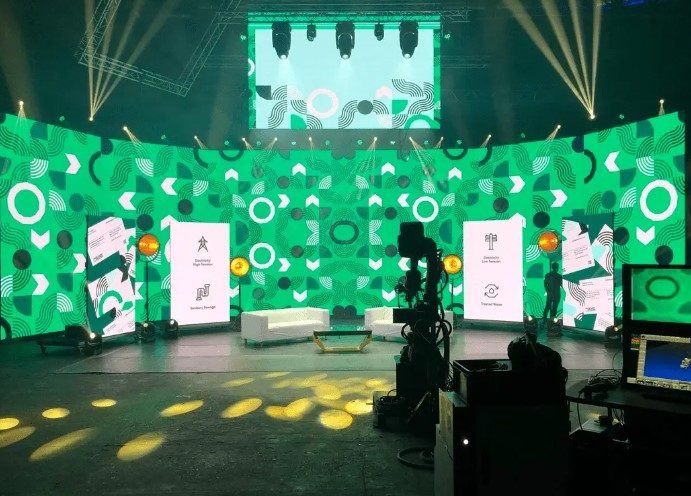
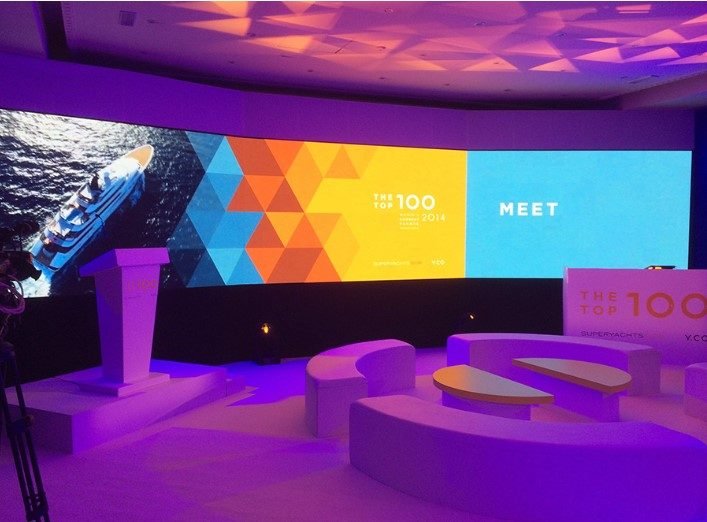
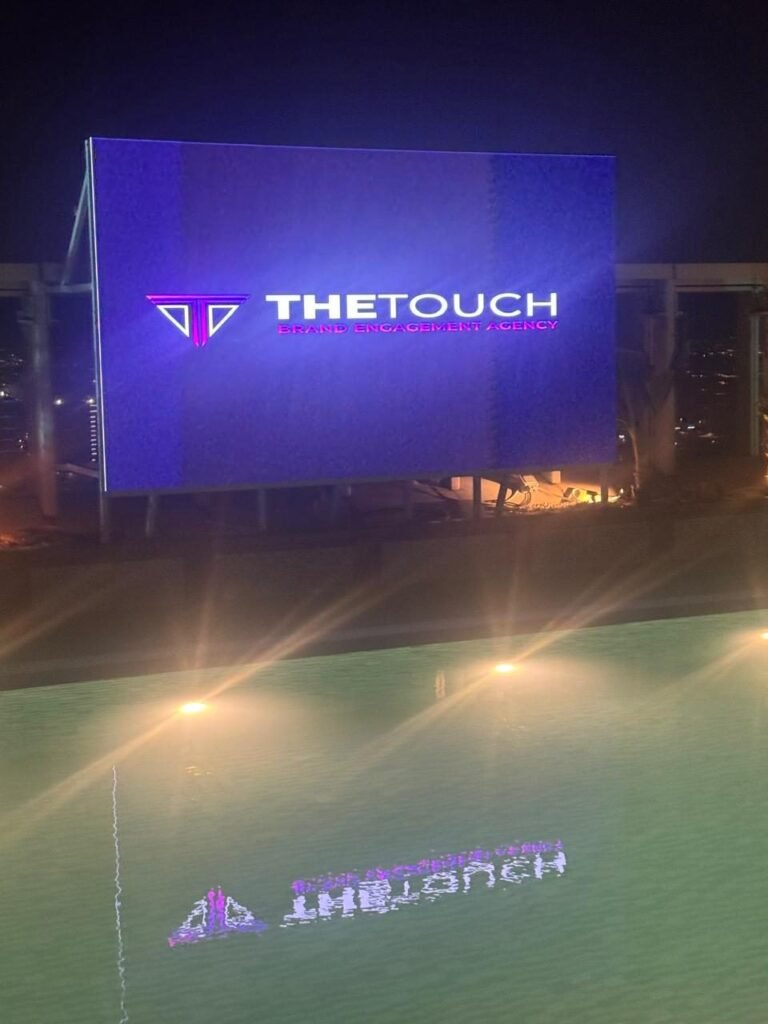
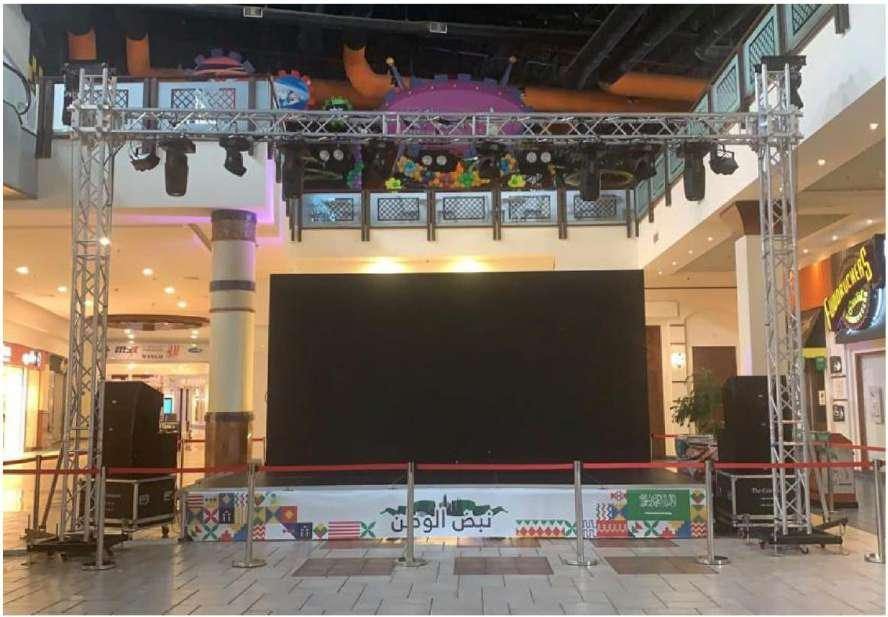
A screen in a mall or a giant LED wall at an event has its own shape, its own brightness and usually no sound. The advertising video is exported at the real resolution and proportion of that screen, with large text, strong contrast and a loop that makes sense from whatever moment a passerby starts watching.
How Promo Video Production Runs From Idea to Platform Files
Each stage is signed off before the next begins, so the shoot captures only what the campaign actually needs.
Brief and concept
We start with the product or the offer, the audience, the platforms and the dates the campaign runs. From those comes the concept: the single idea the advertising video is built on, the hook for its opening seconds and the action the viewer should take. You approve the concept in writing before any script is written.
Script and storyboard
The script sets every shot, every line of voice over and every piece of on screen text in Arabic and English, for each length the campaign needs. The storyboard draws the advertising video frame by frame and marks how each shot will sit in horizontal, vertical and square framing. Both are approved before talent and locations are booked.
Casting, location and permits
Talent is chosen with you for each role, and everyone who appears signs a release that names where and for how long the advertising video will run. Each location is visited and its owner asked. If the concept includes aerial shots, the shoot plan includes the required permits, since flying a camera drone needs a permit from the civil aviation authority and some areas do not allow flights at all.
The shooting day
A call sheet lists every shot, its time and who must be there. We shoot with cinema cameras, with lighting shaped for the product, the food or the faces, and sound recorded on set for dialogue and atmosphere. Every key shot is framed with room for the vertical crop, and drone shots are flown where the location allows and the permit covers.
Edit, colour, graphics and music
The edit follows the approved storyboard, then colour grading gives every shot the look of the brand. Motion graphics add the offer, the logo and the titles, subtitles are set in Arabic and English, and the music is licensed for paid advertising on the platforms you plan to use. You review each cut and send your comments as one list per round.
Cutdowns and delivery
The approved master becomes a family of cuts: horizontal 16:9 for YouTube, the website and screens, vertical 9:16 for Reels, TikTok, Snapchat and Stories, square for feeds, cutdowns of 6, 15 and 30 seconds, and screen versions for LED walls. Each file arrives named, exported to the specification of its platform and ready to upload.
What Decides the Launch Date
Concept and script approval
The production clock starts when the concept, script and storyboard are signed off. Every extra round of comments moves the shoot and the delivery with it.
Permits and locations
A drone permit, or a mall or site that needs written permission, takes its own time. The shooting day is fixed once they are in hand.
Talent, food and set
Talent availability, dishes prepared in turns and props made for the set decide how many shooting days the advertising video needs.
Cuts and versions
The number of lengths, shapes and language versions, and the graphics they carry, decide how long the edit takes. The quote states the date.
What Shapes the Cost of an Advert
There is no fixed price for promo video production, because each advertising video is priced from its concept and its list of cuts. These are the lines that move the figure, which makes it easy to compare two offers on the same terms.
Shooting days and locations
Each day adds crew, equipment and travel, and each change of location costs hours of setting up. A concept that keeps its scenes in fewer places is cheaper to shoot than one that moves between cities.
Cameras, lighting and crew
A single speaker to camera needs little. A product advert with a moving camera, controlled light on shiny surfaces and food that must be filmed at its best needs a larger crew and more equipment, and each is a line in the quote.
Talent and usage
Presenters, actors and voice artists are paid for their time and for where and how long the advert runs. A paid advertising video across several platforms carries higher usage fees than an ordinary post on your own account.
Aerial shots
Drone shots add a pilot, the permit work and time on site, and depend on the location allowing flights. They are priced as a line of their own, so you can decide whether your advertising video needs them.
Motion graphics and subtitles
Simple titles and an end card cost little. Animated offers, product callouts and full graphic sequences are designed shot by shot, and subtitles in two languages add time to every version.
Music and the number of cuts
A library track licensed for advertising costs less than an original composition. Every extra length, shape or language version adds editing time, and so does each review round beyond those in the quote.
Send the product or the event, the platforms, the lengths you need and the launch date, and an itemised quote reaches you within 24 hours. Request a quote for your advert or message 0567069088 on WhatsApp. If the advert will loop on a stand you are also planning, the budget for the stand itself is set out line by line in our guide to exhibition stand cost in Saudi Arabia.
Where the Advert Runs: Feeds, Screens and Stands
Promo video production pays off when one day of filming keeps working across the whole campaign. In the feed, the vertical and square cuts run as paid adverts and as posts, planned and published through our social media and content creation service, which decides which cut goes to which account and when. On a mall screen or a giant wall rented through our LED screen rental service, the screen version plays at the real shape and brightness of the wall, silent and in a loop. For a product advert, stills taken in the same session through our product photography service keep the catalogue, the online store and the advertising video on one look. A company film that tells who you are, from script to motion graphics, is a different job with a longer life, explained on our corporate video production page. Filming a whole conference, gala or exhibition as it happens, with photos and video delivered for the record, belongs to event photography and coverage, while this page plans the promo before the event and the recap advert after it. When a project needs aerial footage on its own rather than inside an advert, our aerial filming service handles it as a separate job. This page is about adverts and promos: short, planned pieces made to sell, announce or invite, and cut for every place they will run.
Which Cut Leads Your Campaign
Most campaigns need several shapes and lengths, but one of them carries the budget. These questions show which cut a promo video production should be planned around.
Where is your audience scrolling?
If most of your customers will meet the advertising video on a phone, the vertical 9:16 cut leads and the horizontal version is composed around it. If it runs mainly on YouTube, the website or screens, the horizontal 16:9 cut leads, with the action kept near the centre of the frame for the vertical crop.
Is the goal awareness or action?
Awareness lives on repetition, so the 6 and 15 second cutdowns earn most of the views. A purchase, a booking or a registration usually needs the 30 second advertising video or a longer story that gives a reason to act, with the shorter cuts reminding people afterwards.
Will it play with sound?
Feeds and mall screens are mostly silent, while a cinema or a launch stage is not. If silence is likely, the story is told in pictures and on screen text, and sound becomes a bonus rather than the message.
Does the advert need a person?
A presenter or a customer on camera builds trust for services, restaurants and real estate. A product that explains itself through its details may need only hands and close ups, which also keeps the advertising video usable for longer.
Does the location deserve aerial shots?
A real estate project, a resort, a large venue or an outdoor event reads best from above, and a drone shot can open an advertising video in a few seconds. A product on a table or a dish in a kitchen gains nothing from the air, and the permit time is better spent elsewhere.
Where Adverts Usually Lose Viewers
Each of these is cheaper to prevent in the storyboard than to fix in the edit.
A slow opening
A logo reveal or a wide establishing shot in the opening seconds gives the viewer a reason to scroll on. The hook goes first, and the logo can wait until the viewer is already watching.
A wide advert squeezed into vertical
Footage shot only for a wide frame loses the product, the faces and the text when it is cropped to 9:16. Shots are framed for every shape on the day, with safe areas kept clear of platform buttons and captions.
Text hidden under the platform
Each app lays its own buttons, names and captions over the bottom and the side of the video. Offers and subtitles placed there disappear, so text is set inside the safe area of each platform.
Music that blocks the advert
A popular song without an advertising licence can get an advertising video muted or rejected by the platform. Every track is cleared for paid use on the platforms in the plan, and the licence is delivered with the files.
A drone flight without a permit
An aerial shot decided at the last minute can stop the shoot or put it at risk. Drone shots are planned with the location and the permit from the start, and dropped from the plan wherever flights are not allowed.
A 6 second cut made by trimming
Cutting the first seconds off the long version rarely leaves a complete message. The short cutdowns are written into the script with shots of their own, so each length says something whole.
Shoot, Edit and Screen From One Company
Promo video production, drone shots, editing, motion graphics, design, print and the LED screens an advert plays on all sit with our own team, so a campaign moves from concept to the wall and the feed without a second supplier in between. We have worked for Saudia, Saudia Holidays, Cartoon Network, Ganache, Swarovski and Gucci Flora.
Events We Delivered
Stages, platforms and event set-ups our team built and ran.

Questions About Promo Video Production
What brands, restaurants and developers ask before they book an advertising shoot.
What does your promo video production include?
The brief and concept, the script and storyboard, casting and locations, the shoot with cinema cameras, lighting, sound and drone shots where allowed, then editing, colour grading, motion graphics, subtitles and licensed music, and finally every cut your platforms need. The quote lists each stage as its own line.
Do you shoot restaurant and food adverts?
Yes. The shoot is planned with your kitchen so dishes are prepared in turns and filmed while they look their best, alongside the dining room, the team and guests at the table. A restaurant advertising video is usually cut vertical first, since most diners discover places on their phones.
Which formats do we receive?
Horizontal 16:9 for YouTube, the website and screens, vertical 9:16 for Reels, TikTok, Snapchat and Stories, square for feeds, cutdowns of 6, 15 and 30 seconds, and screen versions for LED walls. Each file is exported to the specification of its platform and named so your team can upload it directly.
Can you film with a drone?
Yes, where the location allows. Flying a camera drone needs a permit from the civil aviation authority, and some areas do not allow flights at all, so the shoot plan includes the required permits and aerial shots are confirmed only once the permit has been issued.
Do you write the concept and the script?
Yes. We develop the concept from your brief and write the script and storyboard in Arabic and English, or build on an idea your team already has. Either way, both are approved in writing before the shoot is scheduled.
Do you provide presenters and talent?
We cast presenters, actors and voice artists with you for the roles the script needs, and their fee depends on where and how long the advertising video runs. Your own staff or customers can also appear, each with a signed release.
Is the music licensed for paid advertising?
Every track is licensed for the uses the advertising video will have, including paid campaigns on the platforms in your plan, for a stated period. The licence is delivered with the files, so any platform claim can be answered.
Can you make a promo and a recap for the same event?
Yes. The promo runs before the event to drive registrations or attendance, and the recap is cut from the video, photos and drone shots of the day into an advertising video for the next edition and for sponsors, in horizontal and vertical versions.
Are Arabic and English subtitles included?
Subtitles and on screen text are written in both languages in the script, then set in each version. A clean master without text is also kept, so a new language or a new offer can be added later without filming again.
How do we get a quote for an advert?
We handle promo video production in Riyadh, Jeddah, Dammam and across the cities of the Kingdom. Send the product or event, the platforms, the lengths and your launch date on WhatsApp at 0567069088 or through the quote page, and an itemised quote follows within 24 hours.
An Advert for Your Next Campaign?
Send the product, the platforms and the launch date for your promo video production. Within 24 hours you have an itemised quote that names every shooting day, every cut and every licence.
More specific pages on this
If your question is narrower than this page, these are written for one question each.

