
How to Organize a Ceremony: A Planning Guide for Companies, Schools and Government Bodies

How to organize a ceremony is a question that usually lands on the desk of a public relations manager at a company, a deputy head at a school or the communications department of a government body, often with a date already pencilled in and a patron who has not yet confirmed. An opening ceremony, an award ceremony, a university graduation, an end of year school ceremony and a National Day or Founding Day celebration differ in their guests and their segments, but they rest on a common frame: a written purpose, a guest list, a venue and a date, a timed running order, a stage and a screen, invitations and seating, photography, hospitality, a rehearsal, then the day itself and what follows it. This guide walks through those parts in the order a host usually settles them in Saudi Arabia.
The subject here is the formal ceremony in particular: an occasion with a patron, a stage, speeches and protocol. Running any event from the idea to the closing report has its own article, the stages of event management. When it comes to how to organize a ceremony, this page stays with what belongs to the ceremony alone: who sits in the front row, who speaks and when, when the hall stands, and how the official photograph comes out the way the host wants it.
Purpose and guest list before any booking
Before anyone asks about the hall or the stage, write down why the ceremony is being held, in a short line the decision maker agrees to: “We open our new head office in front of our partners and the press”, or “We honour colleagues who have completed long years of service”, or “We celebrate this year’s graduates with their families”. That line answers many later questions in advance: whether the press is invited, whether a film is shown, whether a short formal programme is enough or an evening with dinner is needed. Once the decision maker has signed it, the purpose stops shifting every time a new manager joins the planning meetings.
Then comes the guest list, which at a formal ceremony is a set of tiers. At the top sits the patron, the most senior person present, around whose time the whole programme is built. Next come senior guests from partner and official bodies, then the people the occasion is about (honourees, graduates, top students), then staff, families or students, then the press if they are invited. Each tier has its own invitation wording, its own entrance, its own seats and its own person to receive it. The figure a plan is built on is the number of confirmed guests, not the number of invitations sent, because seats, hospitality and parking are all counted from it.
Patronage is requested with a formal letter to the patron’s office, sent early, naming the occasion, the date, the venue and the length of time the patron is asked to attend, and saying whether a speech or the handing over of awards is expected. Nothing carrying the patron’s name is printed until the confirmation arrives in writing, since a change of patron late in the day rewrites the invitation, the seating plan and the order of speeches all at once.
Choosing the venue and setting the date
The kind of ceremony draws the limits of the venue. A university graduation needs a hall large enough for the graduates and their families and a stage every graduate crosses, so it usually takes place in the university’s own hall, a sports hall or a conference centre. An end of year school ceremony belongs naturally in the school theatre or courtyard. A company recognition evening leans towards a hotel ballroom or the head office auditorium. An opening ceremony is held at the place being opened, which makes its entrance and its facade part of the programme. National Day and Founding Day celebrations may move out into a tent or an open square.
When you compare two halls, ask about what never appears in the venue’s offer: the hours allowed for the build before the ceremony, what may be fixed to walls and ceiling, where the stage sits in relation to the entrance, whether a side entrance lets the patron reach the front row without crossing the audience, whether there is a room nearby to receive senior guests before the start, and whether the hotel requires its own kitchen for catering. Any temporary structure in an open square or inside a mall needs the approval of the owner or the relevant authority, and the route to it is explained in our article on the event permit in Jeddah and Riyadh.
The date is chosen around the patron’s diary, the host’s own calendar of school holidays and financial period ends, and prayer times. A ceremony that starts just before the call to prayer breaks off halfway through, so keep the whole formal part between two prayers, or make the prayer an announced pause between the formal part and the hospitality.
How to organize a ceremony programme: running order and protocol
The running order is what turns a gathering into a formal ceremony. It is written segment by segment, and each segment has an owner, a start time and an end time, along with who goes up to the stage, who comes down and from which side. This is a sequence common at formal ceremonies in the Kingdom, which the host adapts to the occasion and to the guidance of the patron’s office:
- Reception. Guests arrive well before the start, are shown to their seats, and are offered coffee and dates in the foyer.
- The patron’s arrival. The head of the host body receives the patron at the door and walks with them to the centre of the front row, and the hall stands as they enter.
- The royal anthem and the recitation. Many formal ceremonies open with the royal anthem, with everyone standing, followed by a recitation from the Holy Quran; the order between the two follows the custom of the host and the guidance of the patron’s office.
- The host’s speech. A brief welcome from the head of the host body or the person they delegate.
- A short film. About the occasion, the project, the graduating class or the careers being honoured.
- The patron’s speech, or a speech on behalf of the honourees or graduates. As agreed with the patron’s office.
- The awards, the certificates or the ribbon. The segment most of the audience came for.
- The group photograph. At a spot fixed in advance, with everyone knowing where to stand.
- Hospitality or a tour. Then the patron is seen off at the exit, just as they were received.
The anthem is played where the occasion calls for it: at government ceremonies, at National Day and Founding Day celebrations and at most graduations. An internal recognition evening at a company may simply open with the recitation and the welcome. Every speech has a written length in the running order, shared with the speaker beforehand, and its text is received in writing so the slides that go with it can be prepared. The MC reads from a single approved script that gives each guest’s title the way its holder likes it said, and the pronunciation of every name that could be misread.
Opening ceremony
At the opening of a head office, a branch or a project, guests are usually on their feet, so the formal part stays short: a welcome, the ribbon cut or a commemorative plaque unveiled, then a tour in which the head of the host body walks the patron through the new space. The route of the tour is drawn and walked before the day, and each stop on it has someone ready to explain it. The practical side of opening stores and branches is on our page for grand opening events.
Award ceremony
If the awards have winners to announce, the names stay within a small circle until the moment they are read. The calling order is approved in writing, the shields and certificates are lined up beside the stage in that same order, and the MC reads names from the approved list and nothing else. The full method for recognising staff is set out on our page for employee award ceremonies.
University graduation and end of year school ceremonies
A university graduation is governed by the procession and the reading of names: graduates enter in lines in the order of their colleges, each name is read exactly as it appears in the record, and its owner walks up to collect the document in front of the camera. An end of year school ceremony is lighter and closer to the families, with segments performed by the students themselves and recognition of the top achievers. In both, families need clearly marked seats and guidance from the moment they reach the door. Graduation has its own page: graduation ceremony organisers.
National occasions
A National Day ceremony is built on green and white, the ardah and the royal anthem, while a Founding Day ceremony has a historical, heritage character, closer to the majlis, coffee and traditional dress. On both occasions the flag is treated with full respect and never becomes decoration on tablecloths or cups. How companies mark the day is covered on our page for National Day corporate events.
The planning table: every element and who signs it off
This table answers how to organize a ceremony on a single page: every part, and who approves it. Any element whose approver you cannot name is the place where preparation will stall.
| Element | What is decided | Who signs it off | Ready when |
|---|---|---|---|
| Purpose | Why the ceremony is held and for whom | The decision maker at the host body | It is written in a short signed line |
| Patron | Who is patron, and whether they speak or hand over awards | The patron’s office | Confirmation arrives in writing |
| Guest list | The tiers, the names and the titles | Public relations or protocol at the host | It matches the replies received |
| Venue and date | The hall, the build hours, the timing between prayers | The host and the venue management | The booking is confirmed in writing |
| Running order | Each segment with its time and owner | The head of the host and the patron’s office | A final version is approved with no open changes |
| Speeches | Who speaks, and for how long | Each speaker | The texts are received in writing |
| Stage and screen | Height, backdrop, lectern and sound | The host, after reviewing the drawing | The layout and the render are approved |
| Invitations and seating | Wording, distribution and the seating plan | Protocol at the host | Every confirmed guest has a named seat |
| Photography | The shot list and who approves publication | The communications department | The list is in the photographer’s hands |
| Hospitality | Menu, service style and timing | The host and the catering partner | It appears as a named line in the quote |
| Rehearsal | A full run of the programme on the stage | The stage manager | The list of notes is closed |
| Follow up | Thanks, photographs, the news story, the dismantling | Public relations | Every honouree has received their photographs |
The stage and the screen
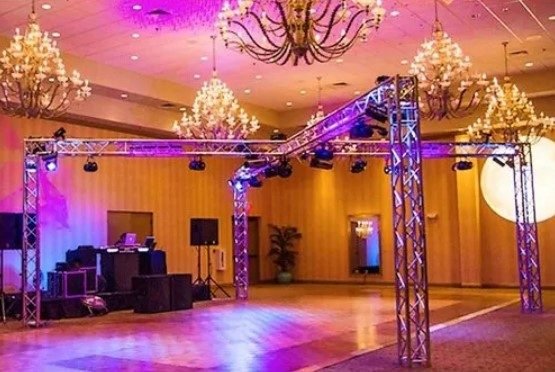
A stage is designed around one test: can someone in the last row see the speaker’s face? The height of the platform follows the depth of the hall and the slope of its floor, the steps go at the side so they never hide an honouree on the way up, and they carry a handrail when older guests will use them. The lectern stands to one side of the stage, not in the middle, so the screen stays visible through every speech. The backdrop carries the name of the occasion and the host’s logo, and it is drawn so that it appears whole in the group photograph.
The screen works through the whole ceremony, not only for the film: it shows the name of the occasion between segments, the name and position of each speaker as they step up, and the names of honourees as they are called. An LED wall keeps its clarity in a lit hall better than a projector does, which matters when the lighting has to stay up for the cameras. On the lectern a spare microphone sits ready, and front lighting keeps the speaker’s face clear in every picture. The platforms, backdrops and steps are covered on our page for event stages, along with how we build the stage in our own factory and our own team installs it.
Invitations and the seating plan
A formal invitation names the inviting body, the patron once confirmed, the occasion, the date, the time to arrive before the start, the venue with a map link, and how and by when to confirm attendance. Senior guests receive a printed invitation by hand or through their offices, with an electronic copy alongside. Then a reminder some days before, and a last one on the morning itself. At the entrance a registration desk holds the confirmed list, staffed by someone who knows the senior guests by sight and can walk them straight to their seats.
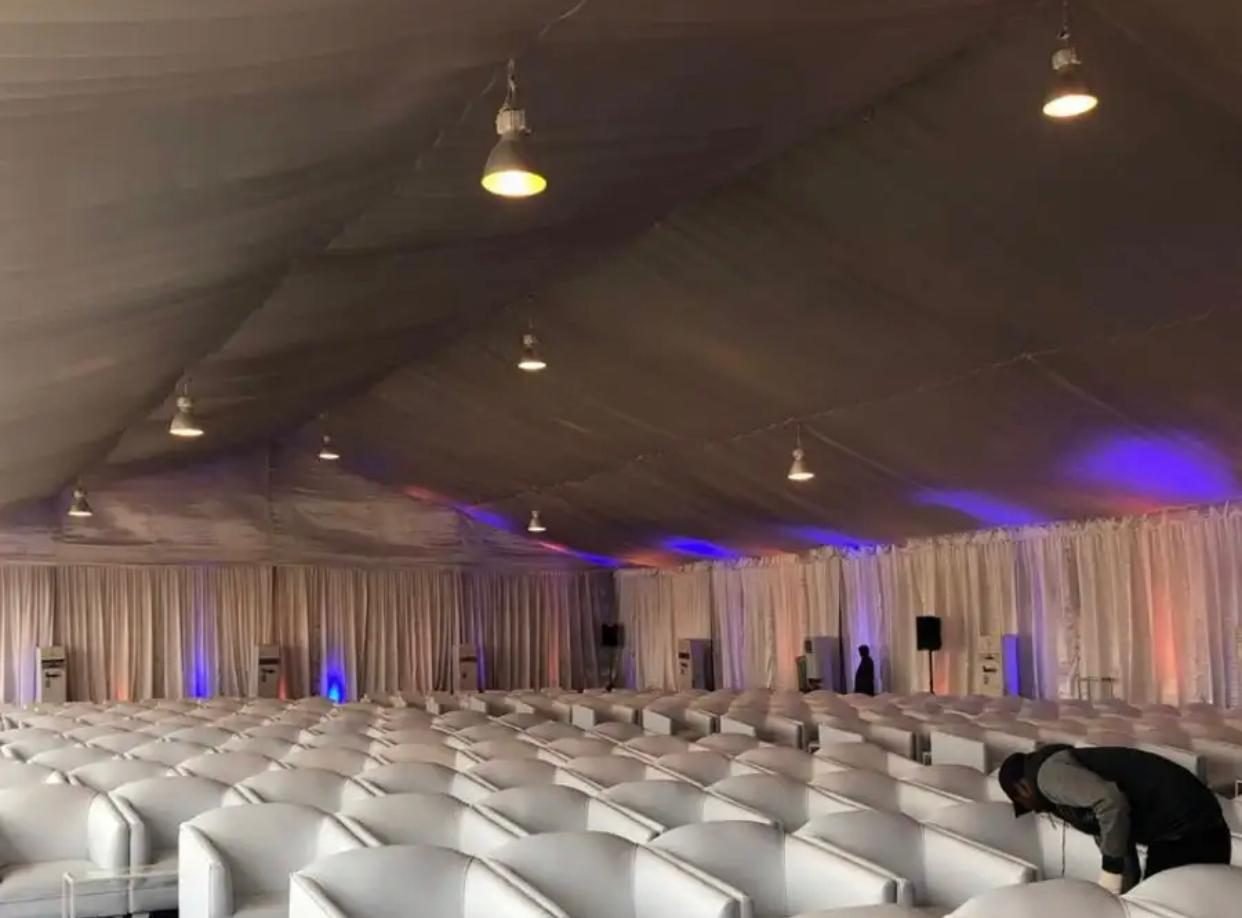
The seating plan is the most delicate part of a formal ceremony. The front row has the patron in the centre and senior guests to the right and left in the order of precedence the host’s protocol team approves. Honourees and graduates sit close to the stage on aisle seats, which keeps their walk short. Every reserved seat carries a card with its guest’s name, and some seats are held back for senior guests who arrive late. Where the host sets aside sections for families or for female students, clear signs go up and a host or hostess stands at each section. The press gets an area at the side, with a view of the stage that does not put anyone in front of the first row.
Photography and coverage
Start with a shot list agreed between the communications team and the photographer: the patron’s arrival, the hall standing for the anthem, every speaker at the lectern, every handover, the group photograph and a wide view of the full hall. The photographer covering the handovers keeps a fixed spot marked at the rehearsal, while a second one moves through the audience. A highlights film needs a video crew separate from the stills photographer, because each of them has to stand somewhere different.
Agree in advance who approves publication. Pictures that include the patron usually pass through the patron’s office before they go out, and pictures of students at a school follow the school’s policy and the consent of families. Ask for a selected set on the evening itself for the press release and the host’s accounts, and the full edited set afterwards.
Hospitality through a catering partner
Coffee and dates at the reception are a settled custom at Saudi ceremonies, with water at the lectern and at the speakers’ seats. The main hospitality follows the formal part: a buffet, served tables or ready boxes, depending on the hour and the nature of the occasion. Food is never served during the speeches, because the sound of service carries over the speaker. Senior guests may have a majlis or a corner of their own, served separately, where space allows.
Hospitality is arranged through a catering partner and shows in the quote as its own named line, with the menu and the way it is served. Some hotels accept no food from outside their own kitchen, so ask before the menu is chosen; the programme is then timed around the hotel’s service.

The rehearsal: the whole ceremony before its day
A rehearsal is a full run of the programme on the actual stage, with the MC, the screen operator, the sound engineer, the hosts and the stage manager. The MC reads every name out loud, stand-ins cover the path from the honourees’ seats up the steps, the photographer marks the handover spot, and the films and the anthem file are played from the very device that will be used on the night. One member of the team stands in for the patron to test the angles of the photograph. Every segment is timed, and anything that runs long is cut here, not on stage. Of everything in how to organize a ceremony, the rehearsal is the step most often squeezed, and the one that costs most when it is.
The rehearsal is held on the eve of the ceremony, or on its morning if the hall is not free before then. It produces a list of notes that is closed point by point, and then the running order is frozen, with nothing added to it.
The day itself
The crew arrives ahead of the guests with enough time for a short briefing, so that each person knows their place, their role and whom they answer to. The stage manager holds the printed running order with its times and cues each segment. The registration desk opens before the announced arrival time, and the people at the door know the signal that means the patron has arrived.
Some things are prepared for before they happen. A patron who is running late: the MC has a short segment ready to fill the time without the wait showing. A speaker who withdraws at the last minute: the script is adjusted and the slot is not left empty. A film that will not play: the MC carries on and the film is tried again at the end of the programme. The stage stays clear of loose items between segments, and when the ceremony ends the patron is accompanied to the car, just as they were received.
The follow up
The ceremony does not end when the lights go down. In the days that follow, letters of thanks go to the patron and senior guests, every honouree or graduate receives their photographs, and the news story goes out with the approved pictures. The host’s team meets to write down what worked and what to change next time. The stage and backdrop are dismantled and the hall is handed back as it was received, and pieces that return every year can be kept in our storage for the next edition.
Where The Touch fits into your ceremony
Knowing how to organize a ceremony also means knowing who does what. The host owns the purpose, the guest list, the running order and every protocol decision, and the patron’s office owns whatever concerns the patron. We take on what is made, installed, run and filmed. We design the stage and backdrop and build them in our own factory, and our own team installs them, stays through the ceremony and dismantles afterwards. We provide the screens and the print, from invitations to programmes and certificates, make the shields, supply the MC and the hosts and hostesses under a supervisor, and photograph and film the ceremony and edit its film. Hospitality comes through a catering partner as a named line. Where the venue needs an approval, we prepare the drawings and paperwork its management or the relevant authority asks for, and the decision is theirs. Send us the kind of ceremony, the city, the approximate date and the expected number of guests, and an itemised quote reaches you within 24 hours.
Frequently asked questions about organizing a formal ceremony
What are the steps to organize a formal event or ceremony?
It starts with the purpose, the guest list and the patron’s confirmation, then the venue and the date, then the running order and the speeches. Next come the stage and screen, the invitations and seating plan, photography and hospitality. It ends with the rehearsal, the day itself and the follow up, and the table on this page lists each step with whoever signs it off.
How do you organize an opening ceremony for a head office or branch?
Keep the formal part short, because guests are usually standing: a welcome, the ribbon cut or a commemorative plaque unveiled, then a tour for the patron. Walk the tour route before the day, and prepare the entrance and facade as the backdrop of the official photograph.
How do you organize an award ceremony for staff or students?
Approve the list of honourees and their calling order in writing, and line up the shields and certificates beside the stage in that same order. Seat the honourees near the stage on aisle seats, and let the MC practise every name at the rehearsal.
How does a university graduation differ from an end of year school ceremony?
A university graduation is formal, governed by the procession, the reading of names and the handing over of documents, and families attend in large numbers. An end of year school ceremony is lighter and closer to the family, with segments performed by the students and recognition for the top achievers. In both, families need clearly marked seats and guidance from the door.
Is the royal anthem played at every ceremony?
It is played where the occasion calls for it, such as government ceremonies, National Day and Founding Day celebrations and most graduations, with everyone standing. An internal recognition evening at a company may open with the recitation and the welcome instead. The decision rests with the host and the guidance of the patron’s office.
How does a National Day ceremony differ from a Founding Day ceremony?
National Day is built on green and white, the ardah and the royal anthem. Founding Day marks the founding of the first Saudi state, so its character is historical and close to heritage: the majlis, coffee and traditional dress. Each has an identity guide issued for it, so work from that guide rather than from memory.
How early should we start preparing a ceremony?
The lead time depends on the size of the ceremony, when the patron confirms, when the venue is free and how much is built new. Settle the purpose, the patron and the venue first, since they are what takes the waiting. Our quote gives the date of every line counted from the approval of the design.
Celebrations We Delivered
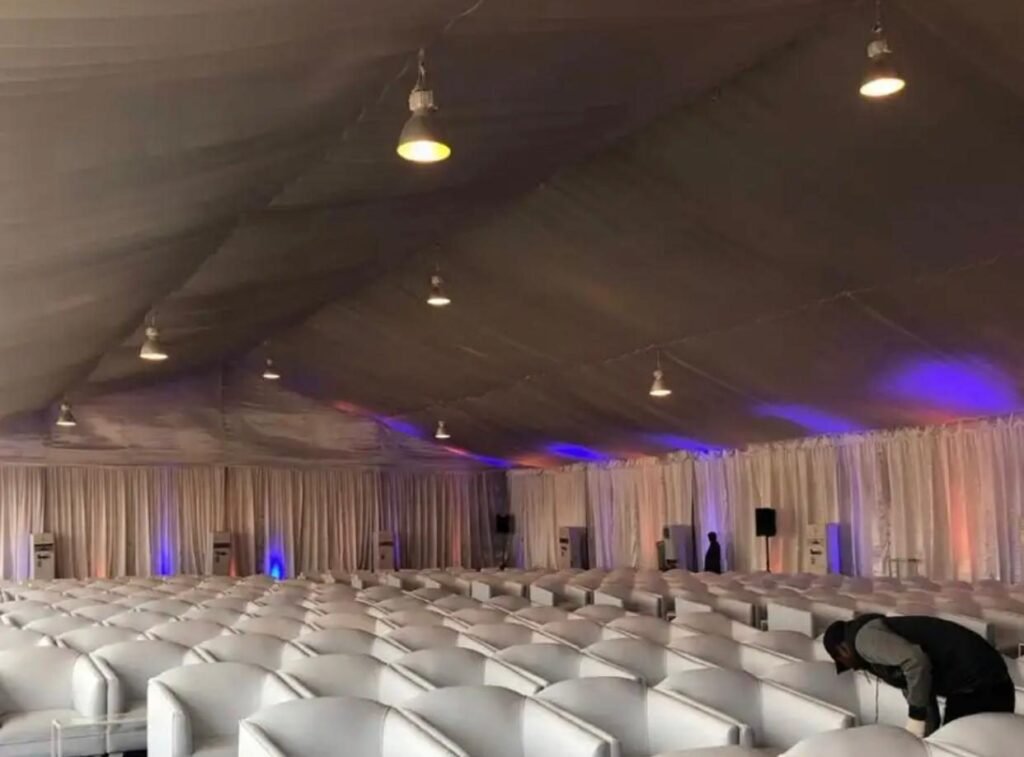
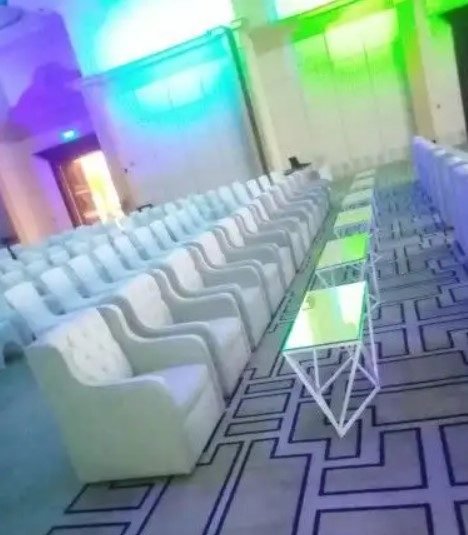
Photographed on site after handover, no renders.
Have a project and want a real number?
Send the area, the date and the city, and we come back with an itemised quote within 24 hours. No commitment, and no vague all-in price.

