
Interactive Brand Experiences
Interactive Brand Experiences People Stop to Play With
Interactive brand experiences turn a stand, a hotel lobby or a mall atrium into something people touch, move in front of or step inside: a touch table, a wall that follows a hand, a projection that wraps a model, an immersive room, a VR headset or a 360 booth. Done well, each one carries a single message about your brand in the few moments a visitor gives it, and leaves you with names to call afterwards. This page explains the types, how the play is written before it is drawn, what the installation needs, and how it keeps running from the first visitor to the last.
What Makes Interactive Brand Experiences Worth the Space
Screens and sensors are easy to hire. Whether an interactive or immersive installation works is decided before any of that: what the visitor should remember, and why they would step in at all. That is the heart of experiential marketing: the visitor lives the idea instead of reading it on a wall.
One message, not a menu
The corner exists to land a single idea: the product is lighter, the service is faster, the heritage is alive. A touch screen that opens on a menu of everything the company does is a brochure behind glass. Pick the one point and build the play around it, so the visitor walks away able to say it in a sentence.
A play short enough to finish
People at a show are on their way somewhere else. A good play is learnt by watching the person ahead, finished before the queue behind grows restless, and ends on a result: a score on a board, a photo, a reveal of the product. A long game empties the corner of everyone except the player.
Something worth watching from the aisle
Most of the audience never plays. They watch. A large screen that mirrors the player, a projection that reacts to movement or a leaderboard with the best scores of the day pulls in the next visitor. The attract loop that runs between players matters as much as the game, because it is what passers by actually see.
A reason to leave a name
A score sent to a phone, a picture from the photo booth, a prize draw at the end of the day or a demonstration booked for later: each is a fair exchange for contact details, asked with consent. Without it the corner is entertainment, and the sales team has nobody to follow up after the event.
The Teams Behind an Interactive Installation
An immersive corner needs structure, screens, print, people and data at the same time. All of them come from teams under one roof.
Printing & Promotional Gifts
The graphics that dress the corner, the play instructions printed beside it and the prizes handed to winners. Graphics are printed in 1 to 5 working days.
Acrylic & Wood Fabrication
The joinery that hides screens, sensors and cables, acrylic covers and plinths, and the surface a projection lands on, cut on CNC and laser machines.
Promoters & Brand Ambassadors
Hosts who invite visitors in, explain the play in a sentence and record leads, led by a supervisor.
Branding & Creative Studio
The concept, the script of the experience and the look of every screen and photo frame, true to your identity.
Digital Solutions
Interactive screens, visitor registration on a tablet or a QR code, and a database you receive after the event.
Experiences & Events
The wider programme the corner sits in: a launch, a mall event, an open day or a space inside a festival.
Social Media & Content
Clips of visitors playing and pictures from the photo booth, edited for your channels during the event itself.
Custom Exhibition Stands
The stand that holds the installation, designed around it instead of handing it whatever corner is left over.
Types of Immersive and Interactive Installation
Interactive brand experiences come in several types, and each does a different job. Choose by the message and the visitor, not by what impressed you on someone else's stand.
Touch screens and touch tables
The right tool when there is something to explore: a product the visitor configures, a map of projects, a catalogue, a timeline. A touch table lets a small group lean in together, while a tall touch screen serves one visitor at a time. Both need content laid out for a finger and an arm's reach, with large targets and nothing important near the bottom edge.
Motion and gesture walls
A depth camera or sensor reads a body or a hand and the wall answers: particles scatter, a product turns, a character copies the visitor. Nothing is touched, so it draws children and adults alike and works for a watching crowd. Sensors react to strong light, glossy floors and people walking behind the player, so the play zone is marked on the floor and the sensor is set up in the hall's real light.
Projection mapping
Video cut to the exact shape of a surface, whether a sculpture, an architectural model or a facade, so the object itself seems to change colour, open up or come apart. It is the strongest way to reveal a product or tell the story of a building, and the most dependent on darkness: a bright exhibition hall washes it out, so it lives in an enclosure, under a canopy or in a room where the light is controlled.
Immersive rooms
A room whose walls, and sometimes floor, are covered in screens or projection, where a small group stands inside the story: a journey through a project, a heritage site, the making of a product. It needs an entrance and an exit that hold the light, sound that stays inside, a host at the door who runs the groups, and content made for those walls rather than for an ordinary screen.
VR and AR
VR is the most immersive of the types: a headset takes one person where the stand cannot, inside a machine, or across a site that is not built yet. AR places the product or a character over the real scene on a tablet or a phone. Because a headset serves one visitor at a time, it needs a screen that shows the queue what the player sees, a host beside the player, short sessions and a plan for cleaning headsets between users.
Photo booth and 360 booth
The simplest interactive brand experiences and among the most shared: a frame or backdrop in your identity, a camera, and a picture or a slow motion clip sent to the visitor's phone. Sending it is the natural moment to ask for a name and a number with consent, and every picture a visitor shares carries your logo beyond the edge of the stand.
How Interactive Brand Experiences Are Designed and Built
The order matters: message, play, build, content, test, run. Jumping straight to the hardware is the usual reason a corner ends up impressive and forgotten.
The message and the visitor
We start with the one thing the visitor should remember, and who that visitor is: buyers, families, officials or students. Then the space and its rules, and what you want back: contacts, appointments, pictures shared, or simply time spent with your brand.
The play, written in words
Before any drawing, the experience is written as a short script: how a visitor is invited, what they see from the aisle, what they do, what happens when they do it, how it ends and what they leave with. If the script cannot be told in a few lines, the play is longer than a show can carry.
The build around the technology
The structure is drawn to hide what makes the immersive effect: screens set flush with the wall, sensors at the right height and angle, the projector position and the surface it lands on, ventilated cupboards for computers and players, cable routes, and walls or a roof that control the light.
Content and software made for this corner
The game, the film or the app is produced for this installation alone: for the real screen, the real surface and the play time written in the script, in Arabic and English. The quote names who produces it, our digital solutions side or your agency, and who approves it before shipping.
Tested in our factory
The installation is assembled in our factory with its screens, sensors and projection running, as every stand we build is test assembled before it ships. This is where people who have never seen the game play it, the sensor is tried under bright light, and the projection is aligned on the real surface.
Installed, run and taken down by our team
Our own team installs the corner, stays for the opening and dismantles it after the event, and hosts with a supervisor run it day by day. After the event you receive the database with the play counts the software logged, and the installation can be kept in our storage for the next date.
How Long Interactive Brand Experiences Take
A corner or room built to order
6 to 8 weeks from brief to opening, as for a custom stand, with the script and the design approved at the start.
Inside a modular stand
A modular stand with new graphics takes 2 to 4 weeks and can carry a touch screen, a photo booth or a gesture wall.
Content and software
It depends on the number of screens, the languages, the game logic and the data you collect. The quote states the date.
Graphics and instructions
Printed in 1 to 5 working days once the artwork is approved.
What Shapes the Cost of an Immersive Experience
We publish no price list, because every interactive installation is priced from its script and its drawings. These are the lines that move a quote for interactive brand experiences, named so offers can be compared fairly.
The hardware, hired or bought
Screens, projectors, sensors, computers, headsets and cameras. Hiring suits a single event, and buying suits an installation that will tour. The quote names each item, who supplies it and whether it is hired or bought.
Content and software
A game built for the corner costs more than a film adapted to a screen, and it is the part the visitor actually meets. Languages, the number of screens, a leaderboard and the link to your database each add work that the quote states.
The enclosure and the light
Projection and immersive rooms need darkness, which means walls, a roof, an entrance that holds the light and ventilation for the equipment inside. That structure is often a larger line than the projector itself.
Hosts and supervision
An interactive installation without hosts is a queue nobody manages. Their number follows the hours, the number of play stations and whether they also record leads, with a supervisor leading the team and covering any absence.
Data capture
Registration on a tablet or a QR code, the consent wording, the link to your CRM and the database handed over after the event are a line of their own, and the reason the corner pays back.
Reuse and storage
An installation built to travel costs more the first time, with its cases and a structure that bolts together, and less each time it returns with new content. Keeping it in our storage between events is quoted as its own line, and where transport applies it is a named line in the quote.
Tell us the event, its dates, the space and the message you want visitors to leave with. An itemised quote follows within 24 hours. Request a quote or message 0567069088 on WhatsApp. To see how a budget is put together line by line, read our guide to exhibition stand cost in Saudi Arabia.
Power, Light and Sound: What the Venue Decides
An interactive installation asks more of a venue than a printed stand does. Many exhibitor manuals cap sound levels and the direction speakers may face, ask that a queue stays inside your space rather than in the aisle, and need a separate power order for screens, projectors and computers. Projectors hung from the hall roof or a truss need rigging approval, and an enclosed immersive room may have its exits and materials checked. Malls add their own hours and their own rules on sound and light. These approvals belong to the organiser, the venue or the mall management; we prepare the drawings and details they ask for. The corner is one part of our wider experiences and events service, which covers brand activations of every kind. Screens on their own, from video walls to projectors, are explained on LED screens for exhibitions, and registration, interactive screens and the database sit with our digital solutions. The stand around the corner starts from exhibition booths in Saudi Arabia, a large logo or a character that visitors pose beside is on 3D letters and props, and a whole event with its programme is on event management in Saudi Arabia. A campaign that moves from mall to mall is planned around shopper traffic and each mall's rules. Product sampling is planned around getting the product itself into the visitor's hand.
Which Experience Fits Your Event
A few questions settle most choices between interactive brand experiences before anyone talks about hardware.
Does the visitor need to explore, or to feel?
If the message is detail, a range of products or a map of projects, a touch screen or a touch table lets each visitor find what concerns them. If it is a feeling, a sense of scale or a story, projection mapping or an immersive room does it better.
How many people pass, and how many can play at once?
A busy aisle needs something many people enjoy together, such as a gesture wall or a projection. A VR headset serves one person at a time, so it suits a booked demonstration or a quieter hall.
How much space is there?
On 9 or 18 square metres, a single station with a strong screen and a place to watch from works better than several cramped ones. An immersive room needs the floor of a large stand, 36 square metres or more, or a space of its own.
Who is the audience?
Government entities and museums usually want a story told with dignity and in both languages, which suits a room or a mapped model. Consumer brands want a score, a picture and a prize. Business buyers want a demonstration they control themselves.
Will it be used again?
If the installation will tour several events, design it to travel and to take new content. If it serves a single launch, put the budget into the moment rather than into durability.
Where an Interactive Installation Goes Wrong
Each of these is cheap to prevent on the drawing and expensive on opening morning.
A queue that blocks the aisle
The game is a hit, the line spills into the aisle and the organiser asks you to stop it. Plan the queue inside your space, give it something to watch, and let a host take names while people wait.
A projection lost in the hall light
An immersive projection that looked rich in the dark of a studio fades to grey under hall lighting. Decide the enclosure or the canopy at the design stage, not on site.
A sensor confused by the crowd
A gesture wall reads people walking behind the player, reflections from a glossy floor and strong light as deliberate movement. Mark the play zone, choose the floor finish with the sensor in mind, and set it up in the real light.
A dark screen with no plan B
A computer freezes, the internet drops or a file will not play, and a black screen sits in the middle of your installation. Run the game locally rather than on hall internet, keep an offline version and a film ready to switch to, spare cables, and a technician within reach through the show hours.
A game nobody finishes
Rules that need explaining, several levels or a play that runs long all empty the corner. If the host needs more than a sentence to explain the game, simplify it before it ships.
Data you cannot use
Names typed into a screen with no consent, no link to your CRM and nobody to receive them after the event. Agree the fields, the consent wording and who receives the data before the content is built, and check the wording against the Kingdom's personal data protection law.
One Roof for Structure, Screens and People
Design, CNC and laser cutting, joinery, paint, acrylic, large format print, installation and hosts with their supervisor sit under one roof with us, so the wall that hides the sensor is built by the team that tests the game on it. Interactive brand experiences live or die on that link. We have more than one location in the Kingdom, and your installation is built in our own factory and installed by our own team. We have worked for the Heritage Commission, Saudia Holidays, Cartoon Network, Johnson & Johnson MedTech and Swarovski, and a single campaign of ours has passed a reach of more than 10 million.
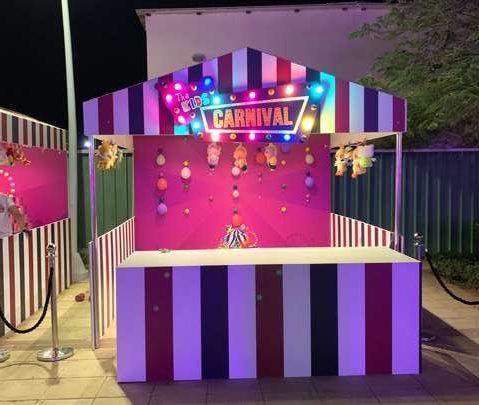
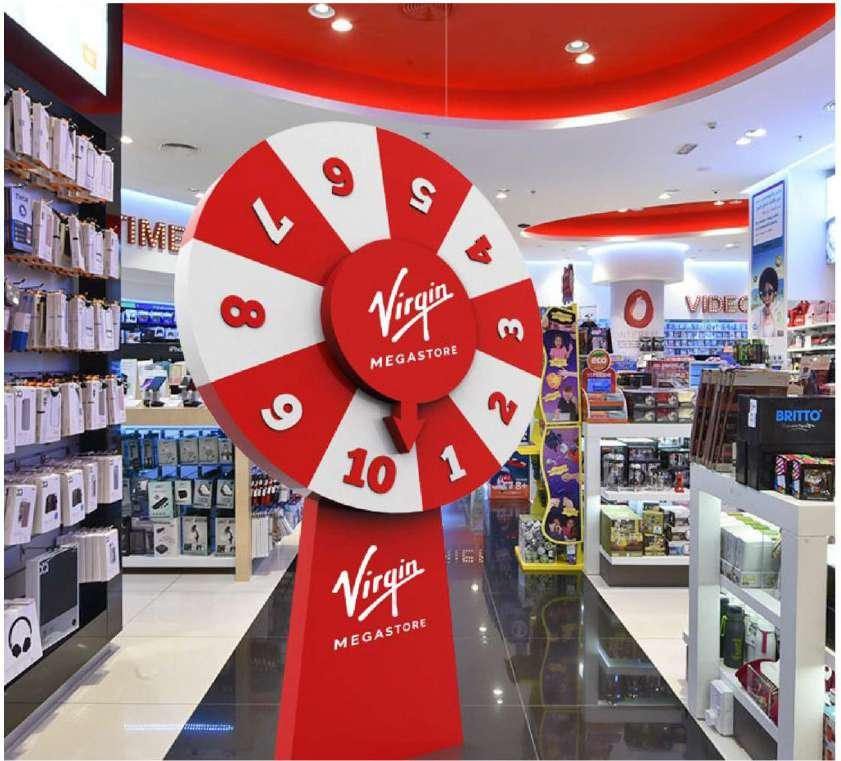
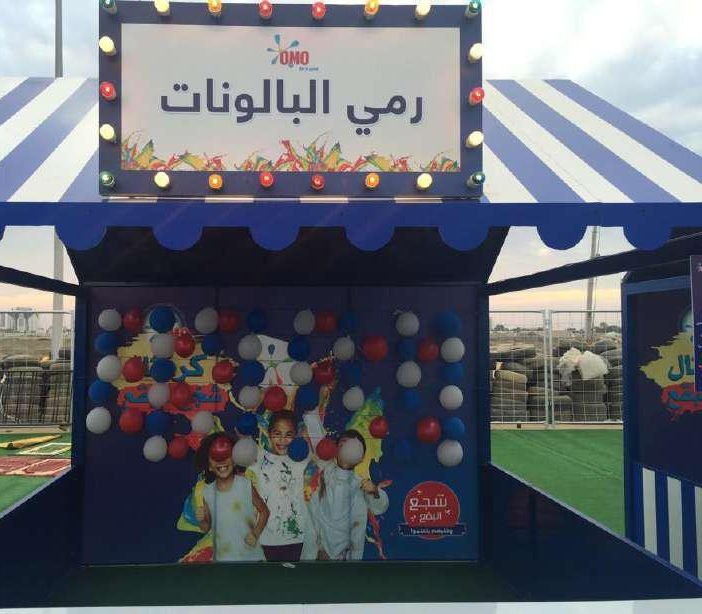
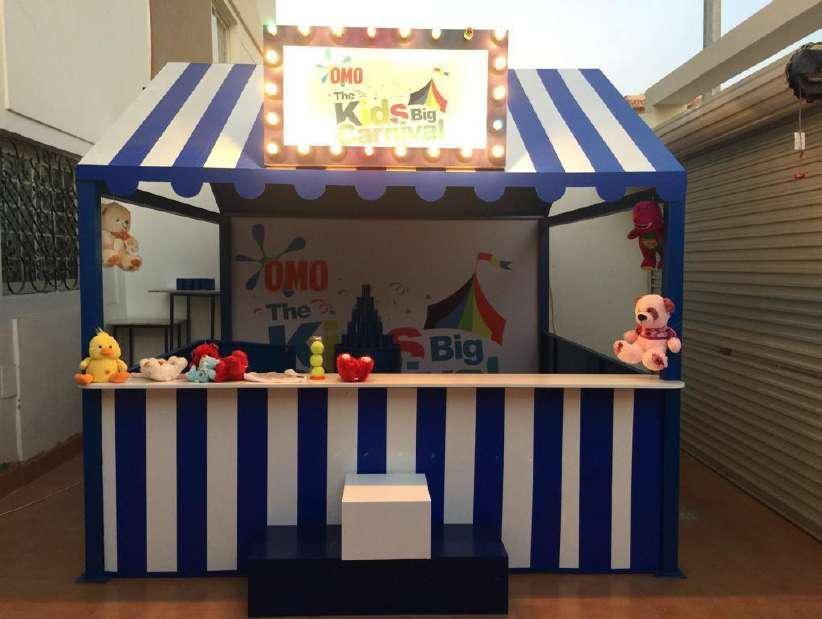
Interactive Experiences From Our Work
Games and interactive corners we built for brands and events.

Questions About Interactive Brand Experiences
What exhibitors ask before they commission interactive brand experiences.
What are interactive brand experiences?
Installations a visitor takes part in instead of only looking at: touch screens and tables, gesture walls, projection mapping, immersive rooms, VR and AR, photo and 360 booths, and branded games and quizzes. Each is built around a single message and usually ends by capturing contact details, with the visitor's consent.
Which type suits an exhibition stand?
It depends on the message and the traffic in the aisle. Touch screens and tables suit detail and products, gesture walls and projection suit busy aisles, and immersive rooms and VR suit stories and booked demonstrations. We propose the type after reading the brief, not before.
Do you do projection mapping?
Yes. We plan the surface, the projector positions and the light control together, build the model or wall the image lands on in our factory, and align the projection there before the event. Where the hall is bright, the design includes an enclosure or a canopy, so the effect stays immersive.
Can you provide a photo booth or a 360 booth?
Yes, in your identity, with the frame or backdrop built for it, pictures sent to the visitor's phone and a host to run it. The moment the picture is sent is also when the visitor can agree to leave their details.
Who makes the game or the content?
Content is made for the real screens and the real play time, in Arabic and English. The quote names who produces it, our digital solutions side or your agency, and who approves it, so nothing is adapted at the last minute.
How do you capture visitor data?
Through registration on a tablet, a QR code or a step at the end of the play, with a clear consent line and only the fields you need. You receive the database after the event, in a form your sales team can use straight away.
What happens if something stops working during the event?
The installation is planned never to go dark: the game runs locally rather than on hall internet, an offline version and a film are ready to switch to, and spare cables and a technician are within reach. All of it is tried in our factory before it ships.
Can the installation be reused at our next event?
Yes, if it is designed to travel: sections that bolt together, protective cases and content that can be swapped. Between events it can be kept in our storage, and it returns with a new game or a new film on the same structure.
How do we measure whether it worked?
Count the plays, the average time spent in the corner, the contacts captured with consent and the meetings booked from them, and compare them with the stand's visitors overall. The software logs plays and scores, and the hosts note the quality of each conversation.
How long does it take, and how do we start?
A corner built to order follows the custom stand timeline, 6 to 8 weeks from brief to opening. Send the event, its dates, the space and the message on WhatsApp at 0567069088 or through the quote page, and an itemised quote follows within 24 hours.
An Interactive Corner for Your Next Event?
Send the event, its dates, the space and the one thing you want visitors to remember. Within 24 hours you have an itemised quote for an interactive or immersive corner that names the hardware, the content, the hosts and the build.
More specific pages on this
If your question is narrower than this page, these are written for one question each.

