
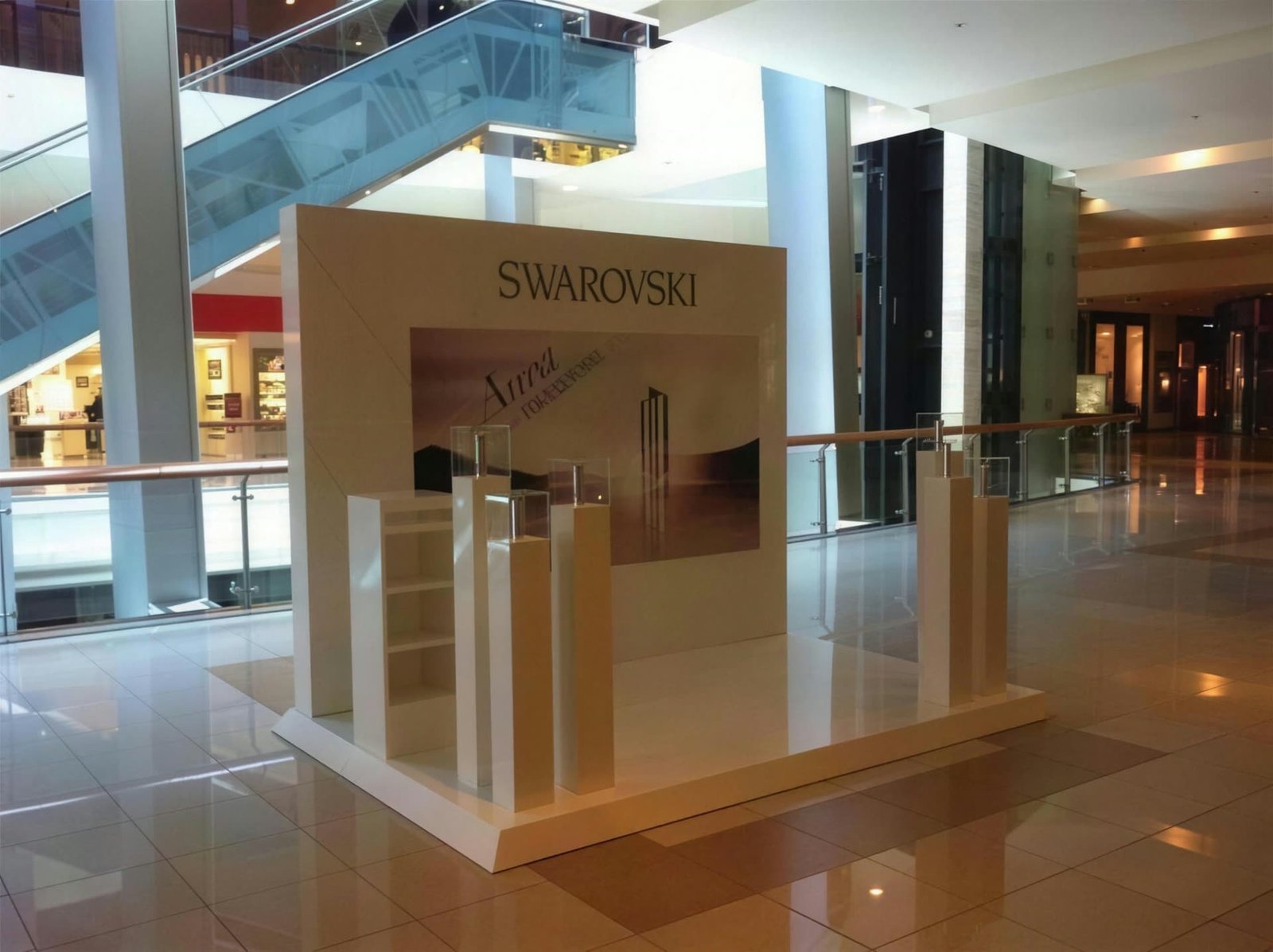
A mall is not an exhibition hall. It is a building open to the public all day, with an owner, an operations team, a safety team and its own fire system, and every display built inside it is treated as a temporary change to an existing building. That is why no mall display starts with the design; it starts with an approval file the mall’s management asks for before the first panel is cut.
This guide collects what a mall requires before any display is built, as the management of the large malls in Jeddah and Riyadh actually asks for it: who approves what, what the file contains, what the materials, the night build and the live days must comply with, and how many weeks all of it takes. What works inside a mall as an idea is the subject of our article on mall activations in Saudi Arabia; this one is about the approval, not the idea.
Who approves what inside a mall
The first mistake is assuming the approval is one person. In a large mall there are four departments, and each checks something different:
- Specialty leasing. Sells the space and the period, and decides the position: a corridor, the main atrium or in front of an entrance. Its contract fixes the area in metres, the days and the hours.
- Marketing. Checks whether the brand and the idea fit the mall’s image, whether they clash with a permanent tenant, and whether the mall’s own channels should announce it.
- Operations and security. Check the drawings, the weights, the power, the build hours and the escape routes, and issue the night work permit and the workers’ passes.
- Safety and fire. Check the material certificates, the distance from emergency exits and extinguishers, and may ask for a walk-round before opening.
A fifth party from outside the mall joins when the display is a promotion or a sampling: the municipality or the competent authority’s permit, which the mall itself asks for before allowing operation. One file sent to all four departments at the same time saves two weeks of back and forth.
The file mall management asks for
| Document | What it must show |
|---|---|
| Site plan | The display on the mall plan with dimensions, and the distance from exits, escalators and neighbouring shops |
| 3D design and elevations | Every elevation with heights, because the height limit in a corridor is not the limit in the atrium |
| Materials list with certificates | Every material with its fire-rating certificate: timber, fabric, acrylic, carpet |
| Electrical load and connection point | Total consumption in kilowatts, the power point the mall provides, and cables concealed |
| Weights | The display’s weight per metre, especially over raised floors, glass floors and bridges |
| Insurance certificate | Public liability covering installation, operation and dismantling |
| Workers’ details | Names and IDs of the installation team for the night access passes |
| Build and dismantling schedule | The nights and hours, the loading entrance, the lift size and the floor protection |
| External permits | The municipal permit for promotion or sampling where applicable, and any health approval for food |
The point that delays most files is the material certificates: the mall does not accept “fire-rated timber” as a phrase, but a certificate from the supplier with the class. We keep our material certificates ready, and preparing the file is part of our events and activations service rather than a separate line.
What the materials and the design must comply with
What is accepted in an exhibition hall is not necessarily accepted in a corridor where children and pushchairs pass all day. The fixed requirements in most malls:
- Rounded corners on everything below one metre, with no sharp edges at a child’s height.
- No exposed cables on the floor or the walls, with power from the mall’s point through a concealed, protected route.
- A height limit that differs between corridor and atrium, and that never blocks shop signage, security cameras or smoke detectors.
- Fire-rated materials with certificates, and no fabric hung over hot lighting.
- Floor protection under the display and along the loading route, because any scratch on the mall’s marble comes out of the deposit.
- Stability by weight, not by fixing into the floor, because drilling the mall’s floor is prohibited.
A working rule: design the display to survive a child pushing it, a pushchair hitting it and a cleaner mopping around it daily, not a visitor walking past it at a show. Rounded acrylic and wrapped timber are what we use on most mall displays for exactly this reason.
The night build: what happens after the mall closes
The mall does not allow anything to be built in front of visitors. Installation starts after closing and finishes before opening, which imposes a precise order:
- Booking the loading entrance and the lift. Each mall has one or two service entrances and a lift of a fixed size. A piece that does not fit the lift is split in the workshop, not at the door.
- Night access passes. Issued by security against the workers’ names days in advance; nobody not on the list gets in.
- A security escort. In most malls security accompanies the installation team, and the route from the service entrance to the position is fixed.
- Protection first, then the build. The floor is covered first, the display is built, then the area is cleaned and the covering removed an hour before opening.
- The morning inspection. Operations and safety walk past the display before opening and note anything to be corrected the following night.
A medium display needs one night if it was dry-assembled in the workshop, two if it was not. Dismantling follows the same rules: one night after the period ends, and the position handed back clean as it was, or the deposit is charged.
The operating rules during the display’s days
The approval does not end with the installation. The live days have their rules, and breaking them means the display is closed halfway through the period:
- Sound. A limit that does not exceed the corridor’s own noise, and no speakers aimed at neighbouring shops.
- Sampling and food. A health permit, individual packaging, and no cooking on site without written approval.
- The team. Visible ID badges and a uniform, no calling out to passers-by and no handing out beyond the display’s boundary. Promoters trained on the mall’s rules are what protect the display from being closed.
- Photography. Photographing the display is allowed; photographing visitors needs their consent and a notice.
- Power. No devices added after approval, and no second screen plugged into an extension lead.
- Cleaning. The display is the tenant’s responsibility inside its boundary, the mall’s outside it.
The timeline and the costs the mall adds
Mall approval takes three to four weeks from a complete submission, and a request for changes restarts the cycle by a week. The municipal permit for promotion needs its own time too. So a mall display starts at least six weeks before its date, and an idea that arrives two weeks before is built in another mall or on another date.
On top of the price of the space, the mall adds lines that are written into the contract: power by consumption, the security escort on the build night, sometimes a refundable cleaning deposit, and a fee for sound promotion or sampling. We list all of them in our quote so they do not arrive as a surprise on the final invoice.
Malls differ too: the large Jeddah malls ask for a complete file and a security escort, and some Riyadh malls ask for a safety walk-round the day before opening. Our pages on events in Jeddah and events in Riyadh carry what we know about each city from projects delivered there.
Mistakes that get displays refused
- Designing before the contract. Then the position turns out to be a corridor with a height limit a metre below the design.
- Missing material certificates. The first reason files are sent back, and the easiest to prepare in advance.
- A piece that does not fit the lift. Split at the door in the middle of the night instead of in the workshop.
- Workers’ names sent on the day. So the passes are not issued and a build night is lost.
- A speaker or a screen added after approval. The display is closed on the first operations round.
- The display still in place after the period ends. Dismantled the mall’s way, with the deposit charged.
After all of this, the rule the mall does not write remains: a display is measured by what the visitor does at it, not by how it looks. Read how to measure exhibition success, because the same numbers work for a mall. The International Council of Shopping Centers, ICSC, has published its research on specialty leasing and temporary displays for years, and it is the reference the region’s mall managements build their policies on.
Frequently asked questions
What is the first thing a mall requires before any display?
The space contract from specialty leasing, then the approval file: the site plan, the design with heights, material certificates, the electrical load, insurance, the workers’ details and the build schedule.
How long does mall approval take?
Three to four weeks from a complete submission, plus a week for every request for changes. Start at least six weeks before the date.
Is daytime installation allowed?
Not in most malls. Installation and dismantling happen after closing and before opening, with night access passes, a security escort and floor protection.
Which materials does a mall refuse?
Any material without a fire-rating certificate, sharp edges below one metre, exposed cables, fixing into the mall’s floor, and fabric over hot lighting.
Do I need a permit from outside the mall?
Yes, if the display is a promotion, a sampling or involves food: the municipal or competent authority’s permit, which the mall itself asks for before operation.
What happens if the display breaks a rule while operating?
It is closed on the first operations round until the breach is corrected, and the deposit may be charged. A team trained on the mall’s rules is the cheapest protection against that.
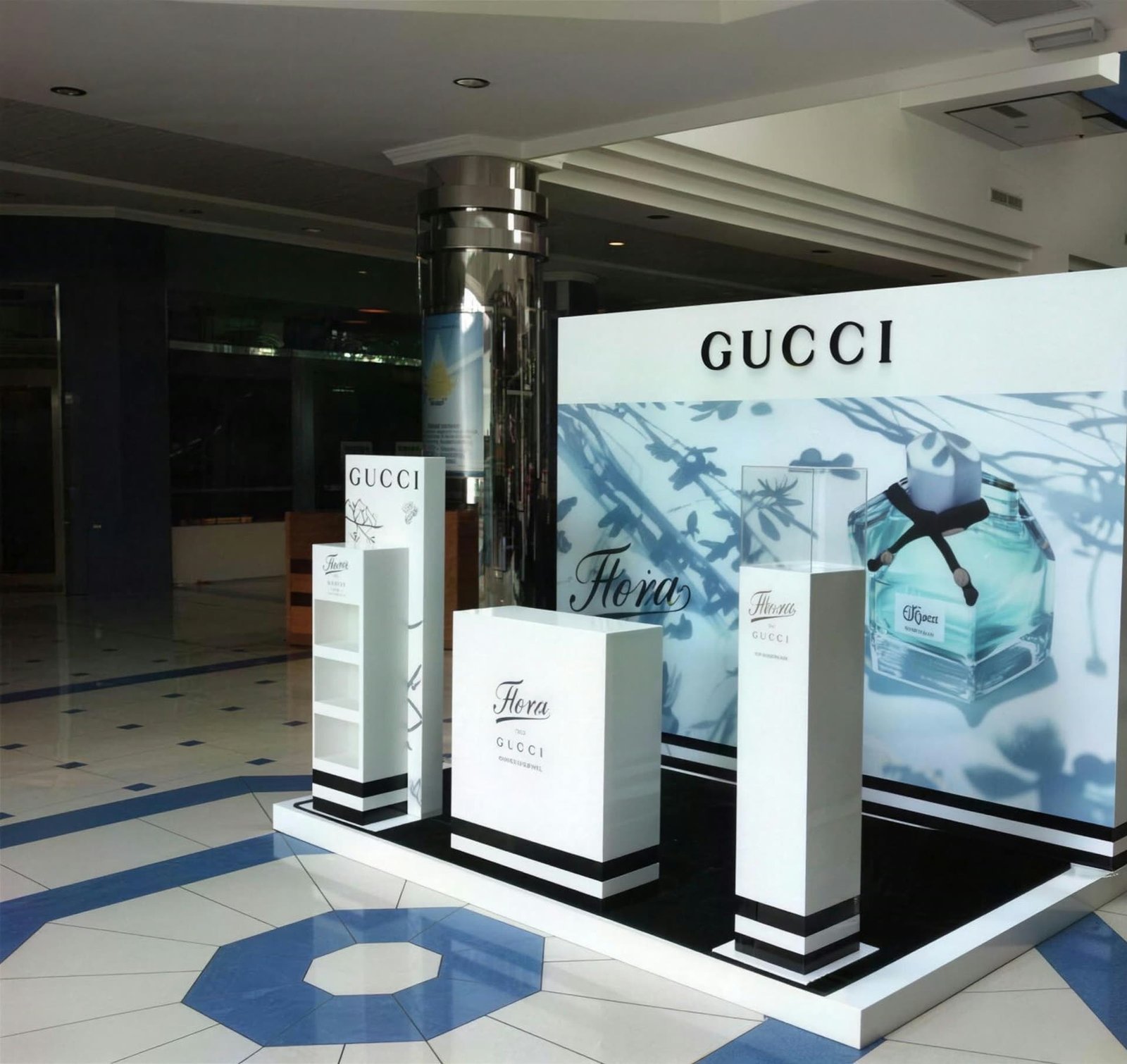
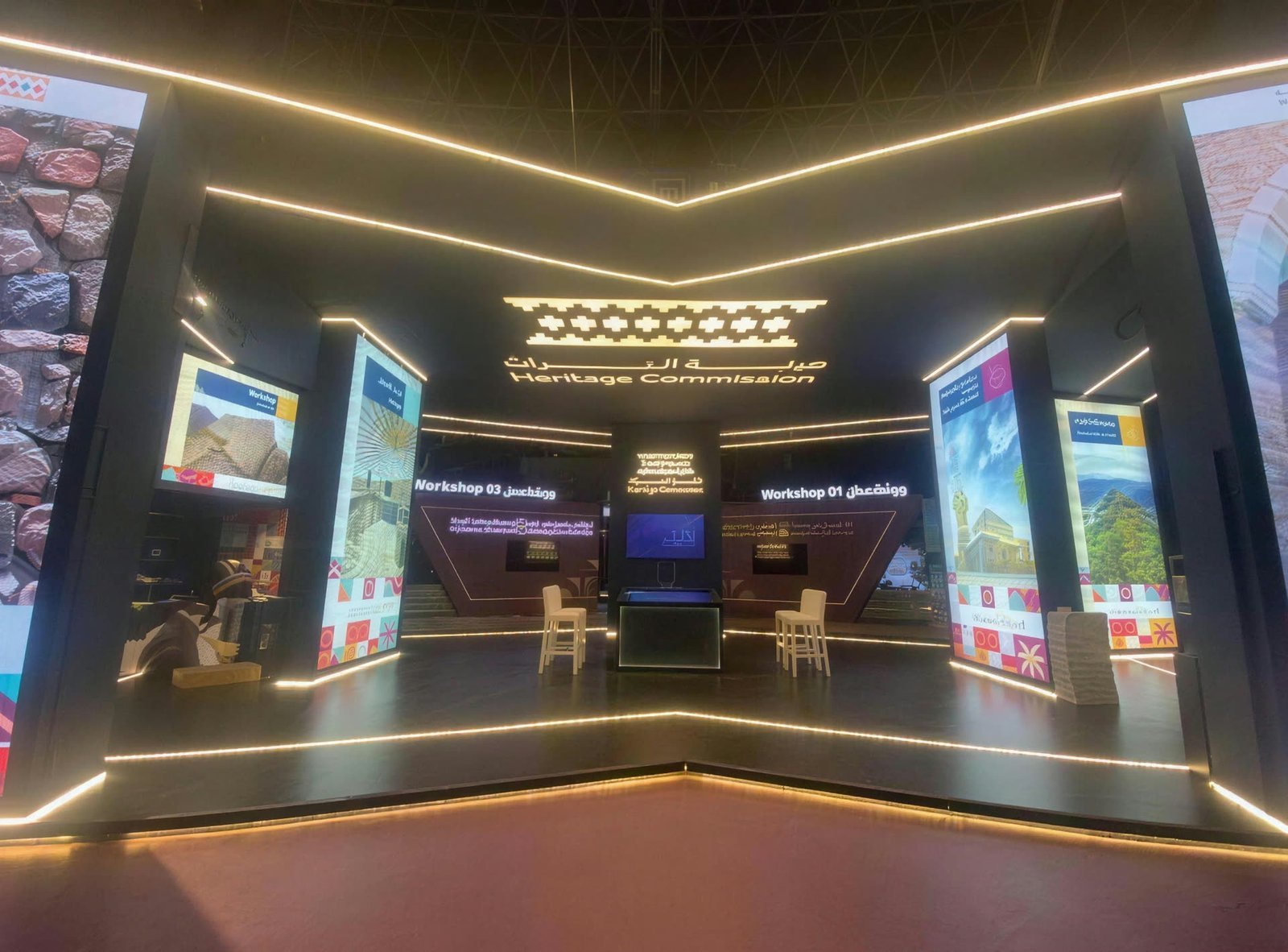
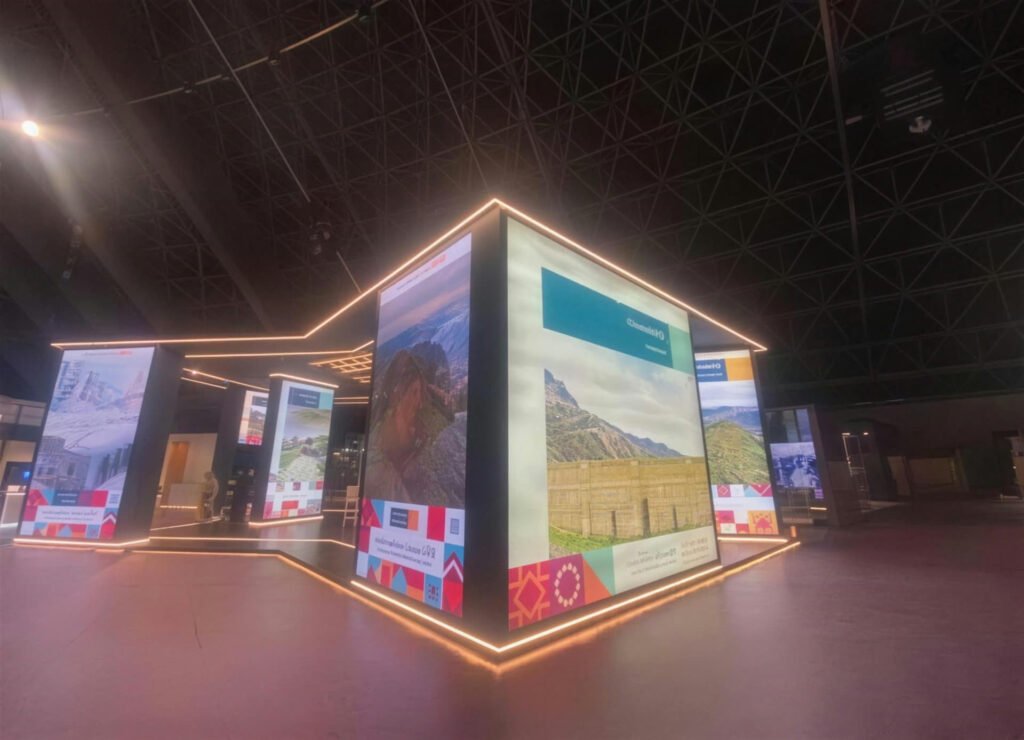
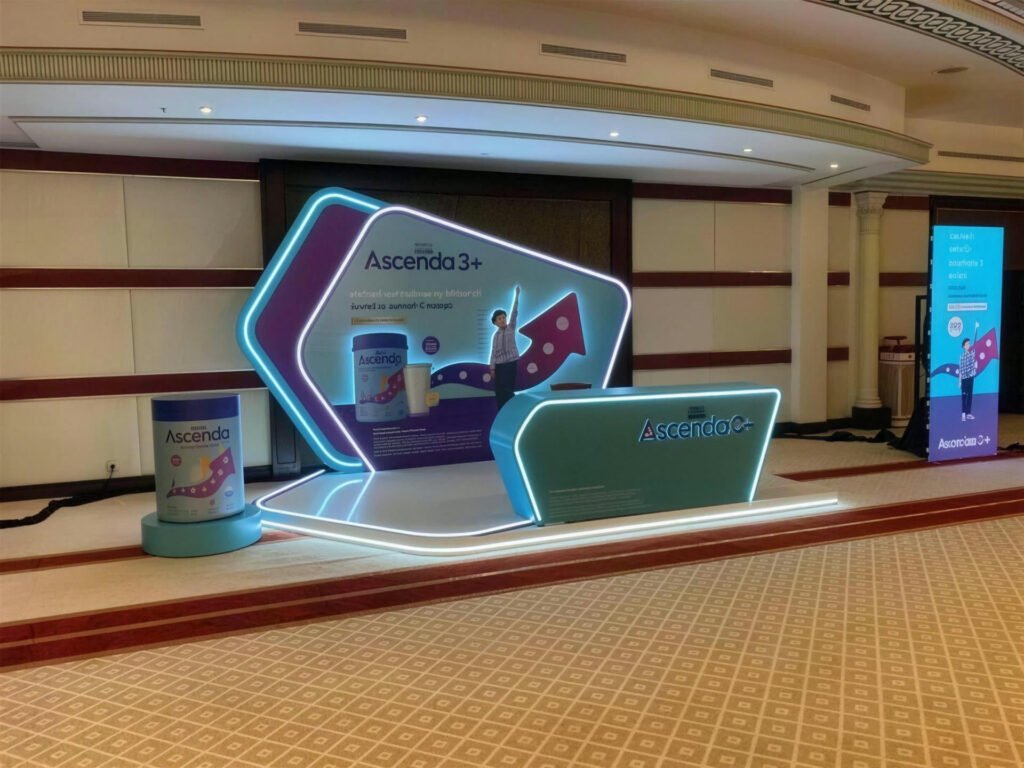
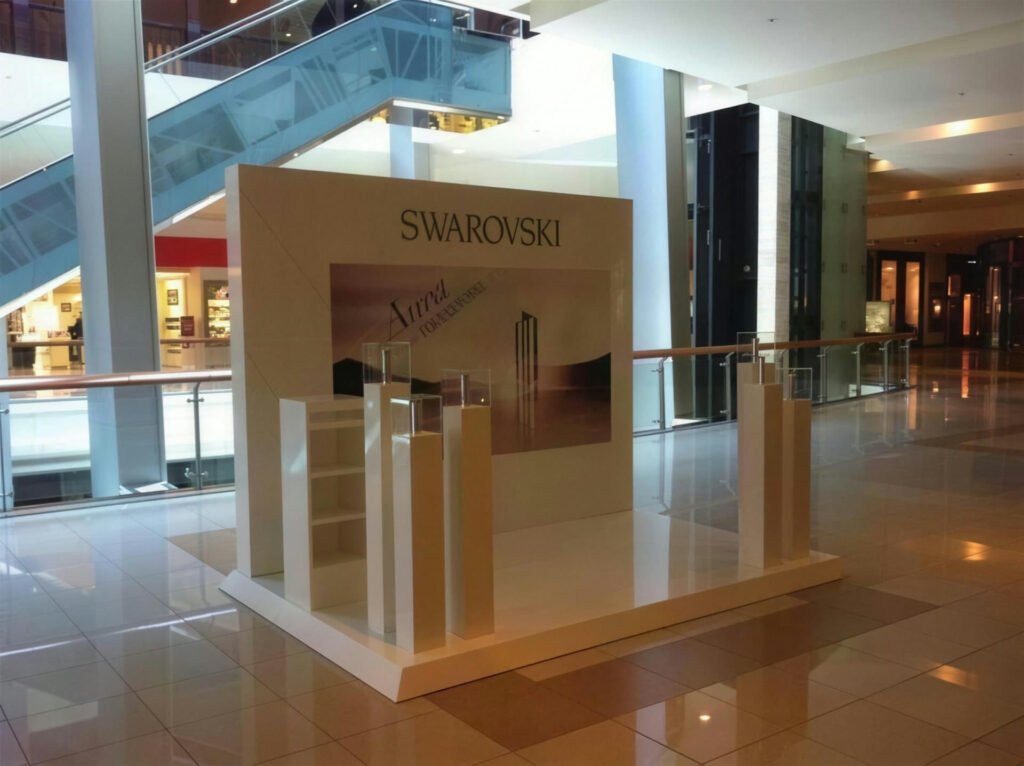
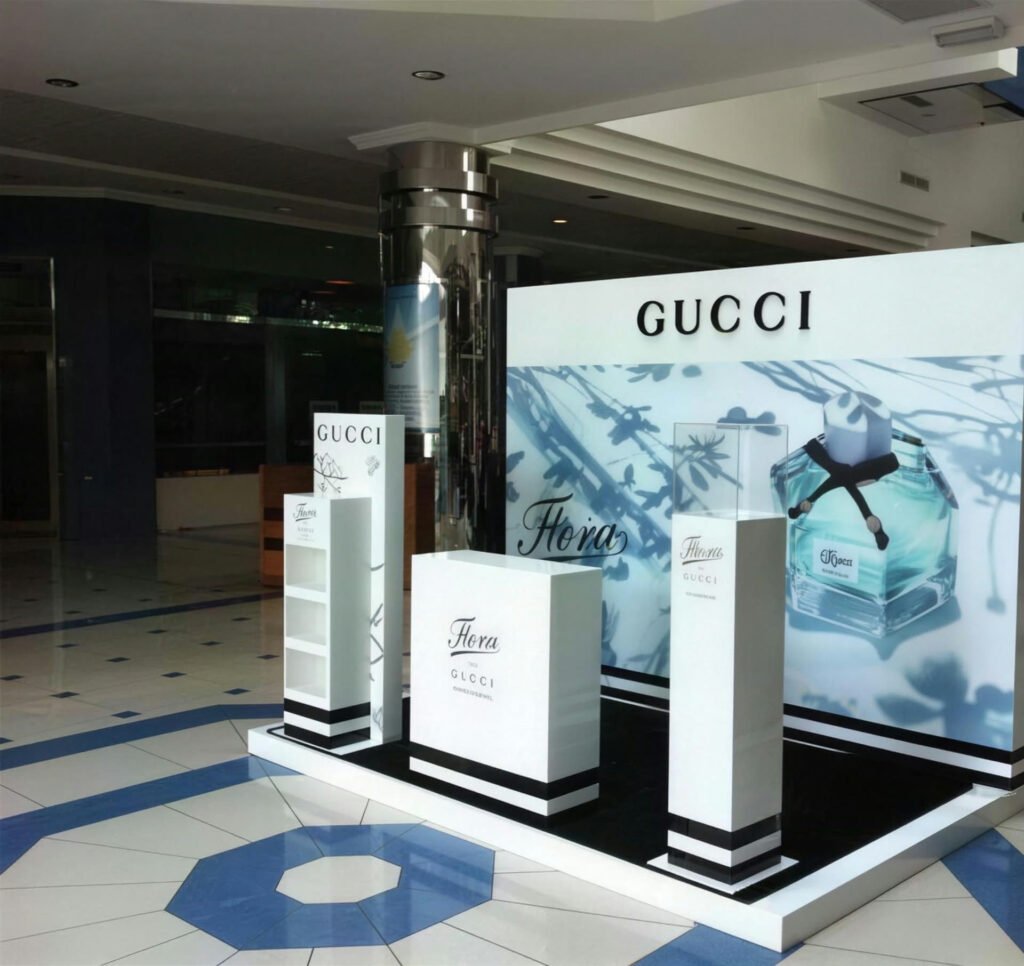
Stands we designed, built and installed
Photographed on site after handover, no renders.
Have a project and want a real number?
Send the area, the date and the city, and we come back with an itemised quote within 24 hours. No commitment, and no vague all-in price.

