
Wall Stickers
Wall Stickers and Murals for Commercial Spaces
Wall stickers are the fastest way to change how a room feels without rebuilding it. A plain painted wall in a cafe becomes the photo spot guests share, a clinic corridor becomes calmer, a classroom fills with letters and colour, and a gym gains the line every member reads on the way in. There are three ways to do it: printed vinyl, cut lettering and a full mural joined in panels. This page explains how each one behaves, what the surface underneath has to be, and how we measure, proof and install, so the quote you receive matches the room you actually have.
Printed, Cut or Mural: Three Ways to Dress a Wall
Most requests arrive as a sticker for the wall, yet three different products hide behind those words. Each is printed, cut, priced and installed differently, so naming the right one is the first step of any wall graphics job and the first thing we ask when a photo arrives.
Printed vinyl pieces
A logo, a photograph, an illustration or a block of colour printed on adhesive film, protected with a laminate and either kept as a clean rectangle or cut around its outline. This is the choice for anything with full colour, gradients or a photo, from a highlighted dish behind a counter to a large brand image in a showroom, and it is the most common request we receive from shops and cafes.
Cut lettering and shapes
Letters, icons and patterns cut from coloured film with no background, so the paint shows between them and the result looks as if it were painted by hand. It suits a slogan above a counter, values along a corridor, class names in a school or a motto in a gym. Each colour is a separate layer cut on its own, so photographs and gradients are not possible with this method. Letters can come in Arabic and English together, in the typeface of your own identity.
A full mural
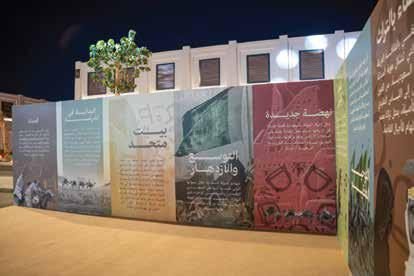
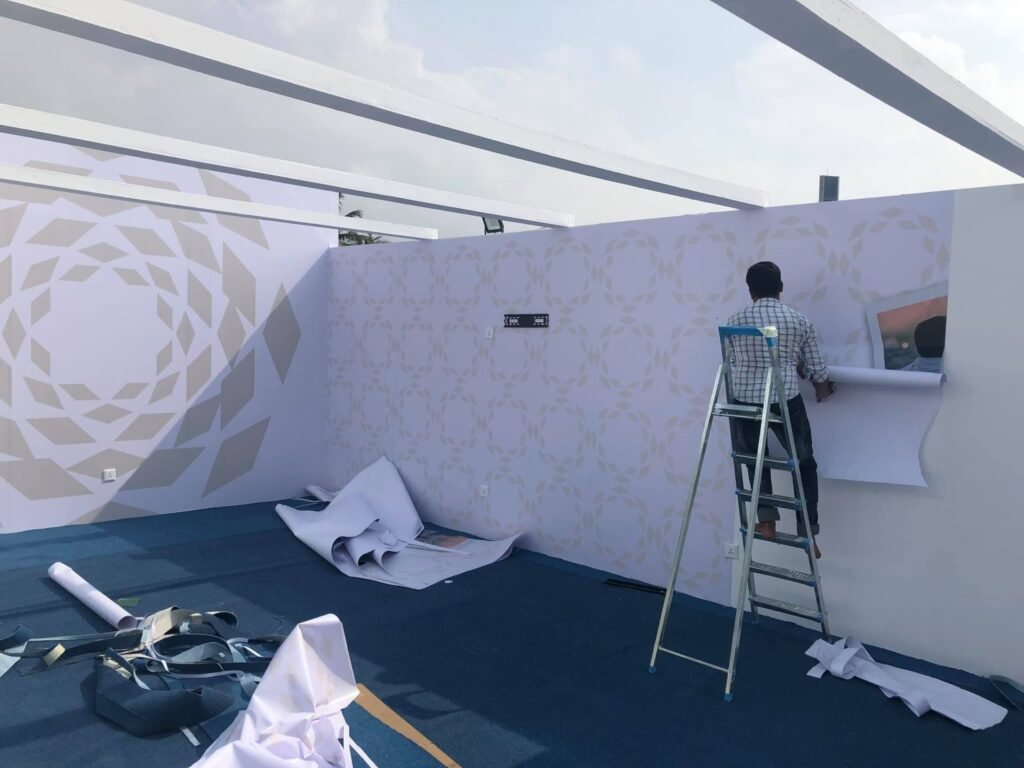
A printed image that runs from edge to edge and from floor to ceiling, produced in panels and joined on site. It can be a city skyline, a hand drawn illustration, a pattern taken from your identity or a scene for children. The joins are planned on the artwork itself, so that no seam ever cuts through a face, a product or a line of text.
The surface underneath
The same print behaves differently on smooth emulsion, textured paint, concrete, block, gypsum board or tiles. Fresh paint, damp patches and flaking layers are the usual reasons a graphic lifts, which is why we look at the wall itself before anyone talks about artwork or colours. Tiles and glossy surfaces also need every trace of residue cleaned away before film will hold.
What Gets Made and Printed Around the Wall
A dressed surface is rarely the only thing a space needs. These services work under the same roof and from the same approved artwork.
Printing & Promotional Gifts
Menus, table cards and window posters that carry the same artwork as the mural, from the same print service.
Acrylic & Wood Fabrication
A raised acrylic or wood logo mounted over a printed backdrop, made in our factory for the depth vinyl alone cannot give.
Promoters & Brand Ambassadors
Hosts for the opening day when the new interior is revealed, greeting guests in front of it with a supervisor.
Branding & Creative Studio
Illustrations and patterns drawn for your space, so the mural is designed for its surface rather than stretched from a logo file.
Digital Solutions
A QR code inside the design that opens the menu, a booking page or a feedback form, tested on the printed proof.
Experiences & Events
A reopening, a launch evening or a seasonal theme built around the newly dressed space.
Social Media & Content
Photographs and short videos of the finished room, ready for the post that announces it on the day.
Custom Exhibition Stands
When the same look travels to a show, the stand and its graphics come from the same artwork and the same team.
Wall Graphics for Every Kind of Commercial Space
The venue decides the film, the laminate and the design. These are the spaces we dress most often, and what each one asks of the print.
Cafes and restaurants
The wall behind the counter or along the seating is often the one guests photograph and post, so it carries the brand at its strongest. Near the kitchen, steam and grease call for a laminate that takes daily wiping, and under pendant lights a matte finish keeps the image readable from every table in the room.
Shops and showrooms
In a shop the graphic sells: a lifestyle image behind the product, the collection name, a seasonal campaign that changes several times a year. A removable adhesive lets each campaign come down cleanly, and a showroom gains a sense of scale from large images that a framed poster could never give, however big the frame. When the season changes, we remove the old campaign and fit the new one in the same visit.
Clinics and medical centres
Waiting areas and corridors benefit from calm imagery, soft colour and coloured bands that guide a patient to each department. Surfaces in a clinic are cleaned often with strong products, so the laminate is tested with the clinic's own cleaning product on a sample before the full run is printed.
Schools and nurseries
Classrooms and corridors take letters, animals, maps and themes that teach as well as decorate, placed at the eye level of the children who use them. The print is laminated so that it survives small hands and frequent wiping, and every edge is finished so that no corner invites picking.
Gyms and studios
A gym uses graphics for energy: a motto at the entrance, zone names, movement illustrations beside the equipment. At body height the film meets sweat, bags and the odd knock from a weight, so a harder wearing laminate is worth it in the zones where people actually train.
Offices
A single feature in an office, such as the logo behind reception or a pattern in a meeting room, is a wall stickers job in its own right. When the brief grows into a plan for every zone of the office, from reception to corridors, glass and floors, it becomes a branding project with its own planning stage.
From a Photo of the Wall to the Last Panel
A good result is decided long before the film touches the paint. These are the stages of every wall graphics project, in the order they happen.
Photos and a site visit
You send photos of the space and its rough measurements, then our team visits to measure properly and note everything that interrupts the surface: doors, switches, sockets, air conditioning grilles, skirting, columns and the direction of both daylight and artificial light. If drawings of the space exist, send them too, because they help us plan the panels before the visit.
Checking the surface
We look at the paint, the texture and the condition of what lies underneath, and carry out an adhesion test with the chosen film. A freshly painted wall must be fully cured before any film goes on, because paint that is still releasing solvent pushes the vinyl away in bubbles that keep coming back.
The design on a photo of your wall
The artwork is placed on a photo of your actual room at its true proportions, so you see how it sits around the door, where the panel joins fall and how it reads from the entrance and from the seats, before anything is printed.
A sample under your own lights
For a full mural or a sensitive brand colour, we print a sample on the chosen film and laminate and look at it in the room itself. Daylight, warm spotlights and white office lighting all change how a colour reads, and the sample settles it.
Printing, laminating and cutting
The approved file is printed in our factory, laminated, cut to shape and divided into numbered panels in the order they will be fitted. Lettering is weeded and taped so it transfers in one piece. Printed items are ready in 1 to 5 working days after artwork approval.
Installation by our team
Our installers clean and prepare the surface, align the first panel to a level line, overlap or butt the joins as planned and trim neatly around every fitting. When the venue is open by day, we install outside working hours when needed, and leave care notes for the cleaning team. Before we leave, the room is cleared of offcuts and backing paper.
How Long a Wall Graphics Job Takes
Printed panels and lettering
Ready in 1 to 5 working days after the artwork is approved.
Site survey
Booked at a time that suits the venue, as soon as you send the location and photos.
Installation
On the date agreed in the quote, outside working hours when needed.
Your quote
An itemised quote within 24 hours of receiving photos and rough measurements.
What Moves the Quote for Printed Wall Stickers
We publish no price list, because every wall is a different case. These are the lines that move the number, so you can compare offers on the same basis, wherever they come from.
Area and coverage
A logo in the centre of a large wall costs far less than the same wall printed edge to edge. The quote measures the area actually printed, not the size of the room, which is why cut lettering and a full mural on the same surface are priced so differently.
Film and adhesive
Standard film for smooth paint, a conformable film for textured or rough surfaces, and a removable adhesive for graphics that will change. The film is chosen by the surface and by how long the graphic should stay, not by price alone.
Laminate and finish
A matte or gloss laminate protects the print and changes how it reads under light. Areas that are touched, cleaned or knocked often need a harder wearing laminate, while a feature high above head height may need a lighter one.
Design work
Placing your existing logo is simple. An illustration drawn for the space, a pattern built from your identity or a mural composed around doors and windows is design time, and it is quoted as its own line. Either way, you see the design on a photo of your space before you approve it.
Site conditions
Working at height, access for equipment, many fittings to cut around, installation outside opening hours and the removal of old graphics before the new ones all affect the installation line.
Several branches
When the same design goes into many branches, the artwork is adapted once for each layout and printed together, and the installation is scheduled branch by branch so that no branch has to close.
Send photos of the space, rough measurements, the type of venue and your artwork if you have it, and an itemised quote reaches you within 24 hours. Request a quote or message 0567069088 on WhatsApp. If the same graphics are heading to an exhibition stand this year, our guide to exhibition stand cost in Saudi Arabia shows how that budget is built line by line.
Indoor or Outdoor, and Where Other Pages Take Over
Most wall graphics live indoors, out of the sun and the rain, where standard film and laminate behave as they should. An outdoor wall is a different job: sun, heat, dust and the occasional storm work on the print every day, so it needs outdoor film, outdoor laminate and a surface that is sound, sealed and smooth enough to hold it. Rendered or block exteriors with deep texture may take a conformable film, or a printed panel fixed to the surface may serve better, and we say so after the site visit rather than after the first summer. Anything fitted to a building facade also follows the rules of the landlord and the municipality, which the property owner arranges. Product labels, seal stickers and roll labels belong to our sticker and label printing page, and hanging fabric or flex prints for a hall or an event to banner printing. Printed panels on the fence around a building site are covered under construction hoarding graphics, and a logo or name that stands out from the surface with real depth under 3D letters and props.
Matte or Gloss, Removable or Permanent: Choosing the Film
Five questions decide the film and the laminate for wall stickers. Answer them before the design is final, and the graphic behaves as planned for as long as you need it.
How long should it stay?
A seasonal campaign needs a removable adhesive that peels away cleanly when the season ends. A permanent feature takes a stronger adhesive that holds for longer, and still comes off later with warmth and patience. Tell us which before the film is ordered, because the adhesive cannot be changed after printing.
What light falls on it?
Gloss deepens colour but reflects spotlights and windows, so part of the image disappears from some angles. Matte reads evenly from anywhere in the room and photographs without hot spots, which is why most photo spots and menu features are matte.
How rough is the surface?
Smooth emulsion takes standard film. Textured paint, bare concrete and block need a conformable film that is warmed into the texture during installation; otherwise the film bridges the hollows without touching them and lifts soon after.
Who will touch it?
In a corridor, a nursery or a gym, hands, bags and trolleys meet the graphic every day. A harder wearing laminate and carefully finished edges keep it looking new where contact never stops. In a school, the lower part of the wall, where children lean and play, deserves the strongest protection of all.
Will the design change?
If part of the message changes often, such as a monthly offer or a seasonal theme, we design a fixed base with a replaceable panel, so you print the small part again and leave the rest of the wall in place.
What Goes Wrong on a Wall and How We Prevent It
Each of these shows up soon after installation if nobody asked the right question at the start, and each is prevented by one simple step before printing.
Bubbles on fresh paint
Paint that has not cured releases solvent behind the film and raises bubbles that return each time they are pressed flat. The answer is patience: the painting contractor confirms the surface is ready, and we test adhesion before we install.
A join through a face
A mural printed without a panel plan can split a face, a product or a word across two panels. The joins are drawn on the proof and moved to quiet parts of the image before printing. Where a join cannot be avoided, the overlap faces away from the main light so its edge does not catch the eye.
Glare that hides the image
A gloss finish facing a window or a row of spotlights turns part of the graphic into a bright patch. A matte laminate, chosen with the lighting in mind, keeps it readable from every angle.
A colour that clashes with the paint
A brand colour printed next to a painted surface can look wrong if nobody compared the two in the room. A sample viewed under the venue's own lights settles it before the run, not after. Where needed, we suggest a shade closer to the paint or a white border that separates the two.
Paint that comes off with the graphic
Weak or poorly bonded paint can lift when an old graphic is removed. A removable adhesive for temporary designs, a surface check before installation and careful warm removal by our own team protect the paint underneath.
A blurred image at scale
A small logo or a web image stretched across a large wall looks soft from a few steps away. The artwork is checked for resolution at the distance people will see it from, and redrawn as vector artwork where needed.
Printed in Our Factory, Installed by Our Own Team
Design, large format printing, lamination, cutting, fabrication in our own factory and installation by our own team sit under one roof, so the person who measured your wall is part of the team that later fits the graphics on it. One team also means one point of contact from the first photo to the care notes. We have worked for Ganache, Cartoon Network, Kinan, Saudia Holidays and Oceanera.
Graphics From Our Work
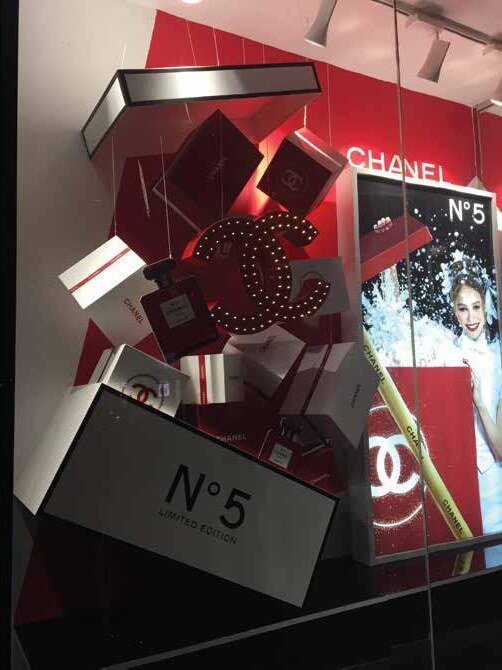
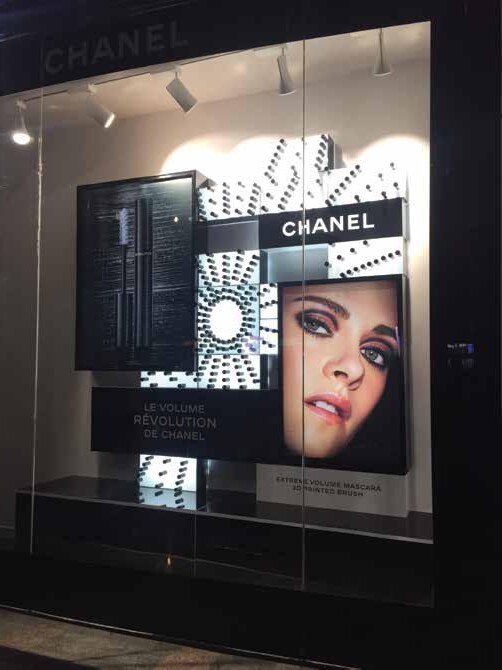
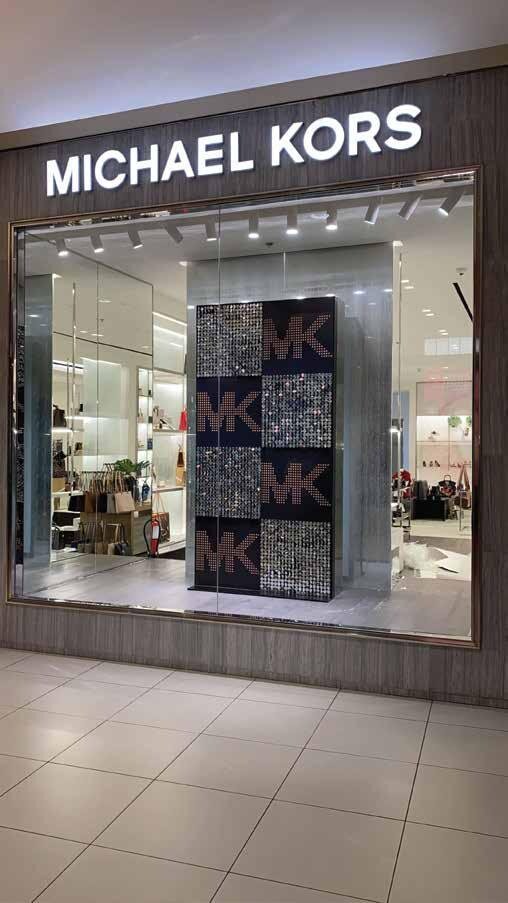
Walls, windows and stands we dressed with graphics we printed and installed.
Questions About Wall Stickers
What venue owners and facility managers ask before they dress a space.
What is the difference between wall stickers, decals and a mural?
Wall stickers and decals are usually single pieces: a printed logo, an image cut to its outline or lettering cut from coloured film. A mural covers the whole surface in printed panels joined on site. All of them use adhesive film; the difference is the coverage, the production and the installation time.
Can graphics go on a freshly painted wall?
Only once the paint has fully cured. Fresh paint keeps releasing solvent, and film applied too early bubbles and lifts. Your painting contractor can confirm the surface is ready, and we carry out an adhesion test with the chosen film before installation.
Will removing the graphics damage the paint?
On sound, well bonded paint, a removable adhesive comes away cleanly, and a permanent one comes off with warmth and care. Weak or flaking paint can lift with any adhesive, which is why we check the surface first and recommend removable film for anything temporary.
Can you install on textured paint, concrete or block?
Yes, with a conformable film that is warmed into the texture during installation. Very rough or crumbling surfaces may not hold any film well, and in that case we suggest a printed panel fixed to the surface instead.
Do you make graphics for an outdoor wall?
Yes, with outdoor film and outdoor laminate made for sun, heat and dust, on a surface that is sound and sealed. Anything on a building exterior also follows the landlord and municipality rules, which the property owner arranges before installation.
Are wall stickers suitable for schools and nurseries?
Yes. We laminate the print so it takes wiping, finish the edges so nothing invites picking, and place learning themes at the eye level of the children. The design can include letters, colours and maps chosen with the teachers and the school management.
How do you make sure the design fits around doors and sockets?
We measure on site and place the artwork on a photo of your actual space at true proportions. You see where every door, switch and join falls, and you approve that layout before printing begins. If something on site changes after approval, such as a new socket, we adjust the layout before installation.
Should we choose matte or gloss?
Matte for most interiors, photo spots and anything facing windows or spotlights, because it reads evenly without glare. Gloss deepens colour and suits a feature in soft, indirect light. A sample held up in the room settles the choice.
How long does the whole job take?
Printed panels and lettering are ready in 1 to 5 working days after the artwork is approved. Installation follows on the date agreed in the quote, and we work outside opening hours when needed so the venue stays open to its customers.
Do you install in Riyadh, Jeddah and other cities?
Yes. Our own team surveys, installs and comes back for changes, and we have installed work in 30+ cities across the Kingdom. Send photos, rough measurements and the location on WhatsApp at 0567069088 or through the quote page, and an itemised quote follows within 24 hours.
A Blank Surface Waiting for Its Wall Stickers?
Send photos of the space and rough measurements. Within 24 hours you have an itemised quote that names the method, the film, the laminate and the installation date.
More specific pages on this
If your question is narrower than this page, these are written for one question each.

