
Experiential Marketing in Saudi Arabia
Experiential Marketing in Saudi Arabia People Live, Share and Remember
Experiential marketing is marketing people take part in: instead of reading about a product, they taste it, hold it, step inside its story or play a game built around it, and they leave with a memory they connect to your brand. In Saudi Arabia it shows up as a tasting counter in a supermarket, an immersive room at a heritage exhibition, a pop up in a mall during Ramadan or a game zone at a National Day celebration. This page explains in plain words why experiential marketing works, which format fits which goal, how to plan an experience before, during and after the day, and how to measure what it returned.
Why Experiential Marketing Sells
An advert asks for attention. Experiential marketing earns it, because the visitor does something, and what people do they remember far better than what they are told. These are the reasons brands come back to it season after season.
Memory that lasts
A message read on a billboard fades within the day. A product held in the hand, a scent tried on the wrist or a story walked through in a darkened room is stored as an event the visitor lived. Experiential marketing turns your key message into that event, so it is recalled weeks later at the shelf or in a meeting, when the decision is actually made.
Sharing that travels
Visitors in the Kingdom film and post what surprises them, often before they have left the space. A moment designed to be photographed, such as a reveal, a branded frame or a result on a big screen, travels far beyond the people who were there. Immersive brand experiences built around that moment are seen by many more people on their phones than ever walk through the door.
Trying before buying
The biggest doubt a customer has is a simple one: will this product suit me? Tasting the coffee, feeling the fabric, testing the device or sitting in the seat removes that doubt on the spot. For a new product, or a brand entering the Saudi market, that first trial is often worth more than any amount of explaining, which is why sampling sits at the heart of so much experiential marketing in the Kingdom.
Data people choose to give
An experience gives a natural reason to leave a name: a photo sent to the phone, a result, a prize draw, a demonstration booked for later. Captured with clear consent, those contacts let the sales team pick up where the experience ended, and they turn experiential marketing from a cost into real sales opportunities.
The Teams Behind Experiential Marketing
Experiential marketing draws on structure, print, people, content and data at the same time. With us they come from teams under one roof that are used to working together.
Printing & Promotional Gifts
Signs, leaflets, coupons, packaging for samples and the gifts visitors carry home. Printed items are ready in 1 to 5 working days after artwork approval.
Acrylic & Wood Fabrication
Counters, plinths, display stands, frames and the built set an experience stands in, cut on CNC and laser machines in our factory.
Promoters & Brand Ambassadors
Hosts trained on your product and your message, who invite people in, guide them through the experience and record leads, led by a supervisor.
Branding & Creative Studio
The idea, the story the visitor walks through and the look of every surface, screen and photo frame, true to your identity.
Digital Solutions
Interactive screens, registration on a tablet or a QR code with a consent line, and a database you receive after the event.
Experiences & Events
The wider programme experiential marketing can sit in: a launch, an opening, a festival space or a national occasion.
Social Media & Content
Clips and pictures captured during immersive brand experiences and edited for your channels while it is still running, so the content never waits for the end.
Custom Exhibition Stands
When the experience lives at an exhibition, the stand is planned around it from the first sketch, so the experience gets the best spot on the floor.
Formats of Experiential Marketing and What Each One Does
Experiential marketing is not one format. Each format below does a different job, and most good campaigns combine more than one around a single idea.
Immersive rooms and projection
A space where screens or projection cover the walls and the visitor stands inside the story: a heritage site brought back to life at a government exhibition, a walk inside an engine at an industrial launch, a stroll through a new district for a property developer. Immersive brand experiences of this kind are strongest for feeling and scale, and they need controlled light and a host at the door to run the groups.
Interactive installations and games
A wall that reacts to movement, a quiz on a screen, a game with a leaderboard, a challenge a visitor completes to win a prize. A bank at a family festival or a telecom brand at a gaming event uses them to hold a crowd and turn watching into taking part. In experiential marketing the game has to be short, easy to learn from watching the person ahead, and tied to the one thing the brand wants remembered.
AR and touch screens
Augmented reality places a product or a character over the real scene on a phone or a tablet, so a furniture brand can show a sofa in the visitor's own living room or a car brand can open a bonnet that is not there. Touch screens and touch tables let visitors explore a range, a map or a set of options at their own pace. Both suit detail rather than spectacle, and both sit well inside immersive brand experiences on a stand or in a showroom.
Sampling and tasting
The most direct form of experiential marketing: the product itself in the hand or in the mouth. A coffee roaster at a weekend market, a dairy brand in a supermarket aisle, a fragrance brand at a mall counter. It works when the product wins on taste, texture or scent, and it fails when the sample is too small to judge or the promoter cannot answer a simple question.
Hands on sessions
Short guided sessions where visitors make, mix or use something with the brand's help: a skincare routine with an expert, a cooking demonstration with a new ingredient, a coding session for students with a technology brand. They are slower than a passing experience and reach fewer people, but each visitor leaves with a skill tied to the product, which builds a trust no advert can and makes these sessions the quiet workhorse of experiential marketing for beauty, food and technology brands.
Pop ups and seasonal experiences
A temporary space that opens for days or weeks: a mall pop up for a launch, a Ramadan majlis, an Eid gift corner, a zone in the winter season, or an experience for National Day or Founding Day. Seasons in the Kingdom bring crowds already in the mood to go out, and seasonal experiential marketing that matches that mood borrows its energy. The build has to go up and come down quickly, and it often travels to more than one city.
How to Plan Experiential Marketing Step by Step
The order matters. Most experiential marketing that impresses on the day and changes nothing afterwards skipped the first two steps and went straight to the build.
The objective
Decide in one sentence what the experience must change: trial of a new product, awareness in a new city, leads for the sales team, loyalty among existing customers. Each objective leads to a different format and a different measure, and experiential marketing without one ends up judged on how busy the space looked.
The audience
Who exactly should walk in: families on a weekend, young people at a festival, buyers at a trade show, officials at a conference, shoppers in a hurry. Their age, language, time and mood decide how long the experience can last, how it is explained and what reward makes them stop.
The location
Go where the audience already is rather than hoping they come to you: a mall atrium, a supermarket aisle, an exhibition hall, a university, a festival ground, a corporate lobby. Each place has its own rules, hours and approvals, and in experiential marketing the location often decides the format more than the idea does.
The story
Write the experience as a short script before anything is drawn: how the visitor is invited, what they see from a distance, what they do, what happens when they do it, and what they leave with. A good script fits in a few lines and carries a single message from start to finish.
The moment to share
Plan the one moment people will want to film or photograph: a reveal, a branded frame, a result on a big screen, a product they made themselves. Place it where the light is good and the logo is in shot, and make sharing easy. This moment is what carries immersive brand experiences far beyond their day and their place.
The staff
Hosts decide whether experiential marketing works on the floor. Choose people who suit the audience, train them on the product and the script, give them a supervisor and plan their shifts around peak hours. A host who explains the experience in one sentence and records a lead politely is worth more than any screen.
The Experiential Marketing Journey: Before, During and After
Before
Teasers on social media, invitations to key customers, signs that point the way and a reason to come: a launch date, a gift, a session to book. The journey starts before anyone reaches the space.
During
The invitation at the edge of the space, the experience itself, the moment to share and the consent to stay in touch, run by hosts and logged as it happens.
After
A thank you message, the photo or result sent on, an offer or a meeting, and the leads passed to sales while the memory is still fresh.
The timing
An itemised quote within 24 hours of the brief, and printed items in 1 to 5 working days after artwork approval. The build depends on the format, and the quote states the date.
What Shapes the Cost of Experiential Marketing
We publish no price list, because every experiential marketing brief is priced from its idea, its places and its days. These are the lines that push a quote up or down, and knowing them lets you read any offer clearly.
The format and the build
A sampling counter is a small build; an immersive room with walls, a roof, controlled light and ventilation is a large one. The more of the experience is built rather than printed, the more the structure weighs in the quote.
Technology and content
Screens, projectors, sensors, headsets and cameras, hired or bought, and the game, film or app made for them. Content made for immersive brand experiences costs more than content adapted from an advert, and it is the part the visitor actually meets.
Locations, days and hours
Each mall, store, festival or city adds set up, shifts and supervision. A short run in a few busy places can achieve more than a wide spread across quiet ones.
Hosts and supervision
The number of hosts follows the hours, the stations and whether they also record leads or run sessions. A supervisor leads the team and covers any absence.
Samples, gifts and printed items
Samples, packaging, coupons and gifts are priced by quantity and finish. Order them to the expected number of visitors: a surplus sits in a store room, and a shortage closes the experience early.
Data, content and reuse
Registration, consent wording, the link to your CRM and content edited for social media are lines of their own. A build designed to travel costs more the first time and less every time it returns, and storage between events is a named line.
Tell us the product, the objective, the audience, and the places and dates you have in mind. An itemised quote follows within 24 hours. Request a quote or message 0567069088 on WhatsApp. When the experience sits on an exhibition stand, our guide to exhibition stand cost in Saudi Arabia shows how that budget is built line by line.
Consent and Privacy: Data People Agree to Give
Data capture is where experiential marketing pays back, and it is also where it can go wrong. In the Kingdom, the personal data protection law expects people to know what is collected, why, and who will contact them, and to agree before it is collected. In practice that means a clear consent line on the tablet or QR form, only the fields you need, no boxes ticked in advance, a named owner of the data on your side, and a way for people to ask to be removed. Photos and clips of visitors used in your content need the same care, and children need a parent's agreement. Check the wording with your own legal adviser; we build the registration flow around what you approve and hand the database to you alone. Venues add their own rules on sound, queues and data collection, and the organiser or the mall management decides. Each tool inside experiential marketing has its own page. Screens, touch tables and immersive corners are on interactive brand experiences, light shows cut to a facade or a model on projection mapping in Saudi Arabia, branded quizzes and leaderboards on interactive games for events, branded pictures sent to the phone on photo booth rental, and tasting counters with trained promoters on product sampling in Saudi Arabia. Launches, openings and festival spaces as a whole sit with our experiences and events service. Running an activation on the ground, day by day, is covered on our brand activation agency page.
How to Measure Experiential Marketing
Agree the measures for your experiential marketing before the build, because each one has to be designed in from the start: a counter, a form, a code. These cover most objectives.
Visitors and footfall
How many people passed, how many stopped and how many took part. Hosts count with a hand tally or the software logs each session, and the share of passers who took part tells you whether the invitation worked or needs changing from the second day.
Dwell time
How long people stayed inside the experience. Longer is not always better: a tasting should be quick, a hands on session naturally longer. Compare dwell time with what the script planned, and look at where people dropped out.
Samples and trials
Samples handed out, products tried, sessions completed. Matched with stock records or coupon redemptions, they show how many trials turned into a purchase. A single campaign of ours ran to 500K+ pieces.
Leads captured
Contacts recorded with consent, and what happened to them next: calls made, meetings booked, deals closed. This is the measure sales teams care about most in experiential marketing, and it only works if someone receives the data the day after the event.
Content and reach
Clips and pictures posted by the brand and by visitors, with their views, shares and mentions. This is where experiential marketing multiplies: one of our campaigns passed 10M+ in reach, far beyond the people who stood in the space.
Where Experiential Marketing Goes Wrong
Each of these is easy to prevent while experiential marketing is being planned, and costly to fix once the doors open.
An idea with no objective
The experience looks great in photos, but nobody agreed what it should change, so nobody can say whether it worked. Write the objective and its measure before the first sketch.
Technology chosen before the story
A headset or a projection is picked because it impressed someone at another event, and the brand message is squeezed in afterwards. Start from the message and choose the tool that carries it.
The wrong place for the audience
A premium experience in a busy discount aisle, or a family game at a business conference. Match the location to the people you want, even if it means fewer visitors.
Waiting nobody organises
The experience works, the waiting crowd spills into the aisle and the venue asks you to stop. Keep the waiting line within your own footprint, put something in front of it to watch, and have hosts register names during the wait.
No moment worth sharing
Visitors enjoy it but find nothing to film, or the logo is out of frame, or the light is poor. Design the sharing moment as carefully as the experience itself.
Leads with no follow up
Names collected without consent, left on a tablet and never sent to sales. Before any content is built, decide which fields you need, how consent is worded and who calls the names within days.
From the Idea to the Floor Under One Roof
Concept, design, CNC and laser cutting, joinery, acrylic, large format print, content, and hosts with their supervisors all sit under one roof with us, so the team that writes the experience is the team that builds and runs it. Experiential marketing depends on that link between the idea and the floor. Every set we build for an experience is made in our own factory and installed by our own team, and we have worked in more than 30 cities. We have worked for the Heritage Commission, Saudia Holidays, Cartoon Network, Swarovski and Gucci Flora, and one of our campaigns has passed a reach of more than 10 million.
Interactive Experiences From Our Work
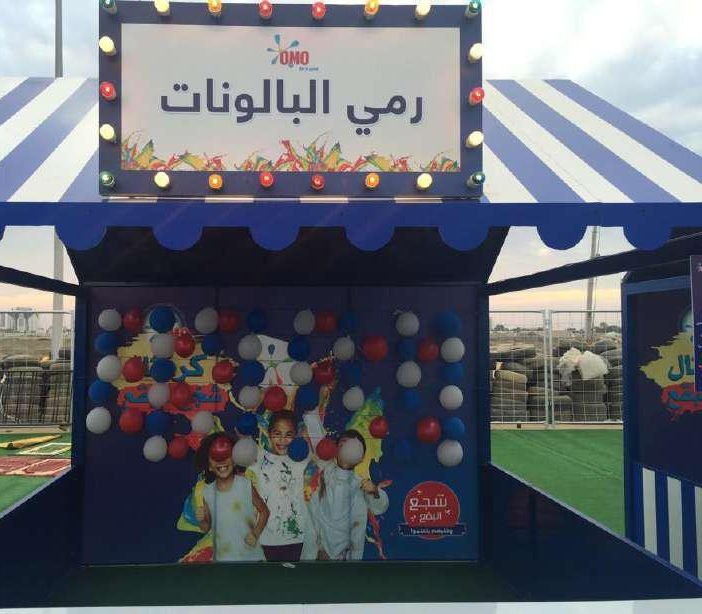
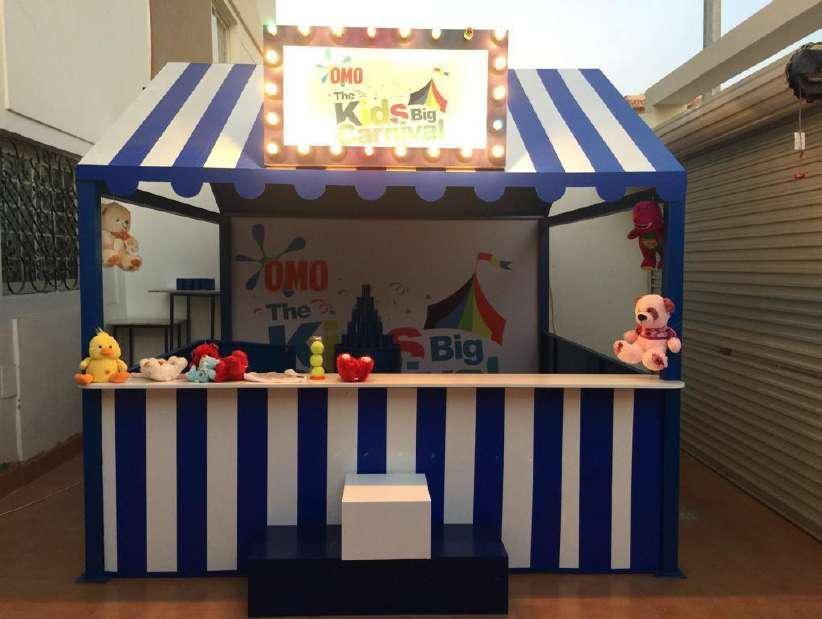
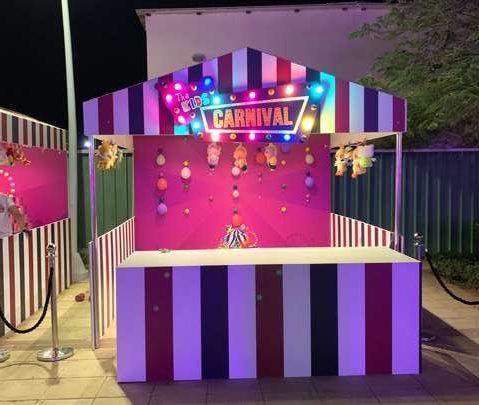
Games and interactive corners we built for brands and events.


Questions About Experiential Marketing
What marketing teams ask before they commission experiential marketing in Saudi Arabia.
What is experiential marketing?
Experiential marketing is marketing that people take part in rather than only watch or read. Visitors taste, touch, play, make or step inside something built around a brand, so the message is remembered as an event they lived. Common formats include immersive rooms, interactive games, AR, sampling, hands on sessions and pop ups.
How is it different from advertising?
Advertising sends a message to many people who receive it passively. Experiential marketing reaches fewer people directly but involves them, so recall and trust are higher, and the content they share extends the reach online. Most brands use both, with the experience giving the advertising something real to show.
What are immersive brand experiences?
Immersive brand experiences surround the visitor with the story, usually through screens or projection on the walls, sound and controlled light, so they feel inside it rather than in front of it. They suit stories, heritage, places and launches, where feeling and scale matter more than detail.
Which experiential marketing format suits our objective?
For first trial of a product, sampling and hands on sessions. For awareness and sharing, immersive rooms, projection and photo moments. For leads, an interactive game or a demonstration that ends with registration. For a season, a pop up that matches its mood. We propose the format after reading the brief, not before.
Does experiential marketing work for brands that sell to other businesses?
Yes. At trade shows and conferences a working demonstration, a touch table that lets buyers explore a full range, or an immersive room that tells the story of a project gives a buyer a reason to stop and the sales team a reason to call. The measure there is meetings booked rather than footfall.
How is visitor data captured lawfully in experiential marketing?
Through registration on a tablet or a QR code with a clear consent line, only the fields you need and a named owner of the data. You and your legal adviser approve the wording, and you receive the database after the event, ready for your team to work on.
How do we measure experiential marketing results?
Agree the measures before the build: visitors and participation, dwell time, samples or trials, leads captured with consent and what came of them, and the reach of the content shared. Hosts and software log the numbers during the event, and you receive them in full afterwards.
Can immersive brand experiences travel between cities and events?
Yes, if it is designed for it: a structure that bolts together, protective cases and content that can change for each place or season. Between events it can be kept in our storage, which makes each return cheaper than the first run.
What drives the cost?
The format and the build, the technology and content, the number of locations and days, the hosts, the samples and gifts, and the data and content work. We publish no price list, and every quote is itemised from your brief so you can compare offers line by line.
What should we send to get a quote?
The product or message, the objective, the audience, the cities, places and dates you have in mind, and your brand guidelines if you have them. Send them on WhatsApp at 0567069088 or through the quote page, and an itemised quote for your experiential marketing follows within 24 hours.
Planning Experiential Marketing?
Send the product, the objective, the audience and the dates. Within 24 hours you have an itemised experiential marketing quote that names the format, the build, the hosts, the data capture and how the results will be measured.
More specific pages on this
If your question is narrower than this page, these are written for one question each.

