
Brochure and Flyer Printing
Brochure and Flyer Printing Planned Around What the Reader Does
Brochure and flyer printing for a company is not a supermarket offer sheet or a template downloaded the night before. It is the leave behind a sales team hands over after a meeting, the leaflet on a clinic counter, the menu a guest holds, the flyer taken from a stand and the card tucked inside a product box. Each one is read in a different place and asks its reader to do something different, and that decides the format, the paper and how many are printed. This page explains how to choose, how to prepare the file, what to check on the proof and how the run is packed for every branch or stand.
What a Printed Brochure Does That a Link Cannot
Most of your information already lives on a website. Brochure and flyer printing earns its cost in the moments when a screen is the wrong tool.
It stays after the conversation
A visitor at a stand talks to your team for a few minutes and then walks on to the next aisle. The brochure in their bag is what reminds them of you that evening, and what reaches the colleague who makes the decision but never came to the show.
It works where phones stay in pockets
A patient in a waiting room, a parent at a school open day, a guest reading a menu: people browse print when looking at a phone would feel rude or tiring. A well planned leaflet gives them the whole story in the order you chose.
It makes comparison easy
Models, packages and specifications laid side by side on an open spread are easier to compare than tabs on a small screen. That is why property developers and equipment suppliers still print catalogues, even though everything they sell is also online.
It hands the reader to your landing page
A QR code on the brochure takes the interested reader to a page built for that campaign, where they can book, register or ask for a quote. Print opens the interest, the page completes it, and the scans tell you which branch or stand the visitor came from.
Around the Print Run
Brochures rarely travel alone. These are the pieces that usually go with them, made by teams under the same roof.
Printing & Promotional Gifts
Bags to carry the brochures in, notebooks and giveaways printed from the same approved colour reference as the run itself.
Acrylic & Wood Fabrication
Acrylic brochure holders for a counter, a reception desk or a stand wall, cut in our own factory to the size of your piece.
Promoters & Brand Ambassadors
Hosts with a supervisor who hand out flyers at a stand or in a mall, and know when to offer the full brochure instead.
Branding & Creative Studio
Layout, copy editing and artwork in Arabic and English, set on your identity before a single copy is printed.
Digital Solutions
The landing page a QR code opens, with a separate link for each branch or stand so the scans from each place can be counted.
Experiences & Events
Launches and open days where the programme, the menu and the take home brochure are all ready before the doors open.
Social Media & Content
Product photographs and short posts that repeat the brochure's offer on your accounts during the same campaign.
Custom Exhibition Stands
When we build your stand, the brochures arrive packed with it and the holders are already fixed in place.
Formats Companies Order Most
Brochure and flyer printing covers several formats, and each suits a different job. Choose by what the reader has to do after reading, not by what looked good in someone else's rack.
Bi fold brochures
A single sheet folded once gives a cover, an open spread inside and a back. It suits a short introduction to a service, an event programme or a list of a clinic's services, where the reader needs one clear message and a way to get in touch. It is also the easiest format to keep flat in a meeting pack.
Tri fold: roll or Z
In a roll fold the panels wrap inside each other, so the reader opens the brochure in steps and the story arrives in order. A Z fold opens like a zigzag and shows everything at once, which suits a map or a timeline. In a roll format the panel that tucks inside is cut slightly narrower than the rest, or it buckles against the spine.
Gate fold for a reveal
Both outer panels turn in to meet at the centre and open like doors onto a wide inside spread. It suits a launch, a property project or a new product where the moment of opening matters. Because the panels must meet exactly, it needs more care in finishing than any other format.
Booklets and catalogues, saddle stitched
Printed sheets are nested and stapled through the spine. The page count has to fill complete sheets, and the middle pages push outward slightly, so text on central pages is kept further from the outer edge. Past a certain thickness the spine no longer sits flat, and a glued or wire bound catalogue becomes the better choice.
Flyers and door drop leaflets
A flat sheet for one offer, one opening or one event, printed on one side or both. A flyer handed out at a stand can be light, while a leaflet left at a gate or under a door needs a sturdier paper that does not curl in the heat and a message readable at a glance.
Menus and product box inserts
A restaurant menu is handled, spilled on and wiped, so it needs lamination or a washable synthetic paper, and prices that change are better kept on a separate insert. An insert for a product box is sized to sit flat inside, and its thickness is chosen so the lid still closes.
From the Brief to Labelled Cartons
Brochure and flyer printing goes wrong in the file far more often than on the press. These are the steps that keep it right.
Who reads it, and what next
The brief starts with the reader and the action you want: visit a showroom, compare models, register for an event, order from a menu. That single action decides the format, the order of the panels and where the QR code sits.
Format, paper and finish together
The format, the paper and the finish are one decision, because a heavy coated paper needs creasing before it bends and a matt laminate behaves differently from a varnish along the crease. You approve them together with the layout, not after it.
A print ready file
The file carries bleed beyond the trim on every side, keeps text and logos inside a safe margin, marks the creases on a separate layer that does not print, and is set in print colour with fonts embedded. Images that cross a crease are checked so that a face or a logo is not split.
Proof and a hand made sample
A digital proof checks every word, number and link in both languages. For a new format, a sample on the real paper shows how it opens, how it feels in the hand and whether the panels fall in the right order, which no screen can show.
Printed and finished in our factory
Once the proof is signed, the run is printed in our own factory, then creased, folded, stitched or trimmed as the format needs. Short runs and versions per branch suit digital print and long runs suit offset, so the method is chosen by quantity and material.
Packed for every destination
Each carton is labelled with the branch, the stand or the campaign it belongs to and the quantity inside, so nobody opens the wrong box on the morning it is needed.
How Long a Print Run Takes
Flyers and folded brochures
Printed from a signed file in 1 to 5 working days, depending on the paper, the finish and the size of the run.
Booklets and catalogues
Depends on the page count, the binding and any special finish. The quote states the date in writing.
Design from the start
Depends on how ready the text, photographs and approvals are. Content that arrives late moves the print date with it.
A fixed event date
Count back from the day the brochures must be on the stand or in the branches, including packing and delivery.
What Moves the Price of a Run
We publish no price list, because every brochure and flyer printing job is priced from its own specification. These are the lines that make one quote differ from another.
Paper and weight
Coated or uncoated, light or heavy, white or tinted: the paper is often the largest single line, and a heavier one also costs more to finish and to deliver.
Folding and binding
A flyer needs only trimming. A tri fold needs creasing and folding, a gate fold needs precision on both sides, and a booklet needs collating and stitching. Each step is a line in the quote.
Finishes
Matt or gloss lamination, soft touch, spot UV, foil and embossing each add a pass through a machine, and a die cut shape adds a cutting tool made for that job alone.
Versions
An Arabic and an English version, or a different address and map for each branch, are separate files and separate setups, even when the total quantity stays the same.
Quantity and method
Offset has a setup cost that a long run spreads thin, while digital needs little setup but costs more per copy. The right method depends on how many you truly need, and when.
Packing and delivery
Cartons per branch or per stand, labels and splits all take working time. Where transport applies, it is a named line in the quote.
Send the format you have in mind, the number of pages, the languages and the date the brochures are needed. An itemised quote reaches you within 24 hours. Request a quote or message 0567069088 on WhatsApp. When the brochures are going to a trade show with you, our guide to exhibition stand cost in Saudi Arabia explains how the rest of that budget is planned.
Where the Brochures Go: Stand, Branch, Box or Door
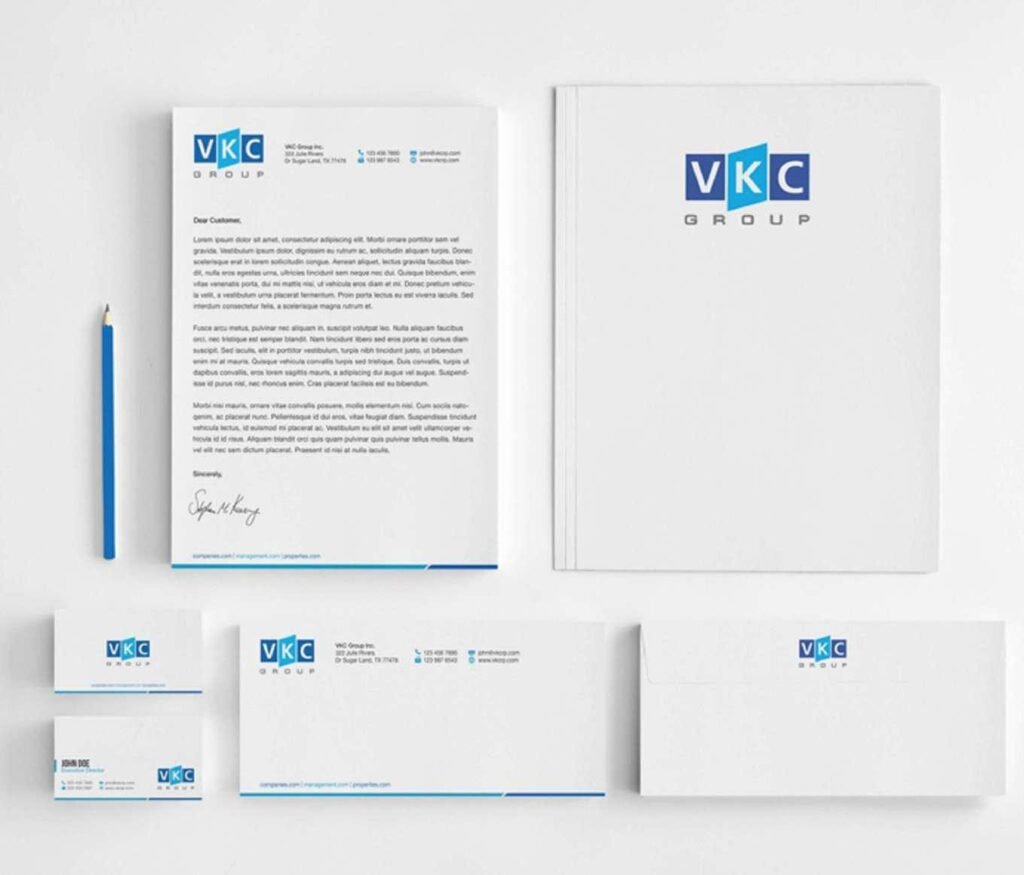
The destination changes the whole order. Brochures for a stand are printed to arrive with the stand, packed so the team can refill the holders each morning without searching, and matched in colour to the printed walls, which have their own page on exhibition stand graphics. Leaflets for a network of clinics, showrooms or schools are packed per branch with the branch name on every carton, and a version carrying each branch's own address and map can be printed in the same run. Inserts that go inside a product box are sized to the box and planned with the packing line, while the tasting and trial campaigns they support are covered on product sampling in Saudi Arabia. If you need the content itself written and designed, such as a full company profile for tenders and partners, start with company profile design, then come back here for the print run. The folders that hold a brochure in a meeting and the letterheads beside it are on corporate stationery printing, the cards your team hands over with it on business card printing, and the large signs that bring people to the stand or the shop on banner printing.
Choosing the Format by What the Reader Must Do
These questions settle the format, the paper and the quantity of any brochure and flyer printing order before anyone opens a design file.
Must the reader act once, or compare?
A single action, such as visiting a showroom this weekend or registering for an event, needs a flyer with one message and one QR code. Comparing models, plans or packages needs room, which means a tri fold, a gate fold or a booklet.
Where will it be read?
Standing in an aisle, people take in a cover and a headline. Seated in a waiting room or a meeting, they read the inside. A piece read standing carries its main promise on the cover panel, not behind the second turn of the page.
Where will it be carried?
A pocket, a meeting pack, a goodie bag or a product box each set a size and a thickness. A brochure that does not fit the pack you hand out is left behind on the table.
Arabic, English, or both in one piece?
Separate versions give each language the full space and the right reading direction. A flipped booklet has an Arabic cover on one side and an English cover on the other, each reading towards the middle, so one piece serves every visitor. A bilingual single sheet suits short text only.
How long will the content stay true?
Prices, offers, phone numbers and dates age fast. Keep what changes on an insert, a sticker or the landing page behind the QR code, and the main brochure stays usable for longer, so fewer copies are thrown away.
Mistakes That Only Show After Folding
In brochure and flyer printing, a hand made sample catches each of these. On a finished run, each one means printing again.
Panels in the wrong order
On screen the layout is a flat spread, and it is easy to put the back cover where the first inside panel should be. Making a sample by hand from a printout is the only quick way to be sure the reader meets the panels in the order you planned.
Cracks along the crease
Heavy coated paper bent without creasing, or against its grain, cracks along the line and shows white fibres through dark ink. The crease is made first, and solid dark colour across it is avoided where the paper is heavy.
A QR code that hides or fails
A code on the panel that tucks inside, across a crease or too close to the trim does not get scanned. It belongs on a panel the reader sees early, clear of every crease, and it is scanned from the printed sample before the run is approved.
An Arabic version that is not mirrored
Arabic reads from right to left, so a tri fold for Arabic readers opens from the other side and its cover sits on the opposite panel. Pouring translated text into the English layout leaves the reader opening the brochure from the back.
Page numbers trimmed in a booklet
In a thick saddle stitched booklet the centre pages stick out further and lose more at the trim. Page numbers and text close to their outer edge can be cut off, so the margins are set with that in mind from the start.
Cartons that outlive the offer
A run sized on a guess leaves boxes with an old phone number or an expired date. Print for the campaign you can see, keep a reprint file ready, and send clean leftovers to recycling rather than storing them for years. Lamination makes recycling harder, so use it only where the piece is handled heavily.
From File to Holder in One Factory
Design, print, acrylic, CNC and laser cutting, joinery and installation sit together in our own factory, so brochure and flyer printing is planned with the holder on the counter and the stand behind it, from one colour reference and one approved file. We have more than one location in the Kingdom, and every run is printed in our own factory. Among the brands we have worked for are Kinan, Saudia Holidays, Ganache, Oceanera, Al Khaleej Al Gharbiya and Johnson & Johnson MedTech.
Print Work From Our Factory
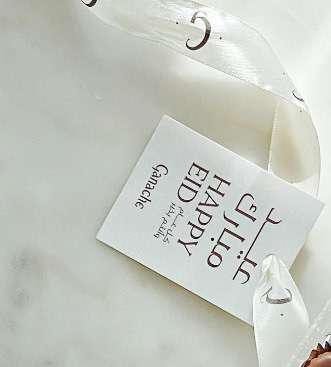
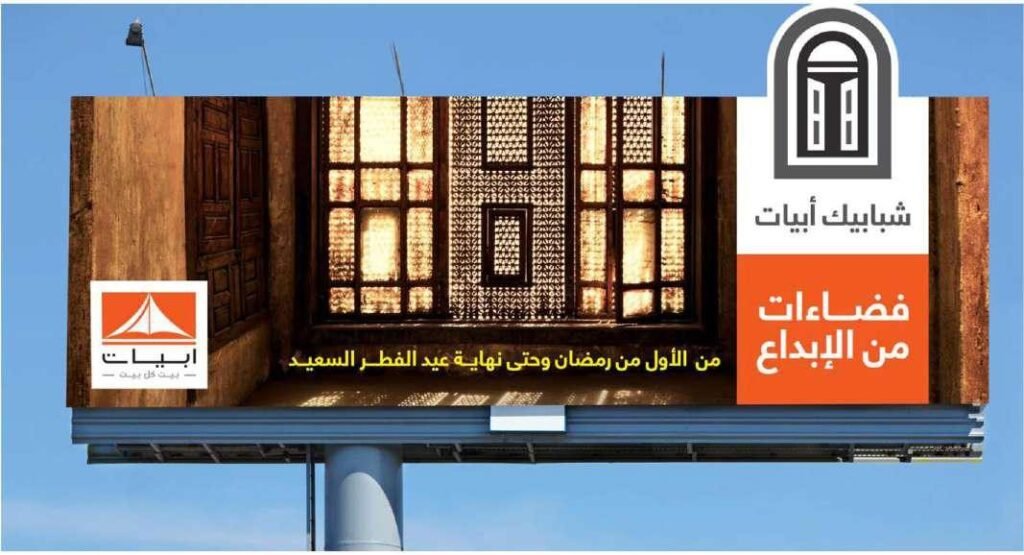
Print jobs we delivered: offset, digital, boxes and labels.


Questions About Brochure and Flyer Printing
What marketing teams ask before they send the file.
What is the difference between a brochure, a flyer and a leaflet?
A flyer is a single flat sheet with one message, usually for a launch, an offer or an event. A brochure is folded or bound and carries more, such as services, models or a whole project. Leaflet is used for either, and most often for a flyer delivered to homes.
Which fold should we choose?
Choose by what the reader must do. A bi fold suits a short introduction, a roll format tells a story in steps, a Z format shows everything at once, and a gate fold makes a reveal. For a full product range, a saddle stitched booklet or catalogue gives more room than any folded sheet.
What paper do you recommend?
Coated paper gives sharp photographs and strong colour, in matt or gloss. Uncoated paper feels natural and takes a pen, which suits forms and menus that get written on. Heavier paper feels more serious but must be creased first. A printed sample on the papers you are considering settles the choice faster than any description.
Do you print Arabic and English in one brochure?
Yes, in more than one way. Separate versions give each language the full layout and the correct reading direction. A flipped booklet carries an Arabic cover on one side and an English cover on the other, and a single sheet can hold both languages side by side when the text is short.
How should we prepare the file?
Send a print ready PDF with bleed on every side, text inside the safe margin, fonts embedded and colours set for print, with the creases marked on a separate layer. If you only have an open design file or a Word document, our studio prepares it, and that work is a separate line in the quote.
Will we see a proof and a sample?
Every job has a proof that you sign before printing. For a new format, a heavy paper or a special finish, ask for a printed and hand made sample as well, because only the real piece in the hand shows how it opens and how the finish looks.
How many should we print?
Plan the quantity around the date and the places it goes: the days of the show, the visitors you expect at the stand, the branches and how fast each one hands them out. A main run plus a file kept ready for a quick top up usually wastes less than one large guess.
Can the QR code show which branch or stand brought the visitor?
Yes, if each version carries its own link. The code opens the same landing page, but the link behind it is tagged per branch, stand or campaign, so your analytics show where each scan came from. Every code is tested from the printed sample.
How long does printing take?
Flyers and folded brochures from a signed file are printed in 1 to 5 working days, depending on paper and finish. Booklets, catalogues and special finishes depend on the page count and the binding, and the quote states the date. For an event, count back from the day the cartons must arrive.
Where are the brochures printed, and how do we start?
We have more than one location in the Kingdom, and all our brochure and flyer printing is done in our own factory, then packed per branch or per stand. Send the format, the languages, the date and your file or content on WhatsApp at 0567069088 or through the quote page, and an itemised quote follows within 24 hours.
Brochures Ready Before the Doors Open?
Tell us who will read it, where, and by which date. Within 24 hours you receive an itemised quote for your brochure and flyer printing, naming the format, the paper, the finish, the versions and the packing.
More specific pages on this
If your question is narrower than this page, these are written for one question each.

