
Most exhibitions end with one sentence in the following week’s meeting: “the stand was busy”. That is not a result, it is an impression. An impression cannot be compared with last year’s show, cannot justify next year’s budget, and cannot tell you whether the floor space you paid for was worth it.
This is a guide to how to measure exhibition success with four numbers instead of an impression: decided before the stand is built, counted the same way every day, and written up on one page the week after. None of it needs expensive software; it needs an early decision and discipline in the counting.
Decide what success means before the stand is built
The first question is not “how many visitors came?” but “why are we exhibiting?”. A single show can serve four different goals, and each one is measured differently:
- Sales or new leads: measured in qualified leads, then in how many of them became a deal within 90 days.
- Meetings with existing customers: measured in pre-booked meetings that actually happened, and what came out of them in renewals or expansion.
- A product launch or brand presence: measured in live product trials, in content shot and published, and in mentions during the show days.
- Recruitment or partnerships: measured in candidates or partners with whom a serious conversation opened after the show.
Pick one primary goal and one secondary, and write a target number for each before the stand design is approved. The design itself changes with the goal: a meetings stand needs a room, a new-leads stand needs an open counter and hosts, a launch stand needs a trial area.
The numbers worth counting
| Number | How to capture it | What it tells you |
|---|---|---|
| Visitors who stopped | A hand counter or a tablet at the counter, every hour | Whether the stand pulls from the aisle, and at which hours |
| Qualified leads | A short form: name, company, need, best time to follow up | The number that matters most in most shows |
| Meetings held | The meeting schedule against what actually took place | The stand’s value to your existing customers |
| Trials or live demos | A counter at the trial area | The success of the launch, not of the decoration |
| Content published and mentions | Posts and tags during the show days | The stand’s reach beyond the hall |
| The full cost | Every invoice, including time and travel | The denominator of every ratio you will calculate |
Leads: counting them the same way every day
What ruins measurement most is each person on the team counting their own way: one counts every business card, another counts only serious conversations. Agree before opening on one definition of a qualified lead, for example: a person with a specific need, authority to decide and a follow-up date within a month. Everything below that is a “visitor” and goes in another column.
Then hold the number in one place: a form on a tablet at the counter, or digital visitor registration that reads the visitor badge, with the conversation graded in ten seconds: hot, warm, information only. The hosts and promoters trained on your product are the ones filling that form, so explain the definition to them, not just the button.
A working rule: review the numbers at the end of every show day, not after the show. Day two fixes what day one revealed: the counter position, the opening line, or how many people you need at peak hour.
Cost per lead and return on investment, with the full cost
The two figures that convince management are cost per lead and return on investment, and both are calculated on the full cost, not on the price of the stand alone:
- Full cost = floor space + stand and fit-out + transport, installation and dismantling + staff, travel and accommodation + print and giveaways + your own team’s time, estimated in days.
- Cost per lead = full cost ÷ qualified leads. Compare it with the cost per lead from your other channels, not with the show alone.
- Return on investment = the value of what closed within 90 days (or the open pipeline multiplied by your usual close rate) ÷ full cost.
The real return on investment does not show in show week but three months later, so book the final report in the calendar on the day you book the space. What happens to the stand itself after closing belongs in the cost too: read dismantling, transport and storage after the exhibition, because a stand that is reused splits its cost across two shows.
What to measure during the show, not after
Three things cannot be recovered once the doors close:
- Peak and quiet hours: counting visitors every hour tells you when you need a bigger team and when one person is enough. That changes the staffing plan for the next show.
- Where the visitor came from: one question at registration, “how did you hear about us?”, tells you whether your invitations, the stand position or the aisle brought them.
- What they asked about: the questions repeated at the counter are your content for the coming months, recorded in one line per conversation.
The one-page report
In the week after the show, one page is enough, in the same order every time so the reports can be compared:
- The goal and the target number as written before the show.
- What was achieved: visitors, qualified leads, meetings, trials, content.
- Full cost and cost per lead.
- Preliminary return on investment and the date of the final figure after 90 days.
- Three notes: what we repeat, what we change, what we drop at the next show.
Keep the page with the stand photos and the lead list in one place. After three shows you have what most exhibitors never do: a real comparison between one show and another, and one city and another, whether you exhibited in Riyadh, Jeddah or Dammam.
Mistakes that make the numbers lie
- Counting business cards instead of leads. Half the cards are from suppliers and people in the same industry, not customers.
- Calculating return on the stand price alone. Staff, travel and time often equal the cost of the stand itself.
- Judging after a week. Deals that started at the show close two or three months later, and an early verdict kills a successful participation.
- Following up after two weeks. A lead not contacted in the first three days becomes a row in a spreadsheet instead of a deal.
- Measuring crowds. A busy exhibition stand full of people collecting giveaways is not better than a quiet one with ten serious conversations.
Research from the Center for Exhibition Industry Research, CEIR, has made the same point for years: exhibitors who set written objectives before the show are the ones who can prove its return afterwards. Choosing the company that builds your stand is part of this too, and how to choose an events company in Saudi Arabia covers it.
Frequently asked questions
What is the most important number when you measure exhibition success?
In most shows: the number of qualified leads, then how many became deals within 90 days. If the goal is a launch or brand presence, the number of live trials and the content published.
How do I calculate cost per lead from an exhibition?
Add every cost: floor space, stand, transport, staff, travel, print and team time, then divide by the number of qualified leads. Compare the result with the cost per lead from your other channels.
When should return on investment be judged?
A preliminary figure the week after, based on the open pipeline, and a final one after 90 days based on what actually closed. Anything earlier is premature.
Do I need a CRM to measure a show?
No. One spreadsheet with a clear lead definition and a three-level grade is enough for one show. A CRM becomes useful once you are comparing more than three participations.
How do I get the team to record leads during the show?
A form with four fields at most, on a tablet at the counter, and a review of the numbers with them at the end of every day. What is reviewed daily gets recorded daily.
Do you help measure exhibition results?
Yes: digital visitor registration at the stand, hosts trained on your lead definition, and a daily report of conversations and their grades, as part of the stand or event service.
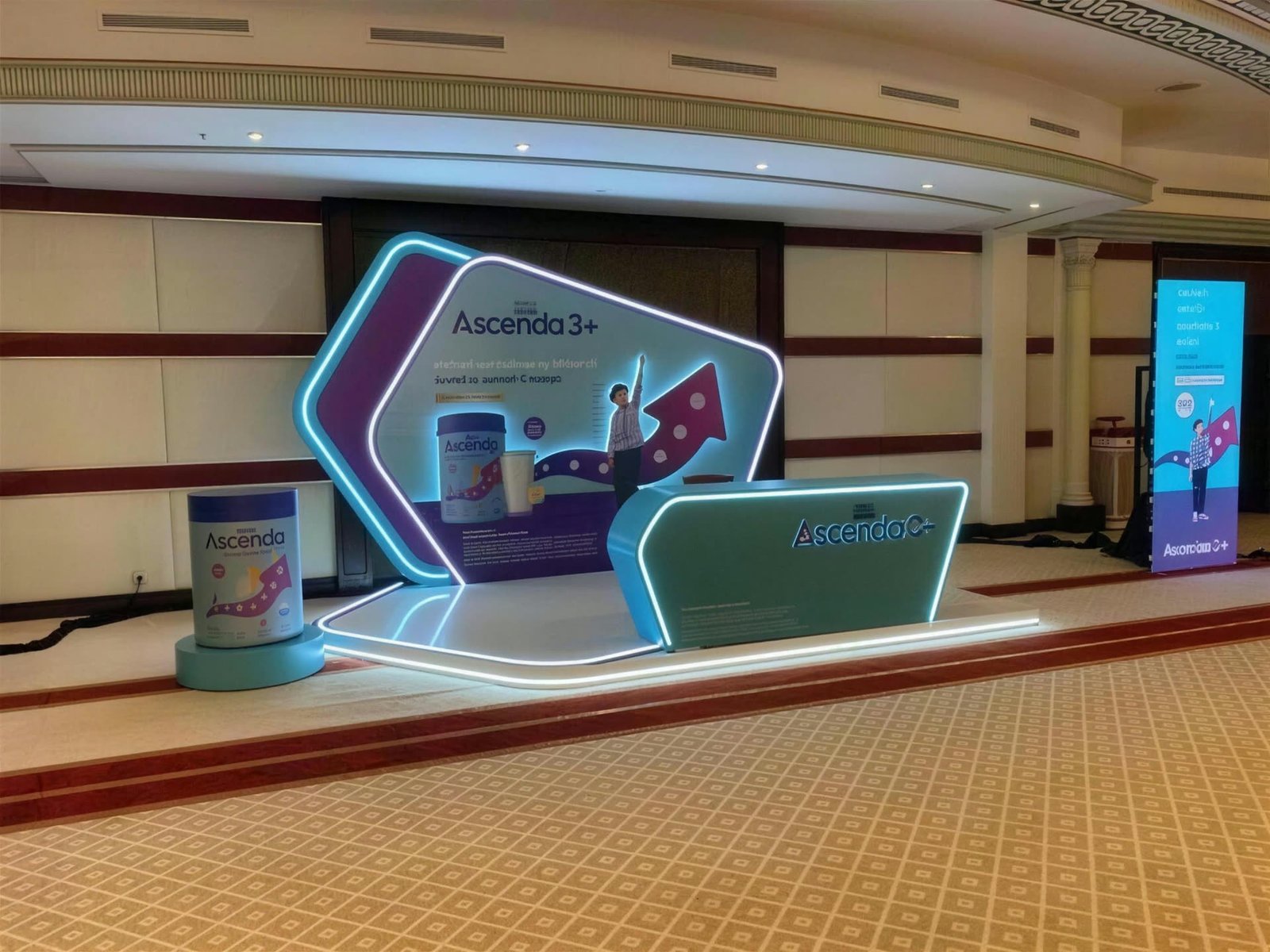
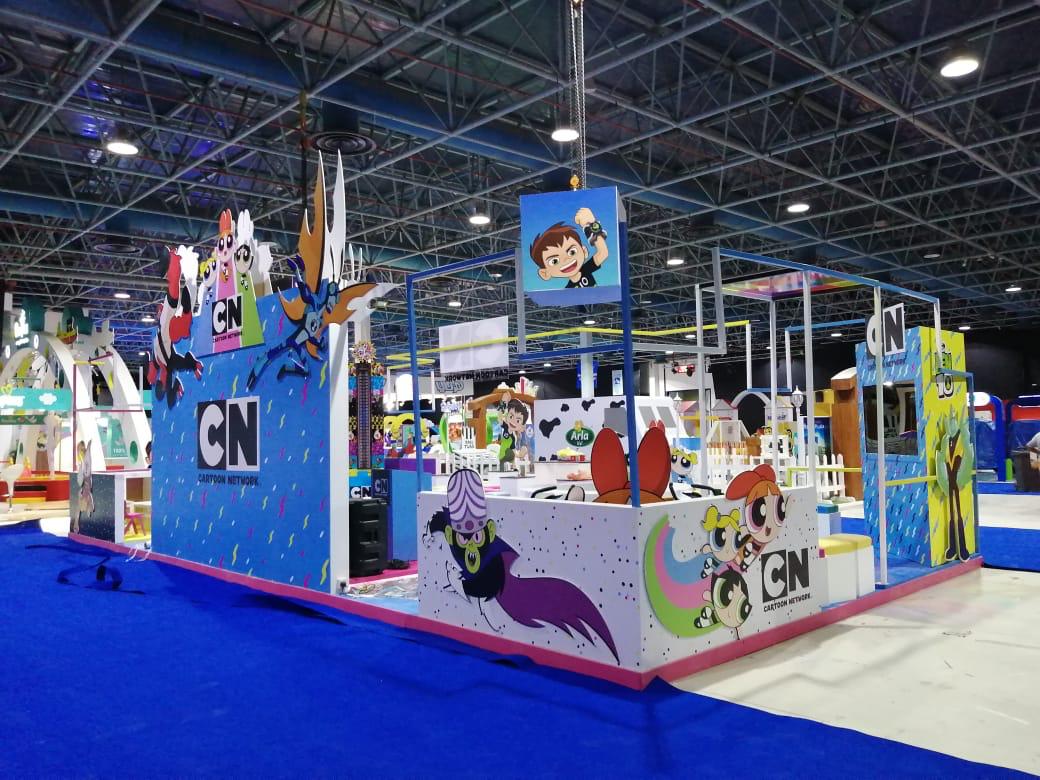
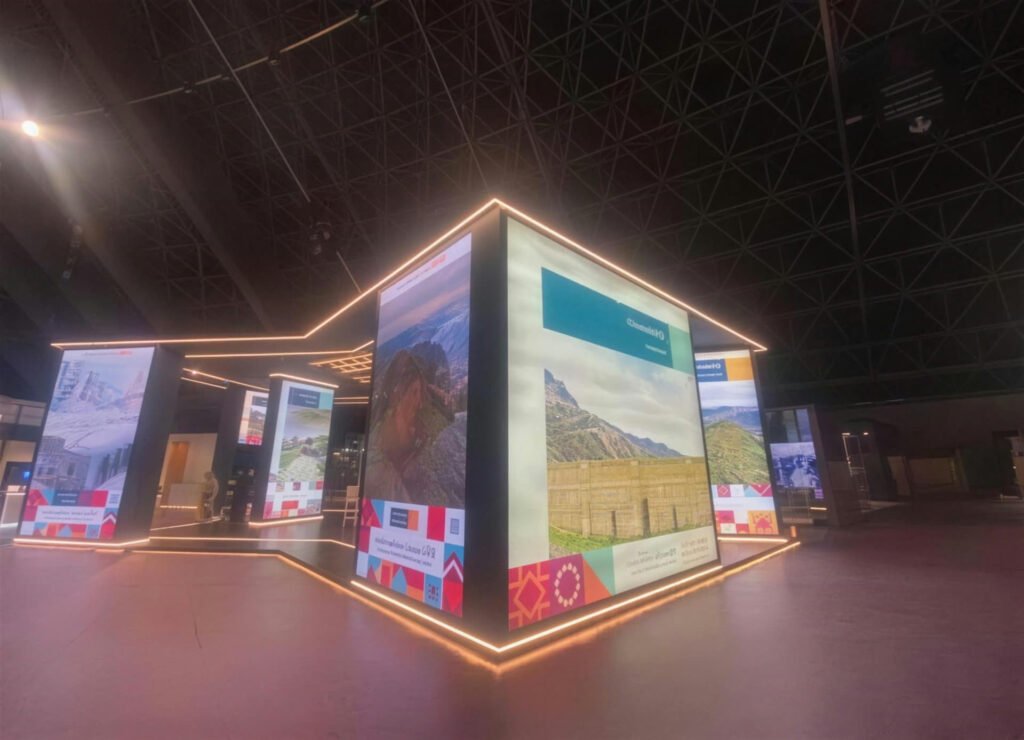
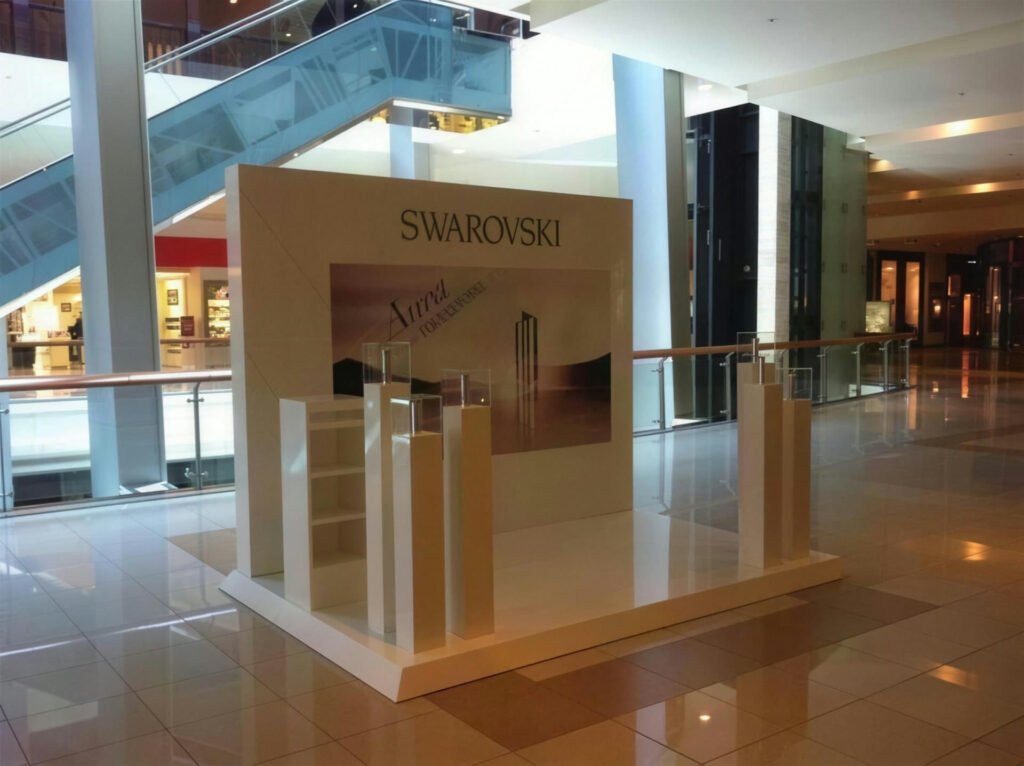
Stands we designed, built and installed
Photographed on site after handover, no renders.


Have a project and want a real number?
Send the area, the date and the city, and we come back with an itemised quote within 24 hours. No commitment, and no vague all-in price.

