
The doors close at six. By five past six, a stand that took weeks to build has become something that must disappear before dawn. These are the least planned hours of any exhibition, and they decide whether the stand ever stands again or reaches the warehouse as parts fit only for a skip.
This is a guide to dismantling, transport and storage after the exhibition, written from the other side of the wall: who takes down what, in which order, how a stand travels between Riyadh, Jeddah and Dammam without breaking, and what survives a year in storage and what does not.
The dismantle window is shorter than the build window
An organiser gives you days to build and one night to clear out, sometimes only a few hours. In most Saudi halls the dismantling window opens the moment the doors close and ends in the morning, because another show is waiting for the floor. Whatever has not left by then is removed by the hall’s own crew, their way, and charged against your deposit.
So planning the dismantling starts before opening day. The rules manual lists the dismantle hours, the loading gate assigned to your stand, whether forklifts may enter the aisle and where trucks can wait. Reading that page in the first week saves a night of chaos in the last.
A working rule: allow half the build time for dismantling, never less. A stand that took two days to install needs a full night to come down, be packed and be loaded if it is meant to be used again.
One hour before closing: a one-page plan
In the last hour of the last day everything is still in place, which makes it the best moment for three decisions:
- What is reused and what is thrown away. Frames, counters, lighting and furniture come back. Graphics printed on foam board or thin panels rarely survive a second move, and temporary carpet never does.
- Where each group goes. Back to our storage, to your office, or straight on to the next show in another city. Each group needs its own cases and its own colour of tape.
- Who owns each item. The install crew takes down the structure, but who collects the devices, the samples and the leftover giveaways? Small things are the first to vanish during dismantling.
Photograph the stand from every angle before the first piece is touched. Those photos are the reference for the next build, and your evidence if the organiser disputes the state of a rented floor or wall.
What comes off first and what is packed last
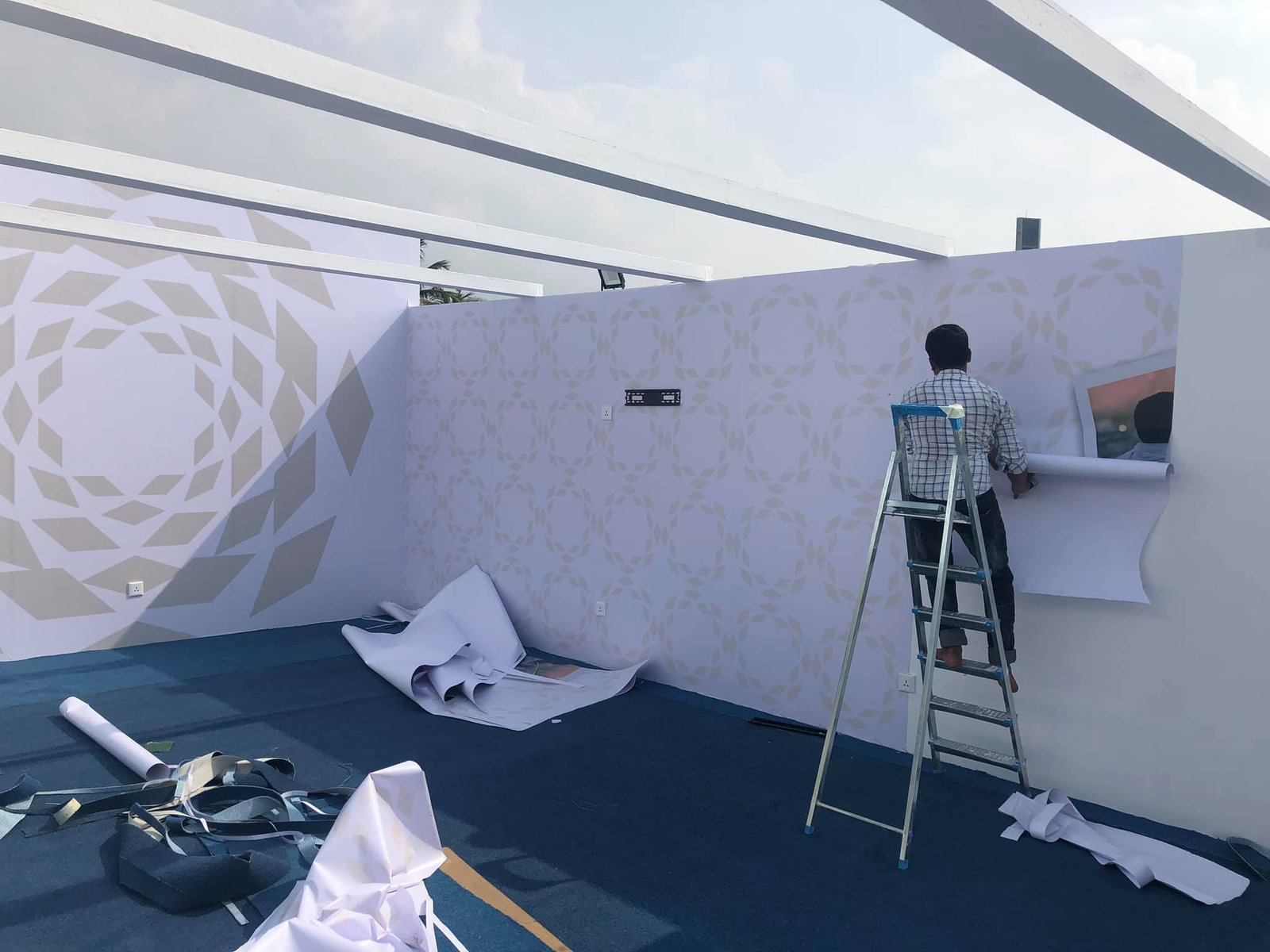
Dismantling runs in exactly the reverse order of the build, and breaking that order is where most damage happens:
- Devices, samples and documents. Screens, players, tablets and the visitor registration kit are disconnected and packed in their original boxes before anyone walks in with a tool.
- Graphics and tension fabric. Taken down gently, rolled onto a tube or folded only along its original lines. Fabric stuffed into a bag comes out creased for good.
- Lighting and power. Disconnected at the source first, then the spotlights and cables come down, coiled and labelled with their position.
- Furniture and counters. Broken down into their units, with glossy surfaces wrapped in bubble or felt.
- The structure. Last of all, piece by piece, with every joint numbered if the stand is modular and will be rebuilt.
- The floor. The very last thing, because everything above stood on it.
On the custom exhibition stands we design for dismantling, every part is numbered in the workshop before the first shipment, so the second build becomes a matter of reading numbers rather than remembering.
Transport: how a stand travels between cities
A stand built in Jeddah and showing in Riyadh two months later does not go home and set out again; it is packed in Dammam or Riyadh straight for its next destination. Three rules protect the shipment:
- Wooden crates for the valuable parts: acrylic faces, counters and illuminated letters need a lined wooden crate, not plastic wrap on a pallet.
- Weight on the floor, fabric on top: metal structure at the bottom of the truck, graphic rolls and fabric cases above, and nothing tall travels upright.
- A signed loading list: how many cases, what is in each, who received them, at loading and at delivery. Without that sheet there is no way to prove the seventh case never arrived.
The long roads between cities add a day each way to the schedule, and summer heat inside a truck does more harm to bent acrylic and printed fabric than the road does. Our pages on exhibition stands in Riyadh and Dammam cover the dismantle and loading windows in each city’s halls.
Storage: what survives a year in a warehouse and what does not
| Item | Survives storage? | Condition |
|---|---|---|
| Aluminium and steel structure | Yes, for years | Dry, numbered, in its cases |
| Built counters and furniture | Yes | Surfaces wrapped, off a damp floor |
| Acrylic faces | Yes, with care | On edge in a lined crate, away from heat |
| Printed tension fabric | Yes, for several editions | Rolled not folded, at room temperature |
| Foam board and thin panel graphics | Rarely | Usually reprinted for the next show |
| Lighting and cables | Yes | Tested before storage, not after |
| Carpet and temporary flooring | No | Discarded and bought new |
A stand store is not an ordinary warehouse: summer heat warps acrylic and fades colour, and humidity gets into timber. If the stand is modular or portable, storage with us in Jeddah keeps it ready for the next edition without its cases living in your office.
Rented versus owned: who dismantles what
With a rented stand, dismantling, transport and storage after the exhibition are all the supplier’s problem; what comes back to you is the graphics, your devices and your samples. With a stand you own, you decide: the install crew takes it down and packs it, and storage is either with you or with whoever built it. Read the full comparison in custom stand vs shell scheme, because the decision taken before the show is what shapes the night after it.
The dismantle-night checklist
| Before closing | During dismantling | After loading |
|---|---|---|
| Photograph the stand from every angle | Devices and samples first | Loading list signed by both sides |
| Sort what is reused from what is discarded | Graphics rolled, never folded | Rented walls and floor inspected with the organiser |
| Confirm the loading gate and the window hours | Number every structural joint | Badges and insurance paperwork handed back |
| Cases and coloured tape ready | Floor lifted last | A short report: what was damaged, what is reprinted |
Mistakes that repeat at every show
- Leaving dismantling to the hall crew alone. Without someone from your team or the builder’s who knows the stand, pieces come off by force rather than in order.
- Packing fabric into bags. The cheapest saving and the dearest result: printed graphics bought again for a show the old ones could have served.
- One truck for everything. Devices and samples travel with a person, not with the structure, or the screen arrives cracked under a metal panel.
- Promising to clear the hall in two hours. Whoever promises that throws away half the stand to keep the promise.
- Storing in an office or a hot warehouse. Six months of summer is enough to ruin what took weeks to make.
The global exhibition industry association UFI publishes guidance on sustainable exhibiting, and its first point is that a stand should be reused rather than rebuilt, which only happens if it survives the dismantle night.
Frequently asked questions
How long does dismantling take after the exhibition?
Allow roughly half the build time if you want to reuse the stand: a full night for a stand that took two days. A small modular stand comes down and packs in a few hours.
Who is responsible for dismantling, transport and storage after the exhibition?
With a rental, the supplier for all three. With an owned stand, the exhibitor and the builder agree before the show who dismantles, who transports and where it is stored, and it is written into the quote as its own line.
Can a stand move directly from a show in one city to a show in another?
Yes, and it costs less than sending it back to the workshop. The stand has to be designed for dismantling, and the loading list and cases have to be ready from the first take-down.
What is not worth storing?
Temporary carpet, foam board and thin panel graphics, and anything damaged in transport. Storage has a cost, so only what will actually be used again goes into it.
How is printed fabric kept until the next show?
Rolled on a tube or folded only along its original lines, somewhere dry at room temperature, and steamed before the next installation.
Do you store stands after the show?
Yes, in Jeddah, for the modular and dismantlable custom stands we built or moved, with the storage line written into the quote from the start.
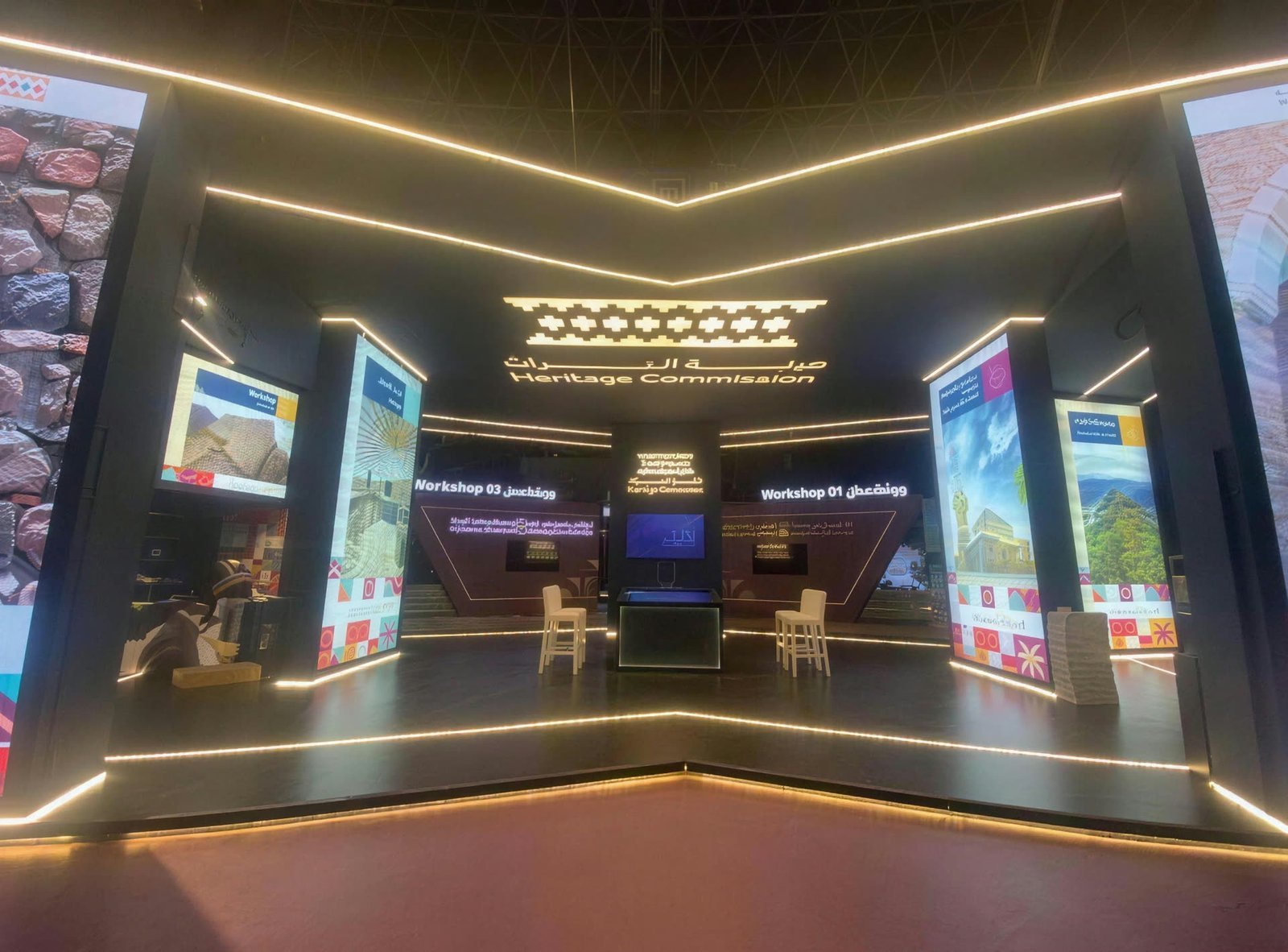
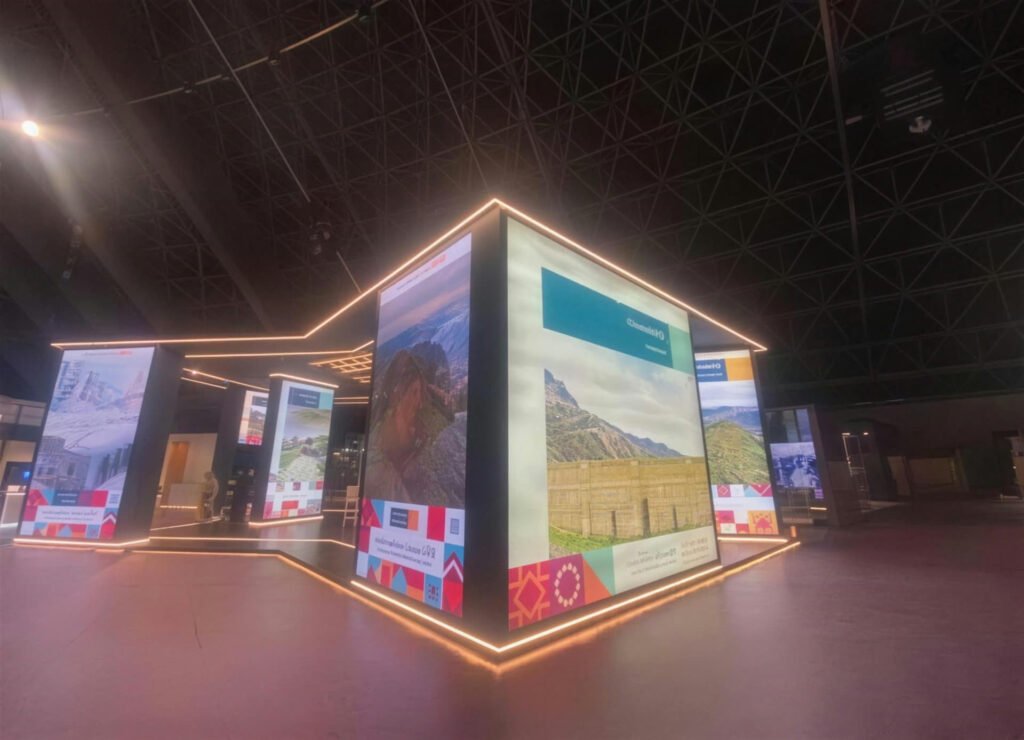
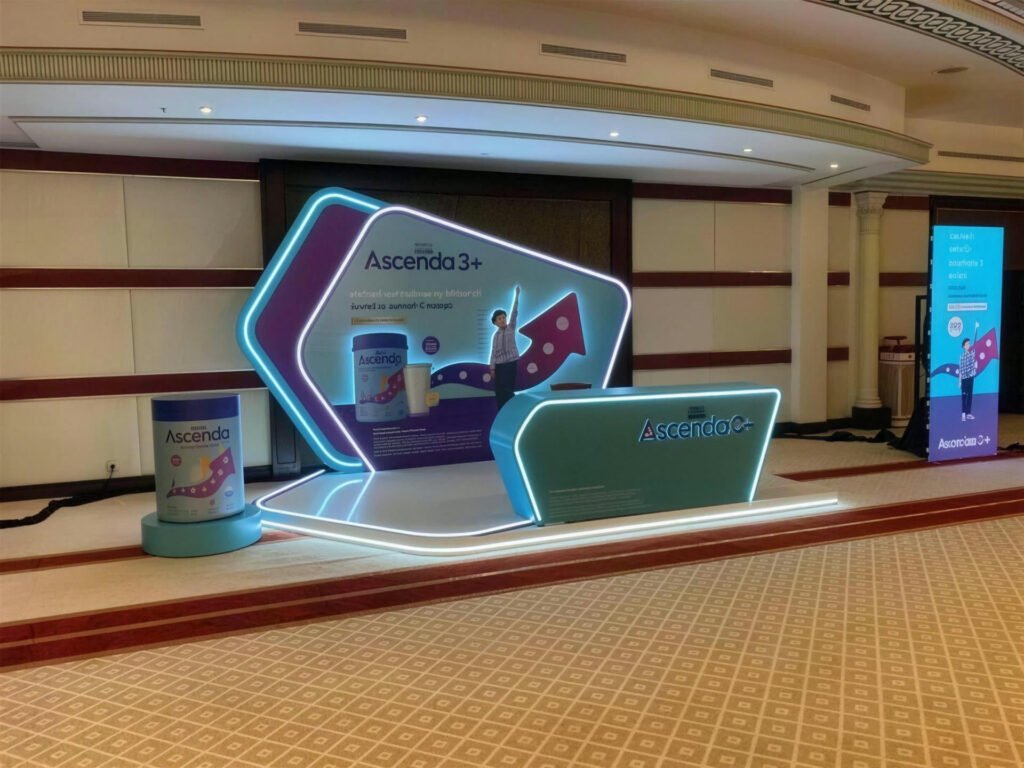
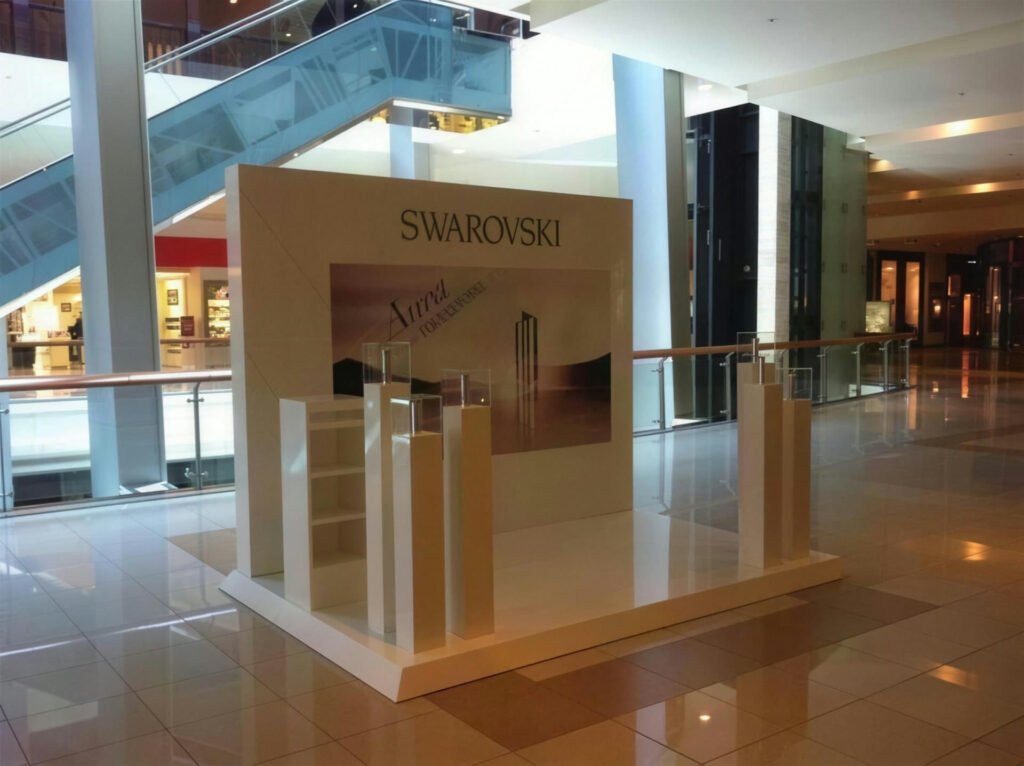
Stands we designed, built and installed
Photographed on site after handover, no renders.

Have a project and want a real number?
Send the area, the date and the city, and we come back with an itemised quote within 24 hours. No commitment, and no vague all-in price.

