
Custom Stand vs Shell Scheme: Which One Fits Your Show?
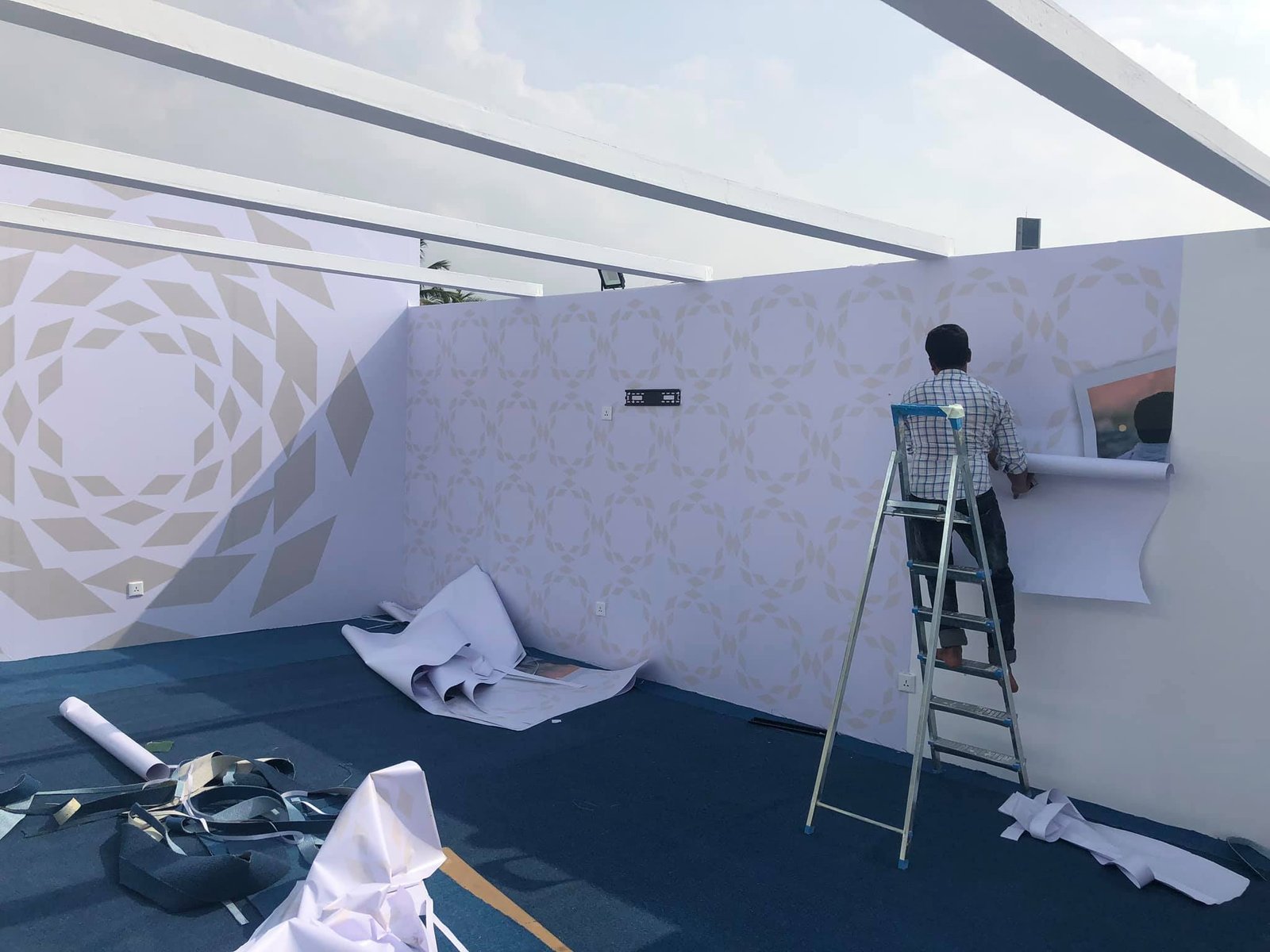
The moment an exhibitor books space, the organiser sends a form with two options: space with a shell scheme, or raw space for a custom stand. Most exhibitors choose in two minutes, then live with that choice for every day of the show.
Custom stand vs shell scheme is not a question of taste. It is a question of objective, budget and time. This guide puts the two side by side the way we see them in the workshop and on the show floor, and explains the third option most people never hear about: the upgraded shell scheme.
What exactly is the difference
A shell scheme is a ready structure the organiser supplies with the space: white panel walls in an aluminium frame, a fascia board with your company name, basic lighting, carpet and a power point. It arrives built, and every exhibitor in it looks much the same.
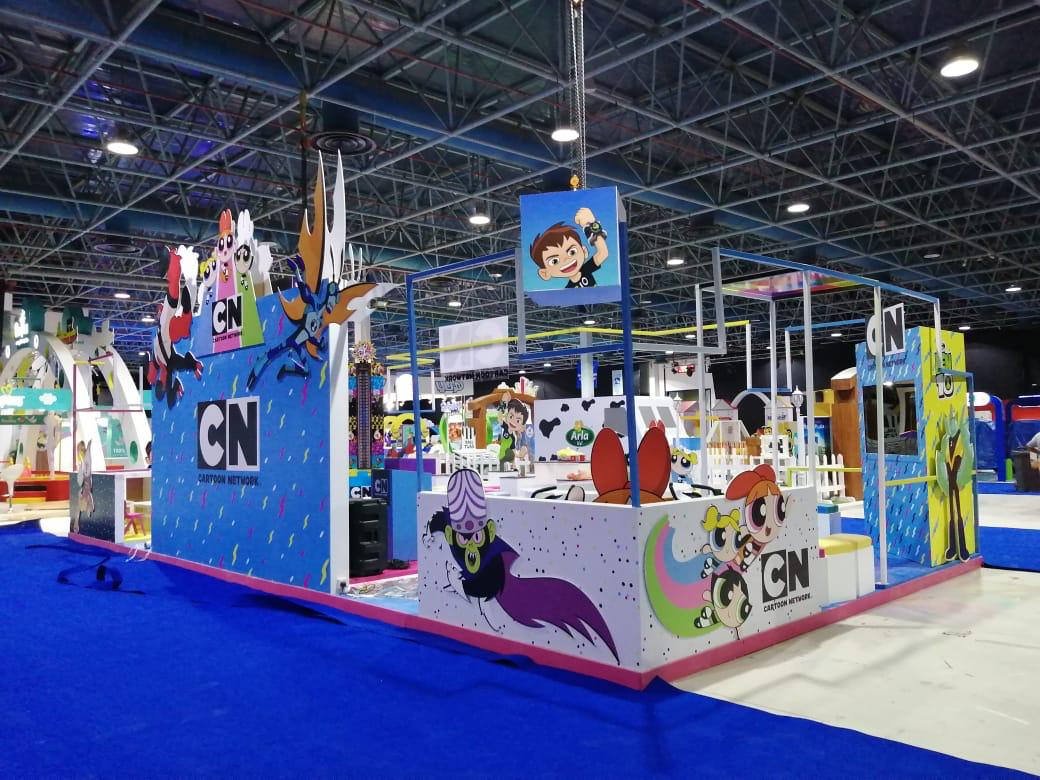
A custom stand starts from raw space, empty floor with no walls, and is designed and built for your brand alone: heights, lighting, materials and a visitor route. This is what custom exhibition stands are for, and it is what makes a visitor turn their head from the far end of the hall.
Between them sit two answers: the upgraded shell scheme, the same structure fully wrapped in graphics with a counter, lighting and flooring added, and the modular stand, frames that come apart and rebuild, with fabric graphics that change from show to show.
| Criterion | Shell scheme | Upgraded shell or modular | Custom stand |
|---|---|---|---|
| Cost | Lowest, often included with the space | Medium | Highest |
| Lead time | Almost none | Two to four weeks | Six to eight weeks |
| Visual impact | Identical to your neighbours | Clear and considered | Seen from across the hall |
| Reuse | Nothing to reuse | High, the frame stays and graphics change | Possible if designed to dismantle |
| Organiser approvals | Simple | Simple to moderate | Structural drawings and full approval |
When a shell scheme is enough
A shell scheme is not a weak choice. It is the right choice in specific cases. If two of the following apply to you, you probably need nothing more:
- It is your first time at the exhibition and you want to test its audience before investing.
- Your space is twelve square metres or less in a row of adjoining stands, where the difference barely shows from a distance.
- Your goal is pre booked meetings rather than passing traffic, so visitors come by appointment rather than by chance.
- You have less than three weeks, and time does not allow design, fabrication and approvals.
- Your budget is limited and you would rather spend it on staff, print and follow up after the show.
Even then, a simple layer of wall graphics and better lighting changes the impression a great deal for a small cost.
When a custom stand earns every riyal
- A corner or island space open on three or four sides. A shell scheme there wastes the most valuable thing you paid for: visibility from every direction.
- A product or brand launch, where the first impression is the message itself.
- Competitors around you on custom stands. At that exhibition, a shell scheme tells visitors something about your size you would rather it did not.
- Repeat participation at the same show or similar ones, because a stand designed to dismantle spreads its cost across several outings.
- A product that needs demonstrating: devices to try, samples to taste, interactive screens, all of which need space, power and planning a ready structure does not give you.
Custom stands go through a real workshop: timber and metal structures, laser cut acrylic, integrated lighting, then print made to size. That is why they need their full lead time, and why the difference shows.
The middle ground most people miss
Between a plain shell scheme and a custom stand is a wide space, and most smart decisions land in it:
- Full wall wraps printed to size instead of white panels and a small name board.
- A reception counter built for your brand instead of the organiser’s table.
- Extra lighting and different flooring, the cheapest changes with the biggest effect.
- A modular frame you own, rebuilt at every show in a different size with new graphics.
A working rule: if you exhibit twice or more a year, a modular stand you own becomes cheaper by the second show than an upgraded shell scheme you rent each time.
Mistakes that repeat with both
- Printing graphics to the wrong size. Shell scheme panels have a clear size between posts that varies by organiser. Take it from the exhibitor manual, not from memory.
- Fixing with nails or strong adhesive. Most organisers forbid it on rented walls and deduct it from your deposit.
- Booking raw space without enough time. A custom stand designed in two weeks is built on rushed decisions, and the look pays for them.
- Cramming a custom stand into a small space. Nine square metres cannot carry four display units, a screen, a counter and a store room. Restraint is the design here.
- Neglecting lighting. Hall lighting is not enough for any stand, custom or shell scheme.
Ask yourself these questions before you choose
| Question | If the answer is yes |
|---|---|
| Is your space a corner or an island? | Custom or modular |
| Do you have less than three weeks? | Upgraded shell scheme |
| Will you exhibit twice or more this year? | A modular stand you own, or a custom stand built to dismantle |
| Is your goal pre booked meetings only? | Shell scheme with good graphics |
| Are you launching a new product at this show? | Custom stand |
Because the choice also depends on the city and on each hall’s build windows, our local pages go further: exhibition stands in Riyadh, exhibition stands in Jeddah and exhibition stands in Dammam, all across Saudi Arabia. And before you choose the company itself, read how to choose an events company.
Frequently asked questions
Is the shell scheme included in the space price?
Usually yes, in the packages organisers call space with a stand. Raw space is priced alone and comes with no structure at all. Read the package carefully, because some organisers list lighting and power separately even with a shell scheme.
Can a shell scheme be made to look custom?
To a large extent, yes. Full wall wraps, a built counter, and different lighting and flooring change the look a great deal. But the structure keeps its height and its posts, so do not expect the height or the openness of a custom stand.
How long does a custom stand take?
Six to eight weeks from concept approval to installation, covering design, approvals and fabrication. A modular stand or an upgraded shell scheme needs two to four weeks.
Is a modular stand cheaper than a custom one?
At the first show the gap is not always large, but it widens with every show after, because the frame stays and only the graphics change. That is why it suits companies exhibiting more than once a year in Saudi Arabia.
Who handles organiser approvals for a custom stand?
The builder, as part of the scope of work. A custom stand needs drawings with dimensions, heights and safety materials, submitted well before the organiser’s deadline.
Which is better for a first exhibition?
In most cases an upgraded shell scheme with good graphics and extra lighting. It gives you a respectable presence at a sensible cost, leaves budget for staff and follow up, and lets you decide the next time on real data. Industry references such as UFI, the global association of the exhibition industry are worth reading too.
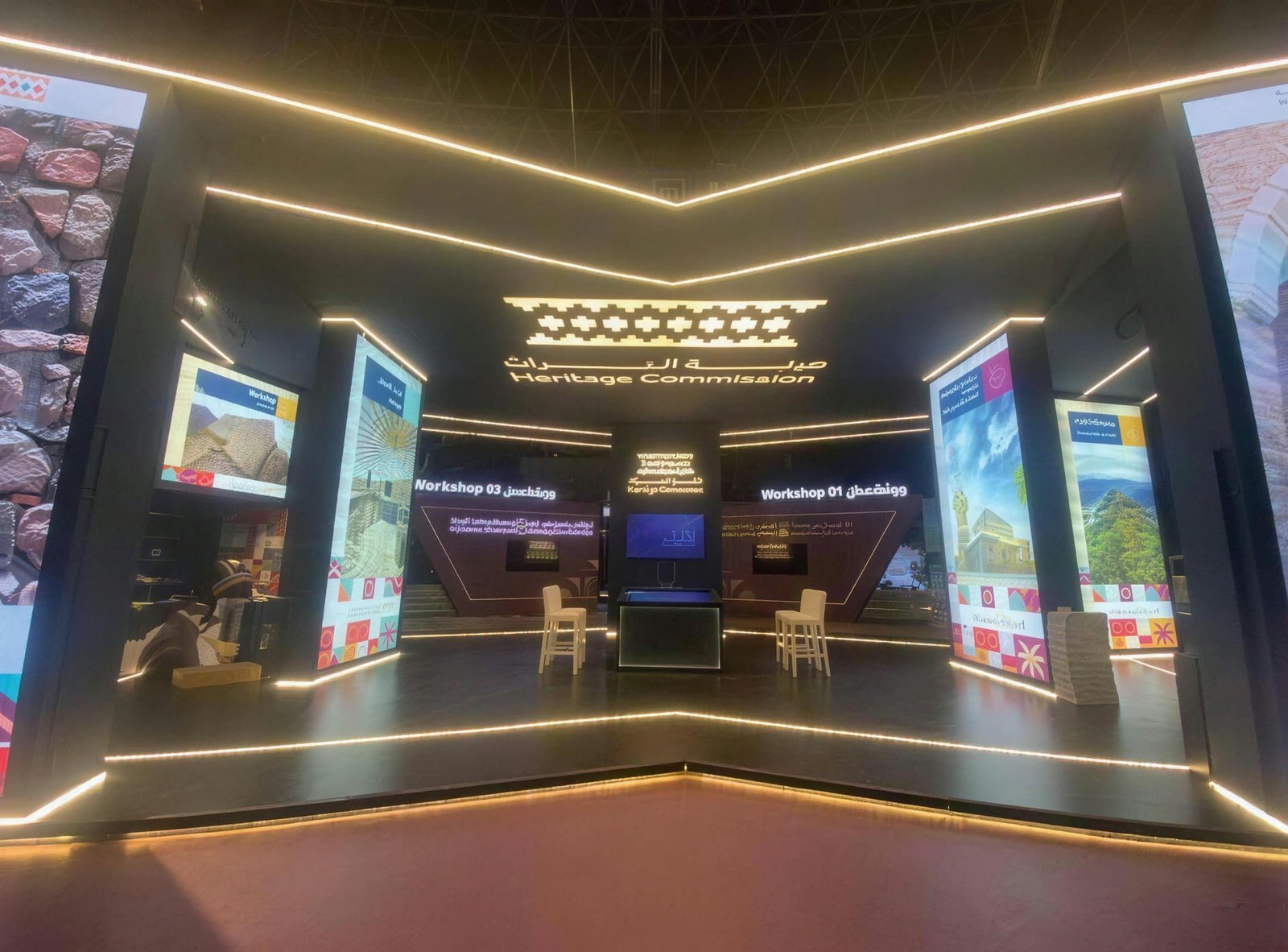
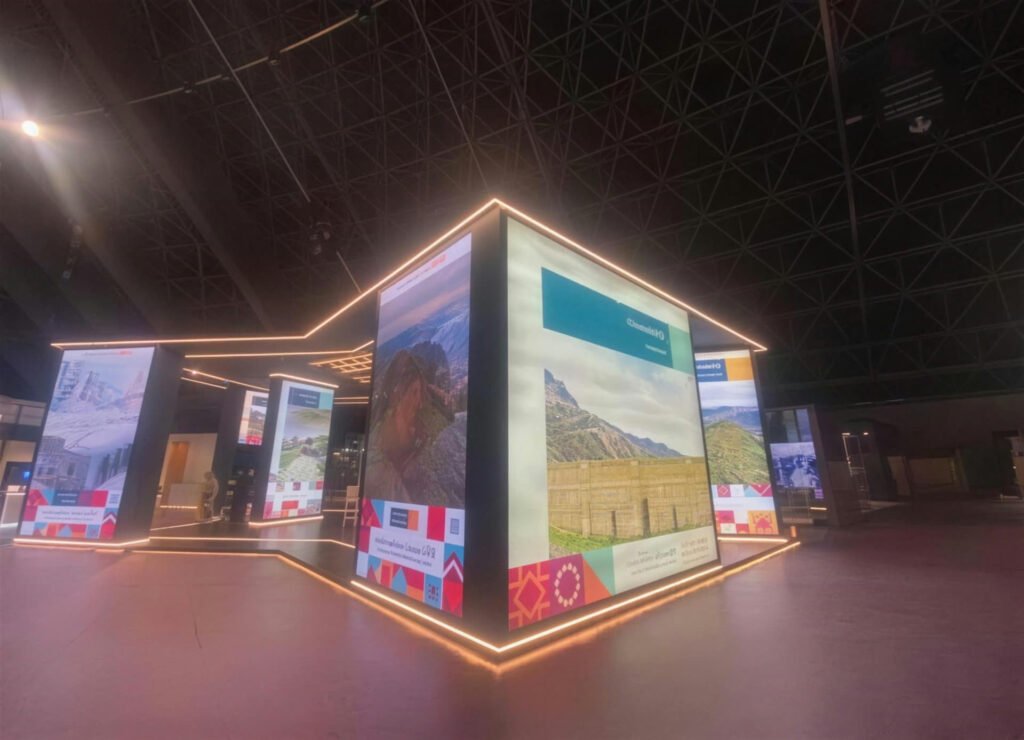
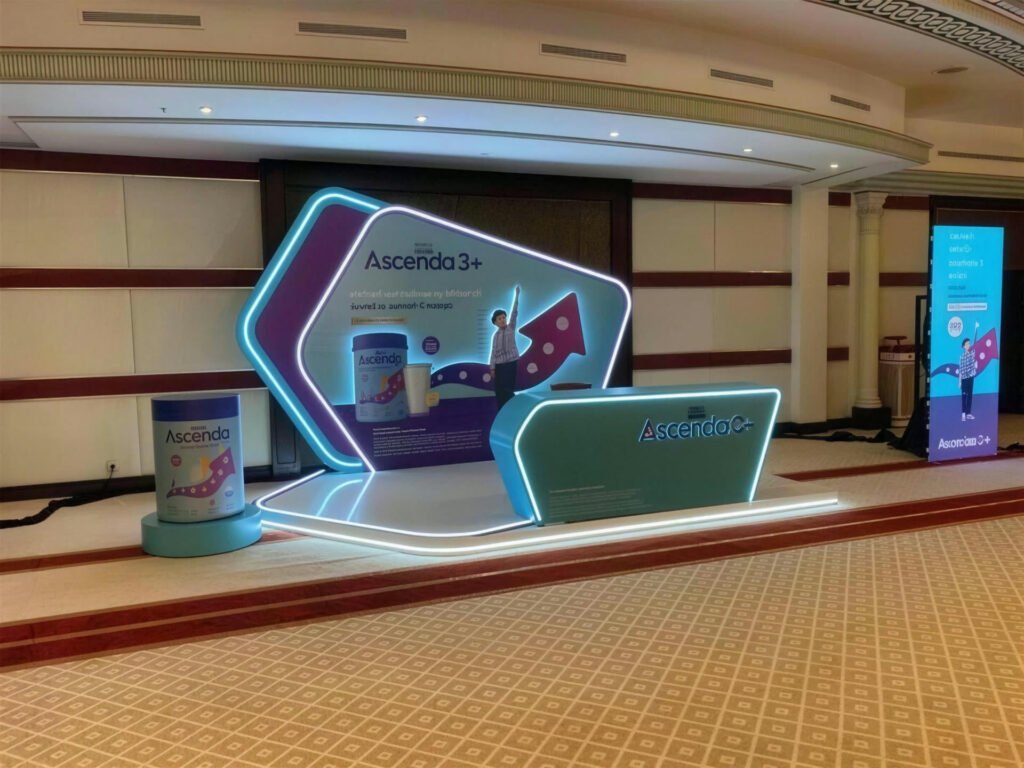
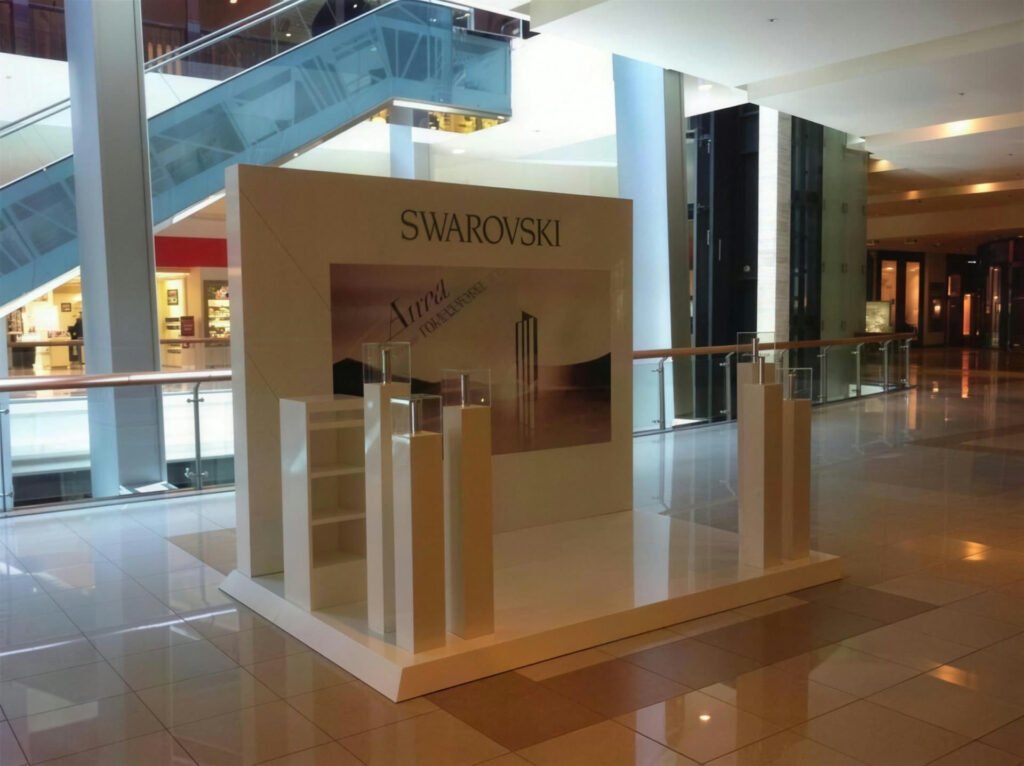
Stands we designed, built and installed
Photographed on site after handover, no renders.

Have a project and want a real number?
Send the area, the date and the city, and we come back with an itemised quote within 24 hours. No commitment, and no vague all-in price.

