
How to Choose an Events Company in Saudi Arabia
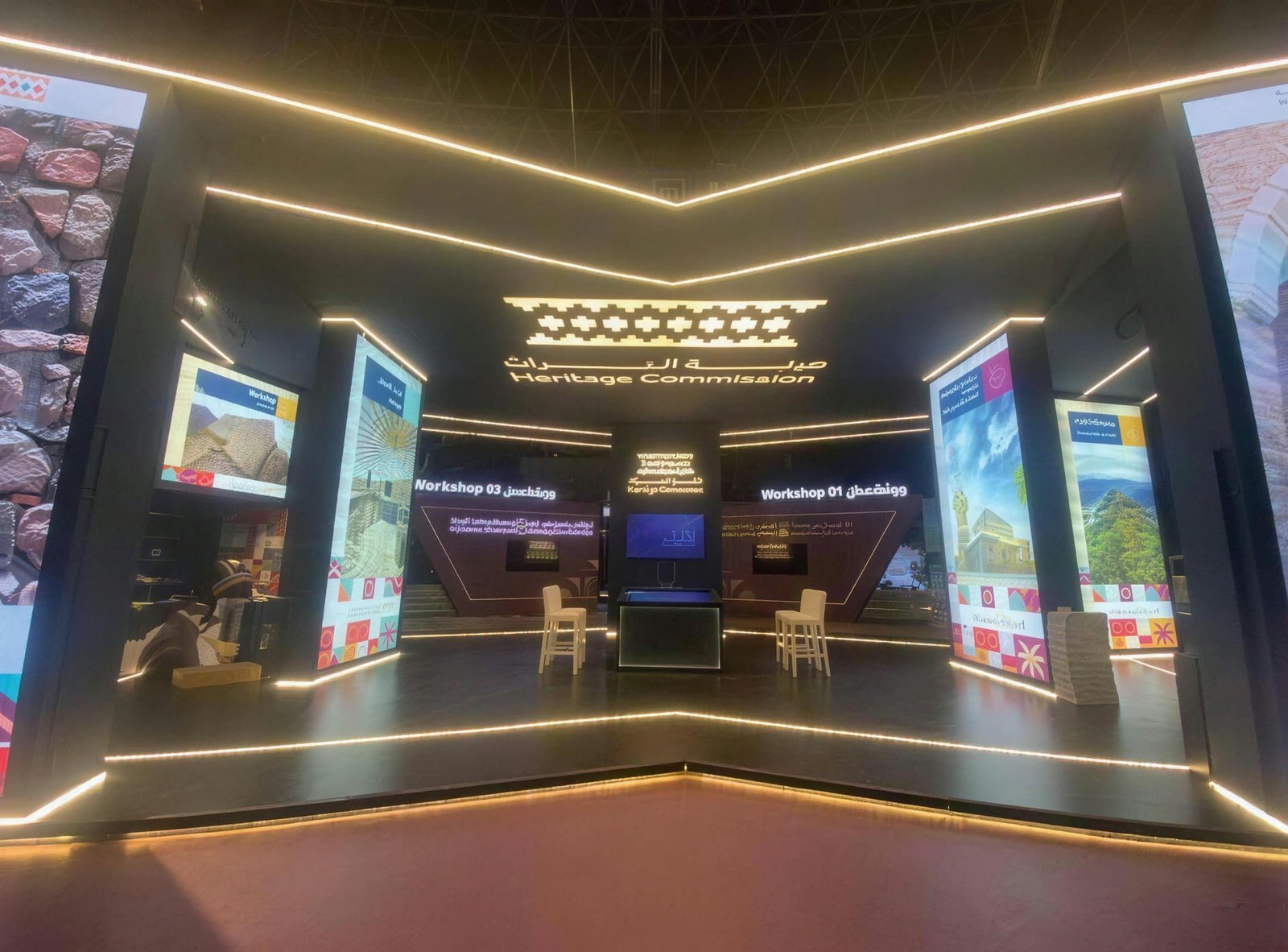
Three quotes land for the same project: one at 100,000 riyals, one at 160,000, one at 250,000. The line items look alike, and the gap between them is a whole campaign budget. Which do you take?
The question is not which is cheapest. It is which one knows what it just promised. Most problems in Saudi events and activations do not start on build night, they start at signature: a missing line item, an unassigned responsibility, or a company signing for work it will go out and buy next week.
This guide is written from the other side of the table. We have been building event management and exhibition stands in Saudi Arabia for fifteen years, and we know where costs get buried and how a quote is written to look cheaper than it is. Read it before you collect quotes, not after.
The difference that decides everything: who builds it
There are three kinds of company in the event management market in Saudi Arabia, and all of them call themselves an events company. The difference never shows in the quote. It shows on build night.
| Type | What it actually owns | Where it goes wrong |
|---|---|---|
| Broker | A portfolio and a contact list | Every change passes through a third party, so it costs two days and a markup |
| Marketing agency | Strategy and creative, production bought in | The idea is excellent, the build is only as good as whoever they bought it from |
| Builder with a workshop | Machines, a fabrication team, storage, site supervisors | Needs a realistic schedule, because the workshop has other projects that same week |
None of these is wrong in itself. A broker can be the right answer for a small activation in a far city, and an agency is the right answer when what you are buying is an idea rather than a build. The only real mistake is paying a builder’s price while buying from a broker, and finding out two weeks before the date.
Twelve questions to ask before you sign
Print this list, take it to the first meeting, and ask every company, us included. The answers matter less than the manner of answering: a firm that owns the work answers in detail and at once, a firm reselling it answers in generalities and promises to come back to you.
- Is the workshop yours, and where is it? Then ask to visit. A company with its own workshop opens it proudly. A company without one finds a reason to postpone.
- Who will be standing on site on install night? Ask for the name and number in the quote itself. “Our team” is not an answer, a name makes responsibility real.
- Who handles organiser approvals and structural drawings? They belong inside the scope of work, not as a task handed back to you a week before opening.
- What does this price not include? The single most useful question in the meeting. Ask for the answer in writing.
- What happens if a part fails or a supplier is late? A good answer names spares, a fallback and a schedule with slack. A bad one promises it will not happen.
- Have you read the rules for this specific show or mall? Every venue has height limits, build windows and fire requirements. Whoever has not read them now will read them on install night, at your cost. If your project sits inside a mall, the detail is in the mall activation rules.
- How many projects is your team building that same week? A busy workshop is not a problem. A schedule that ignores how busy it is, is.
- Who owns the design after handover? If you intend to reuse it at another show, put that in the contract today rather than later.
- Is the build reusable? Exhibition stands designed to be dismantled save thirty to fifty per cent on the next outing, but only if that decision is made on day one.
- What are the payment terms, and what if the show is cancelled? Cancellation is a real possibility. Know today what you get back and when.
- Do you carry insurance and site liability? Malls and major venues ask for it, and its absence stops the build at the loading bay.
- Show me a project that went wrong, and how you fixed it. The best question on the list. Anyone who has delivered a hundred projects has had one go sideways, and anyone who denies it is either inexperienced or not being straight with you.
Notice that eleven of the twelve questions have nothing to do with price. Price is the last thing you compare, because it means nothing until you know what it buys.
How to read the quote
“All in” is a comforting and dangerous phrase. Comforting because it is one number, dangerous because it hides whatever was never mentioned. A serious quote itemises the following, each with its own figure:
| Line item | Why it has to appear separately |
|---|---|
| Design and 3D visuals | So you know what the idea costs, and who owns it after handover |
| Fabrication and materials | The gap between MDF and metal shows here, not in the render |
| Print and graphics | The item that varies most between quotes, and the easiest to cut quietly |
| Power and lighting | Often excluded, then added as a variation two days before opening |
| Transport, install and dismantle | Dismantle is real work, and its absence means you pay for it later |
| Storage after the event | Decides whether you reuse the build or start from zero next time |
| Project management and approvals | Admin time is real work, and whoever does not price it usually does not do it |
| Event day staffing | Brand ambassadors and hosts are a daily line, separate from building the site |
If a single page quote arrives with a single number, ask for it broken down before you compare it to anything. A company that refuses to itemise is telling you something important about how it will run your project.
Five signs to walk away
- A price forty per cent below the rest with no stated reason. The difference is always paid: lighter materials, fewer people, or a line item that reappears later as a variation.
- A quote with no written scope. What is not written is not bought, and every verbal agreement ends at the first disagreement.
- Portfolio images with no names and no venues. Ask for another angle of the same project. Whoever built it has twenty photographs, whoever copied it has one.
- Nobody answers after six in the evening. Events are built at night and open on weekends. A strictly office hours company will be missing at the hour you need it.
- Agreement with everything and not one question. A company that has not asked about the venue, the date and the build window has not started thinking about your project yet.
What belongs in the contract
A contract is not a legal formality. It is where disagreements are settled before they happen. Six clauses are enough to protect both sides:
- A detailed scope of work with dimensions, materials and quantities, not a phrase like “turnkey delivery”.
- A milestone schedule with dates: design sign off, fabrication start, inspection before shipping, installation, handover.
- Late delivery penalties tied to the opening time, not to a theoretical handover date.
- Design and file ownership once the account is settled.
- Payments tied to completed milestones rather than to dates in a calendar.
- Insurance and site liability, and who carries organiser fees and fines.
How to compare three quotes that do not match
Do not compare quotes as they arrive, that comparison is impossible by design. Write your own list of line items, send it to all three, and ask each to price the same list. Only then does the number mean anything.
| Line item | Quote A | Quote B | Quote C |
|---|---|---|---|
| Area, height and build type | Stated | Stated | Not stated |
| Print and graphics | Itemised | Inside “all in” | Itemised |
| Power and lighting | Itemised | Not mentioned | Itemised |
| Install and dismantle | Itemised | Install only | Itemised |
| Event day staffing | Not required | Not mentioned | Itemised |
In that example Quote B is cheapest on paper and dearest in the end: dismantle and power arrive later at rush rates. That is how quotes are won and clients lose.
When to start looking
The schedule below is what we see repeat on event management projects that go well across Saudi Arabia. Every week you delay is paid back later as a rush fee or as fewer options.
| Before the event | What gets done |
|---|---|
| 12 weeks | Objective and budget agreed, space booked, quotes requested |
| 8 weeks | Company chosen, contract signed, design started |
| 6 weeks | Final design approved, drawings submitted to the organiser |
| 4 weeks | Fabrication starts, print files approved, staffing arranged |
| 2 weeks | Workshop inspection before shipping, installation plan locked |
| Build week | Transport, installation, finishing touches and a dry run |
With less than four weeks the options narrow but do not disappear: a modular build that can be adapted, or an upgraded shell scheme. Say so on the first call, so the solution is built around the time you actually have.
Ask us the same questions
It would not be fair to publish twelve questions and then dodge them, so here are our answers in short:
Our workshop is in Jeddah and it is ours, with more than ten fabrication machines, and we have been doing this for fifteen years. We design, build and install with our own team, and organiser approvals sit inside our scope of work. Examples of the work are in our portfolio, the team and the workshop are on the about page, and names and venues are stated wherever the client allows it.
We work across the Kingdom: events in Riyadh, events in Jeddah and events in Dammam. If your project is an exhibition stand specifically, the detail is on the exhibition stands page.
The work covers event management, brand activations and exhibition stands across Saudi Arabia, from a single kiosk inside a mall to a two storey stand at one of the Kingdom’s largest shows. Same team, same workshop, one number to call when something needs to change at eleven at night.
Frequently asked questions
What does an event management company in Saudi Arabia actually do?
At minimum it plans the project, designs it, produces it and runs it on the day. In practice the scope varies widely: some firms only plan and outsource the build, others also fabricate exhibition stands, kiosks and sets in their own workshop and staff the event. Ask which of those four it does with its own people, because that is where the differences in price and reliability come from.
Is a large company better than a small one?
Size is not the measure, capacity to deliver is. Ask about the workshop, about how many projects run that same week, and for the site supervisor’s name. A mid sized firm with its own workshop delivers better than a large one that resells the build to a third contractor.
Do I need a company in my own city?
Not necessarily, but the city changes the cost through transport, accommodation and local permits. What matters is that the company has delivered in your city before and knows its build windows and venue rules, because that is the experience that saves install night.
How long does it take to prepare an event from scratch?
Six to eight weeks for a mid sized event, with four weeks a sensible minimum using a modular solution. Busy seasons in spring and autumn fill workshop capacity early, so booking starts the moment the date is confirmed.
What if my budget is limited?
Say the number on the first call. A good company builds the solution around your budget: a smaller footprint built properly, or a reusable build that spreads the cost across two outings. Hiding the budget produces a quote that does not fit, then a negotiation that takes the difference out of quality.
Can the work be split across several suppliers?
It can, but it makes you the project manager. If you do it, put in writing who owns the schedule and who hands over to whom, and above all who enters the site first. Most installation problems happen in the grey area between two suppliers.
How do I verify a company’s work before signing?
Ask for three things: more photographs of the same project, a reference you can call, and the workshop address so you can visit. A company that built what it shows gives you all three the same day. It also helps to ask about professional standards and memberships such as UFI, the global association of the exhibition industry, and to check your show organiser’s own pages, for example dmg events, before you commit to any build schedule.
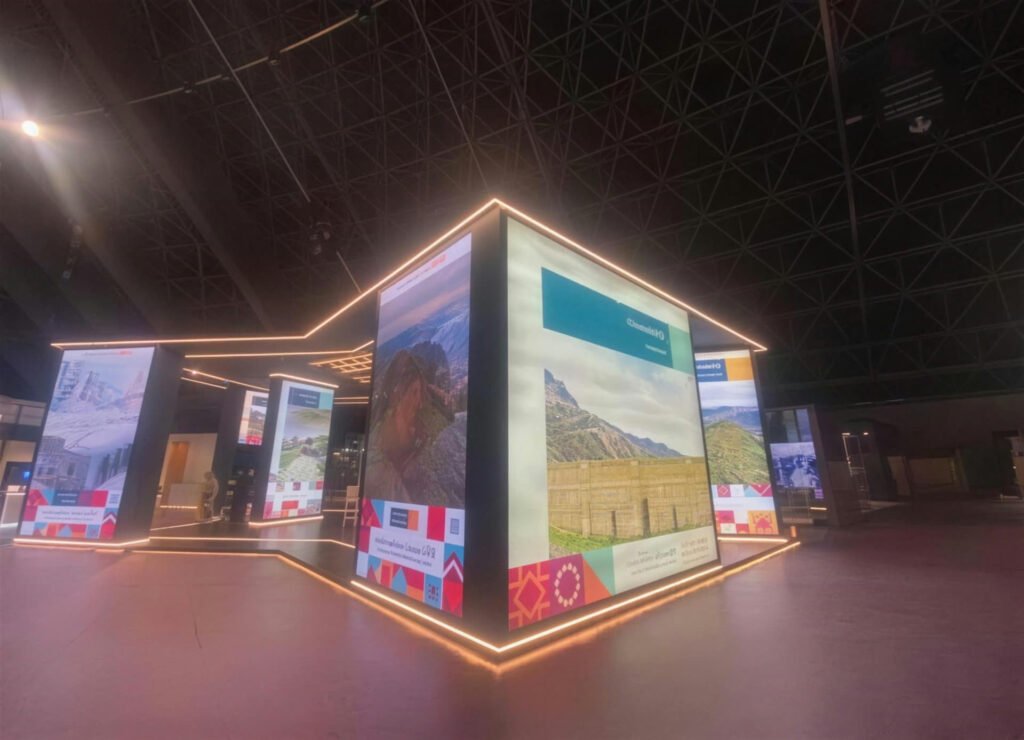
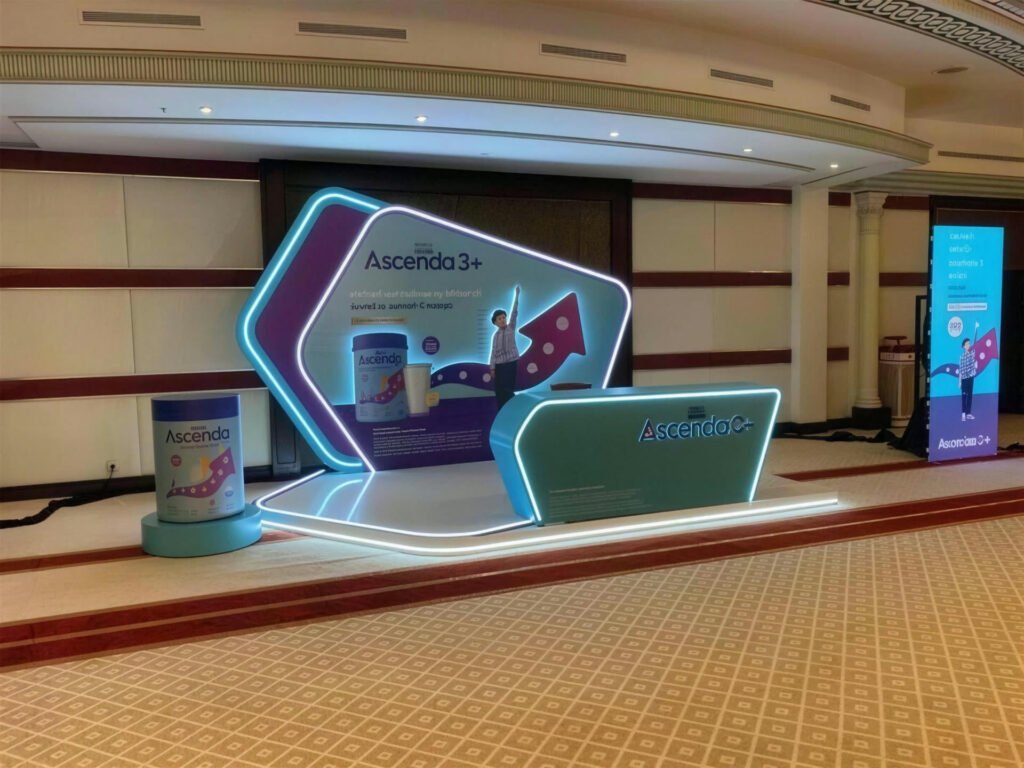
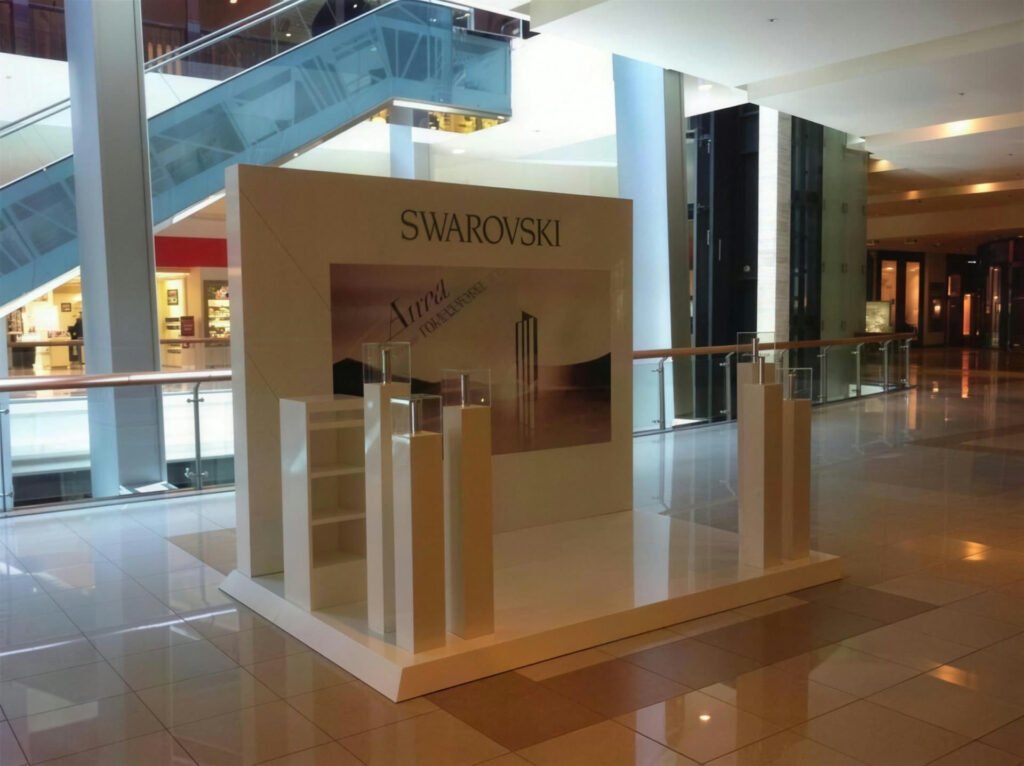
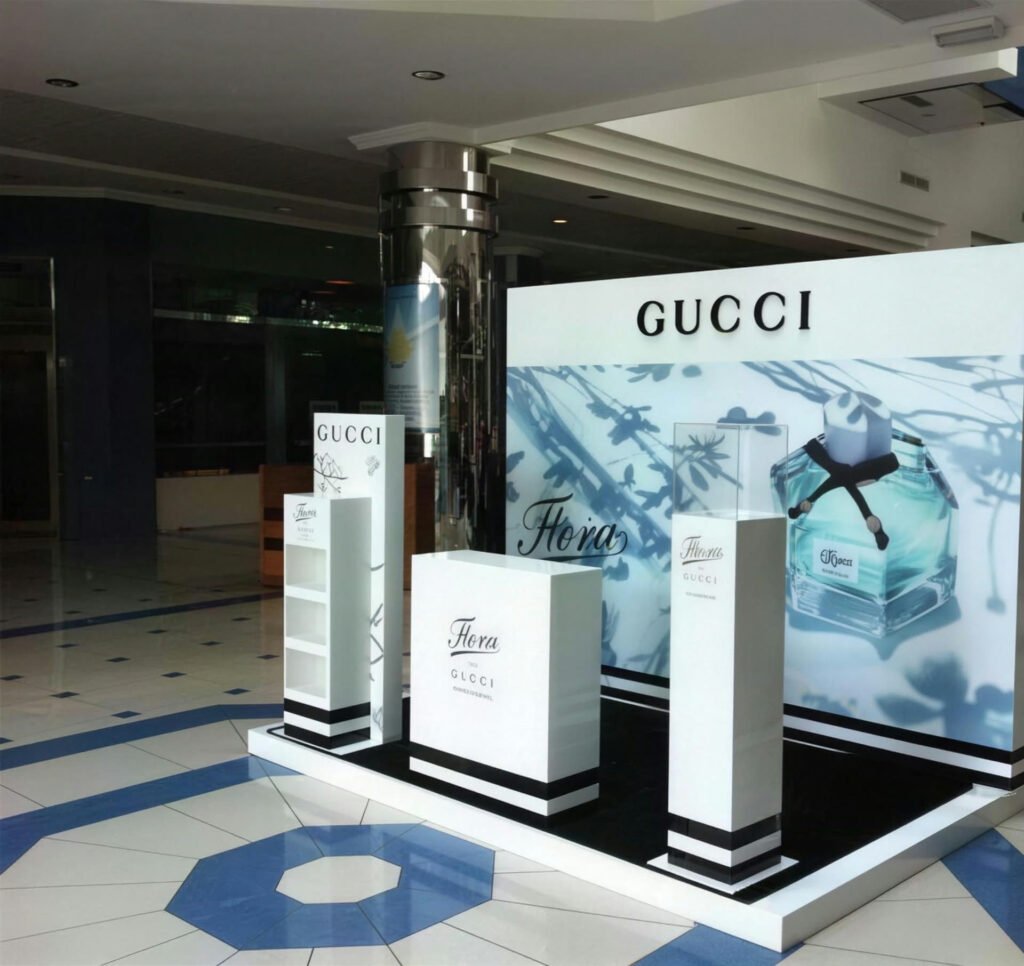
Stands we designed, built and installed
Photographed on site after handover, no renders.
Have a project and want a real number?
Send the area, the date and the city, and we come back with an itemised quote within 24 hours. No commitment, and no vague all-in price.

