
Ramadan Corporate Events
Ramadan Corporate Events Planned Around the Prayers
Ramadan corporate events follow a clock no other month has. A staff iftar is set by the sunset call to prayer, to the minute. A ghabga starts once the night prayers are over, and a suhoor runs in the last part of the night. This page is for the HR, internal communications or admin team at a company or government body that has to organise one of them, and the Eid greeting gathering that follows the holiday. It covers what differs between the formats, the venue, a set with a Ramadan identity that keeps your logo correct, invitations, prayer space, catering and the programme. Ramadan 1448 AH is expected to begin around early to mid February 2027 by the astronomical calendar, and the official moon sighting sets the start, so planning starts in December and January.
Ghabga, Suhoor or Iftar: What Changes Between Them
They share a month and very little else. The hour, the meal, the seating and the mood are different, and a plan written for a ghabga does not carry over to a suhoor or an iftar.
The ghabga: late evening, majlis and conversation
A ghabga is a Gulf tradition held after the night prayers, when people have broken their fast at home and come out again. Guests sit in a majlis, low seating along the walls with cushions and side tables, and move between groups. The food is light and traditional, Saudi coffee and tea keep coming, and the mood is social. Nobody watches the clock.
The suhoor: the last part of the night
A suhoor is the meal taken before the fast begins at dawn, so a company suhoor sits near the end of the night. Guests arrive late, often straight from another gathering, and the menu is more filling than at a ghabga. Service stops with a clear margin before the dawn prayer, so guests can finish, drink water and reach the mosque or home.
The iftar: sunset, to the minute
An iftar breaks the fast at the sunset call to prayer, and it is the only Ramadan gathering with a start that cannot move. Dates and water are on the table when the call is heard, guests pray the sunset prayer, then the main meal is served. A kitchen that is late by a few minutes is late for every guest at once.
The Eid gathering: back at work
After Eid al-Fitr many companies hold an Eid greeting gathering in the first working days after the holiday. It is short, usually in the morning or around midday at the company: coffee, sweets, greetings between colleagues and managers, and a group photograph. Eid al-Fitr is expected around early to mid March 2027 by the astronomical calendar, and the holiday announced for your sector sets the day you return.
What a Ramadan Evening Needs From One Team
The set is built in our own factory. These services join it on the night, and each has its own page.
Experiences & Events
The programme, the floor plan and a team on site from the first guest to the last, with the timetable built around the prayers.
Promoters & Brand Ambassadors
Hosts and hostesses who welcome guests and serve the majlis, an MC who runs the programme, and a supervisor.
Printing & Promotional Gifts
Invitation cards, the photo corner backdrop, table signs, and gifts such as printed mugs or perfume and oud boxes. Graphics are printed in 1 to 5 working days.
Acrylic & Wood Fabrication
Lanterns, panels with geometric patterns and recognition shields, cut on our CNC and laser machines.
Branding & Creative Studio
A Ramadan look drawn around your brand guide, so the greeting and the logo sit together correctly.
Digital Solutions
A registration page for invitations and replies, attendance checked at the door, and a screen for the quiz.
Social Media & Content
Photography and video coverage of the evening, briefed on who may and may not be photographed.
Exhibition Stands
The joinery, paint and print we use for custom stands, used here for a majlis wall, an entrance and a photo corner.
A Ramadan Set That Keeps Your Logo Correct
Ramadan has a visual language everyone recognises. In Ramadan corporate events the work is to use it warmly while your company identity stays exactly as its guide describes it.
Majlis seating
A ghabga is built around the majlis: continuous low seating along the walls, cushions, small tables within reach and carpets guests are happy to sit beside. Leave a path through the middle for the coffee server, and arrange the seating in groups so a department can sit together without closing itself off.
Lanterns and warm light
Lanterns, crescents and geometric patterns read as Ramadan at a glance, and warm, low light suits a ghabga or a suhoor. An iftar needs enough light on the tables to see the food, and a hall that is dimmed for mood should stay bright at the buffet and along the paths.
A photo corner with your backdrop
Guests will photograph the evening whether you plan for it or not, so give them a corner: a backdrop with a Ramadan greeting, your logo in its approved colours with clear space around it, and light that flatters faces. It is the one piece of the set that leaves the room on every phone, so check every letter.
Your logo, unchanged
The season tempts designers to turn a logo gold, tuck it inside a crescent or draw a lantern into its letters. Keep the logo as the brand guide sets it, placed beside the Ramadan elements and never merged with them. The greeting can be set in the brand typefaces, while the logo itself is not redrawn.
A prayer space
Whatever the format, guests will pray during the evening. That means a clean carpeted area, the qibla direction marked, washrooms close by for ablution, a place for shoes, and a separate prayer area for women when women are invited. Put it on the floor plan from the first drawing, not in a corner found on the night.
Separate sections when asked for
Some companies and many government bodies ask for a section for men and one for women, or a family section for staff who bring their families. That means screens or partitions built into the set, a separate entrance where the venue allows, hospitality served by hostesses in the women's section, and a photo corner on each side.
Organising Ramadan Corporate Events Step by Step
The order is the same for a ghabga for one department and a staff iftar for a whole organisation. What changes is how long each step takes.
Format, guests and the night
Decide who is invited, which gathering suits them and which night. Staff who break the fast with their families often prefer a ghabga or a suhoor to an iftar away from home. Start in December and January, because the nights of Ramadan are few and every organisation wants the same ones.
The venue and its rules
Book the venue first: company premises, a hotel, a tent or a rented hall. Then ask what it allows: outside catering, build hours, fixings on its walls, incense and charcoal, and the hour by which the hall must be empty.
Design and an itemised quote
A floor plan places the majlis, the buffet, the prayer space and the photo corner, and a rendered view shows the Ramadan look beside your identity. The quote lists the set, print, hosts, MC, photography and catering as separate lines, and it reaches you within 24 hours of the brief.
Invitations and the guest list
Invitations go out by name, as a printed card, a digital card or a registration page that records replies. The list tells the caterer how many to prepare, tells the venue how many seats to set, and tells protocol who sits where when senior officials attend.
Build, print and test assembly
The set is built in our factory and fully test assembled there before it leaves, while the graphics are printed alongside it. The caterer confirms the menu and the service plan against the final guest count.
The night and after it
Our team installs within the access hours the venue allows, stays through the evening and dismantles afterwards. Pieces that will return for the Eid gathering or next Ramadan are kept in our storage.
What Sets the Timetable
The calendar
Ramadan 1448 AH is expected to begin around early to mid February 2027 by the astronomical calendar. The official sighting confirms it, so keep the first nights flexible.
The venue
Hotels, halls and caterers fill early for the nights of Ramadan, and the dates in your plan follow the venue confirmation.
The set
A new majlis wall or entrance needs build time, and pieces from storage need only new graphics. The quote states the dates.
The graphics
Printed in 1 to 5 working days once the artwork is approved. Late approval is the usual cause of delay.
What Moves the Budget of a Ramadan Gathering
There is no single price for Ramadan corporate events, because a ghabga for one team in the lobby and a staff iftar at every branch are different jobs. These factors explain the gap between any two quotes.
Guest numbers
Seating, catering, hosts, gifts and print all grow with the list. Confirm the number in writing before the caterer orders.
The venue
A hotel package usually includes the hall and the food, but restricts outside suppliers and build hours. Company premises cost nothing to book, and everything else has to be brought in.
Catering
We arrange hospitality through a catering partner, shown as a named line in the quote. The format sets its cost: a ghabga is light dishes and coffee, an iftar is a full meal served at a fixed minute, and a suhoor sits between the two.
How much of the set is new
A printed backdrop with a few lanterns sits at the light end. A built majlis wall, an entrance, partitions for separate sections and a raised floor are joinery and paint, priced from their drawings.
People on the night
Hosts, hostesses, the MC and the photographer are priced by their hours, with a supervisor. A suhoor that ends close to dawn means longer shifts than an iftar.
Nights and locations
One evening at head office is not a ghabga in every region. Each location needs its own set and its own crew present. Where transport applies, it is a named line in the quote.
Send the format, the venue, the night you prefer and the guest count, and an itemised quote reaches you within 24 hours. Request a quote or message 0567069088 on WhatsApp. If your company also exhibits at a show after the holiday, our guide to exhibition stand cost in Saudi Arabia explains how a stand budget is built.
Premises, Hotel, Tent or Hall: Where the Evening Works
The venue decides half of the plan. Company premises, whether a lobby, a rooftop or a courtyard, need no booking and keep staff close to home, but every chair, cup and lamp has to be brought in, and the security and cleaning teams of the building need the timetable. A hotel gives you a hall, a kitchen and parking, and many hotels put up a Ramadan tent of their own, but most allow only their own kitchen, set build hours between functions and do not allow fixings on their walls. A tent or an outdoor majlis gives the strongest Ramadan feel, yet evenings in February and March can be cool and windy, so the plan needs ballast for every structure, heating where nights turn cold, and ground guests can cross in their thobes and abayas. A rented hall or an istiraha gives privacy and long hours, with only what the owner provides. In every case the venue owner, the mall or the competent authority decides what is allowed, and we prepare the drawings and paperwork they ask for. A Ramadan gathering is part of the event work described on event management in Saudi Arabia, with city pages for Riyadh and Jeddah. A platform for the MC and the recognition segment is covered on event stages, hosts and hostesses come from promoters and brand ambassadors, and invitations, backdrops and gifts from printing and promotional production. In 2027 Founding Day is expected to fall within Ramadan, so if you are planning both, read Founding Day corporate events as well.
Ghabga, Suhoor or Iftar: Which One Suits Your Staff
The right gathering follows who is invited and what you want from the evening. These questions settle it faster than any mood board.
Do your guests break the fast with their families?
For most staff the iftar is a family meal, and asking them to give one up is a real request. An iftar suits a single important night, or teams who work through sunset. A ghabga or a suhoor comes after the family table, so more people attend.
Is the evening for staff, for clients or for both?
A staff ghabga is relaxed and full of conversation. An iftar for clients, partners or senior officials needs a seating plan, protocol and a short programme. Mixing the two in one room serves neither, so hold them on different nights or in different sections.
Is the next day a working day?
A suhoor ends close to dawn, so hold a company suhoor on the night before the weekend, Thursday evening, and nobody comes to work without sleep. A ghabga is lighter, but a weekend night suits it too.
How many guests, and from where?
A ghabga for one department fits a lobby or a rented majlis. A staff iftar for several branches needs a hall, a kitchen that can serve everyone at the same minute, and parking that absorbs everybody arriving just before sunset.
A programme or a gathering?
A ghabga is conversation first: an MC, a quiz and a short recognition segment are enough. An iftar can carry a short word from the chief executive once the main meal has started, and nothing before guests have broken their fast.
Mistakes That Spoil Ramadan Corporate Events
Most come from a decision taken late or a question nobody asked, and avoiding them costs nothing.
An iftar served late
Guests sitting in front of empty tables when the call to prayer is heard. The caterer works backwards from the sunset prayer time in that city on that date, with dates and water on the tables before it.
A programme that clashes with the night prayers
A ghabga invitation for an hour when most guests are still in the mosque, or a speech placed across the isha prayer. Set the start after the night prayers and keep the programme clear of prayer times.
A logo dressed up for the season
The logo turned gold, placed inside a crescent or redrawn with a lantern. Your brand guide exists so nobody does that, and the photo corner carries the mistake onto every phone in the room.
No real prayer space
Guests praying in a corridor or on the hall carpet beside the buffet. A marked prayer area facing the qibla, with ablution close by, belongs in the first drawing.
Cameras in the women's section
A photographer who walks into the separate section, or photos of women guests published without asking. Tell the photographer where not to go, use a female photographer for the women's section when needed, and agree in advance what is published.
Booking Ramadan in Ramadan
By the time the month begins, the halls, the hotel tents and the good caterers are taken, and the ghabga or iftar gets whatever is left. Book in December and January.
One Factory Behind the Ramadan Set
We design, cut on CNC and laser machines, build the joinery, paint, make the acrylic, print in large format and install, all under one roof. The lanterns, the majlis wall and the photo corner backdrop come from the same place and arrive as they looked in the rendered view. Among those we have worked for are Saudia, the Heritage Commission, Kinan, Ascenda and Johnson & Johnson MedTech.
Celebrations We Delivered
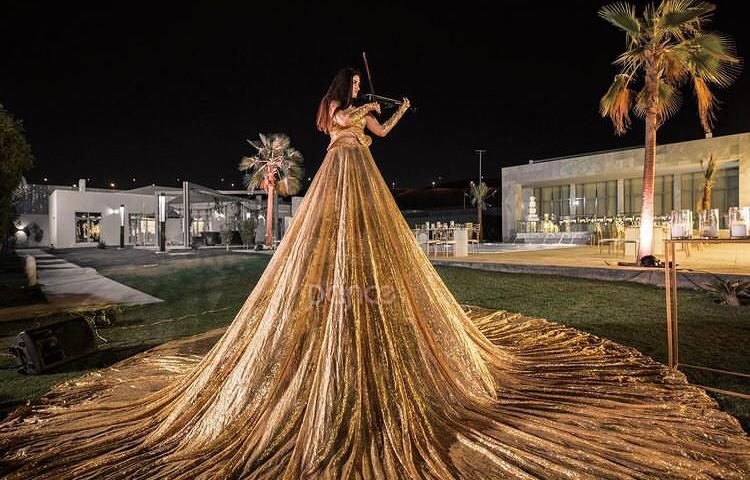
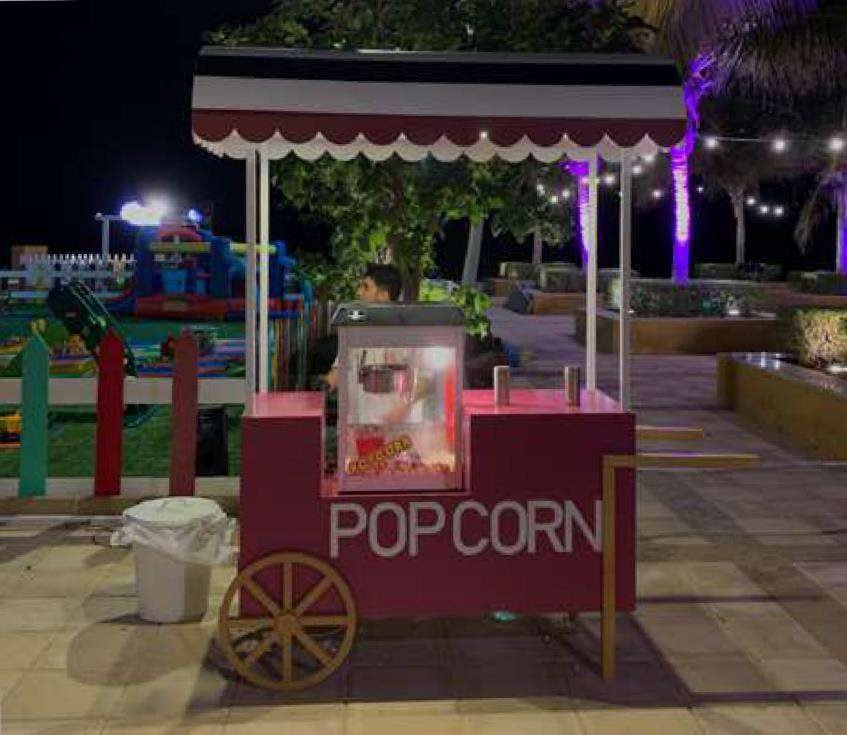
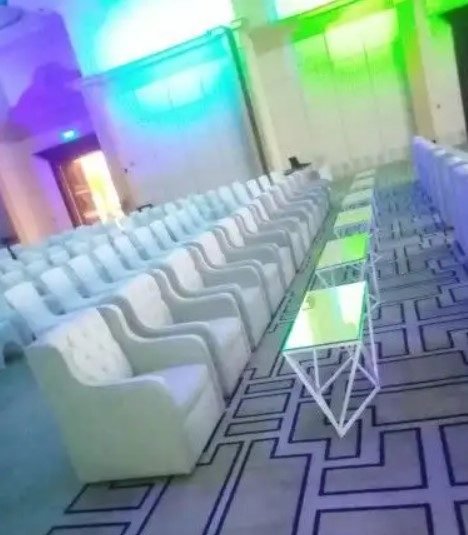
Corporate celebrations and occasions set up by our team.


Questions About Ramadan Corporate Events
What HR and admin teams ask before they book.
When is Ramadan 1448 expected?
By the astronomical calendar, Ramadan 1448 AH is expected to begin around early to mid February 2027, and Eid al-Fitr around early to mid March 2027. The start is set by the official moon sighting, so keep the first nights flexible and confirm as the date approaches.
What is a ghabga, and how is it different from an iftar?
A ghabga is a gathering held later in the evening, after the night prayers, once people have broken their fast at home. It is social, seated in a majlis, with light dishes, coffee and tea. An iftar is the meal that breaks the fast at sunset, with a fixed start and a full meal.
When should we start planning a ghabga or a staff iftar?
In December and January, because Ramadan corporate events compete for the same nights. Halls, hotel tents and caterers book up early for the nights of Ramadan, and the set, the invitations and the guest list need their own time once the venue is fixed. The quote states the dates for each part.
Do you arrange the food?
Yes. Hospitality and catering are arranged through a catering partner and appear as a named line in the quote, with the menu and the service plan agreed with you. If your venue is a hotel that allows only its own kitchen, we work with the hotel catering instead.
Can you provide an MC and hosts?
Yes. An MC runs the programme and keeps it clear of prayer times, and hosts and hostesses welcome guests, serve the majlis and pour the coffee, with a supervisor on site. When the event or the venue calls for an all female crew, we provide one.
What entertainment suits the month?
Keep it calm and inclusive: an MC who knows the room, a quiz on a screen with small prizes, a short recognition segment for teams or long serving staff with shields carrying your logo, and time to talk. Loud music and anything out of keeping with the month are best left out.
Can you set up separate sections and a prayer space?
Yes. When the company asks for separate sections, screens and partitions are built into the set, with a separate entrance where the venue allows, hospitality served by hostesses on the women's side and a photo corner on each side. The prayer space is on the floor plan from the first drawing, with the qibla direction marked.
Can the same set serve the Eid gathering?
Yes, if it is planned that way from the start. The structure stays and the Ramadan greeting is printed as a separate layer, so it can be swapped for an Eid greeting at the gathering in the first working days after the holiday. Between years the pieces are kept in our storage.
Do you handle invitations and gifts?
Yes. An invitation can be a printed card, a digital card or a registration page that records replies and checks attendance at the door. Gifts handed out on the night, such as perfume and oud boxes or printed mugs, carry your logo. Corporate Ramadan gifts are a wider subject that we cover on a separate page.
Where is the set made, and how do we start?
We have more than one location in the Kingdom. Your set is built in our own factory and installed by our own team. Send the format, the venue, the night and the guest count on WhatsApp at 0567069088 or through the quote page, and an itemised quote follows within 24 hours.
Planning Your Company Ghabga or Staff Iftar?
Send the format, the venue and the guest count. Within 24 hours you have an itemised quote for the set, the hosts, the catering line and the print.
More specific pages on this
If your question is narrower than this page, these are written for one question each.

