
Podcast Production
Podcast Production in Your Organisation's Own Voice
Podcast production for a company or a government body starts with a reason to talk: a leader who wants to explain a strategy, a brand that wants a regular conversation with its customers, a chamber or an association that wants its members heard, or an internal podcast that keeps employees informed. We shape the concept and the format with you, choose the host and the guests, plan the episodes and write the question guides, then record a multi camera video podcast on a branded set, at your office or at your event. We edit the sound and the picture, cut short clips for every platform and publish on a steady schedule. Most of what makes a series last is decided before the first episode is recorded.
Why Podcast Production Is Decided Before the First Episode
A microphone records whatever is said into it. Podcast production is the work of deciding who speaks, about what, for whom and how often, and those decisions carry most of the result.
A series, not a single episode
A video podcast is judged across its episodes, not by one of them. A listener who enjoyed the first returns only if the next one arrives when expected and keeps the same promise. Agree first on what the series is about, who it is for and how often it appears, then plan enough episodes ahead that the schedule never depends on a guest who cancels at the last minute. A published schedule commits the team as much as it promises the listener.
The host carries the series
Listeners come back for a voice they trust. A host who knows the subject, listens well and can steer a guest gently back to the point matters more than any piece of equipment. The host may be one of your leaders, a member of your team or a presenter we put forward, and the choice comes before the format is fixed, because the format has to suit that voice.
Video changes how it is recorded
A video podcast is watched as much as it is heard, and most people first meet it as a short clip on a phone. That means a set that looks like your brand, cameras placed so every speaker is properly framed, lighting that is kind to faces, and a microphone for each speaker, so every voice stays clean when the clips are cut.
Publishing may need a licence
In Saudi Arabia, media content may need a licence from the General Authority for Media Regulation, depending on who publishes it and what the activity is. The publisher should check its own case directly with the authority before the first episode goes out. We produce the podcast. We do not hold or issue licences, and nothing on this page is legal advice.
What Joins the Podcast
Podcast production is one of several services under the same roof. These are the ones a series draws on most.
Printing & Promotional Gifts
The printed backdrop behind the host and the guests, the branded pieces on the recording table and the gifts guests take home. Graphics are printed in 1 to 5 working days.
Acrylic & Wood Fabrication
The video podcast table, the illuminated logo and the set pieces cut in our factory, so the set belongs to your brand rather than looking like a rented room.
Promoters & Brand Ambassadors
Professional presenters put forward to host the video podcast when you prefer an experienced voice, and hosts who welcome the guests when an episode is recorded at an event.
Branding & Creative Studio
The podcast name, its logo, the episode covers and the title cards, built from your brand guide so the series looks like the organisation that publishes it.
Digital Solutions
A podcast page on your website that gathers the episodes, their transcripts and a subscription form, so a listener has somewhere to go after the clip.
Experiences & Events
Conferences, forums and launches where a live video podcast episode is recorded in front of an audience, with the stage, the screens and the guest programme around it.
Social Media & Content
The content plan the video podcast episodes feed, and posting the short clips on your accounts week after week.
Custom Exhibition Stands
A stand with a video podcast corner built in, where guests are interviewed throughout the exhibition, designed and built in our own factory and installed by our own team.
What Podcast Production Covers
Each podcast format has its own rhythm, its own preparation and its own way of being recorded. Naming the format in the brief settles much of the podcast production plan before it starts.
The interview podcast
A host and a guest in conversation, the most common format in podcast production for a company or a leader. Its strength is the guest, so the work sits in the booking and the question guide: who is worth hearing, what they can say that nobody else can, and the order of questions that lets the conversation build rather than wander.
The panel or round table
Several voices around one table, often a debate on a question facing the sector or a regular review with your own experts. A panel needs a host who shares the time fairly, a microphone for every speaker and cameras that cut to whoever speaks next, because a video podcast panel filmed in one wide shot is hard to watch.
The narrative series
A story told across episodes: the history of an organisation, a project from its first day to its handover, or the people behind a heritage site. Narrative series are scripted, built from interviews and voice over, and take more podcast production time, in writing and in editing, than a conversation, which is why they are often the ones people remember longest.
The internal podcast for employees
A series made for your own people: updates from leadership, a new strategy explained, colleagues from other departments introduced, or a welcome for new joiners. Its files are delivered for your internal channels rather than public platforms, and it works because people listen on the way to work or between meetings instead of reading another long email.
The leader's conversation series
A senior leader in regular conversation with guests from the sector, customers or the team. A video podcast gives a leader a voice that a press release cannot, and it needs careful preparation: question guides agreed in advance, recording slots that fit a busy diary, and approval of each episode before it is published.
The video podcast at an event
Episodes recorded live at a conference, a forum or an exhibition stand, with speakers interviewed between sessions. The event sets the timetable, so the set, the sound and the cameras for the video podcast are ready before the doors open, and the guest list is confirmed with the organiser in advance.
How Podcast Production Runs From Idea to Published Episode
Each stage of podcast production is approved before the next one starts, so nothing reaches the recording that was not agreed.
Concept and format
We start with who the podcast is for, what it promises them, the format that suits that promise and how often episodes appear. You send the brand guide, any earlier content and the voices you have in mind. The stage ends with a series outline: the name, the format, the host, the rhythm and the topics for the first run of episodes.
Host, guests and the episode plan
The host is chosen, and the guests for the first run are listed and invited. Each episode gets its own plan: a script for narrative episodes, or a question guide for interviews and panels, written in Arabic, English or both. The guide reaches the guest beforehand, so nobody is surprised on the day. What the conversation will cover, and what stays outside it, is agreed with each guest.
The set and the recording setup
The set is designed with your brand identity, backdrop, table, lighting and logo, and built in our factory. Whether the video podcast is recorded on a fixed set, at your office or at an event, we plan the camera positions, a microphone for each speaker and lighting that holds through a long session, then test the room for echo and noise.
The recording day
The recording plan lists every episode, its guests, its time and what they wear. Several cameras record the video podcast at once, a wide shot and a close shot on each speaker, while the sound is monitored throughout, because a poor recording can never be repaired later as well as it can be prevented on the day.
Editing sound and picture
The audio is cleaned and balanced so every voice sits at the same level, then the video is cut between cameras, the colour graded, and the titles, name straps and episode cards added. You review each episode of the video podcast, and your comments are gathered in a combined list for each round.
Clips, covers and publishing
Each approved episode becomes its versions: the full episode for podcast platforms and YouTube, short vertical clips for Reels, TikTok and Snapchat, horizontal cuts for YouTube, the episode cover, a transcript and subtitles. Episodes go out on the agreed publishing schedule, on accounts that belong to your organisation.
What Decides the Launch Date
Format and host approval
The podcast production schedule starts when the series outline and the host are approved. A format that keeps changing moves every later date with it.
Guest availability
Senior guests with busy diaries decide when episodes can be recorded, so the first run is booked before the launch is announced.
The set and the location
A set built in our factory, or permission to record at an office or an event, has its own lead time. The recording day is fixed once both are ready.
Editing, clips and versions
The number of episodes, clips, languages and review rounds decides how long the edit takes. The quote states the dates.
What Shapes the Cost of a Podcast
There is no price list for podcast production, because each series is priced from its own format and schedule. These are the lines that move the figure, and when you compare offers from podcast production companies, compare them line by line.
Episodes and recording days
In podcast production, episodes recorded together in a single session cost less per episode than episodes recorded one at a time across the year, because the crew, the set and the equipment are set up once rather than again for every episode.
A fixed set or on location
Recording on a set that is already built is the most controlled option. Recording at your office or at an event adds travel, setting up time and a room that has to be treated for sound and light.
Cameras, lighting and crew
An audio only podcast needs microphones and a sound engineer. A multi camera video podcast with lighting and a director cutting between speakers needs a larger crew, and every extra pair of hands is a line in the quote.
The branded set
A printed backdrop and a logo cost little. A full video podcast set built in our factory, with a custom table, an illuminated logo and set pieces, is designed and fabricated, and can return for the next season.
Host, guests and preparation
A professional presenter is paid for their time and for how the episodes are used. Research, guest booking and question guides add preparation hours to every episode, and narrative episodes need scripts.
Clips, subtitles and publishing
Each short clip, each subtitle file, each transcript, each language version and the publishing itself add editing and management time, and so does every review round beyond those included in the quote.
Send the format, who the podcast is for, how many episodes you have in mind, where you want to record and when you want to launch. An itemised quote reaches you within 24 hours. Request a quote for your podcast or message 0567069088 on WhatsApp. If you plan to record episodes on your own stand at an exhibition, the budget for the stand itself is set out line by line in our guide to exhibition stand cost in Saudi Arabia.
Where the Podcast Works: Platforms, Accounts and Events
Podcast production pays off when each episode reaches people in more than one place. The full episode lives on podcast platforms and on YouTube, while the short clips carry it to people who would never press play on a long conversation, and planning and posting those clips is part of our social media and content creation service. When a series needs a company film or a trailer shot from a script, that is corporate video production, where every scene is planned in advance, while a video podcast is recorded as a conversation and shaped in the edit afterwards. Recording an episode in a hall during a conference or a forum shares the room with the event, and the general filming of that event, the photographs, the highlights film and the speaker sessions, belongs to event photography and coverage. When a live episode is recorded on stage, the sound system, the lighting and the audience screens come from event AV production, and the podcast sound is coordinated with the same team. A leader who presents the same strategy in a keynote can rely on slides from our presentation design team, so the deck and the episode tell one story. This page is about the podcast itself, the series an organisation publishes in its own voice, episode after episode.
Audio Only, Video Podcast or a Live Recording
A video podcast is not always the better choice. These questions show which way of recording suits your series.
Will your audience watch or listen?
If your audience listens while driving or working, sound quality matters most and a simpler setup may be enough. If the series must also feed your social accounts, record a video podcast from the start, because video clips cannot be cut from an audio recording.
Do the faces carry the message?
When the guests are known faces, leaders or specialists whose expressions add to their words, a video podcast lets viewers see them think and react. When the subject is a story told in voice over, sound alone carries it well.
Where will the guests be?
Busy guests are easier to record at their own office or at an event they already attend. A fixed set gives the most consistent picture and sound, and many series mix the two, with the same branded backdrop travelling with the crew.
Will there be an audience?
A live video podcast recording at a conference or a forum adds energy and an audience question at the end, but the event sets the timing and the hall sets the sound. A recording without an audience gives the host time to repeat a question and the guest a chance to restart an answer.
Arabic, English or both?
A bilingual series can run as separate episodes in each language, as one conversation with subtitles, or as a mix. Decide it in the format, because it changes the host, the guests, the question guides and the subtitles, and Arabic subtitles are checked by an Arabic reader before publishing.
Where Company Podcasts Usually Stall
Each of these is cheaper to prevent in the podcast production plan than to repair after the series has launched.
A launch with no episodes in reserve
The first episodes go out, a guest cancels, a busy month arrives and the series goes quiet. Recording a run of episodes before launch keeps the schedule steady while the next ones are booked. The launch is announced when the first episodes are ready, not when they are booked.
A guest who reads a speech
A guest who arrives with prepared remarks sounds like a press release. A question guide shared in advance, with room for follow up questions, lets the guest prepare without reciting.
Room echo and a shared microphone
A glass meeting room with hard walls and one microphone in the middle of the table produces sound that no edit can fully clean. Each speaker has a microphone, and the room is treated or changed before the day.
A set that does not look like the brand
A generic sofa and a plain wall make a video podcast look borrowed. Backdrop, table, lighting and logo are designed together, so even a muted clip in a feed is recognisably yours.
Clips that lose the point
A short clip cut from the middle of a sentence, or framed so wide that faces are tiny on a phone, travels nowhere. Clips are chosen to hold a complete idea and cut vertical with subtitles, because many people watch with the sound off.
Publishing without checking the rules
A series launched before the publisher has checked whether it needs a licence from the General Authority for Media Regulation can be interrupted. The publisher reviews its own case with the authority before launch, alongside consent from every guest and licences for any music.
The Podcast, the Set and the Clips From One Company
Podcast production with video and audio, editing, design, set fabrication in our own factory, large format print and installation all sit with our own team, so a series goes from the first idea to a published episode without a second supplier in between. We have worked for Saudia, Saudia Holidays, the Heritage Commission, Kinan, Ascenda and Johnson & Johnson MedTech.
Events We Delivered
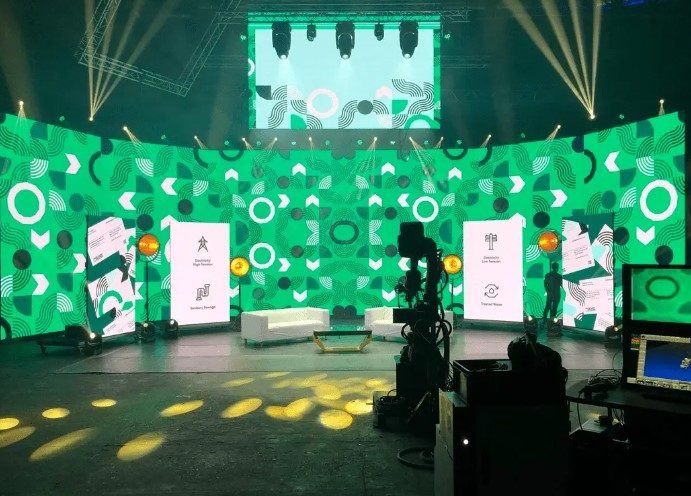
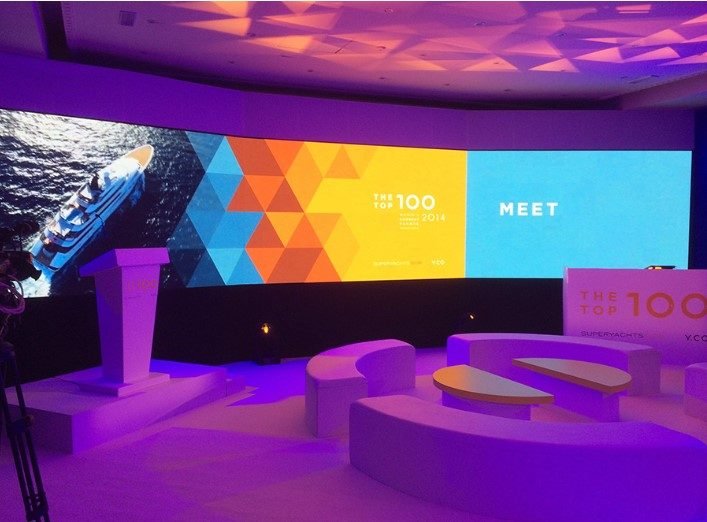
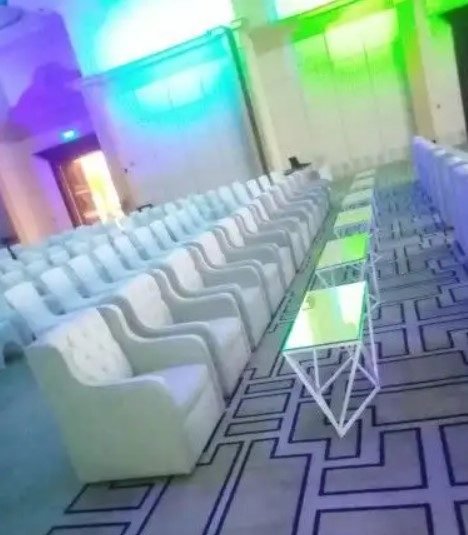
Stages, platforms and event set-ups our team built and ran.


Questions About Podcast Production
What companies, government bodies and associations ask before they commission a podcast.
What does your podcast production include?
Concept and format, the host and the guests, episode planning with scripts or question guides, the set and the recording, editing of sound and picture, short clips, covers, transcripts, subtitles and publishing on a schedule. You can take the whole service or some of its stages, and the quote lists each stage as its own line.
Do you make a video podcast or audio only?
Both. A video podcast is recorded with several cameras, lighting and a microphone for each speaker, and gives you clips for social media. An audio only series is simpler to record and suits listeners who play it while driving or working.
Where do you record the episodes?
On a set we build with your brand identity, or on location at your office, your site or your event. The site owner decides where a crew may set up, so permission is arranged before the day. When we record away from a fixed set, the branded backdrop travels with the crew. We have more than one location in the Kingdom and record across its cities.
Who hosts the podcast?
One of your leaders, a member of your team or a professional presenter we put forward. The host is chosen before the format is fixed, and we prepare the host with the question guide and a rehearsal before the first recording.
Do you arrange the guests?
We plan the guest list with you for each run of episodes and prepare the invitation and the question guide. Invitations go out in your name, because guests respond to the organisation that publishes the series, and every guest agrees to how their episode will be used.
Does podcast production in Saudi Arabia need a licence?
Media content in Saudi Arabia may need a licence from the General Authority for Media Regulation, depending on who publishes it and the nature of the activity, and the publisher should confirm its own case directly with the authority. We produce the podcast, we do not hold or issue licences, and this answer is not legal advice.
Can you design a branded video podcast set?
Yes. The backdrop, the table, the lighting and the logo are designed with your brand identity by our creative studio and built in our factory. The same set can return for the next season or move to an event.
Do you cut clips for social media?
Yes. Each video podcast episode gives short vertical clips for Reels, TikTok and Snapchat and horizontal cuts for YouTube, each built around one complete idea and subtitled, because many people watch with the sound off.
Do you publish the episodes for us?
Yes. We prepare the episode covers, titles, descriptions, transcripts and subtitles, and publish on podcast platforms and YouTube on the agreed schedule, on accounts owned by your organisation, so the audience stays yours.
How do we start?
Send who the podcast is for, the format you have in mind, the host, where you want to record and when you want to launch, on WhatsApp at 0567069088 or through the quote page, and an itemised quote follows within 24 hours.
A Podcast for Your Organisation?
Send the conversation you want people to hear and who should hear it. Within 24 hours you have an itemised podcast production quote that names every episode, every recording day and every version.
More specific pages on this
If your question is narrower than this page, these are written for one question each.

