
Sound System Rental
Sound System Rental Planned for the Last Row
Sound system rental for a company event is not speakers on stands and a microphone on the lectern. It is a plan for one room and one programme: how many people speak, whether music plays, where the audience sits and how far the last row is from the stage. This page explains the speakers, the microphones, the mixing desk and the person behind it, what changes the quote and what goes wrong on the day, so you can brief a supplier properly and compare offers line by line.
Why Sound Decides What Guests Remember
Guests forgive a plain backdrop. They do not forgive a speech they could not follow, a whistle in the middle of an award, or music that drowns out the person at the next seat.
Speech has to be understood, not only heard
At a conference the job of the system is intelligibility: every word reaching every seat without anyone leaning forward to catch it. Loud is not the same as clear. A system that stays clear at a moderate level keeps people listening through the afternoon session and does not tire the front tables.
Music needs weight, speech needs control
A party or an award night with music asks for low end that a speech system does not carry, which is where subwoofers come in. A conference asks the opposite: tight coverage, no boom, and a mic that stays stable when the presenter turns towards the screen behind them.
The last row counts as much as the first
In a long ballroom, if all the sound comes from the stage, the front tables get too much and the back gets too little. Coverage is planned for the seat furthest away, and delay speakers along the room fill what the main system cannot reach, without turning them up.
The cameras and the stream take their sound from the desk
The video crew, the live stream and the recording of the speeches all take their audio from the mixing desk, not from the air. If the desk mix is poor, the video of the event is poor however good the pictures are, and the sponsor's speech you meant to post the next day is lost.
What Our Teams Add Around the Sound
Speakers and microphones are the technical lines. These are the pieces our own teams add to the same event.
Printing & Promotional Gifts
Name cards for the panel, programme sheets and the printed branding on stage and around the room, printed in 1 to 5 working days.
Acrylic & Wood Fabrication
A lectern with a mic mount and a cable channel at the back, so the lead never hangs across the logo.
Promoters & Brand Ambassadors
Hosts with a supervisor who carry the roving mic to the audience during questions and bring it back to the sound desk.
Branding & Creative Studio
The look of the stage, the screens and the room, prepared so the backdrop reads well in the recording and on the stream.
Digital Solutions
Registration websites and attendance systems, so the room and the mic plan match the guests who actually confirmed.
Experiences & Events
The programme, the running order and the timings the sound cues follow, planned together.
Social Media & Content
Short clips of the speeches and the award moments, edited with clean audio taken from the desk.
Custom Exhibition Stands
Stands with a presentation area, designed so their sound stays inside the limit the exhibitor manual sets.
What a Sound System Rental Includes
Every supplier uses the same words. Knowing what each piece does tells you whether an offer was sized for your room or copied from the last job.
Line array or point source speakers
A point source speaker throws sound from a single cabinet in a wide cone, and suits a meeting room, a small hall or a speech to a modest audience. A line array is a column of cabinets hung or stacked in a curve that sends sound further with less drop between the front and the back, which is why ballrooms, concerts and outdoor events use it. Bigger is not always better: a line array under a low ceiling can sound harsh.
Subwoofers for music
Subwoofers carry the low frequencies that give music its weight. A conference with no music rarely needs them, and in a hotel they are the first thing the neighbouring hall and the banqueting team complain about. At a party they are placed and aimed so the dance floor feels them and the tables of senior guests do not.
Stage monitors
Monitors are speakers that face the people on stage, so a presenter hears the video playback and a band hears itself. A speech may need none, or a small wedge at the edge of the stage. A panel, a choir or a live band needs a proper monitor mix, and that mix is a separate job at the desk.
Wired and wireless microphones
A wired microphone on the lectern never runs out of battery. Wireless comes as a handheld, a lapel (lavalier) clipped to clothing, or a headset worn over the ear. The handheld suits the MC and audience questions, the lapel suits a seated panel and a television look, and the headset suits a presenter who walks and gestures, because it stays at the same distance from the mouth.
The mixing desk and its operator
Every microphone, every playback source and every speaker meets at the mixing desk. It sits in the room, usually at the back facing the stage, so the operator hears what the guests hear. A desk tucked in a side corridor is mixed by guesswork. An operator for each desk is a named line in the quote, with the hours stated.
Playback, recording and feeds
Walk in music, the sound of each video, the music for the award reveal and the national anthem play from a playback machine at the desk, with the files prepared and checked before doors open. From the same desk come the feeds: a clean mix for the cameras, a recording of every speech, and a separate line for the live stream or an overflow room.
How the Sound Is Planned and Set Up
Most sound problems are decided before the equipment arrives. These are the steps a good supplier walks through with you.
The room and the programme
We start from the venue, the seating plan, the stage position and the running order: who speaks and for how long, and whether there is a panel, a video with sound, music or a live act. What is enough for speeches alone is not enough for a party with music.
The speaker plan
From the room drawing the supplier decides the speaker type, where each one stands or hangs, whether the room needs delay speakers and where the subwoofers go. Speakers stand in front of the microphone line, never behind it, which is the first defence against feedback.
The microphone list
Every name on the programme gets a microphone type: lectern, handheld, lapel or headset, plus roving mics for questions and spares. Wireless channels are planned so they do not clash with each other or with other systems working in the venue.
Power and cable routes
Sound wants clean power of its own, separate from the lighting and the catering, and every cable that crosses a floor is taped down or covered. Outdoors, the power source and its backup are decided at this stage.
Setup and sound check
The system is installed, aimed and tuned to the room while it is empty, then every microphone is tried at its real position on the lectern and on the stage. The sound check is technical: levels, feedback, batteries and playback files.
Rehearsal with the real people
The rehearsal runs the programme with the speakers, the MC and the files in order. It is where a quiet voice is noticed, a lapel is moved and a video that was too loud is brought down, before the guests sit down.
What Decides the Timing
The quote
An itemised quote within 24 hours of a brief that names the venue, the date and the programme.
Stage, backdrop and branding
Built in our own factory. The time follows the size and the finish, and the quote states the date.
Setup at the venue
Follows the access hours the venue gives and the size of the system, so the quote names the setup and sound check slot.
Printed graphics
Printed in 1 to 5 working days once the artwork is approved.
What Changes the Price of a Sound System Rental
We do not publish prices, because a sound system rental for the same room can be small or large depending on the programme. These are the lines that move a quote, named so you can compare offers on the same basis.
Audience size and room size
More seats and a longer room mean more speakers, delay positions and cabling. A ballroom set for a gala dinner needs wider coverage than the same room set in rows, because round tables spread the guests further from the stage.
Speech only, or music as well
Subwoofers, music playback or a live band add equipment, a monitor mix and setup time. Say early whether music is part of the evening, because adding it in the last week changes the whole system.
How many microphones, and which kind
Every wireless microphone is a channel, a receiver and its batteries. A panel on lapels, a choir or a band costs more than a lectern microphone and a handheld for the MC.
Hung or on stands
Hanging a line array from the venue ceiling or from truss needs rigging points, the venue's approval and more crew time. Speakers on stands or stacked on the stage are quicker, where the room allows it.
Operator hours and programme days
An operator for each desk is a named line, and a long day, an early rehearsal or a programme over several days adds hours. A setup the day before is often cheaper than a rushed one on the morning of the event.
Outdoor needs and feeds
Outdoors adds weather covers, a generator where the site has no supply, and longer cable runs. Recording, a stream feed, an overflow room and interpretation channels are each a line of their own.
Send the venue, the date, the number of guests and the programme. An itemised quote for your event sound reaches you within 24 hours. Request a quote or message 0567069088 on WhatsApp. If your event also has an exhibition stand with its own presentation area, the lines of that budget are listed in our guide to exhibition stand cost in Saudi Arabia.
Hotels, Malls and Open Sites: Who Sets the Sound Limits
Hotels, convention centres and malls each have rules on sound, and those rules belong to the venue, not to the supplier. Many hotel ballrooms share a movable partition with another event, so the hotel sets a level and may cut the power to a system that goes over it. Malls usually limit the level and the hours of sound in common areas and ask that speakers face away from neighbouring shops. On an open site the wind carries and bends sound, so speakers are aimed down at the audience and away from homes, and an outdoor event near a residential area often has a time when loud music must stop. Some venues insist that their in house supplier runs the sound, or charge a fee for an outside one, so ask before you compare offers. We prepare the drawings and the equipment list the venue asks for, and the approval is theirs. For a full conference programme see conference organisers in Saudi Arabia, and for an evening with music, corporate party organisers. The platform and backdrop are covered on event stages, and the presenter who holds the mic all night on event MC in Saudi Arabia. A store or branch opening is planned on grand opening events, and filming the speeches on event photography and coverage.
Choosing the Setup for Your Event
A few questions settle most of the choices before the supplier starts drawing.
Speech, music or both?
Speech only: point source speakers or a small line array, no subwoofers, and care over every microphone. Music: subwoofers and a system with headroom for the peaks. A night with both: a system tuned for speech, with the low end brought in when the celebration starts.
How long is the room, and where is the last row?
If the last row is far from the stage, ask for delay speakers or a line array rather than louder main speakers. Turning up the front does not carry sound to the back. It only makes the front tables uncomfortable.
Who moves on stage?
A speaker who stays at the lectern is fine on the wired mic. A presenter who walks needs a headset, a panel needs lapels or handhelds on stands, and audience questions need roving handhelds carried by hosts.
Will it be filmed or streamed?
Then ask for a separate feed from the desk for the cameras and a recording of each microphone on its own. Room sound picked up by a camera microphone is not usable for a company video.
Do guests need interpretation?
If the speakers use Arabic and English, ask early whether the venue or a named specialist provides interpreter booths and receivers, and how their channels connect to the desk. It changes the microphone plan and the seating.
What Goes Wrong With Event Sound
Each of these has a known cause, and preventing it at the planning stage costs less than fixing it with guests in the room.
Feedback, the whistle
A microphone that hears its own speaker loops the sound into a howl. It happens when speakers sit behind the stage line, when a lapel faces a monitor, or when a quiet voice is turned up too far. Speaker placement and a sound check at the real positions prevent most of it.
Dead spots and booming corners
Columns, a low ceiling, a balcony or a glass wall create seats where speech turns muddy or disappears. They are found by walking the room during the sound check, not by standing at the desk.
Batteries that die mid speech
Wireless mics get fresh batteries before every session, and the spares sit at the desk. A handheld that dies during the award announcement is a battery plan that was skipped.
Wireless interference
An event in the next hall, the venue's own system or a phone too close to a receiver can cause dropouts. Frequencies are scanned at the venue and channels assigned so they do not collide.
Late changes to the programme
An added speaker, a video with sound that arrives on the morning, a surprise performance: each needs a microphone, a file or a channel that was not in the plan. Send changes to the sound operator, not only to the stage manager, and send final files the day before.
A lapel in the wrong place
A lapel under a shemagh, on a thobe collar or beneath a jacket rustles with every movement, and one clipped too low makes the voice thin. It belongs on the chest, clear of fabric, and is checked with the speaker at the rehearsal.
Sound, Stage and Branding Planned as One Event
We supply the sound sized from your venue, audience and programme, and every item is a named line in the quote with its type, its quantity and who operates it. We coordinate with your AV supplier or ours, while our own team builds the stage, the backdrop and the branding in our factory and installs them at the venue. We have worked for Kinan, Saudia, the Heritage Commission, Johnson & Johnson MedTech and Ascenda.
Events We Delivered
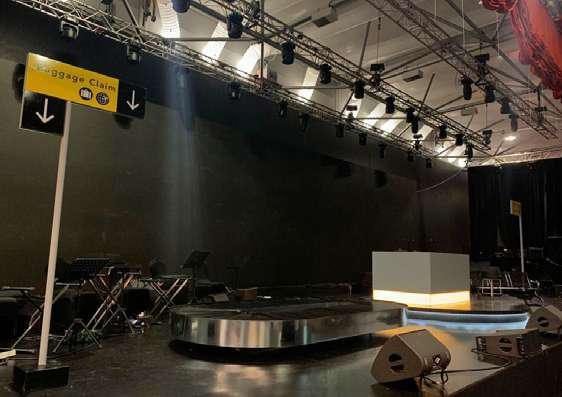
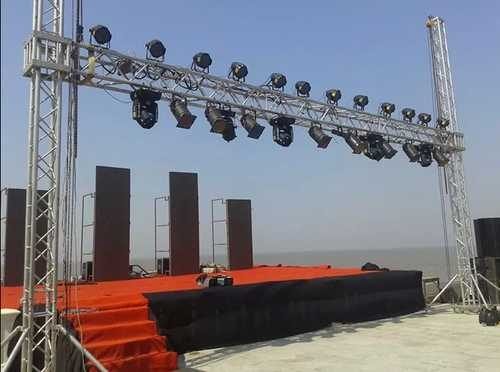
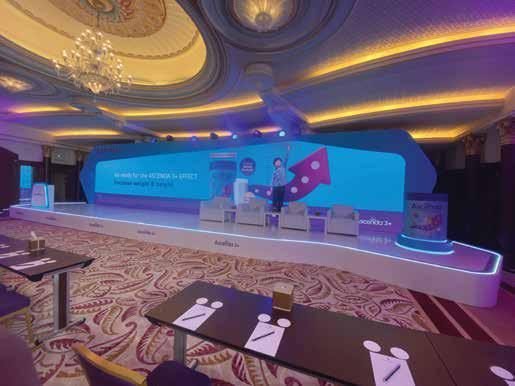
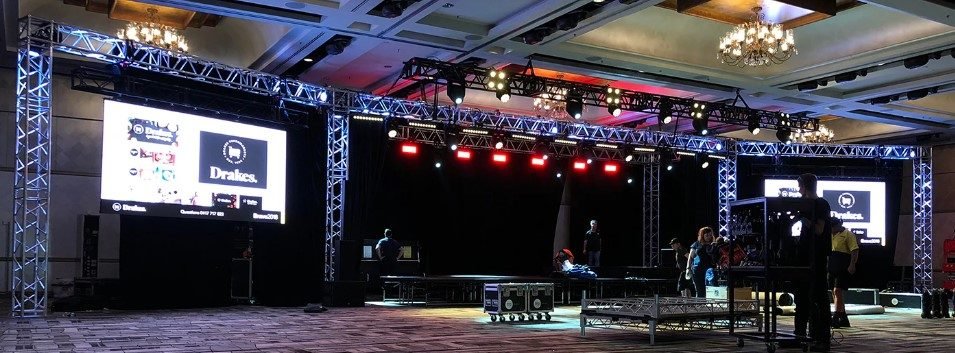
Stages, platforms and event set-ups our team built and ran.

Questions About Sound System Rental
What corporate event managers ask before they book the sound.
What is included in a sound system rental?
Speakers sized to the room, a microphone for every name on the programme, a mixing desk, playback, cabling and stands or rigging, plus setup, sound check and dismantling. An operator for each desk is a named line in the quote. Recording, stream feeds and extra rooms are added as lines when you need them.
Do you supply speakers and microphones for events?
Yes. We supply the sound for an event, sized from your venue, audience and programme, and coordinate with your AV supplier or ours. Every item appears in the quote with its type, its quantity and who operates it.
Should we hire from a rental shop or through the event organiser?
A rental shop hands over equipment, and it is then up to you to know what to order and who runs it. When sound comes as part of the event plan, the speakers are drawn together with the stage, the seating and the cameras, and it is clear who answers for each line. Either way, ask who attends the sound check and who stays at the desk until the end.
Line array or normal speakers: which do we need?
For a meeting room, a small hall or a speech to a modest audience, point source speakers on stands are enough. For a large or long room, a concert style show or an outdoor event, a line array carries sound further at an even level. The room drawing decides, not the size of the budget.
How many microphones should we book?
Count everyone who speaks at the same time, then add roving mics for questions and spares. A panel needs a microphone for each panellist, not one passed along the table. The MC usually keeps a handheld of their own.
Which wireless microphone suits a presenter who moves?
A headset, because it stays at the same distance from the mouth when the head turns. A lapel is discreet and suits seated panels and interviews, but picks up less when the speaker turns away. A handheld is the most forgiving and the easiest to pass around.
Do we need a sound operator at a small event?
If anything will change during it, yes: another speaker, a video with sound, questions from the floor. A system left alone cannot react to a quiet voice or a sudden howl. An operator for each desk is a named line in the quote, and the programme decides the hours.
Can the sound go to the cameras and the live stream?
Yes, from the mixing desk. Ask for a clean feed for the cameras, a separate mix for the stream if needed, and a recording of each microphone so the speeches can be edited later. Arrange it before the day, because it changes the desk and the cabling.
Do hotels and malls limit the sound?
Usually, yes. Hotels with divided ballrooms and malls surrounded by shops set levels and hours, and some require their own supplier or charge for an outside one. Get the venue's rules before comparing quotes, and we prepare the equipment list and drawings they ask for.
Where do you work, and how do we start?
Our sound system rental covers corporate events across the Kingdom. Send the venue, the date, the number of guests and the programme on WhatsApp at 0567069088 or through the quote page, and an itemised quote follows within 24 hours.
Clear Sound for Your Next Event?
Send the venue, the date and the running order. Within 24 hours you have an itemised quote that names every speaker, every microphone and who sits at the desk.
More specific pages on this
If your question is narrower than this page, these are written for one question each.

